Cops nab 3 cattle thieves after chasing car from Thokkottu to Talapady

[email protected] (CD Network)
January 20, 2016

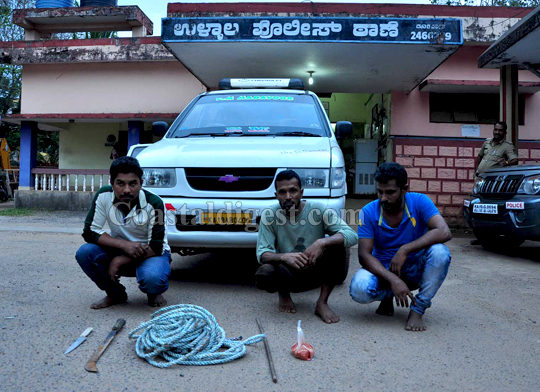
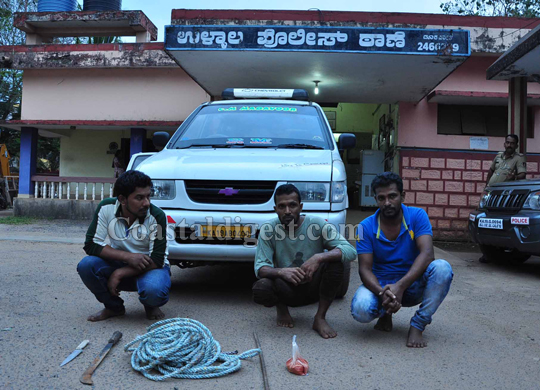
Mangaluru, Jan 20: A gang of three suspected cattle thieves was caught by police in the early hours of Tuesday on National Highway 66 at Talapady on the outskirts of the city.

cattlethieve 1

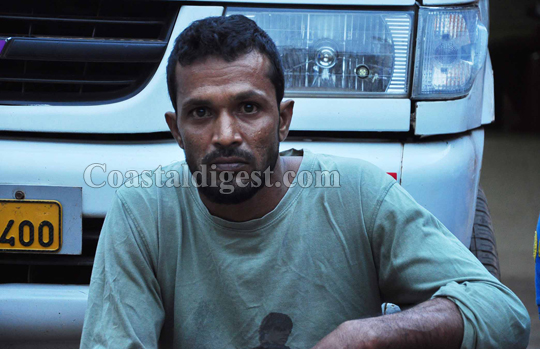
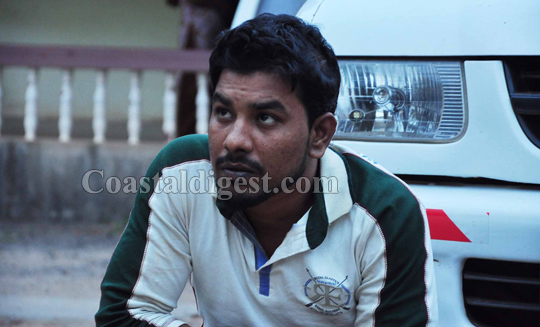
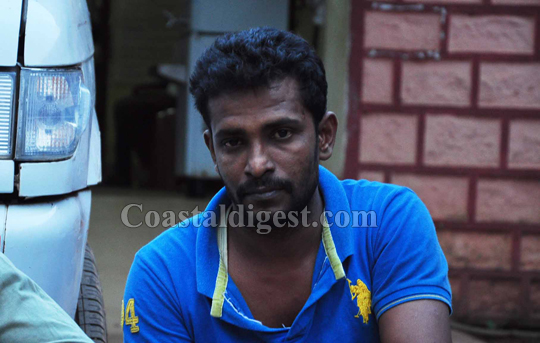
The arrested have been identified as Irshad (30) from Chembugudde, Imran (24) from Farangipet and Mutalib (35) from Kanjanady Kalkatta. The police suspect that the accused were trying to execute a cattle theft plan in Talapady surroundings when they were arrested.

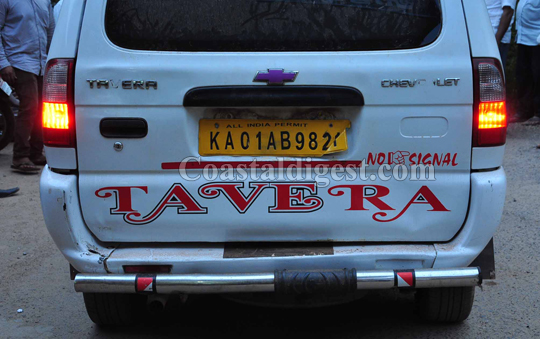
According to police five suspected cattle thieves were on board a Tavera car which was intercepted by the police at around 3:30 a.m. However, two among them managed to escape. A sword, chilly-powder, a rope and some other things used for cattle theft were also found inside the vehicle.

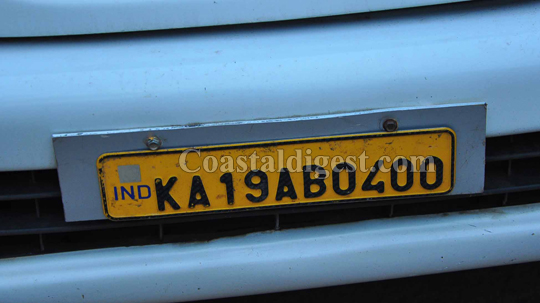
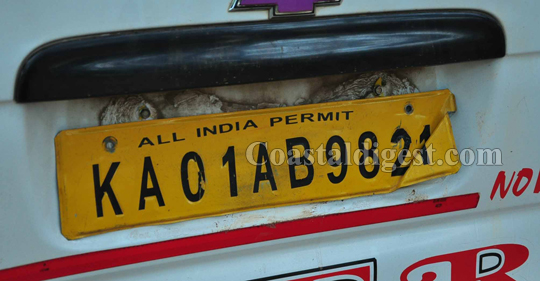
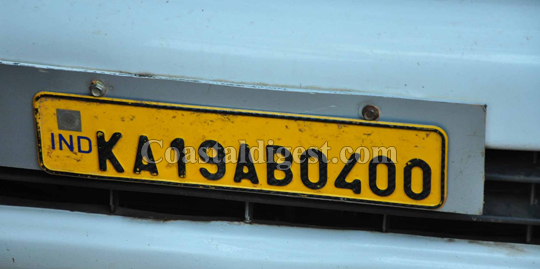
Based on credible information a team of police from Ullal station started chasing the vehicle, which had changed its number plate, from Thokkottu. Near Talapady the vehicle was intercepted. Soon, all five accused alighted from the vehicle and started running. Three among them were caught.

The arrested had previously involved in cattle theft and chain snatching cases, police sources said.

cattlethieve 2

cattlethieve 3

cattlethieve 4

cattlethieve 5

cattlethieve 6

cattlethieve 7

cattlethieve 8

cattlethieve 9

cattlethieve 10

cattlethieve 11

Comments

Munna Bhai
 - 
Thursday, 21 Jan 2016

Well found some supporter here for these thieves. They are the same people who buy cheAp beef from these people. Sorry, now no more cheep beef.

Rikaz
 - 
Wednesday, 20 Jan 2016

They should be given severe punishment....they steal and sell it to innocent people...ultimately those who bought from them are also going to become part of their criminal activity, literally....so sad...

Shaad
 - 
Wednesday, 20 Jan 2016

Hello, Kushwant Bhat, did you see the face of your mentor Pumpwell? He is pakka goonda and anti-national look if you decide by seeing any one's face.

Kushwant Bhat
 - 
Wednesday, 20 Jan 2016

\Experience makes man Perfect \"not understanding again and again these Goons doing better Hang up self and self or Put them in a Dark no one can not see Jails for Permanently or send then to \"Guantanamo bay Jail\" other wise these Culprits never Improve, these Criminal culprits neither go School OR madrasa, looking their face says you readers understand such a Very good community called Peace they came from Destroying their life Inside Bars and Police station what else to say only to Hag yourself ggod.
Most worried Hindustani.
Jai Hind
Where are you Narean
Jai hoo Naren Bai."

Siddik Uchil A…
 - 
Wednesday, 20 Jan 2016

I am really appreciated by Ullala police actions and the award should be given to their timely actions. Stealing is not allowed at all in the Islam. Some people are spoiling the name of Muslim community and giving chance to talk these so called some protector of Hindu community organizer.

Siddik Uchil A…
 - 
Wednesday, 20 Jan 2016

Appreciated Ullala Police timely actions. This culprits are spoiling image of Muslim communities by stealing the COWs.

Whenever there is wrong doings by our community we must condemn randomly.

Add new comment

  • Coastaldigest.com reserves the right to delete or block any comments.
  • Coastaldigset.com is not responsible for its readers’ comments.
  • Comments that are abusive, incendiary or irrelevant are strictly prohibited.
  • Please use a genuine email ID and provide your name to avoid reject.
News Network
June 4,2020

Jun 4: Belur Mutt, the global headquarters of Ramakrishna Mutt and Ramakrishna Mission, has decided to throw open its gates to the devotees from June 15 after putting in place all safety measures required to contain the spread of COVID-19.

The gates of the sprawling premises of the mutt set up by Swami Vivekananada at Belur near here was closed since the lockdown was announced in March by the Centre. The Mutt has devotees from across the globe.

The secretary of Belur Mutt Ramakrishna Mutt and Ramakrishna Mission, Swami Suvirananda said in a statement that as the easing down of lockdown measures announced by the Centre and the state did not indicate the threat caused by COVID-19 pandemic is over, the authorities thought it prudent to put in place all the measures required before opening the gates of the Mutt and all RKM centres in the country for the scores of devotees.

The statement was issued on June 1, the day religious places of worship were thrown open by the West Bengal government.

"We had to think about both aspects - the issue of public health and also the wish of our devotees for having a darshan of the shrines of Swami Vivekananda, Sri Sarada Maa and Ramamrishna Paramahansa. But we believe spirituality and sceintific temparament must go hand in hand," he told reporters on Thursday.

"Therefore it is imperative for us to consult experts and put in place adequate arrangement and infrastructure" before opening the (Belur Mutt) gates," he said.

The senior monk said the timing of the opening and closure of the shrine and all other details conforming the health protocol and guidelines will be announced before opening date.

The Mutt complex had become totally out of bound for visitors from March 24 when the lockdown was clamped. There was restricted entry to it since May 16.

Comments

Add new comment

  • Coastaldigest.com reserves the right to delete or block any comments.
  • Coastaldigset.com is not responsible for its readers’ comments.
  • Comments that are abusive, incendiary or irrelevant are strictly prohibited.
  • Please use a genuine email ID and provide your name to avoid reject.
Agencies
May 8,2020

Washington D.C., May 8: The prime time for brain development in a child's life is the first year, where the infant spends most of the time asleep. It is the time when neural connections form and sensory memories are encoded.

However, when sleep is disrupted, as occurs more often among children with autism, brain development may be affected, too.

New research led by the University of Washington finds that sleep problems in a baby's first 12 months may not only precede an autism diagnosis but also may be associated with altered growth trajectory in a key part of the brain, the hippocampus.

The study, which was published in the American Journal of Psychiatry, researchers report that in a sample of more than 400 taken of 6- to 12-month-old infants, those who were later diagnosed with autism were more likely to have had difficulty falling asleep.

It also states that this sleep difficulty was associated with altered growth trajectories in the hippocampus.

"The hippocampus is critical for learning and memory, and changes in the size of the hippocampus have been associated with poor sleep in adults and older children.

As many as 80 per cent of the children with autism spectrum disorder have sleep problems," said Annette Estes, director of the UW Autism Center and senior author of the study.

"In our clinical experience, parents have a lot of concerns about their children's sleep, and in our work on early autism intervention, we observed that sleep problems were holding children and families back," added Estes, who is also a UW professor of speech and hearing sciences.

"It could be that altered sleep is part-and-parcel of autism for some children. One clue is that behavioural interventions to improve sleep don't work for all children with autism, even when their parents are doing everything just right. This suggests that there may be a biological component to sleep problems for some children with autism," said Estes.

To consider links among sleep, brain development, and autism, researchers at the IBIS Network looked at MRI scans of 432 infants, surveyed parents about sleep patterns, and measured cognitive functioning using a standardized assessment.

At the outset of the study, infants were classified according to their risk for developing autism: Those who were at higher risk of developing autism -- about two-thirds of the study sample -- had an older sibling who had already been diagnosed.

Infant siblings of children with autism have a 20 per cent chance of developing autism spectrum disorder -- a much higher risk than children in the general population.

In the current study, 127 of the 432 infants were identified as "low risk" at the time the MRI scans were taken because they had no family history of autism.

They later evaluated all the participants at 24 months of age to determine whether they had developed autism. Of the roughly 300 children originally considered "high familial risk," 71 were diagnosed with autism spectrum disorder at that age.

Problems with sleep were more common among the infants later diagnosed with an autism spectrum disorder, as were larger hippocampi. No other subcortical brain structures were affected, including the amygdala, which is responsible for certain emotions and aspects of memory, or the thalamus, a signal transmitter from the spinal cord to the cerebral cortex.

The authors note that while parents reported more sleep difficulties among infants who developed autism compared to those who did not, the differences were very subtle and only observed when looking at group averages across hundreds of infants.

Sleep patterns in the first years of life change rapidly as infants transition from sleeping around the clock to a more adult-like sleep/wake cycle. Until further research is completed, Estes said, it is not possible to interpret challenges with sleep as an early sign of increased risk for autism.


Comments

Add new comment

  • Coastaldigest.com reserves the right to delete or block any comments.
  • Coastaldigset.com is not responsible for its readers’ comments.
  • Comments that are abusive, incendiary or irrelevant are strictly prohibited.
  • Please use a genuine email ID and provide your name to avoid reject.
News Network
January 29,2020

Bengaluru, Jan 29: The high court has granted bail to a 37-year-old Bangladeshi woman from the Christian community on the strength of Citizenship (Amendment) Act 2019.

The court cited Section 2 of the amended Citizenship Act 1955, according to which minorities from Pakistan, Bangladesh and Afghanistan who entered India on or before December 31, 2014 should not be treated as illegal immigrants, while granting her bail.

Allowing the petition filed by Archana Purnima Pramanik, an illegal immigrant from Bangladesh, who claims to be staying in India since 2003, justice John Michael Cunha on Monday directed her to furnish a bail bond for Rs 2 lakh to the satisfaction of the investigating officer and cooperate with the probe.

The judge observed the allegations made against her must be proved in a full-dressed trial. Archana was booked for obtaining documents such as PAN and Aadhaar cards and also fraudulently obtaining an Indian passport on March 28 last year. Based on a complaint filed by the assistant passport officer, Archana was arrested on November 7, 2019 and her bail petition was dismissed by a sessions court on December 4, 2019.

Born on March 23, 1983 at Tanore, Rajshahi district of Bangladesh, Archana came to India in 2003 to pursue a career in nursing. After obtaining a diploma in general nursing and midwifery at Ranchi in 2006, she worked in many reputed hospitals.

In 2010, she got married to Rajashekaran Krishnamurthy and the marriage was registered at Ranchi. After the wedding, she moved to Bengaluru and obtained PAN, Aadhaar and voter ID cards.

On April 1, 2019, Archana applied for a visa to Bangladesh for herself and her son. During her journey on May 20, 2019, they were detained at Kolkata airport and released later. However, the regional passport office issued a notice revoking Archana’s passport and she was arrested by RT Nagar police on November 7, 2019.

Comments

Add new comment

  • Coastaldigest.com reserves the right to delete or block any comments.
  • Coastaldigset.com is not responsible for its readers’ comments.
  • Comments that are abusive, incendiary or irrelevant are strictly prohibited.
  • Please use a genuine email ID and provide your name to avoid reject.