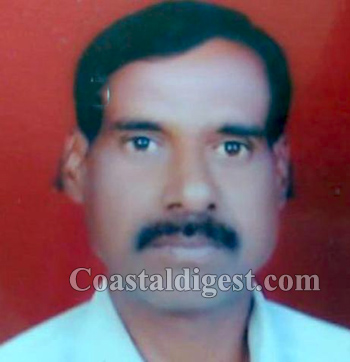
Cops suicide spree continues; transfer drives head constable to kill self

July 22, 2016

KarnatakaBengaluru, Jul 22: The spate of suicides involving police staff has continued in Karnataka with a constable allegedly taking his life this morning in Kalaburgi owing to issues relating to his transfer.

Annarao Saibanna Gamaga (48), a head constable with the Indian Reserve Battalion (IRB), was found hanging from the ceiling at his staff quarters in Sultanpur in Kalaburgi. Though he was taken to a nearby hospital, he did not survive.

According to his relatives, Annarao, who was working for the Karnataka State Reserve Police (KSRP), was transferred to the IRB a year ago. Owing to poor health, he requested to be transferred back to the KSRP. However, it is alleged that his superiors demanded money to transfer him back to the KSRP. Annarao was reportedly under great stress and may have committed suicide because of the issue, his relatives alleged.

This is the fifth suicide case involving police staff in the last two weeks in Karnataka. The police have registered a case and probing the circumstances leading to Annarao's suicide.

Comments

Rikaz
 - 
Friday, 22 Jul 2016

No one can stop corruption....no political parties....????

Add new comment

  • Coastaldigest.com reserves the right to delete or block any comments.
  • Coastaldigset.com is not responsible for its readers’ comments.
  • Comments that are abusive, incendiary or irrelevant are strictly prohibited.
  • Please use a genuine email ID and provide your name to avoid reject.
Media Release
February 14,2020

Veteran journalist P. Sainath has said that the nation is in a crisis. And this crisis is not limited to just the rural area. It has become a national crisis at various areas such as agriculture, education, economy, job creation etc.

He was delivering the endowment lecture on the topic ‘Indian democracy at the post-liberalization and post-truth era’ at Media Manthan 2020 organized by the PG department of journalism and mass communication at St Aloysius College (Autonomous). 

Mr Sainath said that the many policies adopted in the 90s led to India becoming unusually unequal. Referring to the speech Ambedkar had made at the Constituent Assembly while handing over the draft of the Constitution, Mr Sainath said, “Ambedkar had warned about the weakness of Indian democracy that liberty without equality allows the supremacy of a few over the multitude. Liberty, equality and fraternity must be kept together as we cannot have one without the other.” 

Mr Sainath stated that the agrarian crisis was no longer about the loss of productivity, employment or about farmer suicide; it was a societal, civilizational crisis. Commenting on the lopsided policies such as cow-slaughter ban, he explained how cow slaughter ban had adversely affected many industries due to their interdependency. While Muslims who slaughtered cows were rendered helpless, the cattle traders who were mostly OBCs lost their earnings as the cattle prices crashed. An important industry like Kolhapur sandals industry in Maharashtra went bankrupt as a result of the cow slaughter ban in Maharashtra. He said the policymakers had no idea how the rural industries were interconnected. Demonetisation too devastated the rural economy as 98 percent of rural transactions happen through cash. 

Mr Sainath also spoke about the crisis of inequality which affects the Dalits and the Adivasis far more than anyone else as 90 percent of the rural households take home less than Rs 10,000/- per month. “Women are yet another group whose labour is never counted in the gross domestic product. Women and girls globally do unpaid work which amounts to about 12.5 billion working hours per year. Monetarily speaking, this is worth 10.8 trillion dollars,” Mr Sainath added. 

Speaking about the crisis of jobs Mr Sainath said that major companies were laying off employees just to create more profits for the investors and the adoption of artificial intelligence in the industry would further destroy millions of jobs.

Rector of St Aloysius College Institutions Fr Dionysius Vaz SJ, Principal Dr (Fr) Praveen Martis SJ, HOD of Journalism and Mass Communication department Dr (Fr) Melwyn Pinto SJ were present.

‘Veerappan and Vijay Mallya’s business models are interesting!’

Addressing the gathering during his endowment lecture on Friday, Mr Sainath made an interesting comment on the so called ‘revenue model’. “Whenever I visit IIMs and IITs for lectures on my PARI project, the students there ask me what my revenue model for my project is. I tell them that I do not have a revenue model. In fact, journalism does not begin with a revenue model. Gandhiji, Ambedkar, Bhagat Singh were all great journalists. But they did not have a revenue model,” Mr Sainath said.

On a lighter note, he said that the best revenue model that he liked was that of forest brigand Veerappan and liquor baron Vijay Mallya. “Veerappan ruled the forest for forty years and from the top ministers to the villagers he could dictate terms and liver royally. Similarly, Mallya’s revenue model was to steal the banks and run away abroad and live like a king,” Mr Sainath added.

Journalism is not and can never be a business. It is a calling, he opined. While newspaper can be a business, television can be a business, journalism per se cannot be reduced to a business. “Unfortunately today, journalists are recruited on a contract basis and they have no bargaining power; and there are no unions to fight for their cause. Hence, they are at the mercy of the corporate media houses for their survival and are made to write stories that cannot be called journalism,” Mr Sainath said.

Answering a question as to the pressures he faced as a journalist, he said that external pressures from the government or others could be very well handled. It is the internal pressures from once own media house that journalists find it difficult to manage.


 

Comments

Add new comment

  • Coastaldigest.com reserves the right to delete or block any comments.
  • Coastaldigset.com is not responsible for its readers’ comments.
  • Comments that are abusive, incendiary or irrelevant are strictly prohibited.
  • Please use a genuine email ID and provide your name to avoid reject.
News Network
January 14,2020

New Delhi, Jan 14: The Kerala government has challenged the new Citizenship (Amendment) Act (CAA) before the Supreme Court, becoming the first state to do so amid nationwide protests against the religion-based citizenship law. The Supreme Court is already hearing over 60 petitions against the law.

Kerala's Left-led government in its petition calls the CAA a violation of several articles of the constitution including the right to equality and says the law goes against the basic principle of secularism in the constitution.

The Kerala government has also challenged the validity of changes made in 2015 to the Passport law and the Foreigners (Amendment) Order, regularising the stay of non-Muslim migrants from Pakistan, Bangladesh and Afghanistan who had entered India before 2015.

The Citizenship Amendment Act (CAA), eases the path for non-Muslims in the neighbouring Muslim-majority nations of Pakistan, Afghanistan and Bangladesh to become Indian citizens. Critics fear that the CAA, along with a proposed National Register of Citizens (NRC), will discriminate against Muslims.

The Kerala petition says the CAA violates Articles 14, 21 and 25 of the constitution.

While Article 14 is about the right to equality, Article 21 says "no person will be deprived of life or personal liberty except according to a procedure established by law". Under Article 25, "all persons are equally entitled to freedom of conscience."

Several non-BJP governments have refused to carry out the NRC in an attempt to stave off the enforcement of the citizenship law.

Over 60 writ petitions have been filed in Supreme Court so far against the Citizenship (Amendment) Act. Various political parties, NGOs and also MPs have challenged the law.

The Supreme Court will hear the petitions on January 22.

During the last hearing, petitioners didn't ask that the law be put on hold as the CAA was not in force. The Act has, however, come into force from January 10 through a home ministry notification.

Comments

Add new comment

  • Coastaldigest.com reserves the right to delete or block any comments.
  • Coastaldigset.com is not responsible for its readers’ comments.
  • Comments that are abusive, incendiary or irrelevant are strictly prohibited.
  • Please use a genuine email ID and provide your name to avoid reject.
News Network
March 12,2020

Bengaluru, Mar 12: The Karnataka government on Wednesday clarified that no coronavirus "emergency" has been declared in the state and that all the schools and offices will remain open.

Earlier, there were fake reports that Karnataka has declared "coronavirus as an epidemic" in the state.

In a statement, Karnataka health commissioner Pankaj Kumar Pandey refuted the reports doing rounds on social media which said Karnataka had declared COVID-19 as a "state epidemic".

Refuting the rumours, he added that all the schools, offices and other institutions will continue to function normally in the state.

The Karnataka government earlier today issued temporary regulation which asked all government and private hospitals to have flu corners for screening of suspected cases of COVID-19.

According to the regulation, no person/institution shall use print or electronic media to spread mis-information on COVID-19 without prior permission of the department of health & family welfare. If a person is found indulging in any such activity, they will be punished, it said.

The Karnataka government also started a campaign called 'Namaste over Handshake' that encourages people to greet in the traditional Indian style, to tackle the spread of the virus.

The state has reported four positive cases of coronavirus so far.

India, so far, has 60 confirmed cases of coronavirus, including 16 Italians tourists.

Comments

Add new comment

  • Coastaldigest.com reserves the right to delete or block any comments.
  • Coastaldigset.com is not responsible for its readers’ comments.
  • Comments that are abusive, incendiary or irrelevant are strictly prohibited.
  • Please use a genuine email ID and provide your name to avoid reject.