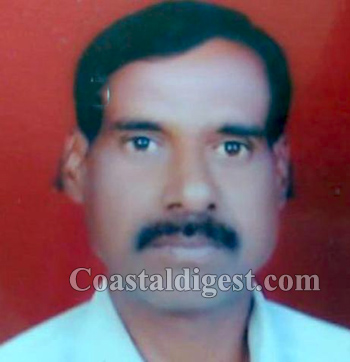
Cops suicide spree continues; transfer drives head constable to kill self

July 22, 2016

KarnatakaBengaluru, Jul 22: The spate of suicides involving police staff has continued in Karnataka with a constable allegedly taking his life this morning in Kalaburgi owing to issues relating to his transfer.

Annarao Saibanna Gamaga (48), a head constable with the Indian Reserve Battalion (IRB), was found hanging from the ceiling at his staff quarters in Sultanpur in Kalaburgi. Though he was taken to a nearby hospital, he did not survive.

According to his relatives, Annarao, who was working for the Karnataka State Reserve Police (KSRP), was transferred to the IRB a year ago. Owing to poor health, he requested to be transferred back to the KSRP. However, it is alleged that his superiors demanded money to transfer him back to the KSRP. Annarao was reportedly under great stress and may have committed suicide because of the issue, his relatives alleged.

This is the fifth suicide case involving police staff in the last two weeks in Karnataka. The police have registered a case and probing the circumstances leading to Annarao's suicide.

Comments

Rikaz
 - 
Friday, 22 Jul 2016

No one can stop corruption....no political parties....????

Add new comment

  • Coastaldigest.com reserves the right to delete or block any comments.
  • Coastaldigset.com is not responsible for its readers’ comments.
  • Comments that are abusive, incendiary or irrelevant are strictly prohibited.
  • Please use a genuine email ID and provide your name to avoid reject.
News Network
March 30,2020

Mangaluru , Mar 30: Dakshina Kannada Superintendent of Police Laxmi Prasad on Monday suspended a constable attached to Subramanya Police Station for manhandling the chief priest of Kukke Subramanya Temple on Saturday.

According to the police, when the priest Srinivas Bhat was on his way to the temple to offer Puja, Prasad, a police constable intercepted him and enquired where he was going during the lockdown period and then charged at him with lathi on his hand and back.

The priest, then immediately filed a complaint at local police station, following which a complaint was also brought to the notice of Deputy SP of Puttur Sub-division.Please lo

Comments

Add new comment

  • Coastaldigest.com reserves the right to delete or block any comments.
  • Coastaldigset.com is not responsible for its readers’ comments.
  • Comments that are abusive, incendiary or irrelevant are strictly prohibited.
  • Please use a genuine email ID and provide your name to avoid reject.
Agencies
January 16,2020

Bengaluru, Jan 16: Amping up the online payment experience for consumers, Razorpay, the leading full-stack financial services company, today launched a new product, Instant Refunds for businesses.

This new feature activates refunds and credits the customer's source account across payment methods such as credit card, net banking, and UPI within a minute of initiation.

India is one of the fastest-growing online retail markets today. About 71 per cent of internet users in the country purchase products online. Today, the refund process has two major pain points for both the end customer and the business.

First, a delay of five-seven business days for the customer in receiving the money because of multiple intermediaries like the acquiring bank, issuing bank and the networks (VISA/MasterCard/Rupay).

Second, the lack of transparency during the entire refund process for both the customer and the business. This long cycle of processing refunds is a significant problem with every popular payment method in the industry.

By issuing refunds instantly, Razorpay will help businesses retain their customers, build trust through an improved hassle-free payment experience and provide complete transparency on refunds to both the business and the end-user.

This new feature will also reduce the dependence on manpower as every refund issue on an average leads to ten service emails or calls from customer support teams.

"Instant Refunds are the new normal and central to great customer experience. A lot of consumers fail to use online payment methods as they feel getting refunds through an online platform is a very time-consuming task; hence they prefer CoD as the best alternative. Given the technological advancements being made in the fin-tech ecosystem, its fair for customers to expect refunds as fast as possible. A solution like Instant Refunds will not only help build consumer confidence in digital payments but also reduce losses for e-commerce companies where CoD has become an expensive option with more than 50 per cent online transactions made through cash", said Shashank Kumar, CTO & Co-founder of Razorpay.

"Our Instant Refunds feature ensures that the refund is processed at a 3600x faster pace than the normal expected time of five-seven business days. The team is focused on creating new technologies designed to make the entire payment lifecycle hassle-free. We believe this new feature will make customers experience a notch higher, help brands create a competitive advantage, and even make them more profitable", he added.

Razorpay's growth has been uphill, particularly in the last two years. With a 500 per cent growth in 2019, the company has been witnessing a healthy growth rate of 35 per cent month-on-month.

The company also recently launched its corporate credit cards for its partner businesses, RazorpayX current accounts, support for freelancers and homepreneurs, and acquired Opfin, a payroll and HR management software company.

Currently powering payments for over 800,000 businesses including the likes of Indigo, BSE, Thomas Cook, Reliance, SpiceJet, Aditya Birla, Sony, and Oyo, the team plans to increase this count to 1,400,000 by this year. The full-stack financial solutions company expects a 4x growth in its revenue by the end of the next fiscal year.

This story is provided by NewsVoir. ANI will not be responsible in any way for the content of this article.


Comments

Add new comment

  • Coastaldigest.com reserves the right to delete or block any comments.
  • Coastaldigset.com is not responsible for its readers’ comments.
  • Comments that are abusive, incendiary or irrelevant are strictly prohibited.
  • Please use a genuine email ID and provide your name to avoid reject.
Media Release
February 14,2020

Veteran journalist P. Sainath has said that the nation is in a crisis. And this crisis is not limited to just the rural area. It has become a national crisis at various areas such as agriculture, education, economy, job creation etc.

He was delivering the endowment lecture on the topic ‘Indian democracy at the post-liberalization and post-truth era’ at Media Manthan 2020 organized by the PG department of journalism and mass communication at St Aloysius College (Autonomous). 

Mr Sainath said that the many policies adopted in the 90s led to India becoming unusually unequal. Referring to the speech Ambedkar had made at the Constituent Assembly while handing over the draft of the Constitution, Mr Sainath said, “Ambedkar had warned about the weakness of Indian democracy that liberty without equality allows the supremacy of a few over the multitude. Liberty, equality and fraternity must be kept together as we cannot have one without the other.” 

Mr Sainath stated that the agrarian crisis was no longer about the loss of productivity, employment or about farmer suicide; it was a societal, civilizational crisis. Commenting on the lopsided policies such as cow-slaughter ban, he explained how cow slaughter ban had adversely affected many industries due to their interdependency. While Muslims who slaughtered cows were rendered helpless, the cattle traders who were mostly OBCs lost their earnings as the cattle prices crashed. An important industry like Kolhapur sandals industry in Maharashtra went bankrupt as a result of the cow slaughter ban in Maharashtra. He said the policymakers had no idea how the rural industries were interconnected. Demonetisation too devastated the rural economy as 98 percent of rural transactions happen through cash. 

Mr Sainath also spoke about the crisis of inequality which affects the Dalits and the Adivasis far more than anyone else as 90 percent of the rural households take home less than Rs 10,000/- per month. “Women are yet another group whose labour is never counted in the gross domestic product. Women and girls globally do unpaid work which amounts to about 12.5 billion working hours per year. Monetarily speaking, this is worth 10.8 trillion dollars,” Mr Sainath added. 

Speaking about the crisis of jobs Mr Sainath said that major companies were laying off employees just to create more profits for the investors and the adoption of artificial intelligence in the industry would further destroy millions of jobs.

Rector of St Aloysius College Institutions Fr Dionysius Vaz SJ, Principal Dr (Fr) Praveen Martis SJ, HOD of Journalism and Mass Communication department Dr (Fr) Melwyn Pinto SJ were present.

‘Veerappan and Vijay Mallya’s business models are interesting!’

Addressing the gathering during his endowment lecture on Friday, Mr Sainath made an interesting comment on the so called ‘revenue model’. “Whenever I visit IIMs and IITs for lectures on my PARI project, the students there ask me what my revenue model for my project is. I tell them that I do not have a revenue model. In fact, journalism does not begin with a revenue model. Gandhiji, Ambedkar, Bhagat Singh were all great journalists. But they did not have a revenue model,” Mr Sainath said.

On a lighter note, he said that the best revenue model that he liked was that of forest brigand Veerappan and liquor baron Vijay Mallya. “Veerappan ruled the forest for forty years and from the top ministers to the villagers he could dictate terms and liver royally. Similarly, Mallya’s revenue model was to steal the banks and run away abroad and live like a king,” Mr Sainath added.

Journalism is not and can never be a business. It is a calling, he opined. While newspaper can be a business, television can be a business, journalism per se cannot be reduced to a business. “Unfortunately today, journalists are recruited on a contract basis and they have no bargaining power; and there are no unions to fight for their cause. Hence, they are at the mercy of the corporate media houses for their survival and are made to write stories that cannot be called journalism,” Mr Sainath said.

Answering a question as to the pressures he faced as a journalist, he said that external pressures from the government or others could be very well handled. It is the internal pressures from once own media house that journalists find it difficult to manage.


Comments

Add new comment

  • Coastaldigest.com reserves the right to delete or block any comments.
  • Coastaldigset.com is not responsible for its readers’ comments.
  • Comments that are abusive, incendiary or irrelevant are strictly prohibited.
  • Please use a genuine email ID and provide your name to avoid reject.