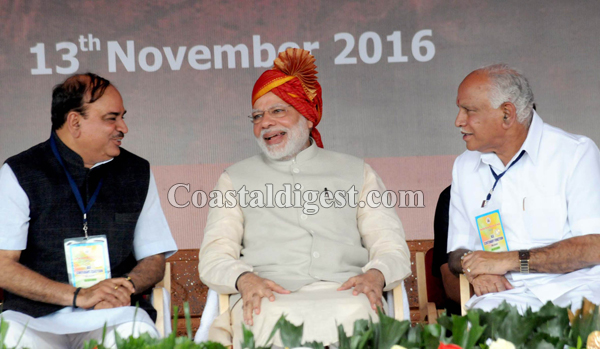
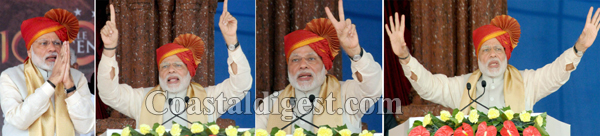
Country is happy after demonetisation; poor sleeping peacefully: PM Modi

November 13, 2016

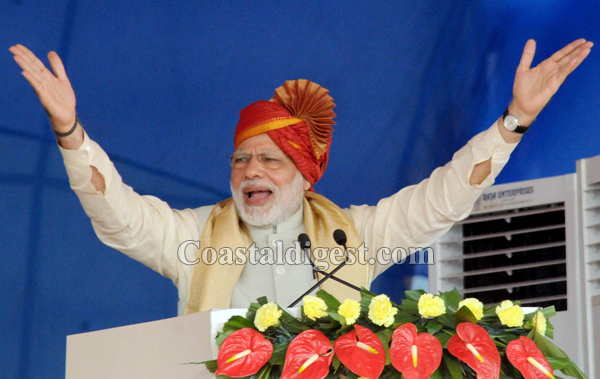
Belagavi, Nov 13: Coming down heavily on those who raised voice against demonetisation that led to chaos across the nation, Prime Minister Narendra Modi today said that Congress did not have the strength to touch high value currency during its rule and claimed that the "clean up" was required as a lot had been looted in the last 70 years.
modibelagavi 1

"I am surprised that the Congress is asking why did I stop Rs 1000 notes and 500 notes. When you stopped 25 paise, did we say anything? You could dare to stop only 25 paise, that's what your power was limited to. But you did not make higher denomination currency notes illegal. ... We did it.

"People have chosen a government and they expect so much from it," Modi said, as he took on Congress which has been critical of the Centre's demonetisation move.

"You had also agreed to stop (black money), but you did not have the strength to stop big notes. You wanted to run the vehicle (by stopping) 25 paise," he said.

Lashing out at the previous UPA government, he said, "On the night of November 8, at 8 o'clock, did you see (what happened)? In 2012, 2013, 2014 newspapers were filled with news about lots of money being eaten up in scams like coal and 2G. But after November 8, their position was such that they had to stand in line for Rs 4,000."

"Those who question me today... those who had heard my speeches... I have not said this for the first time. Many years ago I had said in a public function that Congress doesn't have strength so they are stopping 25 paise, if I'm given a chance I will stop Rs 1,000 note," he said.

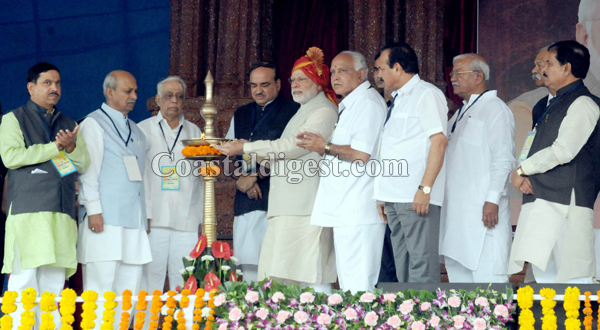
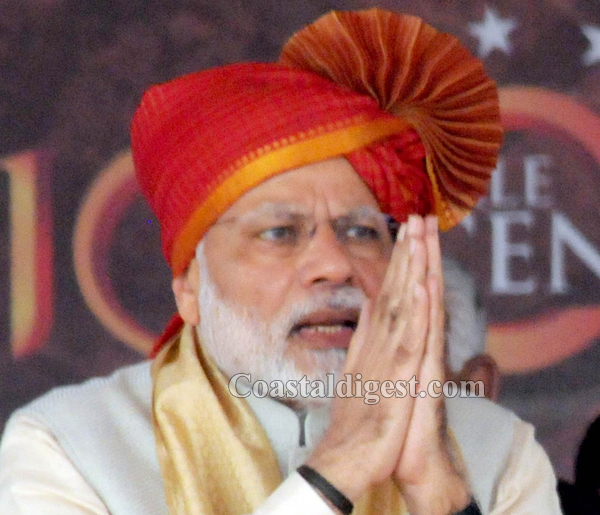
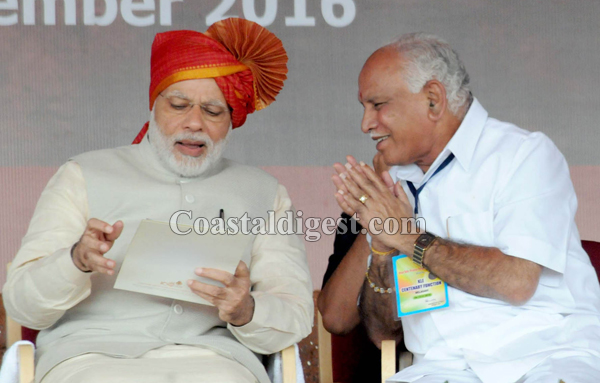
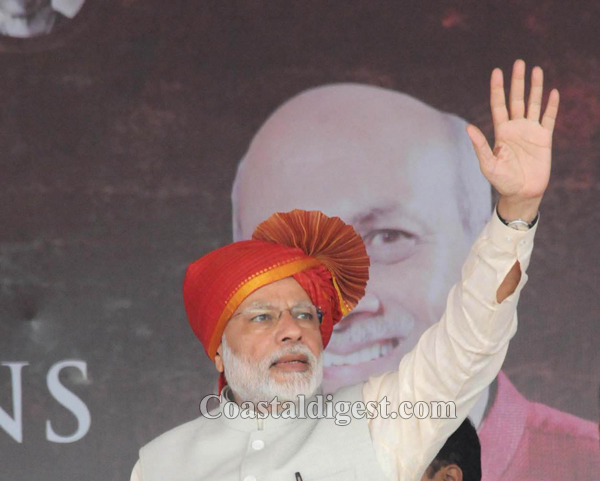
The Prime Minister, who was speaking at the centenary celebrations of Karnataka Lingayat Education (KLE) Society, a leading educational institution here, said the government did not want to harass the honest but would not spare the dishonest.

"... it has been 70 years, tell me has the country been looted or not? Has corruption taken place or not? Are big stacks of cash lying at houses or not?" the Prime Minister said, strongly defending "the war" against black money.

"Enough has been looted. You have seen looters. For 70 years the country has been looted, give me 70 months I will clean it up," he added.

"These people who used to ask what has Modi done? Switch on your TV and see what Modi did on 8th November," he said.

Stating that he has started a "sacred work" for the "honesty" people, he added, "If you believe in my honesty and my work, if you believe in my words to clean up notes I need you blessings, please bless me."

Asserting that he has not hidden anything from the people, Modi sought their support in "protecting the honest" in the ongoing drive against black money, amid reports of long queues and cash crunch at banks and post offices where people thronged to exchange the now-invalid currency.

"If I lie, you have the right to get angry on me. I had said on the first day, give me 50 days for this work, give me time till 30 December. I had said on the first day itself that there will be difficulty till 30 December. I have worked taking the country into confidence.

"There are crores of people in this country who are living with honesty. Please tell me isn't it the duty of the government to protect the honest, to punish the dishonest?" he said seeking people's support on the issue.

"The country is happy. On November 8, the poor of India slept in peace and the rich went in search of sleeping pills but no one was there to give it to them," he remarked.

Emphasising that "humongous task" was involved in the operation, Modi said, "I have only asked you for 50 days for the sake of the country."

The government had removed tax on credit cards and debit cards in budget, he said, adding, "It was done because I had to do this today."

Jan Dhan accounts were also opened along with which Rupay cards were given to 20 crore people so that they get used to transacting with it, he said. "It will take time, but we started it two years ago. I have not done it all of a sudden," he added.

Hinting at more steps to crackdown on black money, the Prime Minister said, "Dishonest and those protecting them listen to me with open ears, after December 30 Modi will not stop."

"Those who were not putting 25 paise in Gangaji are today putting these notes in the river. I saw on TV that a sweeper woman got Rs 57,000 in garbage which she informed to police.

The PM also complimented bank officials for their work, saying, "I was seeing that those working in banks what they used to work in one year, they have worked in these 10 days. ... appreciate them for their good work."

"The country is tired of corruption. There is pain, I agree that because of this decision of mine there is pain, but there is more gain for the country," he said, adding, "I want to assure you that I'm standing with you."

The exercise will continue till December 30 and it will be fruitful, Modi said, as he warned that "those trying to show honesty by other means and trying to deposit money, I will open your history and impose 200 per cent penalty."

modibelagavi 2

modibelagavi 3

modibelagavi 4

modibelagavi 5

modibelagavi 6

modibelagavi 7

modibelagavi 8

modibelagavi 9

modibelagavi 10

modibelagavi 11

modibelagavi 12

modibelagavi 13

modibelagavi 14

modibelagavi 15

Comments

Abdul
 - 
Monday, 14 Nov 2016

Mr. Naren Kotian does'nt know what to comment, he knows only Jihadist, kasmiris, terrorist. may be only these words learnt from his chaddi school. para para modi.... leader of modi bhakt....

PK
 - 
Monday, 14 Nov 2016

Blind leaders and blind followers.... One day they will dump each other as they are dumping the poor now...

Satyameva jayate
 - 
Monday, 14 Nov 2016

As if yesterday night he slept with the poor in Japan..

naren kotian
 - 
Monday, 14 Nov 2016

very much right Narendra modiji , one particular segment , which survived on parallel banking system ... as they thought they were in pakistan .. never paid tax ... now we can see them in large no in queue ... I heard in udupi and dk , bank queue has come down substantially .. .. hahahaha... make sure jihadists are hit very hard ... with this kashmir unrest stopped immediately as they couldnot get money via hawala ... their terror infrastrure and benami propoerties must be hit hard ... bholo bharath mata ki jai ...

imtiaz
 - 
Monday, 14 Nov 2016

sleeping in d queue I gues..mr. pm y don't u come to India n make such comments??? feku dongi

Shabeer Puttur
 - 
Sunday, 13 Nov 2016

when he dont have family, how he knows the problems of poor or families?

myb
 - 
Sunday, 13 Nov 2016

Hahaha... hahaha...... i cant control... hahahah..height of the fekuness ...hahahahaaaa...

Rikaz
 - 
Sunday, 13 Nov 2016

Poor otherwise also sleep nicely....they did not have money before as well now....why you guys are bullshitting....

Saleem
 - 
Sunday, 13 Nov 2016

Poor ppl Slept in peace? or rested in peace? Modi switch on TV for the reality

Add new comment

  • Coastaldigest.com reserves the right to delete or block any comments.
  • Coastaldigset.com is not responsible for its readers’ comments.
  • Comments that are abusive, incendiary or irrelevant are strictly prohibited.
  • Please use a genuine email ID and provide your name to avoid reject.
News Network
July 28,2020

Hounde, Jul 28: Coronavirus and its restrictions are pushing already hungry communities over the edge, killing an estimated 10,000 more young children a month as meager farms are cut off from markets and villages are isolated from food and medical aid, the United Nations warned Monday.

In the call to action shared with The Associated Press ahead of publication, four UN agencies warned that growing malnutrition would have long-term consequences, transforming individual tragedies into a generational catastrophe.

Hunger is already stalking Haboue Solange Boue, an infant from Burkina Faso who lost half her former body weight of 5.5 pounds (2.5 kilograms) in just a month. Coronavirus restrictions closed the markets, and her family sold fewer vegetables. Her mother was too malnourished to nurse.

“My child,” Danssanin Lanizou whispered, choking back tears as she unwrapped a blanket to reveal her baby's protruding ribs.

More than 550,000 additional children each month are being struck by what is called wasting, according to the UN — malnutrition that manifests in spindly limbs and distended bellies. Over a year, that's up 6.7 million from last year's total of 47 million. Wasting and stunting can permanently damage children physically and mentally.

“The food security effects of the COVID crisis are going to reflect many years from now,” said Dr. Francesco Branca, the WHO head of nutrition. “There is going to be a societal effect.”

From Latin America to South Asia to sub-Saharan Africa, more poor families than ever are staring down a future without enough food.

In April, World Food Program head David Beasley warned that the coronavirus economy would cause global famines “of biblical proportions” this year. There are different stages of what is known as food insecurity; famine is officially declared when, along with other measures, 30% of the population suffers from wasting.

The World Food Program estimated in February that one Venezuelan in three was already going hungry, as inflation rendered salaries nearly worthless and forced millions to flee abroad. Then the virus arrived.

“Every day we receive a malnourished child,” said Dr. Francisco Nieto, who works in a hospital in the border state of Tachira.

In May, Nieto recalled, after two months of quarantine, 18-month-old twins arrived with bodies bloated from malnutrition. The children's mother was jobless and living with her own mother. She told the doctor she fed them only a simple drink made with boiled bananas.

“Not even a cracker? Some chicken?” he asked.

“Nothing,” the children's grandmother responded. By the time the doctor saw them, it was too late: One boy died eight days later.

The leaders of four international agencies — the World Health Organization, UNICEF, the World Food Program and the Food and Agriculture Organization — have called for at least dollar 2.4 billion immediately to address global hunger.

But even more than lack of money, restrictions on movement have prevented families from seeking treatment, said Victor Aguayo, the head of UNICEF's nutrition program.

“By having schools closed, by having primary health care services disrupted, by having nutritional programs dysfunctional, we are also creating harm,” Aguayo said. He cited as an example the near-global suspension of Vitamin A supplements, which are a crucial way to bolster developing immune systems.

In Afghanistan, movement restrictions prevent families from bringing their malnourished children to hospitals for food and aid just when they need it most. The Indira Gandhi hospital in the capital, Kabul, has seen only three or four malnourished children, said specialist Nematullah Amiri. Last year, there were 10 times as many.

Because the children don't come in, there's no way to know for certain the scale of the problem, but a recent study by Johns Hopkins University indicated an additional 13,000 Afghans younger than 5 could die.

Afghanistan is now in a red zone of hunger, with severe childhood malnutrition spiking from 690,000 in January to 780,000 — a 13% increase, according to UNICEF.

In Yemen, restrictions on movement have blocked aid distribution, along with the stalling of salaries and price hikes. The Arab world's poorest country is suffering further from a fall in remittances and a drop in funding from humanitarian agencies.

Yemen is now on the brink of famine, according to the Famine Early Warning Systems Network, which uses surveys, satellite data and weather mapping to pinpoint places most in need.

Some of the worst hunger still occurs in sub-Saharan Africa. In Sudan, 9.6 million people live from one meal to the next — a 65% increase from the same time last year.

Lockdowns across Sudanese provinces, as around the world, have dried up work and incomes for millions. With inflation hitting 136%, prices for basic goods have more than tripled.

“It has never been easy but now we are starving, eating grass, weeds, just plants from the earth,” said Ibrahim Youssef, director of the Kalma camp for internally displaced people in war-ravaged south Darfur.

Adam Haroun, an official in the Krinding camp in west Darfur, recorded nine deaths linked with malnutrition, otherwise a rare occurrence, over the past two months — five newborns and four older adults, he said.

Before the pandemic and lockdown, the Abdullah family ate three meals a day, sometimes with bread, or they'd add butter to porridge. Now they are down to just one meal of “millet porridge” — water mixed with grain. Zakaria Yehia Abdullah, a farmer now at Krinding, said the hunger is showing “in my children's faces.”

“I don't have the basics I need to survive,” said the 67-year-old, who who hasn't worked the fields since April. “That means the 10 people counting on me can't survive either.”

Comments

Add new comment

  • Coastaldigest.com reserves the right to delete or block any comments.
  • Coastaldigset.com is not responsible for its readers’ comments.
  • Comments that are abusive, incendiary or irrelevant are strictly prohibited.
  • Please use a genuine email ID and provide your name to avoid reject.
News Network
April 21,2020

Global oil markets remained under intense pressure on Tuesday, with Brent crude dropping below $20 per barrel for the first time in 18 years while other major benchmarks across the world tumbled. 

Brent, the international crude marker, slipped to $18.10, indicating that markets see no immediate let-up to the collapse in oil demand that sent some US oil benchmarks plunging under $0 for the first time on Monday, leaving producers paying for buyers to take their oil away while available storage is scarce.

Coronavirus has sent the oil sector into a state of crisis, with lockdowns implemented by authorities to smother the outbreak slashing demand for crude by as much as a third.

Contracts for the US benchmark West Texas Intermediate for delivery next month tumbled as low as minus $40 a barrel on Monday. Analysts at Citi warned that “if global storage worsens more quickly, Brent could chase WTI down to the bottom”.

The collapse in the May WTI contract was partly a technical product of the fact that it expires on Tuesday, meaning trading volumes were low and making the contract for June delivery more noteworthy, analysts said. That contract held above $20 a barrel on Monday but slid as much as 42 per cent on Tuesday to trade at lows of $11.79, suggesting the blowout in the May contract was more than a blip and that the entire global oil market faced challenges.

Goldman Sachs analysts said the June contact was likely to face downward pressure in the coming weeks, pointing to the “still unresolved market surplus”.

“As storage becomes saturated, price volatility will remain exceptionally high in coming weeks,” they said. “But with ultimately a finite amount of storage left to fill, production will soon need to fall sizeably to bring the market into balance, finally setting the stage for higher prices once demand gradually recovers.”

Warren Patterson, head of commodities strategy at ING, said it was likely that “storage this time next month will be even more of an issue, given the surplus environment”.

“And so in the absence of a meaningful demand recovery, negative prices could return for June,” he added.

European equities traded lower, partly dragged down by weaker energy stocks. The continent-wide Stoxx 600 was down 1.9 per cent, with its oil and gas sub-index dropping 3.3 per cent. In London the FTSE shed 1.7 per cent, while Frankfurt’s Dax slid 2.3 per cent. 

Equities were also broadly lower in Asia, with futures tipping US stocks to fall 1 per cent when trading in New York begins later.

On Wall Street overnight, the S&P 500 closed down 1.8 per cent, partly because of weakness in energy shares, but also due to increased pessimism over the time it will take for countries to emerge from lockdowns.

In fixed income, the yield on the 10-year US Treasury fell 0.03 percentage points to 0.585 per cent as investors retreated to the safety of the debt.

Comments

Add new comment

  • Coastaldigest.com reserves the right to delete or block any comments.
  • Coastaldigset.com is not responsible for its readers’ comments.
  • Comments that are abusive, incendiary or irrelevant are strictly prohibited.
  • Please use a genuine email ID and provide your name to avoid reject.
coastaldigest.com news network
February 2,2020

Bantwal, Feb 2: A 45-year-old man was found murdered in a parked Innova car at Shantinagar near Nagri in Sajipa Munnur in Bantwal taluk today. 

The deceased has been identified as Tasleem, a native of Kerala who was wanted in a few criminal cases. He was, according to reports, a member of Kerala's notorious Ziya. 

Tasleem was an accused in Kalia Rafiq murder in Ullal (2017). He was arrested last year in connection with a jewellery store robbery case registered in Mangaluru North police station and was sent to Kalaburagi prison. He was later released on bail. 

Police are of the suspicion that a rival gang might have kidnapped him, tried to strangle him and then stabbed him in the stomach, before fleeing the spot.

The car had been parked at the spot since morning. The locals who grew suspicious at this informed the police. Circle inspector T D Nagaraj and other officers conducted spot investigation. 

Comments

Add new comment

  • Coastaldigest.com reserves the right to delete or block any comments.
  • Coastaldigset.com is not responsible for its readers’ comments.
  • Comments that are abusive, incendiary or irrelevant are strictly prohibited.
  • Please use a genuine email ID and provide your name to avoid reject.