



Criticism has nothing to do with country, but society: Sunny Leone

Agencies
April 3, 2018

Sunny's life story is set to be unveiled in an upcoming biopic 'Karenjit Kaur - The Untold Story of Sunny Leone'.

"Many people have the misconception that people started criticising me when I decided to come to India, but that is not true. I started getting hate mails and criticism when I was around 21 years old.

"So it has nothing to do with the country, but society in general. That was the first time I faced real hatred," Sunny said.

The show revolves around the journey of Sunny, who was born as Karenjit Kaur in a middle class Sikh family in Canada. It will trace her transition from being a little girl to becoming an adult film actress and from there to her rise in Bollywood.
"Like many families, there are some problems in our family too. There is love, hate, emotional moments in all our lives, but our parents protected my brother and me from all the negativity, as much as they could.

"But at the age of 21, when you see people are saying really nasty things about you, it affects you so badly... I was vulnerable and broken from within emotionally," said the actress, whose sensational dance moves have added glamour to songs like 'Baby doll', 'Laila main laila' and 'Pink lips'.

On how her parents dealt with the hate that came her way, Sunny said, "Reverse psychology always happens and that was definitely the case with me and my parents. They were thinking that if they forcefully stop me, I might just gain more curiosity and then I might not return from that world.

"Of course, I went to a different direction that my parents did not want me to... But I want to say that I love my life the way it is and everything happens for a reason. I have no complaints."

Sunny's big ticket to India came with a season of 'Bigg Boss', after which she landed her Bollywood debut with 'Jism 2'.
Since then, the actress has appeared in several films like 'Ragini MMS 2', 'Ek Paheli Leela', 'Mastizaade', 'One Night Stand' and 'Tera Intezaar'. She has also appeared in youth television reality shows.

Unapologetic about the choices she has made in life, Sunny said she is glad a show like 'Karenjit Kaur' is an opportunity for her to express herself.

"When the producers of the show came to us almost a year ago, they wanted to unveil the real me. There is a curiosity about my life and there is a person who is not what you see on the internet.

"I know I could have kept my personal story to myself, but you see, through this show, I am actually getting a chance to express myself, my real self," said the young mother of three children.

Sunny and her husband Daniel Weber become parents of three children - Asher, Noah and Nisha. They adopted Nisha, and their twin sons were born via surrogacy.

She wants them to enjoy the freedom of choice when they grow up.

"Adulthood is a phase where people become rebels at times and one cannot do anything with that, can we? As a mother, I want them to be good people who do not hurt anyone physically and emotionally.

"My kids should not cheat anyone, they should not steal from people... I may or may not agree with their choices in life but as individuals that is their choice. I think all I want as a mother is my children should not go through such hatred from the society that I faced," she added.

Comments

Add new comment

  • Coastaldigest.com reserves the right to delete or block any comments.
  • Coastaldigset.com is not responsible for its readers’ comments.
  • Comments that are abusive, incendiary or irrelevant are strictly prohibited.
  • Please use a genuine email ID and provide your name to avoid reject.
News Network
January 23,2020

Jan 23: Calling himself an optimist who believes in the goodness of people, director Kabir Khan says everything these days is being looked at through the prism of religion but India is about more than that.

The director of blockbusters such as Bajrangi Bhaijaan and Ek Tha Tiger said he is happy he has a platform as a filmmaker to present a counterpoint to the prevailing narrative based on religious fault lines.

"I’m an optimist who believes in the goodness of the people. But yes, there is a certain level of bigotry that has crept in. Everything is being looked at through the prism of religion but India is not about that.

"It sounds like a cliché but when I was growing up, I was not aware of my religion. That was the greatness of this country,” Kabir told news agency.

He said he is a product of a mixed marriage and is pained to see the social fabric being tattered.

“I have celebrated the best that Indian secularism has to offer. But to see the greatness of this country being simplified and broken down into religious fault lines is a painful experience,” he added.

According to Kabir, it is dangerous to see history through the prism of religion, whether in cinema or society. But it is important to revisit history to know what happened and one can always find something that is relevant for the present, he said.

The director, who started as a documentary filmmaker, returns to his roots for a five-episode series on Subhas Chandra Bose's Indian National Army, The Forgotten Army: Azaadi Ke Liye, on Amazon Prime, his most expensive project yet.

Asked whether this is a difficult time for filmmakers, Kabir said he believes art thrives in the time of strife and, as a storyteller, his politics will always reflect in his work.

“Every film has its politics and every filmmaker has to reflect his or her politics. Every film of mine will reflect my politics and it will never change according to the popular mood of the audience. But a film should not be just about that. Politics should be in the layers beneath," he said.

He terms his 2015 Salman Khan-starrer Bajrangi Bhaijaan an "extremely political" film. At face value, it can also be enjoyed as the story of a mute Pakistani girl who drifts into India and is taken back to her homeland by a Hanuman devotee. But there is so much more. The "chicken song", for instance, was a sly reference to the beef ban controversy at the time, he said.

"I won’t say it is a difficult time for me as a filmmaker. It is good that I have a platform where I can talk and present a counterpoint and I refuse to believe that the entire country believes the narrative that is being sent out. There are millions and millions of people, and perhaps the majority, that does not believe. And if I present the counterpoint, they will think about it.”

Discussing his new series, the director said it has always fascinated him that the sacrifice of the men and women who comprised the INA is just a forgotten footnote in history.

“I wanted to make something that stands the test of time. It goes down in posterity,” Khan, who first explored the subject in a Doordarshan documentary 20 years ago, said.

For the documentary, he traveled with former INA officers Captain Lakshmi Sahgal and Captain Gurbaksh Singh Dhillon from Singapore to India via erstwhile Burma, retracing the route that the INA followed.

“The documentary got me a lot of attention and acclaim but the story just never left me. It's actually the first script I ever wrote and I landed up with that script in Bombay from Delhi. I realised very soon that nobody's going to give me a budget of this size to make my first film.

"And then after every film, I would pick up the script and say, ‘Okay, this is the one I want to make’, because this is the story that made me want to become a filmmaker. On the way, I ended up making eight other films but this is really the story that I wanted to make,” he said.

Kabir is happy that the story has come out as a series, not a film, as it would have required to compromise with the budget and other elements.

"Without giving any numbers, this is the most expensive project I have ever worked on… It required that kind of budget."

Kabir believes the INA was responsible for bringing down the morale of the British establishment, which realised it would be impossible to keep the country colonised without the support of the local army.

"There are a lot of debates and discussions about what happened with the INA and the controversies around it. The whole point is that, if you want to judge what the Army did, sure that's your prerogative, but at least get to know what they did. Nobody knows what happened with the Army from 1942 to 1945."

He added that 55,000 men and women of the INA fought for independence and 47,000 of them died.

"Not a single person from that Army was ever taken back into the independent Army, which is such an amazing fact... the fact that the British called them traitors became the narrative and we also started assuming that they were traitors."

"They were the only women's regiment in the whole world 70 years ago. That's what they thought about women's importance in society. I don't know whether they will be happy with what the current situation is," he said.

Comments

Add new comment

  • Coastaldigest.com reserves the right to delete or block any comments.
  • Coastaldigset.com is not responsible for its readers’ comments.
  • Comments that are abusive, incendiary or irrelevant are strictly prohibited.
  • Please use a genuine email ID and provide your name to avoid reject.
Agencies
July 28,2020

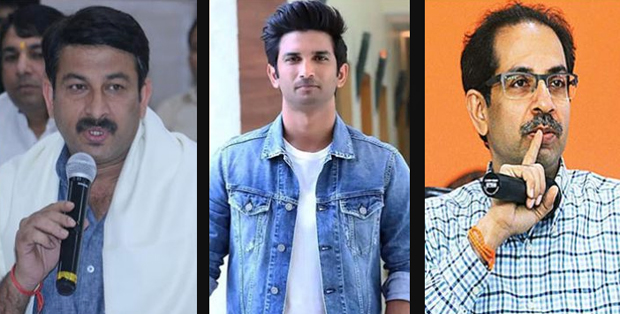
Mumbai, Jul 28: Delhi Bharatiya Janata Party (BJP) MP Manoj Tiwari has urged Maharashtra Chief Minister Uddhav Thackeray to look into the case of actor Sushant Singh Rajput's death and direct the state police to register an FIR in this connection.

Wishing Thackeray on Monday on his birthday, Tiwari, who has acted in Bhojpuri films, pointed out that over 40 days have passed since the death of Rajput, but an FIR is yet to be registered.

"Many happy returns of the Day @CMOMaharashtra Shri Uddhav Ji, on this day I request with folded hands to give justice to Sushant who died 43 days ago, but no FIR has been registered so far. I hope you will help. Please do justice to millions of SSR fans," he tweeted.

Bollywood actor Rajput was found dead at his Mumbai residence on June 14, which the police said was a case of suicide. His death had triggered an outcry from several quarters alleging that the late actor, who hailed from Bihar, was a victim of nepotism in the film industry.

The lawmaker from Northeast Delhi's Lok Sabha seat, who visited the deceased actor's family in Patna last month had then said: "Sushant's father and sister requested me to take up the issue and get him justice. It was really a sentimental moment for me".

Previously, Tiwari had demanded a CBI investigation into the matter

According to the police, statements of 40 people including film critic Rajeev Masand, director-producer Sanjay Leela Bhansali, and filmmaker Aditya Chopra and actor Rhea Chakraborty have been recorded in the investigation so far.

Comments

Add new comment

  • Coastaldigest.com reserves the right to delete or block any comments.
  • Coastaldigset.com is not responsible for its readers’ comments.
  • Comments that are abusive, incendiary or irrelevant are strictly prohibited.
  • Please use a genuine email ID and provide your name to avoid reject.
News Network
June 9,2020

New Delhi, Jun 9: Multiplex operator PVR on Monday said it has cut salary across various levels, laid off employees and deferred increments during the lockdown to mitigate adverse impact of COVID-19 on the business.

The company said at present it is not generating any revenue from exhibition business and related activities as cinemas across the country are shut following the directions from the regulatory authorities.

According to the company, closure of screens during the lockdown will have a significant negative impact on profitability and liquidity.

PVR has taken measures to reduce its personnel cost, including salary cuts across various levels in the organisation during the lockdown along with "reduction in headcount by way of layoffs/retrenchment" to mitigate the adverse impact of COVID-19 on the business.

Moreover, the board of the company, in its meeting held on Monday has also approved plan to raise Rs 300 crore through rights issue.

"Since Cinema Exhibition is the only business segment, company is currently not generating any revenue from admissions, food and beverage sales or other revenue and cash flow from operations," said PVR in an update.

Beginning from March 11, PVR started closing its screens in accordance with the order passed by various regulatory authorities and within a few days most of our cinemas across the country were shut down, it added.

The company will continue to incur committed cash outflows, including employee salary pay-outs, other overheads as well as payments for older working capital.

"This has and will have a significant negative impact on profitability and liquidity during lockdown and even thereafter till business comes to normalcy," it added.

Further, once the cinemas are re-opened, we may not be able to run our cinemas at normal capacity utilisation levels on account of social distancing measures that cinemas may be required to follow as well as health concerns that the patrons may have, the multiplex operator said.

"On account of this, our revenue and cash flow generation may be impeded even once we are allowed to restart operations," it added.

The company has also deferred decision on on increments to reduce its cost, it added.

PVR has also written to developers for waiving rental and CAM (Common Area Maintenance) charges for the lockdown period.

It is in discussion with developers for reducing rentals post re-opening and has invoked force majeure clause in its agreements with them.

Besides, the company has raised additional borrowings from existing bankers to shore up liquidity.

"As of March 31, 2020 the company had cash and bank balance of Rs 316 crore. As on June 7, 2020 cash and bank balance is Rs 227 crore (including undrawn bank lines)," it added.

Over reopening of theatres, PVR said that the government has come out with a phase-wise schedule.

In these guidelines cinema halls have been kept in the third phase of re-opening, where dates will be decided based on assessment of the situation.

"We are in continuous engagement with all regulatory authorities and hope to receive the necessary permissions for restarting opening in the near future," it added.

Currently PVR operates 845 screens in 176 properties in 71 cities.

Comments

Add new comment

  • Coastaldigest.com reserves the right to delete or block any comments.
  • Coastaldigset.com is not responsible for its readers’ comments.
  • Comments that are abusive, incendiary or irrelevant are strictly prohibited.
  • Please use a genuine email ID and provide your name to avoid reject.