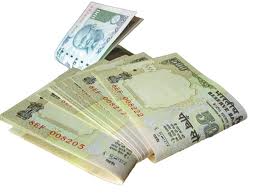
Currency notes issued before to 2005 to be withdrawn

January 22, 2014

New Delhi, Jan 22: The Reserve Bank of India (RBI) on Wednesday decided to withdraw all currency notes issued prior to 2005, including Rs 500 and Rs 1,000 denominations, after March 31 in a move apparently aimed at curbing black money and fake currencies.

currency

"After March 31, 2014, it (RBI) will completely withdraw from circulation all bank notes issued prior to 2005. From April 1, 2014, the public will be required to approach banks for exchanging these notes," the RBI said in a statement.

The public can easily distinguish the currency notes issued before 2005 as they do not have the year of printing on reverse side. The year of printing in a small font is visible at the middle of the bottom row in notes issued after 2005.

Asking people not to panic and cooperate in the withdrawal process, the RBI said old notes will continue to be legal and can be exchanged in any bank after April 1.

"From April 1, 2014, the public will be required to approach banks for exchanging these notes. Banks will provide exchange facility for these notes until further communication," the RBI said.

From July 1, 2014, persons seeking exchange of more than 10 pieces of Rs 500 and Rs 1,000 notes will have to furnish proof of identity and residence to the bank.

Although the RBI did not give any reason for withdrawal of pre-2005 currency notes, the move is expected to unearth black money held in cash.

As the new currency notes have added security features, they would help in curbing the menace of fake currency.

At present, currency notes in denominations of Rs 5, Rs 10, Rs 20, Rs 50, Rs 100, Rs 500 and Rs 1,000 are issued.

Comments

Add new comment

  • Coastaldigest.com reserves the right to delete or block any comments.
  • Coastaldigset.com is not responsible for its readers’ comments.
  • Comments that are abusive, incendiary or irrelevant are strictly prohibited.
  • Please use a genuine email ID and provide your name to avoid reject.
coastaldigest.com news network
July 15,2020

Mangaluru, Jul 15: Amidst mounting coronavirus cases, the district administration has finalised 80 covid care centres (CCC) in Dakshina Kannada.

Sindhu B Rupesh, deputy commissioner of DK, said that as many as 80 premises that were functioning as quarantine centres have now been identified as CCCs in the district.

People in the district have been demanding that CCCs should be opened for asymptomatic cases in the district too. 

A majority of around 1,500 active cases in Dakshina Kannada are asymptomatic, and the CCCs will help those planning to go to private hospitals to reduce their treatment costs.

Additional deputy commissioner M J Roopa said that the 80 CCCs identified throughout the district will work as care centres for asymptomatic Covid-19 patients.

A medical team will attend to the centres, and supply of food and water will be taken care of by the government. In case of any health issues, the patient will be shifted to the Covid hospital, she said.

“All asymptotic Covid-19 patients, who are unable to opt for home isolation, are being kept in CCCs. A designated health team will monitor each CCC in the district. Meanwhile, the nearest public health centre (PHC) will have an ambulance on standby in case of an emergency,” she added.

Comments

Add new comment

  • Coastaldigest.com reserves the right to delete or block any comments.
  • Coastaldigset.com is not responsible for its readers’ comments.
  • Comments that are abusive, incendiary or irrelevant are strictly prohibited.
  • Please use a genuine email ID and provide your name to avoid reject.
News Network
June 26,2020

Bengaluru, Jun 26: The National Restaurant Association of India (NRAI) on Thursday came up with a Standard Operating Procedure (SOP) for restaurants whereby among other physical distancing norms, it has suggested a 2-metre gap between tables.

Formulated in partnership with Releski, a Bengaluru based skill-tech company, the SoP suggests that in case of back-to-back seating, people sitting with their backs towards each other will have their seats divided by 'Plexiglass' divider raised up to 2 meters from the ground.

"In a typical restaurant, the improvised seating plan should have a minimum distance of 2 metres between tables. The distance of 2 metres (6 feet) between tables should measure from one edge of the table to the other table's edge," it said.

In case of loose or free seating such as in banquet style or food court style seating, a minimum 2 meters of distance should be maintained between tables.

The guidelines noted that, to encourage physical distancing, restaurants have to sacrifice their seating capacity, to promote health and safety, and also to gain trust from their patrons.

"In order to perform this, divide your restaurants under different sectors. Pull out your restaurant's floor plan and colour code different sections red and yellow. Red sections are potential areas where maximum footfall or traffic is observed. Yellow sections are areas where the footfalls are average," it said.

All the red sections are encircled or bordered by placing barricades or Q manager and will open at specific points to access the yellow section and all the opening points will have hand sanitisers and sprays, and every guest who walks from red zones to yellow zones will sanitise himself/herself to reduce the chances of contamination.

For air conditioning, the guidelines of CPWD shall be followed which inter alia emphasises that the temperature setting of all air conditioning devices should be in the range of 24-30 degree Celsius, relative humidity should be in the range of 40- 65 per cent, intake of fresh air should be as much as possible and cross ventilation should be adequate, the guidelines suggested.

The industry body has also suggested appointment of a COVID-free Ambassador who would operate as the Chief Health Officer within the restaurant team, preferably from the management team in each shift.

The ambassador's would put the new daily work routines into practice, to monitor compliance with good practice and to lead the preventative measures, adapt to health & safety recommendations and requirements of the restaurant and oversee the implementation of the norms.

Anurag Katriar, President of NRAI and CEO & Executive Director of deGustibus Hospitality, said: "Every restaurant cutting across formats is facing the harsh reality of subdued to shut business volumes in the present and the uncertainty of business environment in the future. One thing is certain that hygiene and safety will be a key differentiator in the post-pandemic restaurant operations."


Comments

Add new comment

  • Coastaldigest.com reserves the right to delete or block any comments.
  • Coastaldigset.com is not responsible for its readers’ comments.
  • Comments that are abusive, incendiary or irrelevant are strictly prohibited.
  • Please use a genuine email ID and provide your name to avoid reject.
News Network
May 27,2020

Bengaluru, May 27: Congress leader Siddaramaiah on Wednesday hit out at Chief Minister BS Yediyurappa-led Karnataka government for allegedly "betraying" the people by not fulfilling its Rs 1,610 crore COVID-19 package promise.

Taking a dig at Yediyurappa over the matter, the Congress leader tweeted, "Chief Minister of Karnataka BS Yediyurappa has betrayed people by not fulfilling his Rs 1,610 crore package promise. He seems to be following his @BJP4India leader @PMOIndia @narendramodi."

"Crisis and vulnerability should not be misused for political gains and BJP for India is insensitive towards the same," the former Karnataka Chief Minister said.

On May 6, Yediyurappa had urged migrant workers to stay back as construction activities have resumed and announced a Rs 1,610 crores COVID-19 financial package for the state.

"A package of Rs 1,610 crores will be released as COVID-19 financial relief. One time compensation of Rs 5,000 will be given to 2,30,000 barbers and 7,75,000 drivers," the Chief Minister said.

Referring to media reports, Siddarmiah cornered the state government for asking the licence to release funds for unorganised sector workers.

"How can we expect washermen and other unorganised sector workers to have licence for their work?" he asked.

It looks like Karnataka Chief Minister is very far from reality, he added.

Comments

Add new comment

  • Coastaldigest.com reserves the right to delete or block any comments.
  • Coastaldigset.com is not responsible for its readers’ comments.
  • Comments that are abusive, incendiary or irrelevant are strictly prohibited.
  • Please use a genuine email ID and provide your name to avoid reject.