


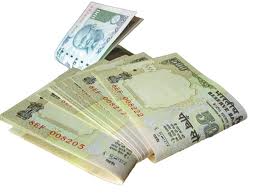
Currency notes issued before to 2005 to be withdrawn

January 22, 2014

New Delhi, Jan 22: The Reserve Bank of India (RBI) on Wednesday decided to withdraw all currency notes issued prior to 2005, including Rs 500 and Rs 1,000 denominations, after March 31 in a move apparently aimed at curbing black money and fake currencies.

currency

"After March 31, 2014, it (RBI) will completely withdraw from circulation all bank notes issued prior to 2005. From April 1, 2014, the public will be required to approach banks for exchanging these notes," the RBI said in a statement.

The public can easily distinguish the currency notes issued before 2005 as they do not have the year of printing on reverse side. The year of printing in a small font is visible at the middle of the bottom row in notes issued after 2005.

Asking people not to panic and cooperate in the withdrawal process, the RBI said old notes will continue to be legal and can be exchanged in any bank after April 1.

"From April 1, 2014, the public will be required to approach banks for exchanging these notes. Banks will provide exchange facility for these notes until further communication," the RBI said.

From July 1, 2014, persons seeking exchange of more than 10 pieces of Rs 500 and Rs 1,000 notes will have to furnish proof of identity and residence to the bank.

Although the RBI did not give any reason for withdrawal of pre-2005 currency notes, the move is expected to unearth black money held in cash.

As the new currency notes have added security features, they would help in curbing the menace of fake currency.

At present, currency notes in denominations of Rs 5, Rs 10, Rs 20, Rs 50, Rs 100, Rs 500 and Rs 1,000 are issued.

Comments

Add new comment

  • Coastaldigest.com reserves the right to delete or block any comments.
  • Coastaldigset.com is not responsible for its readers’ comments.
  • Comments that are abusive, incendiary or irrelevant are strictly prohibited.
  • Please use a genuine email ID and provide your name to avoid reject.
News Network
July 8,2020

Bengaluru, Jul 8: In a setback to the State government, the Karnataka High Court on Wednesday stayed the initial ban and the subsequent restrictions imposed on schools against conducting online classes from pre-primary to Class X.

Prima facie the ban and embargo imposed on online education violate Articles 21 and 21A of the Constitutionon the fundamental right to education, the Court said.

A Division Bench comprising Chief Justice Abhay Shreeniwas Oka and Justice Nataraj Rangaswamy passed the interim order staying the operation of Government Orders issued on June 15 and June 27 respectively.

The Bench passed the interim order on the petitions filed by parents of children and several educational institutions questioning the legality of the ban and the restrictions imposed.

However, the Bench made it clear that this order should not be construed that the schools have right to make online education compulsory and can charge fee for offering online education. Also, the schools should not deprive students, who cannot opt for online education, the lost education when the schools reopen on regular basis.

Comments

Add new comment

  • Coastaldigest.com reserves the right to delete or block any comments.
  • Coastaldigset.com is not responsible for its readers’ comments.
  • Comments that are abusive, incendiary or irrelevant are strictly prohibited.
  • Please use a genuine email ID and provide your name to avoid reject.
News Network
June 14,2020

Mangaluru, June 14: Private schools under the aegis of Association of English Medium Schools in Dakshina Kannada and Udupi urged the State government to reimburse the arrears of the fee related to admission of students under the Right to Education (RTE) Act.

Speaking to newsmen here on Sunday association president Y. Mohammed Beary said the State government has not cleared the arrears for the last two years. “The 400 private schools in two districts have to get around Rs 2 crore,” he said and added that the overall arrears that the government has to pay to schools in the State are around Rs1,200 crore.

Mr. Beary said arrears have made the school managements like his, who collect annual fees of about Rs 20,000 from a student, hard to function. Due to lockdown from March the schools could not conduct annual examinations and hence they could not collect pending fees from parents.

Comments

Add new comment

  • Coastaldigest.com reserves the right to delete or block any comments.
  • Coastaldigset.com is not responsible for its readers’ comments.
  • Comments that are abusive, incendiary or irrelevant are strictly prohibited.
  • Please use a genuine email ID and provide your name to avoid reject.
News Network
May 13,2020

Bengaluru, May 13: The Karnataka Common Entrance Test (K-CET) 2020 will be held on July 30 and 31.

The test, earlier as scheduled to be held on April 22, 23 and 24, was postponed due to COVID-19 crisis and the nation-wide lockdown.

Now, considering the dates for National Eligibility cum Entrance Test (NEET) and Joint Entrance Examination (JEE) dates announced by the Union government, the state government has announced the revised dates on Wednesday.

Higher Education Minister Dr C N Ashwath Narayan announced this in a press conference. The test will be held online, the minister said. 

For CET 2020, over 1.90 lakh students registered for admission to undergraduate engineering, B Tech, Architecture, Agriculture and veterinary science courses.

Home quarantine for repatriated pregnant women, children, senior citizens if they test covid-19 negative 

The Union Health Ministry has revised its discharge guidelines for COVID-19 patients, stating that only those with severe illness need to be tested (through a swab test) and a negative report needs to be obtained before discharge.

The latest guideline adds that other categories of patients, including very mild, mild, pre-symptomatic and moderate cases, need not be tested before discharge.

Comments

Add new comment

  • Coastaldigest.com reserves the right to delete or block any comments.
  • Coastaldigset.com is not responsible for its readers’ comments.
  • Comments that are abusive, incendiary or irrelevant are strictly prohibited.
  • Please use a genuine email ID and provide your name to avoid reject.