


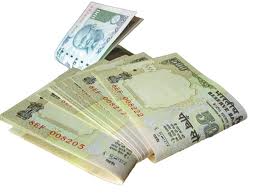
Currency notes issued before to 2005 to be withdrawn

January 22, 2014

New Delhi, Jan 22: The Reserve Bank of India (RBI) on Wednesday decided to withdraw all currency notes issued prior to 2005, including Rs 500 and Rs 1,000 denominations, after March 31 in a move apparently aimed at curbing black money and fake currencies.

currency

"After March 31, 2014, it (RBI) will completely withdraw from circulation all bank notes issued prior to 2005. From April 1, 2014, the public will be required to approach banks for exchanging these notes," the RBI said in a statement.

The public can easily distinguish the currency notes issued before 2005 as they do not have the year of printing on reverse side. The year of printing in a small font is visible at the middle of the bottom row in notes issued after 2005.

Asking people not to panic and cooperate in the withdrawal process, the RBI said old notes will continue to be legal and can be exchanged in any bank after April 1.

"From April 1, 2014, the public will be required to approach banks for exchanging these notes. Banks will provide exchange facility for these notes until further communication," the RBI said.

From July 1, 2014, persons seeking exchange of more than 10 pieces of Rs 500 and Rs 1,000 notes will have to furnish proof of identity and residence to the bank.

Although the RBI did not give any reason for withdrawal of pre-2005 currency notes, the move is expected to unearth black money held in cash.

As the new currency notes have added security features, they would help in curbing the menace of fake currency.

At present, currency notes in denominations of Rs 5, Rs 10, Rs 20, Rs 50, Rs 100, Rs 500 and Rs 1,000 are issued.

Comments

Add new comment

  • Coastaldigest.com reserves the right to delete or block any comments.
  • Coastaldigset.com is not responsible for its readers’ comments.
  • Comments that are abusive, incendiary or irrelevant are strictly prohibited.
  • Please use a genuine email ID and provide your name to avoid reject.
News Network
May 19,2020

Bengaluru, May 19: Containment zones in Karnataka will be much smaller in size under the latest lockdown norms. However, rules and loopholes will be tightened and action against violators will be stringent in order to check the spread of the disease.

Revised guidelines issued by the Centre to the state, reveal containment zones are delineated based on mapping of cases and contacts. Intensive action will be carried out in these areas with the aim of breaking the chain of transmission. Therefore, the area of a containment zone should be appropriately defined by the district administration/local urban bodies with technical inputs at local level.

The health department is considering shrinking the size of containment zones from the existing 100 metres to open up more space for economic activities. Medical education minister K Sudhakar, also a member of the Covid taskforce, said additional chief secretary (health department) Javed Akthar will issue a new definition of a containment zone after the Covid-19 taskforce holds its next meeting.

“We are planning to further shrink it and restrict containment zones to an apartment complex, independent house or even a lane where the Covid-19 patient resides,” Sudhakar said. He went on to say bigger containment zones will impede businesses and normal activities in the vicinity, something which the government wants to avoid.

The minister said Karnataka will also do away with colour-coding districts. “With restrictions being relaxed for almost all activities, it does not make sense to pursue with colour codes. It is either containment zone or outside containment zone,” he said.

In rural areas, the minister said containment zones will be identified by the taluk heads. Government sources say it is difficult to restrict activities to certain areas or smaller location in rural areas as farmers and people will have to travel to the outskirts of their villages for their livelihood.

An official said, a containment operation (large outbreak or cluster) is deemed successful when no case is reported in 28 days from the containment zone.

Comments

Add new comment

  • Coastaldigest.com reserves the right to delete or block any comments.
  • Coastaldigset.com is not responsible for its readers’ comments.
  • Comments that are abusive, incendiary or irrelevant are strictly prohibited.
  • Please use a genuine email ID and provide your name to avoid reject.
News Network
May 17,2020

Mangaluru, May 17: A team of staff and students from the Department of Electrical and Electronics Engineering, NMAM Institute of Technology, Nitte, have designed and developed a simple and cost-effective touch-less hand sanitiser dispenser kit at Research and Innovation Centre, Nitte.

According to a release here on Sunday, NITTE said that the most effective medicine for Covid-19 is social distancing, frequent use of sanitiser, and washing hands regularly. In work areas, many people sharing common sanitiser might lead to issues.

The developed product dispenses sanitiser upon sensing the presence of the hand. The product has features like automatic hand detection, indication for power, and sanitiser quantity in the system.

Comments

Add new comment

  • Coastaldigest.com reserves the right to delete or block any comments.
  • Coastaldigset.com is not responsible for its readers’ comments.
  • Comments that are abusive, incendiary or irrelevant are strictly prohibited.
  • Please use a genuine email ID and provide your name to avoid reject.
News Network
July 6,2020

Bengaluru, jul 6: With coronavirus cases surging and hospitals saturated with patients, the Karnataka government is setting up intensive care units (ICUs) at COVID Care Centres (CCC) in the state for severe cases needing oxygen, Deputy Chief Minister C N Ashwath Narayan said on Sunday.

Covid Care Centres are usually meant for patients who are asymptomatic or have mild symptoms.

"Initially, 10 ICUs will be set up at every CCC in Bengaluru and in other cities and towns across the state subsequently," Narayan said in a statement in Bengaluru.

The state government has set up CCCs at the GKVK campus, the Haj Bhavan and the Art of Living Foundation campus in the city so far. The government has also set up a more than 10,000 bed CCC facility in BIEC, on Tumkur road, on the outskirts of the city.

"About 100 ICUs will be set up soon at the new CCCs opened at the Bangalore International Exhibition Centre (BIEC), Ayurveda College, and Koramangala Indoor Stadium," said Narayan.

The sprawling BEIC in the city's northwest will soon have 10,100 beds for treating Covid patients and asymptomatic cases from state-run hospitals.

The state government has also relieved all Health Department employees from administrative and non-medical duties to depute them at the CCCs.

On complaints about the poor quality of food served to Covid patients and the medical staff, Narayan warned the vendors of cancelling their contracts if they did not supply good quality food as per the guidelines.

The minister also directed the Health Department to ensure adequate supply of drugs and medical equipment to all CCCs and state-run hospitals for treating Covid patients.

With a record 1,925 new cases reported on Sunday, the state's tally touched 23,474, including 13,251 active after 9,847 were discharged (including 603 on Sunday), while 372 succumbed to the infection since March 9, with 37 more deaths on Sunday.

Of the total cases across the state, Bengaluru accounted for 1,235, taking its tally to 9,580, including 8,167 while 145 died so far.

Comments

Add new comment

  • Coastaldigest.com reserves the right to delete or block any comments.
  • Coastaldigset.com is not responsible for its readers’ comments.
  • Comments that are abusive, incendiary or irrelevant are strictly prohibited.
  • Please use a genuine email ID and provide your name to avoid reject.