


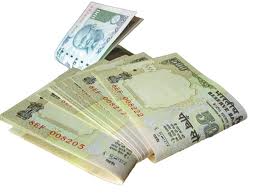
Currency notes issued before to 2005 to be withdrawn

January 22, 2014

New Delhi, Jan 22: The Reserve Bank of India (RBI) on Wednesday decided to withdraw all currency notes issued prior to 2005, including Rs 500 and Rs 1,000 denominations, after March 31 in a move apparently aimed at curbing black money and fake currencies.

currency

"After March 31, 2014, it (RBI) will completely withdraw from circulation all bank notes issued prior to 2005. From April 1, 2014, the public will be required to approach banks for exchanging these notes," the RBI said in a statement.

The public can easily distinguish the currency notes issued before 2005 as they do not have the year of printing on reverse side. The year of printing in a small font is visible at the middle of the bottom row in notes issued after 2005.

Asking people not to panic and cooperate in the withdrawal process, the RBI said old notes will continue to be legal and can be exchanged in any bank after April 1.

"From April 1, 2014, the public will be required to approach banks for exchanging these notes. Banks will provide exchange facility for these notes until further communication," the RBI said.

From July 1, 2014, persons seeking exchange of more than 10 pieces of Rs 500 and Rs 1,000 notes will have to furnish proof of identity and residence to the bank.

Although the RBI did not give any reason for withdrawal of pre-2005 currency notes, the move is expected to unearth black money held in cash.

As the new currency notes have added security features, they would help in curbing the menace of fake currency.

At present, currency notes in denominations of Rs 5, Rs 10, Rs 20, Rs 50, Rs 100, Rs 500 and Rs 1,000 are issued.

Comments

Add new comment

  • Coastaldigest.com reserves the right to delete or block any comments.
  • Coastaldigset.com is not responsible for its readers’ comments.
  • Comments that are abusive, incendiary or irrelevant are strictly prohibited.
  • Please use a genuine email ID and provide your name to avoid reject.
News Network
May 18,2020

Dubai, May 18: An Indian working in a mining company in the UAE has become the latest expatriate to have lost his job for hate-filled social media posts targeting Islam and Muslims.

Brajkishore Gupta was fired without notice for calling Indian Muslims 'coronavirus spreaders' and hailing the Delhi violence as 'divine justice' in his Facebook posts.

Gupta, who is from Chapra, Bihar, was employed by Stevin Rock, a mining company headquartered in Ras Al Khaimah city.

"This isolated incident involving a junior employee was investigated and dealt with immediately resulting in the termination without notice of this person's employment with Stevin Rock," said the company's business development and exploration manager Jean-Francois Milian.

"Our company policy supports the direction of the UAE government in promoting tolerance and equality and strongly renouncing racism and discrimination and we have sent communications to all of our employees irrespective of their religious or ethnic background reminding them that any such behaviour is unacceptable and will lead to immediate dismissal," Milian was quoted as saying in the report.

Three Indians based in the UAE were either fired or suspended from their jobs for "Islamophobic" posts on social media early this month.

On April 20, India's ambassador to the UAE Pavan Kapoor had warned Indian expatriates against such behaviour.

"India and UAE share the value of non-discrimination on any grounds. Discrimination is against our moral fabric and the Rule of law. Indian nationals in the UAE should always remember this," he said in a tweet.

Last month, Sharjah-based businessman Sohan Roy had to apologise for "unintentionally hurting religious sentiments" through his poem, which alluded to a Muslim religious group.

In March, chef Trilok Singh was fired from a restaurant in Dubai for an online threat against a student in Delhi over her views on the Citizenship Amendment Act.

Comments

Add new comment

  • Coastaldigest.com reserves the right to delete or block any comments.
  • Coastaldigset.com is not responsible for its readers’ comments.
  • Comments that are abusive, incendiary or irrelevant are strictly prohibited.
  • Please use a genuine email ID and provide your name to avoid reject.
News Network
January 16,2020

Mangaluru, Jan 16: Following the widespread protests against the National Register of Citizens (NRC) and Citizenship Amendment Act (CAA), former minister and MLA UT Khader on Thursday urged the Centre and State government to address the concerns of the people.

Speaking to reporters here on Thursday, he said there is widespread confusion among the public with regard to the implementation of the Act. People are reluctant to open their doors to Asha workers, out of fear that the NRC exercise is being implemented, said Khader.

He urged the chief minister and home minister to gain the trust of the people on the CAA issue.

Comments

Add new comment

  • Coastaldigest.com reserves the right to delete or block any comments.
  • Coastaldigset.com is not responsible for its readers’ comments.
  • Comments that are abusive, incendiary or irrelevant are strictly prohibited.
  • Please use a genuine email ID and provide your name to avoid reject.
News Network
May 2,2020

Bengaluru, May 2: The Centre’s classification of districts created confusion in Karnataka as the state’s own categorisation deviates significantly from the health ministry’s list.

For instance, the Centre put the number of districts in the red zone in state at three, while the state Covid-19 war room puts it at 14. Bengaluru Urban and Mysuru figure in the red zone in both lists. While Bengaluru Rural with zero active cases on May 1makes it to the Centre’s red-zone list, it is in the orange zone according to the state.

In addition to these two, the state classifies Belagavi, Kalaburagi, Vijayapura, Bagalkot, Mandya, Bidar, Dakshina Kannada, Chikkaballapura, Dharwad, Gadag, Tumakuru and Davanagere as red-zone districts.

State Covid war-room authorities said they would take a look at the Centre’s criteria for classification and take a call. Besides, incharge Munish Mudgil pointed out that states are allowed to make additions to the red and orange zones. According to the Centre’s list, Karnataka has 13 districts in the orange zone and 14 in the green zone.

Sudan said, “the districts were earlier designated as hotspots or red zones, orange zones and green zones primarily based on the cumulative cases reported and the doubling rate. Since recovery rates have gone up, the districts are now being designated across various zones duly broad-basing the criteria.

This classification takes into consideration incidence of cases, doubling rate, extent of testing and surveillance feedback. A district will be considered under the green zone if there are no confirmed cases so far or if there is no reported case in the past 21 days.”

Comments

Add new comment

  • Coastaldigest.com reserves the right to delete or block any comments.
  • Coastaldigset.com is not responsible for its readers’ comments.
  • Comments that are abusive, incendiary or irrelevant are strictly prohibited.
  • Please use a genuine email ID and provide your name to avoid reject.