


Dalit research scholar, suspended after ABVP’s complaint, kills self

[email protected] (News Network)
January 18, 2016

Hyderabad, Jan 18: A Dalit research scholar of the University of Hyderabad (UoH), allegedly hanged himself to death 15 days after he was expelled from his hostel along with four other researchers in the wake of a complaint by Akhila Bharatiya Vidyarthi Parishand (ABVP) activists.
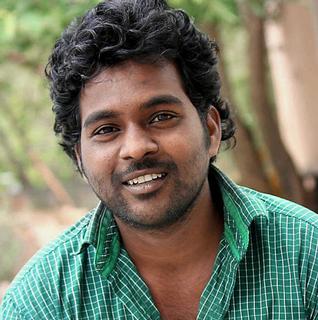
rohitRohith Vemula, and four other Dalit students of Ambedkar Students Association (ASA) had been on a sleep-in strike in the open on the campus ever since their expulsion. On Sunday morning, following his 15th nightout, the student had strayed away from the protestors’ camp and spent his day in one of the rooms of New Research Scholar’s hostel. At 7.30 pm on Sunday, he was found hanging in the same room. He hanged himself using the blue banner of ASA, a student outfit which has been fighting for Dalit rights on the campus.

Suicide note

In the five-page suicide note recovered from the room Rohith had mentioned how he always “looked at the stars and dreamt of being a writer” and an established academic. The research scholar hailed from Guntur district. “His mother is a daily wage labourer with an agricultural background. His JRF fund also used to support his family,” a student leader said.

The victim was a second year research scholar of the science, technology and society studies department and also a University Grants Commission’s Junior Research Fellowship holder. The student is survived by his mother and a younger brother. In his suicide note, the student had also pointed out that for the past six months he had not got his JRF funds.

University Vice-Chancellor P. Appa Rao expressed shock at the incident. Cyberabad police who had to rush to the campus following protests, however, did not comment on whether any case would be booked. Scores of students of the varsity laid siege to the hostel even as the Gachibowli police had to be rushed to the spot.

As per the university orders, five students, including Vemula, were denied entry into the hostel and permission to gather together following a scuffle between two students organisations —ABVP and ASA that took place on August 3, 2015.

It may be recalled that a scuffle broke out after ASA staged a protest at the university against ABVP’s attack on screening of the documentary, Muzzafarnagar Baqi Hai, at Delhi University. Tension mounted on the campus with agitated students preventing the police from shifting the body to the hospital. A case under section 174 of CrPC was registered in Gachibowli police station. As a precautionary measure, additional police forces were positioned on and around the campus.

Comments

HONEST
 - 
Monday, 18 Jan 2016

Intolerance will spread more if we dont voice out of such oppression from the people who think they are superior than others...
No one is superior in the sight of ALLAH except by their Good deeds...

Mohammed
 - 
Monday, 18 Jan 2016

Brothers of Naren Guru..
Naren recently in your comments you mentioned there is no divide and rule in ur so called community.. Now can you brief us about this issue? Y the innocent life was taken by your great nationalist people???

Goodman
 - 
Monday, 18 Jan 2016

All those oppressed should decide their fate themselves adapting the life style where they are secured.

They should join the community of equality is practiced more than preached.

Add new comment

  • Coastaldigest.com reserves the right to delete or block any comments.
  • Coastaldigset.com is not responsible for its readers’ comments.
  • Comments that are abusive, incendiary or irrelevant are strictly prohibited.
  • Please use a genuine email ID and provide your name to avoid reject.
DHNS
January 2,2020

Jan 2: A year after 12,000 acres of forests in Bandipur went up in smoke, the Karnataka Forest Department is gearing up for the summer even as the Forest Survey of India (FSI) has cautioned that 22.78 lakh acres (9,222 sq km) or about 20% of the green cover spread across three districts in the central part of the state is fire-prone.

The FSI studied forest fire incidents across the country between 2004-05 and 2017 before coming up with state-specific inputs.

According to the 13-year observation, Karnataka has 7,352 “fire points” or areas measuring 5 km X 5 km with frequent fire incidents.

Though the number is lower compared to states like Maharashtra, Madhya Pradesh and Odisha with over 20,000 points, the sheer spread of the fire-prone area itself is a challenge for the Karnataka Forest Department.

According to data, about three lakh acres (1,199.9 sq km) of forest area is very highly fire prone with 26 to 52 fire incidents in 13 years. This is followed by 7.6 lakh acres (3,067 sq km) of “highly fire prone” areas with an average of one to two incidents every year.

Almost all of the “red alert” areas are concentrated in Uttara Kannada, Chikkmagaluru, Shivamogga and Chamarajanagar districts. As temperature rises at the end of January, so does the risk of forest fires, requiring officials to be on vigil till the end of summer.

After an investigation into the Bandipur blaze revealed that faulty fire lines and poor supervision were the reason for the spread of the fire, the department has come up with a multi-pronged approach to prevent similar incidents this year.

“After the Bandipur incident, we have created a fire cell and a standard operating procedure (SOP) which everyone has to follow. Firstly, a fire management plan is prepared and approved by a competent authority.

The SOP has well defined firelines which have to be executed by December-end and burning must be completed by January 15,”  Principal Chief Conservator of Forests (Head of Forest Force) Punati Sridhar told DH.

He said that to ensure its strict implementation, GPS readings of firelines are to be submitted for random verification.

“All the required equipment from fire jackets to shoes, gloves, backpack sprayers and tractors mounted with 2,000-5,000 litre tanks with high pressure pumps will be deployed at vantage points,” he said.

In addition, the department’s fire cell works in collaboration with the Karnataka State Remote Sensing Applications Centre (KSRSAC) to give fire alerts within half and hour of an area catching fire and detected by satellites.

“Earlier, the gap used to be four hours by when the fire would have spread beyond control. Now, with reduced time gap, it would be easier to control fire early,” he added.

Comments

Add new comment

  • Coastaldigest.com reserves the right to delete or block any comments.
  • Coastaldigset.com is not responsible for its readers’ comments.
  • Comments that are abusive, incendiary or irrelevant are strictly prohibited.
  • Please use a genuine email ID and provide your name to avoid reject.
coastaldigest.com news network
May 27,2020

Bengaluru, May 27: A yet incomplete state-wide survey has revealed that there are over 53.99 lakh households vulnerable to the infection in Karnataka. The survey is being conducted by the government to find COVID-19 vulnerable population particularly with comorbidities and cases like SARI and ILI.

The survey, which is 67.16% complete so far, finds 1.37 lakh households across Karnataka have people with comorbid conditions, excluding a further 13,341 households with symptoms of Influenza Like Illness (ILI), Severe Acute Respiratory Infection (SARI) and Covid-19.

Over 48 lakh households have senior citizens, who on account of their age are at highest risk of death from the disease.

Munish Moudgil, Director of the State COVID War Room, clarified that households could have multiple types of vulnerable people. According to the survey data (which is dated May 26), Kalaburagi and Bengaluru Urban have the highest cases of SARI, ILI with 1,902 households and 1,703 households respectively, although these numbers are likely to rise, as the survey is still incomplete in these districts. 

A BBMP source said that 68% of the survey has been completed in the city, but the data has not been logged yet. The number of SARI/ILI cases is next highest in Shivamogga with 1,217 households, Mysuru with 1,200 and Davangere with 1,178.

The government regards SARI and ILI as indicators of coronavirus and on April 17, had passed an order instructing healthcare workers to test people with these conditions for the coronavirus. Consequently, 51 COVID-19 cases were discovered by testing people with these symptoms.

Belagavi, meantime, has reported the highest incidents of households with comorbid conditions with 12,427 identified so far, followed by Mandya with 9,289, Kalaburagi with 8,311, Shivamogga with 8,140 and Bengaluru Urban with 7,562. Importantly, 3,45,443 vulnerable people have been identified in Bengaluru Urban within 28.26% of data logged in so far.

Comments

Add new comment

  • Coastaldigest.com reserves the right to delete or block any comments.
  • Coastaldigset.com is not responsible for its readers’ comments.
  • Comments that are abusive, incendiary or irrelevant are strictly prohibited.
  • Please use a genuine email ID and provide your name to avoid reject.
News Network
March 29,2020

Karnataka on Saturday reported 12 new cases, the highest in a single day so far, taking the tally in the state to 76.

Late at night, the Mysuru district commissioner said five more people had tested positive in the district. But it was yet to be confirmed by the state health department.

Of the cases, 41 are from Bengaluru, eight from Chikkaballapur, while Uttara Kannada and Dakshina Kannada districts have seven each.

Interestingly, the highest number of patients are those from Dubai or those who had transit travel via Dubai. Out of 76 cases, 17 cases (22%) have travel history to Dubai, the capital of Emirate of Dubai and the most populous city in the United Arab Emirates (UAE).

Medical Education Minister Dr K Sudhakar, who is also in-charge of COVID-19 operations, said that Dubai has been a major concern as far as Karnataka COVID-19 patients are concerned. “Most of the positive cases have come through Dubai suggesting something amiss there,” he said. 

Echoing the same, Dr Prakash Kumar, Joint Director, Communicable Diseases, Department of Health and Family Welfare, said, “The layover in Dubai is around six to seven hours. We are seeing Dubai to be the new epicentre of the virus as far as India is concerned.”

UAE was initially not on the list of countries from where passengers were screened. It was added much later when clusters of patients with travel history to Dubai began popping up all over the country.

Patient-19 has infected the maximum so far.

Out of the 12 cases that tested positive on Saturday, five are contacts of Patient 19. All of them are being treated at a Chikkaballapur hospital. Two of them are from Hindupur, Andhra Pradesh, and three are residents of Gauribidanur taluk in Chikkabalapur district.

P19, a 31-year-old man from Chikkaballapur, had travelled to Mecca, Saudi Arabia, and returned to India on March 14. Existing patient clusters suggest that P19 had infected the maximum number of people. Officials did not reveal how many people he originally travelled with to Mecca.

Amid the rise in cases, Jawaid Akhtar, Additional Chief Secretary (Health), maintained that the state had not reached stage 3. But he had no definitive answer as to how the Mysuru patient contracted the virus despite health officials he was in touch with not testing positive.

Health Commissioner Pankaj Kumar Pandey said around 1,000 primary contacts of all positive cases have been classified as high-risk and low-risk. The high-risk patients are in government hospitals while the low-risk ones in quarantine facilities.

Comments

Add new comment

  • Coastaldigest.com reserves the right to delete or block any comments.
  • Coastaldigset.com is not responsible for its readers’ comments.
  • Comments that are abusive, incendiary or irrelevant are strictly prohibited.
  • Please use a genuine email ID and provide your name to avoid reject.