


Dalit research scholar, suspended after ABVP’s complaint, kills self

[email protected] (News Network)
January 18, 2016

Hyderabad, Jan 18: A Dalit research scholar of the University of Hyderabad (UoH), allegedly hanged himself to death 15 days after he was expelled from his hostel along with four other researchers in the wake of a complaint by Akhila Bharatiya Vidyarthi Parishand (ABVP) activists.
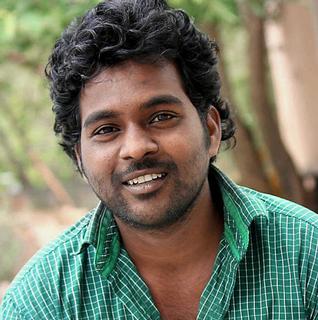
rohitRohith Vemula, and four other Dalit students of Ambedkar Students Association (ASA) had been on a sleep-in strike in the open on the campus ever since their expulsion. On Sunday morning, following his 15th nightout, the student had strayed away from the protestors’ camp and spent his day in one of the rooms of New Research Scholar’s hostel. At 7.30 pm on Sunday, he was found hanging in the same room. He hanged himself using the blue banner of ASA, a student outfit which has been fighting for Dalit rights on the campus.

Suicide note

In the five-page suicide note recovered from the room Rohith had mentioned how he always “looked at the stars and dreamt of being a writer” and an established academic. The research scholar hailed from Guntur district. “His mother is a daily wage labourer with an agricultural background. His JRF fund also used to support his family,” a student leader said.

The victim was a second year research scholar of the science, technology and society studies department and also a University Grants Commission’s Junior Research Fellowship holder. The student is survived by his mother and a younger brother. In his suicide note, the student had also pointed out that for the past six months he had not got his JRF funds.

University Vice-Chancellor P. Appa Rao expressed shock at the incident. Cyberabad police who had to rush to the campus following protests, however, did not comment on whether any case would be booked. Scores of students of the varsity laid siege to the hostel even as the Gachibowli police had to be rushed to the spot.

As per the university orders, five students, including Vemula, were denied entry into the hostel and permission to gather together following a scuffle between two students organisations —ABVP and ASA that took place on August 3, 2015.

It may be recalled that a scuffle broke out after ASA staged a protest at the university against ABVP’s attack on screening of the documentary, Muzzafarnagar Baqi Hai, at Delhi University. Tension mounted on the campus with agitated students preventing the police from shifting the body to the hospital. A case under section 174 of CrPC was registered in Gachibowli police station. As a precautionary measure, additional police forces were positioned on and around the campus.

Comments

HONEST
 - 
Monday, 18 Jan 2016

Intolerance will spread more if we dont voice out of such oppression from the people who think they are superior than others...
No one is superior in the sight of ALLAH except by their Good deeds...

Mohammed
 - 
Monday, 18 Jan 2016

Brothers of Naren Guru..
Naren recently in your comments you mentioned there is no divide and rule in ur so called community.. Now can you brief us about this issue? Y the innocent life was taken by your great nationalist people???

Goodman
 - 
Monday, 18 Jan 2016

All those oppressed should decide their fate themselves adapting the life style where they are secured.

They should join the community of equality is practiced more than preached.

Add new comment

  • Coastaldigest.com reserves the right to delete or block any comments.
  • Coastaldigset.com is not responsible for its readers’ comments.
  • Comments that are abusive, incendiary or irrelevant are strictly prohibited.
  • Please use a genuine email ID and provide your name to avoid reject.
News Network
April 12,2020

New Delhi, Apr 12: Ramping up efforts to "stamp out" coronavirus cases in the state, Kerala Finance Minister Thomas Isaac has said that not only lockdown but intense testing of people and tracing of their contacts are also equally important in the fight against the outbreak.

Kerala, which was the first state in the country to report a coronavirus infection in late January, has also prepared a time table for coming out of the lockdown and there would be district-specific strategies to tackle the situation while the number of cases are on the decline.

In efforts to curb spreading of coronavirus infections, the country is under a 21-day lockdown till April 14 and many states have sought an extension amid rising number of cases. Kerala has proposed extending the lockdown and gradual phasing out after proper assessment.

"Lockdown should go on till we stamp out entire infections. Now, it is not enough to have lockdown. Equally important is that we should have intense testing, tracing and isolating (of people with coronavirus infections)," he said in a telephonic interview.

The government is closely monitoring the situation and there would be region-specific or district-specific strategies in place to tackle the outbreak, he said.

Against the backdrop of the lockdown that has also disrupted economic activities, Isaac said an exit strategy is being prepared and restrictions are being relaxed in certain segments, including agriculture.

Coronavirus India update: State-wise total number of confirmed cases, deaths on April 12

"The number of patients is coming down (in the state). We hope that in the coming days, the decline will be much more faster," he said during the interview late Friday.

On Saturday, the Kerala government said there were a total of 373 confirmed cases of coronavirus infections and 228 patients were under treatment in various hospitals in the state.

Keeping the trend in the last few days, the number of people under observation has come down to 1,23,490. So far, 14,613 samples from people with symptoms were sent for testing and the results of 12,818 samples have come negative, the government said in a statement on Saturday.

Indicating that there would be a calibrated exit from the lockdown, Isaac said the withdrawal would depend on three main factors, including the count of cases and the percentage of people who are under observation.

While emphasising that people must also be fed during the lockdown period, Isaac also said a time table is being prepared by the state to come out of the lockdown.

Even as strict measures are being implemented to deal with the current situation, the state is also preparing for a possible third wave of coronavirus cases.

Three students, who had returned from the Chinese city of Wuhan, were tested positive. They were also the first such cases, to be reported in January-February period, and have recovered. Wuhan was the epicentre of coronavirus infections before it spread to other countries.

Later, there was a second wave of infections in Kerala.

According to the minister, the possibility of a third wave has also been considered for the exit strategy.

"A lot of Malayalees are expected to come back from outside the state. We will welcome them... before that, we want to stamp out all Covid cases in Kerala. Flatten the curve completely so that when these people from outside, they will be quarantined, they will be tested and only then they will be able to integrate with the rest of the community," he said.

The Kerala government's measures, including extensive testing and efforts to trace people who came in contact with coronavirus-infected persons, have helped in curbing spreading of infections.

The state's public healthcare system has also been appreciated in various quarters.

"People are health conscious. There is a demand for quality healthcare services and the response to this demand has been strengthening of the public healthcare system. We have a robust public healthcare system," the minister emphasised.

On April 9, Isaac tweeted about low level of coronavirus spreading in the state.

"International norm for Covid spread is 2.6 per 1 Covid patient. Total number of primary Covid infected who arrived in Kerala from abroad is 254. The secondary spread has been limited to 91. The international mortality rate is 5.75. With just 2 deaths, rate in Kerala is 0.58," he had tweeted.

Death toll due to the coronavirus increased to 273 and the number of cases to 8,356 in the country on Sunday.

Comments

Add new comment

  • Coastaldigest.com reserves the right to delete or block any comments.
  • Coastaldigset.com is not responsible for its readers’ comments.
  • Comments that are abusive, incendiary or irrelevant are strictly prohibited.
  • Please use a genuine email ID and provide your name to avoid reject.
News Network
June 23,2020

Bengaluru, Jun 23: In an attempt to avoid exploitation of patients affected with coronavirus, the Karnataka government on Tuesday announced fixing charges that could be collected from patients by the private hospitals for treatment in the State.

There are now two sets of rates for patients--those who are referred by public health facilities and those who approach private hospitals directly.

According to the notification issued by State Chief Secretary TM Vijay Bhaskar on Tuesday, 50 per cent of the total beds in private hospitals having facilities to treat Covid-19 patients shall be reserved for the treatment of patients referred by public health authorities.

This will include the high-dependency unit and ICU (intensive care unit) beds both with and without ventilators. The hospitals may utilise the remaining Covid beds for admitting Covid-19 patients privately.

Comments

Add new comment

  • Coastaldigest.com reserves the right to delete or block any comments.
  • Coastaldigset.com is not responsible for its readers’ comments.
  • Comments that are abusive, incendiary or irrelevant are strictly prohibited.
  • Please use a genuine email ID and provide your name to avoid reject.
News Network
May 12,2020

May 12: Children suffering from non-respiratory disease symptoms like diarrhea and fever, or those with a history of exposure to the novel coronavirus, should be suspected of having COVID-19, a new study says.

According to the research, published in the journal Frontiers in Pediatrics, gastrointestinal symptoms first suffered by some children hints at potential infection with SARS-CoV-2 through the digestive tract.

"This case series is the first report to describe the clinical features of COVID-19 with non-respiratory symptoms as the first manifestation in children," the scientists from Tongji Hospital in China wrote in the study.

They explained that the gastrointestinal symptoms could be arising since the type of receptors in lung cells targeted by the virus can also be found in the intestines.

Most children are only mildly affected by COVID-19, and the few severe cases often have underlying health issues, the researchers said.

"It is easy to miss its diagnosis in the early stage, when a child has non-respiratory symptoms, or suffers from another illness," said study co-author Wenbin Li, who works at the Department of Pediatrics, Tongji Hospital.

"Based on our experience of dealing with COVID-19, in regions where this virus is epidemic, children suffering from digestive tract symptoms, especially with fever and/or a history of exposure to this disease, should be suspected of being infected with this virus," Li said.

In the study, the scientists described the clinical features of children admitted to hospital with non-respiratory symptoms, who were subsequently diagnosed with pneumonia and COVID-19.

"These children were seeking medical advice in the emergency department for unrelated problems, for example, one had a kidney stone, another a head trauma," Li said.

The study noted that all the children had pneumonia, which was confirmed by chest X-ray scan before or soon after admission.

These children were then confirmed to have COVID-19.

While their COVID-19 symptoms were initially mild or relatively hidden before their hospital admission, four out of the five cases had digestive tract symptoms as the first manifestation of this disease, the researchers said.

Li hopes that doctors will use the findings to quickly diagnose and isolate patients with similar symptoms, which may aid early treatment and reduce transmission.

According to the researchers, the children's gastrointestinal symptoms, which have also been recorded in adult patients, could be an additional route of infection.

"The gastrointestinal symptoms experienced by these children may be related to the distribution of receptors and the transmission pathway associated with COVID-19 infection in humans," Li explained.

Since the virus infects people via the ACE2 receptor, which can be found in certain cells in the lungs as well as the intestines, COVID-19 might infect patients not only through the respiratory tract in the form of air droplets, but also through the digestive tract by contact or fecal-oral transmission, the study noted.

While COVID-19 tests can occasionally produce false positive readings, Li said all the five children assessed in the study were infected with the disease.

However, he cautioned that more research is needed to confirm their findings.

"We report five cases of COVID-19 in children showing non-respiratory symptoms as the first manifestation after admission to hospital. The incidence and clinical features of similar cases needs further study in more patients," he said.

Comments

Add new comment

  • Coastaldigest.com reserves the right to delete or block any comments.
  • Coastaldigset.com is not responsible for its readers’ comments.
  • Comments that are abusive, incendiary or irrelevant are strictly prohibited.
  • Please use a genuine email ID and provide your name to avoid reject.