Dawn of a new-age Steemit blogging trend beckons on Mangaluru

Rajat Rao
June 17, 2017

Mangaluru, Jun 17: In an age where most social media networks engage its users addictively without remuneration for the time spent, a one year old blockchain and cryptocurrency based social networking site rewards their users to use it. ‘Steemit.com’ encourages it’s users to use its platform and by way of upvotes monetize their writing in the form of Steemit’s own internet currencies; Steem and SBD. These cryptocurrencies are similar to the popular Bitcoin, often known as internet gold.
rajat 1

Just as how Facebook and Twitter attracts likes, shares and retweets which has restricted reach; Steemit has upvotes and that is accessible to all. The community upvotes each other and this rewards the author (user) for the posts they make. Apart from making this platform free for all to join and use, it also manages to reward every author for every post or comment that is upvoted. The site also has the concept of curation rewards to reward voters for curating good quality content. Moreover, all the articles are categorized under tags making it reader friendly.

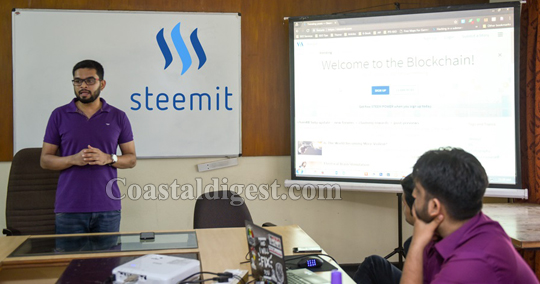
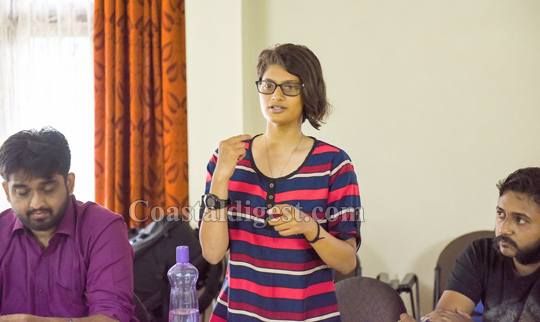
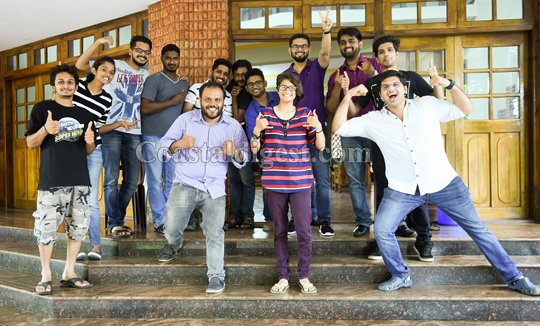
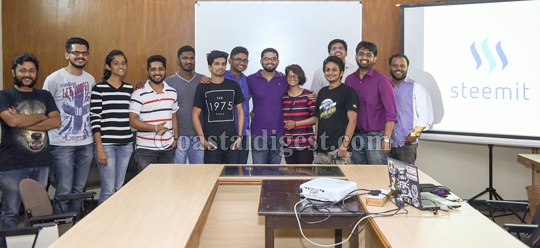
In the dawn of this new age social media craze, a team of 15 young and zestful keyboard enthusiasts have come forward from Mangalore to be a part of Steemit following the initiative of pro-blogger Meghan Naik. The rainy Sunday morning of 11 June witnessed the Steemit meet by this group consisting of bikers, photographers and sportspersons as they pledged to start exercising their flair for writing and get paid for it as well.

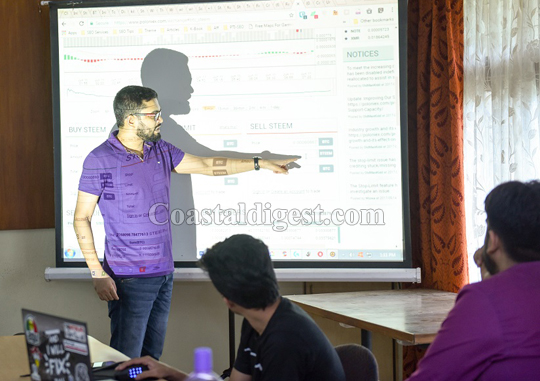
A briefing on this matter conducted by one of the first Indians on Steemit platform, Meghan Naik, who organized and educated the gathering about Steemit.co. He explained how to use the platform, how the incentives work, tips to make the most of this new technology and use of cryptocurrencies such as Bitcoin in the Indian scenario were disseminated to the gathering.

“I came across this platform a year ago and invested my time, and effort in writing content, building a global community for Steemit, helping many users use of this new platform to their benefit. Unlike the other social media platforms such as Facebook, Instagram or Twitter which makes money off it’s users by way of advertising to them, Steemit rewards it’s users for their attention, effort and engaging on its platform”, Meghan said and added, “Your attention, effort and time is definitely worth a reward and Steemit makes it worthwhile to use it over any other social media platform. Even a dollar earned through participation on Steemit is worth more than zero earned when updating your status on Facebook.”
It is but a blogger’s dream to monetize their blogs at day one and Steemit helps them achieve this instantly with exception engagement with the target audience. As was written in one of Meghan’s blog (www.Steemit.com/@firepower), it is wise to spend more time on Steemit and engage more with users across the world. When you are an established author you could even consider sharing content on Steemit full-time as Meghan Naik currently does!

More technical information: Steemit.com is a platform which provides a unique solution to monetize content. It is a social network which empowers the community to award content it finds valuable. The awards are in the digital currency STEEM, and it’s proportionately allocated based upon weighted upvotes earned from the community. Contrasting Steemit against traditional social media platforms such as Facebook and Twitter, outstanding content will attract likes, reposts and attention on traditional social media platforms, but no monetary reward. However, on Steemit, every like (in the form of an upvote) is a vote to award some digital currency STEEM to the content creator – more upvotes equal a greater allocation of STEEM from the reward pool.
rajat 2

rajat 3

rajat 4

rajat 5

Comments

Shankar
 - 
Sunday, 18 Jun 2017

If it catches on in India, it will become another Quora.

Add new comment

  • Coastaldigest.com reserves the right to delete or block any comments.
  • Coastaldigset.com is not responsible for its readers’ comments.
  • Comments that are abusive, incendiary or irrelevant are strictly prohibited.
  • Please use a genuine email ID and provide your name to avoid reject.
News Network
July 26,2020

Bengaluru, Jul 26: A year-long probe by Coffee Day Enterprises Ltd (CDEL) has found that its late founder V G Siddhartha routed Rs 2,693 crore out of the company to Mysore Amalgamated Coffee Estates Ltd (MACEL), another privately-owned entity of him.

The MACEL owes Rs 3,535 crore to subsidiaries of Coffee Day Enterprises as of July 31, 2019 of which only Rs 842 crore was accounted.

"Therefore, a sum of Rs 2,693 crore is the incremental outstanding that needs to be addressed," said the report of an investigation headed by Ashok Kumar Malhotra, a retired DIG of Central Bureau of Investigation (CBI) and assisted by law firm Agastya Agastya Legal.

Siddhartha was found dead in early August 2019, and many suspected that he had committed suicide.

Steps are being taken by subsidiaries of CDEL for recovery of dues from MACEL, the company said.

"The board authorised the Chairman to appoint an ex-judge of the Supreme Court or the High Court, or any other person of eminence, to suggest and oversee actions for recovery of the dues from MACEL and to help on any other associated matters," it said in regulatory filings at stock exchanges late on Friday.

The probe further gives clean chits to the Income Tax Department and the private equity firms who Siddhartha in his parting letter had alleged of harassment.

"We have not been provided with any documentary evidence to draw an inference that there may have been any advertent or inadvertent harassment from the Income Tax Department," said the probe report.

The probe also highlighted severe liquidity crunch at CDEL in the build-up to Siddhartha's death.

A committee supported by senior professionals was formed to protect the interest of all stakeholders. CDEL said the debt levels which were about Rs 7,200 crore on March 31, 2019 have been brought down significantly by Rs 4,000 crore. The present debt of the group is around Rs 3,200 crore.

"The disinvestment process in the group continues and we are confident to have effective solution to all stakeholders," it said.

Comments

Add new comment

  • Coastaldigest.com reserves the right to delete or block any comments.
  • Coastaldigset.com is not responsible for its readers’ comments.
  • Comments that are abusive, incendiary or irrelevant are strictly prohibited.
  • Please use a genuine email ID and provide your name to avoid reject.
News Network
March 2,2020

Bengaluru, Mar 2: Killing an Indian porcupine and inviting his TikTok followers to view it proved costly for a 25-year-old man from Kalaburagi. Forest department officials tracked him down and arrested him on Sunday morning.

Manjunath Biryalhissa, a resident of Jewargi taluk, was famous for his various TikTok videos and for lifting heavy stones in his village and neighbouring areas.

According to forest officials, on Friday, Manjunath and his friends caught a porcupine in Sindagi range, Vijayapura and stoned it to death. Later, they fried and cooked it. Manjunath then made an 18-second video, where he spoke about the porcupine hunt and slaughter, besides inviting his followers to like the video and join him in the feast.

The video was on TikTok and Facebook. Wildlife activists who found the video alerted forest department officials.

“Porcupine comes under schedule four of the Wildlife Protection Act, 1972. Keeping this video as evidence we were able to trace him through his Facebook account, where he had shared details of his hometown,” said forest officials.

Comments

Add new comment

  • Coastaldigest.com reserves the right to delete or block any comments.
  • Coastaldigset.com is not responsible for its readers’ comments.
  • Comments that are abusive, incendiary or irrelevant are strictly prohibited.
  • Please use a genuine email ID and provide your name to avoid reject.
Agencies
June 17,2020

Riyadh, Jun 17: Saudi Arabia is expected to scale back or call off this year's hajj pilgrimage for the first time in its modern history, observers say, a perilous decision as coronavirus cases spike.

Muslim nations are pressing Riyadh to give its much-delayed decision on whether the annual ritual will go ahead as scheduled in late July.

But as the kingdom negotiates a call fraught with political and economic risks in a tinderbox region, time is running out to organise logistics for one of the world's largest mass gatherings.

A full-scale hajj, which last year drew about 2.5 million pilgrims, appears increasingly unlikely after authorities advised Muslims in late March to defer preparations due to the fast-spreading disease.

"It's a toss-up between holding a nominal hajj and scrapping it entirely," a South Asian official in contact with Saudi hajj authorities said.

A Saudi official said: "The decision will soon be made and announced."

Indonesia, the world's most populous Muslim nation, withdrew from the pilgrimage this month after pressing Riyadh for clarity, with a minister calling it a "very bitter and difficult decision".

Malaysia, Senegal and Singapore followed suit with similar announcements.

Many other countries with Muslim populations -- from Egypt and Morocco to Turkey, Lebanon and Bulgaria -- have said they are still awaiting Riyadh's decision.

In countries like France, faith leaders have urged Muslims to "postpone" their pilgrimage plans until next year due to the prevailing risks.

The hajj, a must for able-bodied Muslims at least once in their lifetime, represents a major potential source of contagion as it packs millions of pilgrims into congested religious sites.

But any decision to limit or cancel the event risks annoying Muslim hardliners for whom religion trumps health concerns.

It could also trigger renewed scrutiny of the Saudi custodianship of Islam's holiest sites -- the kingdom's most powerful source of political legitimacy.

A series of deadly disasters over the years, including a 2015 stampede that killed up to 2,300 worshippers, has prompted criticism of the kingdom's management of the hajj.

"Saudi Arabia is caught between the devil and the deep blue sea," Umar Karim, a visiting fellow at the Royal United Services Institute in London, told AFP.

"The delay in announcing its decision shows it understands the political consequences of cancelling the hajj or reducing its scale."

"Buying time"

The kingdom is "buying time" as it treads cautiously, the South Asian official said.

"At the last minute if Saudi says 'we are ready to do a full hajj', (logistically) many countries will not be in a position" to participate, he said.

Amid an ongoing suspension of international flights, a reduced hajj with only local residents is a likely scenario, the official added.

A decision to cancel the hajj would be a first since the kingdom was founded in 1932.

Saudi Arabia managed to hold the pilgrimage during previous outbreaks of Ebola and MERS.

But it is struggling to contain the virus amid a serious spike in daily cases and deaths since authorities began easing a nationwide lockdown in late May.

In Saudi hospitals, sources say intensive care beds are fast filling up and a growing number of health workers are contracting the virus as the total number of cases has topped 130,000. Deaths surpassed 1,000 on Monday.

To counter the spike, authorities this month tightened lockdown restrictions in the city of Jeddah, gateway to the pilgrimage city of Mecca.

"Heartbroken"

"The hajj is the most important spiritual journey in the life of any Muslim, but if Saudi Arabia proceeds in this scenario it will not only exert pressure on its own health system," said Yasmine Farouk from the Carnegie Endowment for International Peace.

"It could also be widely held responsible for fanning the pandemic."

A cancelled or watered-down hajj would represent a major loss of revenue for the kingdom, which is already reeling from the twin shocks of the virus-induced slowdown and a plunge in oil prices.

The smaller year-round umrah pilgrimage was already suspended in March.

Together, they add $12 billion to the Saudi economy every year, according to government figures.

A negative decision would likely disappoint millions of Muslim pilgrims around the world who often invest their life savings and endure long waiting lists to make the trip.

"I can't help but be heartbroken -- I've been waiting for years," Indonesian civil servant Ria Taurisnawati, 37, told AFP as she sobbed.

"All my preparations were done, the clothes were ready and I got the necessary vaccination. But God has another plan."

Comments

Add new comment

  • Coastaldigest.com reserves the right to delete or block any comments.
  • Coastaldigset.com is not responsible for its readers’ comments.
  • Comments that are abusive, incendiary or irrelevant are strictly prohibited.
  • Please use a genuine email ID and provide your name to avoid reject.