


Decks cleared for fresh probe into former Mangaluru Khazi's death

[email protected] (CD Network)
April 20, 2016

Mangaluru, Apr 20: The Central Bureau of Investigation (CBI) is all set to commence its reinvestigation into the mysterious death of former Mangaluru Khazi CM Abdulla Moulavi in 2010, after a court in Eranakulam on the other day ordered for a probe into the incident.
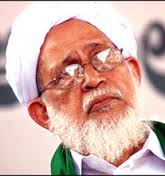
abdullahThe Eranakulam Chief Judicial Magistrate Court order on Friday last came while disposing of a petition by CA Mohammed Shafi, son of the late spiritual leader.

The court, while pronouncing its ruling, termed as “premature” the CBI's earlier finding that Abdulla Moulavi had committed suicide, while he was presumably on a morning stroll on the beach.

The dead body of CM Abdulla Moulavi was found in the sea near a big rock in Chembirikka in Kasargod early morning on February 15, 2010. His sandals and walking stick were found kept on the rock. The local police investigated the case for 16 days and reached the conclusion that he had committed suicide.

Couplet treated as suicide note'!

Several factors led the local police to reach to the conclusion – a note about death was found from the Khazi's diary, he had bought a new lock for his room and had visited his father's burial place climbing 30 steps the day before death. In fact the note found in his diary was reportedly the Malayalam translation of a few lines about death from the book Burda Baith'. The Crime Branch too said the same after doing a dummy test also in the same place where the dead body was found. The case was then handed over to the CBI.

The CBI also said that the Khazi was mentally and physically weak due to his health problems such as cancer for the liver etc. Treatments undertaken in several places such as Vellore were in vain and he even began meeting some people hoping to get relief. At last he resorted to suicide, says the CBI report.

However, those who counter the reports say that the aged Khazi who always has to use walking stick cannot climb on the top of the rock to jump to the sea. They say that a scholar like him did not have any necessity or situations to commit suicide. They also say that the local police was trying to write off the mysterious death as suicide to protect certain people's interests.

The Moulavi was a famous scholar and vice-president of the Samastha Kerala Jamiyathul Ulema (EK faction). The organisation had protested against the different media reports that came suggesting that the Khazi had committed suicide.

Comments

shaji
 - 
Wednesday, 20 Apr 2016

Police were in a hurry to close the case might be under pressure. Let CBP conduct fair enquiry and let the world come to know the fact. Suicide is nearly unimaginable. the Scholar will no way that he came to that decision.

Add new comment

  • Coastaldigest.com reserves the right to delete or block any comments.
  • Coastaldigset.com is not responsible for its readers’ comments.
  • Comments that are abusive, incendiary or irrelevant are strictly prohibited.
  • Please use a genuine email ID and provide your name to avoid reject.
News Network
March 1,2020

Mangaluru, Mar 1: A youth lost his life in a lift crash at a wedding hall at Kallapu near Thokkottu on the outskirts of the city today. 

The deceased has been identified as Hamzah (30), a resident near Thumbay, who was part of the catering team hired for the marriage ceremony. 

The tragedy occurred at around 2 p.m. when Hamzah was getting ready to bring utensils and other things by lift from the third floor of the hall. All of a sudden, the lift’s ropes came loose and Hamzah lost his balance and got trapped inside.

He was pulled out and rushed to a hospital in Deralakatte, but he breathed his last on the way. He is survived by his wife and three children.

Comments

Mbeary
 - 
Sunday, 1 Mar 2020

Inna lillah.. I think someone with a good computer knowledge under an organisation shud come up with fund raisals so that we can donate in a transparent manner

Add new comment

  • Coastaldigest.com reserves the right to delete or block any comments.
  • Coastaldigset.com is not responsible for its readers’ comments.
  • Comments that are abusive, incendiary or irrelevant are strictly prohibited.
  • Please use a genuine email ID and provide your name to avoid reject.
Ram Puniyani
February 10,2020

Noam Chomsky is one of the leading peace workers in the world. In the wake of America’s attack on Vietnam, he brought out his classic formulation, ‘manufacturing consent’. The phrase explains the state manipulating public opinion to have the public approve of it policies—in this case, the attack of the American state on Vietnam, which was then struggling to free itself from French colonial rule.

In India, we are witness to manufactured hate against religious minorities. This hatred serves to enhance polarisation in society, which undermines India’s democracy and Constitution and promotes support for a Hindu nation. Hate is being manufactured through multiple mechanisms. For example, it manifests in violence against religious minorities. Some recent ghastly expressions of this manufactured hate was the massive communal violence witnessed in Mumbai (1992-93), Gujarat (2002), Kandhamal (2008) and Muzaffarnagar (2013). Its other manifestation was in the form of lynching of those accused of having killed a cow or consumed beef. A parallel phenomenon is the brutal flogging, often to death, of Dalits who deal with animal carcasses or leather.

Yet another form of this was seen when Shambhulal Regar, indoctrinated by the propaganda of Hindu nationalists, burned alive Afrazul Khan and shot the video of the heinous act. For his brutality, he was praised by many. Regar was incited into the act by the propaganda around love jihad. Lately, we have the same phenomenon of manufactured hate taking on even more dastardly proportions as youth related to Hindu nationalist organisations have been caught using pistols, while police authorities look on.

Anurag Thakur, a BJP minster in the central government recently incited a crowd in Delhi to complete his chant of what should happen to ‘traitors of the country...” with a “they should be shot”. Just two days later, a youth brought a pistol to the site of a protest at Jamia Millia Islamia university and shouted “take Azaadi!” and fired it. One bullet hit a student of Jamia. This happened on 30 January, the day Nathuram Godse had shot Mahatma Gandhi in 1948. A few days later, another youth fired near the site of protests against the CAA and NRC at Shaheen Bagh. Soon after, he said that in India, “only Hindus will rule”.

What is very obvious is that the shootings by those associated with Hindu nationalist organisations are the culmination of a long campaign of spreading hate against religious minorities in India in general and against Muslims in particular. The present phase is the outcome of a long and sustained hate campaign, the beginning of which lies in nationalism in the name of religion; Muslim nationalism and Hindu nationalism. This sectarian nationalism picked up the communal view of history and the communal historiography which the British introduced in order to pursue their ‘divide and rule’ policy.

In India what became part of “social common sense” was that Muslim kings had destroyed Hindu temples, that Islam was spread by force, and that it is a foreign religion, and so on. Campaigns, such as the one for a temple dedicated to the Hindu god Rama to be built at the site where the Babri masjid once stood, further deepened the idea of a Muslim as a “temple-destroyer”. Aurangzeb, Tipu Sultan and other Muslim kings were tarnished as the ones who spread Islam by force in the subcontinent. The tragic Partition, which was primarily due to British policies, and was well-supported by communal streams also, was entirely attributed to Muslims. The Kashmir conflict, which is the outcome of regional, ethnic and other historical issues, coupled with the American policy of supporting Pakistan’s ambitions of regional hegemony, (which also fostered the birth of Al-Qaeda), was also attributed to the Muslims.

With recurring incidents of communal violence, these falsehoods went on going deeper into the social thinking. Violence itself led to ghettoisation of Muslims and further broke inter-community social bonds. On the one hand, a ghettoised community is cut off from others and on the other hand the victims come to be presented as culprits. The percolation of this hate through word-of-mouth propaganda, media and re-writing of school curricula, had a strong impact on social attitudes towards the minorities.

In the last couple of decades, the process of manufacturing hate has been intensified by the social media platforms which are being cleverly used by the communal forces. Swati Chaturvedi’s book, I Am a Troll: Inside the Secret World of the BJP’s Digital Army, tells us how the BJP used social media to spread hate. Whatapp University became the source of understanding for large sections of society and hate for the ‘Other’, went up by leaps and bounds. To add on to this process, the phenomenon of fake news was shrewdly deployed to intensify divisiveness.

Currently, the Shaheen Bagh movement is a big uniting force for the country; but it is being demonised as a gathering of ‘anti-nationals’. Another BJP leader has said that these protesters will indulge in crimes like rape. This has intensified the prevalent hate.

While there is a general dominance of hate, the likes of Shambhulal Regar and the Jamia shooter do get taken in by the incitement and act out the violence that is constantly hinted at. The deeper issue involved is the prevalence of hate, misconceptions and biases, which have become the part of social thinking.

These misconceptions are undoing the amity between different religious communities which was built during the freedom movement. They are undoing the fraternity which emerged with the process of India as a nation in the making. The processes which brought these communities together broadly drew from Gandhi, Bhagat Singh and Ambedkar. It is these values which need to be rooted again in the society. The communal forces have resorted to false propaganda against the minorities, and that needs to be undone with sincerity.

Combating those foundational misconceptions which create hatred is a massive task which needs to be taken up by the social organisations and political parties which have faith in the Indian Constitution and values of freedom movement. It needs to be done right away as a priority issue in with a focus on cultivating Indian fraternity yet again.

Comments

Add new comment

  • Coastaldigest.com reserves the right to delete or block any comments.
  • Coastaldigset.com is not responsible for its readers’ comments.
  • Comments that are abusive, incendiary or irrelevant are strictly prohibited.
  • Please use a genuine email ID and provide your name to avoid reject.
News Network
February 3,2020

Bengaluru, Feb 3: A wave of dissatisfaction has hit the six-month-old BJP government against the backdrop of chief minister B S Yediyurappa's announcement to induct 13 aspirants in the second cabinet expansion on February 6.

In the first cabinet expansion, the chief minister had inducted 17 ministers on August 20, 2019.

Among the 13, ten will be those defectors from Congress and the JD(S) who were disqualified earlier and won the assembly by-election in December last year.

The rest will be the 'native BJP leaders', as deputy chief minister Govind Karjol put it.

Speculations are rife that Mahadevapura MLA Arvind Limbavali, Hukkeri MLA Umesh Katti and C P Yogeshwar, who had lost to H D Kumaraswamy from Channapatna assembly segment,would be inducted.

If Yogeshwar is included in the cabinet then he will bethe second minister after Deputy chief minister Laxman Savadi who had lost and yet made it to the cabinet.

The possible induction of Yogeshwar and Savadi, who was made deputy chief minister despite losing the assembly elections, are also a "reason" for discontent in the BJP.

Hectic activities began in the power corridor and MLAs started forming groups to impress upon the chief minister to include their members in the ministry.

While one group was from the "Kalyana Karnataka" region, the others were the defectors who will be excluded in the cabinet expansion.

A few MLAS from 'Kalyana Karnataka' region or erstwhile Hyderabad-Karnataka region comprising six districts, met at the Legislature Home and held a meeting.

The meeting was led by Shorapur MLA Narasimha Nayak akaRaju Gouda and Honnalli MLA M P Renukacharya.
The MLAs of the Kalyana Karnataka region were unanimous that their backward region should get representation in the cabinet.

Later, Gouda met the Chief Minister and requested that their region be given adequate representation in the cabinet, which is lacking development.

Talking to reporters, Gouda said, "We had given representations to all the MPs, MLAs and the chief minister. Today also we all had a meeting and later called on the Chief Minister requesting him to make any MLA from our region a minister."

He said any imbalance in cabinet expansion will cause trouble to the MLAs from Kalyana Karnataka region.

"If you make the defeated candidates ministers then include 120 people in the cabinet," an aggrieved Gouda taunted.

Renukacharya too echoed the same sentiments.

"If you give preference to the defeated candidates then what will happen to those who won the election? Where should the winners of election go? We emphasise upon giving preference to the winners."

On the other hand, the defectors who jumped the Congress and the JD(S) ship and helped form the BJP government too had a meeting in Bengaluru, said BJP sources.

They were unanimous that not only the 11 MLAs who won theelection be made ministers but also A H Vishwanath and M T BNagaraj who had unsuccessfully contested the assembly by- polls from Hunasuru and Hoskote on a BJP ticket.

Vishwanath, who was quite vocal on Sunday for dropping his name, was mellowed down on Monday after meeting Yediyurappa.

However, his insistence for getting a cabinet berth remained intact.

"I did not make any proposal before him and will not do it in future because he (Yediyurappa) knows what has to be done,"Vishwanath told reporters after meeting the chief minister.

When he was reminded of Yediyurappa's statement that therewere legal complications in making him a minister, Vishwanath said, "This government has legal experts and the advocate general. They will speak."

Amid speculations that Athani MLA Mahesh Kumathalli may not get a cabinet berth in the reshuffle, the defected MLAs led by Gokak BJP MLA Ramesh Jarkiholi, had a meeting to decide their future strategy, said party sources.

Currently, there are 18 ministers, including the chief minister, in the cabinet, which has a sanctioned strength of 34. Sixteen berths are vacant.

The cabinet expansion exercise will be a delicate task for Yediyurappa as he has to ensure adequate representation for various castes and regions.

The ministry already has eight Lingayats, including Yediyurappa; three Vokkaligas; a Brahmin; three SCs, two OBCs and one ST.

Opposition parties have been critical of the BJP and Yediyurappa over the delay in the cabinet expansion, alleging he is weak and his administration has collapsed.

Reacting to the cabinet expansion, former chief minister Siddaramaiah quipped, "A drama is taking place. Let it happen on February 6. Afterwards we will see what all happens."

Comments

Add new comment

  • Coastaldigest.com reserves the right to delete or block any comments.
  • Coastaldigset.com is not responsible for its readers’ comments.
  • Comments that are abusive, incendiary or irrelevant are strictly prohibited.
  • Please use a genuine email ID and provide your name to avoid reject.