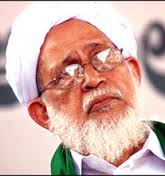
Decks cleared for fresh probe into former Mangaluru Khazi's death

[email protected] (CD Network)
April 20, 2016

Mangaluru, Apr 20: The Central Bureau of Investigation (CBI) is all set to commence its reinvestigation into the mysterious death of former Mangaluru Khazi CM Abdulla Moulavi in 2010, after a court in Eranakulam on the other day ordered for a probe into the incident.

abdullahThe Eranakulam Chief Judicial Magistrate Court order on Friday last came while disposing of a petition by CA Mohammed Shafi, son of the late spiritual leader.

The court, while pronouncing its ruling, termed as “premature” the CBI's earlier finding that Abdulla Moulavi had committed suicide, while he was presumably on a morning stroll on the beach.

The dead body of CM Abdulla Moulavi was found in the sea near a big rock in Chembirikka in Kasargod early morning on February 15, 2010. His sandals and walking stick were found kept on the rock. The local police investigated the case for 16 days and reached the conclusion that he had committed suicide.

Couplet treated as suicide note'!

Several factors led the local police to reach to the conclusion – a note about death was found from the Khazi's diary, he had bought a new lock for his room and had visited his father's burial place climbing 30 steps the day before death. In fact the note found in his diary was reportedly the Malayalam translation of a few lines about death from the book Burda Baith'. The Crime Branch too said the same after doing a dummy test also in the same place where the dead body was found. The case was then handed over to the CBI.

The CBI also said that the Khazi was mentally and physically weak due to his health problems such as cancer for the liver etc. Treatments undertaken in several places such as Vellore were in vain and he even began meeting some people hoping to get relief. At last he resorted to suicide, says the CBI report.

However, those who counter the reports say that the aged Khazi who always has to use walking stick cannot climb on the top of the rock to jump to the sea. They say that a scholar like him did not have any necessity or situations to commit suicide. They also say that the local police was trying to write off the mysterious death as suicide to protect certain people's interests.

The Moulavi was a famous scholar and vice-president of the Samastha Kerala Jamiyathul Ulema (EK faction). The organisation had protested against the different media reports that came suggesting that the Khazi had committed suicide.

Comments

shaji
 - 
Wednesday, 20 Apr 2016

Police were in a hurry to close the case might be under pressure. Let CBP conduct fair enquiry and let the world come to know the fact. Suicide is nearly unimaginable. the Scholar will no way that he came to that decision.

Add new comment

  • Coastaldigest.com reserves the right to delete or block any comments.
  • Coastaldigset.com is not responsible for its readers’ comments.
  • Comments that are abusive, incendiary or irrelevant are strictly prohibited.
  • Please use a genuine email ID and provide your name to avoid reject.
News Network
June 23,2020

Bengaluru, Jun 23: Karnataka Medical Education Minister K Sudhakar's wife and daughter have tested positive for COVID-19, a day after his father was confirmed to have been infected with the virus.

"Test results of our family members have come. Unfortunately, my wife and daughter have tested positive for #Covid19 and are undergoing treatment," the minister tweeted on Tuesday.

He said he and his two sons have tested negative.

Sudhakar's father P N Keshava Reddy tested positive for coronavirus on Monday. He was admitted to the hospital with a cough and fever.

Earlier, the domestic help of the minister had tested coronavirus positive and was admitted to a hospital.

In April, Sudhakar was quarantined along with three other ministers for coming in contact with a journalist who was coronavirus positive.

Karnataka reported 249 new COVID-19 cases and five deaths on Monday taking the total number of cases in the state to 9,399 and the death toll to 142.

Comments

Add new comment

  • Coastaldigest.com reserves the right to delete or block any comments.
  • Coastaldigset.com is not responsible for its readers’ comments.
  • Comments that are abusive, incendiary or irrelevant are strictly prohibited.
  • Please use a genuine email ID and provide your name to avoid reject.
Ram Puniyani
February 4,2020

As democracy is seeping in slowly all over the world, there is an organization which is monitoring the degree of democracy in the individual countries, The Economist Intelligence Unit. As such in each country there are diverse factors which on one hand work to deepen it, while others weaken it. Overall there is a march from theoretical democracy to substantive one. The substantive democracy will herald not just the formal equality, freedom and community feeling in the country but will be founded on the substantive quality of these values. In India while the introduction of modern education, transport, communication laid the backdrop of beginning of the process, the direction towards deepening of the process begins with Mahatma Gandhi when he led the non-cooperation movement in 1920, in which average people participated. The movement of freedom for India went on to become the ‘greatest ever mass movement’ in the World.

The approval and standards for democracy were enshrined in Indian Constitution, which begins ‘We the people of India’, and was adopted on 26th January 1950. With this Constitution and the policies adopted by Nehru the process of democratization started seeping further, the dreaded Emergency in 1975, which was lifted later restored democratic freedoms in some degree. This process of democratisation is facing an opposition since the decade of 1990s after the launch of Ram Temple agitation, and has seen the further erosion with BJP led Government coming to power in 2014. The state has been proactively attacking civil liberties, pluralism and participative political culture with democracy becoming flawed in a serious way. And this is what got reflected in the slipping of India by ten places, to 51st, in 2019. On the index of democracy India slipped down from the score of 7.23 to 6.90. The impact of sectarian BJP politics is writ on the state of the nation, country.

Ironically this lowering of score has come at a time when the popular protests, the deepening of democracy has been given a boost and is picking up with the Shaheen Bagh protests. The protest which began in Shaheen Bagh, Delhi in the backdrop of this Government getting the Citizenship amendment Bill getting converted into an act and mercilessly attacking the students of Jamia Milia Islamia, Aligarh Muslim University along with high handed approach in Jamia Nagar and neighbouring areas.  From 15th December 2019, the laudable protest is on.

It is interesting to note that the lead in this protest has been taken by the Muslim women, from the Burqa-Hijab clad to ‘not looking Muslim’ women and was joined by students and youth from all the communities, and later by the people from all the communities. Interestingly this time around this Muslim women initiated protest has contrast from all the protests which earlier had begun by Muslims. The protests opposing Shah Bano Judgment, the protests opposing entry of women in Haji Ali, the protests opposing the Government move to abolish triple Talaq. So far the maulanas from top were initiating the protests, with beard and skull cap dominating the marches and protests. The protests were by and large for protecting Sharia, Islam and were restricted to Muslim community participating.

This time around while Narendra Modi pronounced that ‘protesters can be identified by their clothes’, those who can be identified by their external appearance are greatly outnumbered by all those identified or not identified by their appearance.

The protests are not to save Islam or any other religion but to protect Indian Constitution. The slogans are structured around ‘Defence of democracy and Indian Constitution’. The theme slogans are not Allahu Akbar’ or Nara-E-Tadbeer’ but around preamble of Indian Constitution. The lead songs have come to be Faiz Ahmad Faiz’s ‘Hum Dekhenge’, a protest against Zia Ul Haq’s attempts to crush democracy in the name of religion. Another leading protest song is from Varun Grover, ‘Tanashah Aayenge…Hum Kagaz nahin Dikhayenge’, a call to civil disobedience against the CAA-NRC exercise and characterising the dictatorial nature of the current ruling regime.

While BJP was telling us that primary problem of Muslim women is Triple talaq, the Muslim women led movements has articulated that primary problem is the very threat to Muslim community. All other communities, cutting across religious lines, those below poverty line, those landless and shelter less people also see that if the citizenship of Muslims can be threatened because of lack of some papers, they will be not far behind in the victimization process being unleashed by this Government.

While CAA-NRC has acted as the precipitating factor, the policies of Modi regime, starting from failure to fulfil the tall promises of bringing back black money, the cruel impact of demonetisation, the rising process of commodities, the rising unemployment, the divisive policies of the ruling dispensation are the base on which these protest movements are standing. The spread of the protest movement, spontaneous but having similar message is remarkable. Shaheen Bagh is no more just a physical space; it’s a symbol of resistance against the divisive policies, against the policies which are increasing the sufferings of poor workers, the farmers and the average sections of society.

What is clear is that as identity issues, emotive issues like Ram Temple, Cow Beef, Love Jihad and Ghar Wapasi aimed to divide the society, Shaheen Bagh is uniting the society like never before. The democratisation process which faced erosion is getting a boost through people coming together around the Preamble of Indian Constitution, singing of Jan Gan Man, waving of tricolour and upholding the national icons like Gandhi, Bhagat Singh, Ambedkar and Maulana Azad. One can feel the sentiments which built India; one can see the courage of people to protect what India’s freedom movement and Indian Constitution gave them.

Surely the communal forces are spreading canards and falsehood against the protests. As such these protests which is a solid foundation of our democracy. The spontaneity of the movement is a strength which needs to be channelized to uphold Indian Constitution and democratic ethos of our beloved country.


Comments

Add new comment

  • Coastaldigest.com reserves the right to delete or block any comments.
  • Coastaldigset.com is not responsible for its readers’ comments.
  • Comments that are abusive, incendiary or irrelevant are strictly prohibited.
  • Please use a genuine email ID and provide your name to avoid reject.
News Network
July 10,2020

Bengaluru, Jul 10: The Karnataka cabinet gave its approval for "The Karnataka Contingency Fund (Amendment) Bill, 2020" to enhance the contingency fund limit to Rs 500 crore in the wake of the COVID-19 pandemic.

This will be an ordinance making one time enhancement in the limit as the government needs money to make payments immediately, Law and Parliamentary Affairs Minister JC Madhuswamy told reporters after a cabinet meeting.

Under the contingency fund, the government had room to spend up to Rs 80 crore without budget provision.

"...but this time due to COVID-19 as we had to give money to some sections that were in distress like barbers, flower and vegetable growers, taxi drivers, among others, we have decided to increase the limit to Rs 500 crore," Mr Madhuswamy said.

"As assembly was not in session and as we had to make payments to those in distress immediately, this decision has been taken," he added.

The cabinet today ratified the administrative approval given to carry out civil and electrical works to install medical gas pipeline with high flow oxygen system at district hospitals, taluk and community health centres coming under Health and Family welfare department in view of COVID-19.

The minister said about Rs 207 crore is being approved for this purpose.

It also ratified procurement of medical equipment and furniture for public healthcare institutions of the health and family welfare department worth Rs 81.99 crore.

According to the minister, the cabinet has decided to bring in an amendment to section 9 of the Lokayukta act, which mandates that the preliminary inquiry contemplated by Lokayukta or Upalokayuta should be completed in 90 days and charge sheeting should be completed within six months.

Noting that at the Agricultural Produce Market Committee (APMC) cess was being collected, he said as the government had brought in an amendment to the APMC act, there was demand to reduce the market cess. "So we have reduced it from 1.5 per cent to one per cent."

Approval has also been given by the cabinet to bring Karnataka Vidyuth Kharkane (KAVIKA) and Mysore Electrical Industries (MEI), which are presently under the control of Commerce and Industries department, under administrative control of the energy department.

Other decisions taken by the cabibinet include deployment and implementation of "e-procurement 2.0" project on PPP at a cost of Rs 184.37 crore and ratification of the action taken to issue orders on March 24 to release interest free loan of Rs 2,500 crore to ESCOMs for payment of outstanding power purchase dues to generating companies.

The cabinet also gave administrative approval for setting up of an Indian Institute of Information technology at Raichur.

"Under this, we are committed to provide Rs 44.8 crore in four years for infrastructure," the minister added.

Comments

Add new comment

  • Coastaldigest.com reserves the right to delete or block any comments.
  • Coastaldigset.com is not responsible for its readers’ comments.
  • Comments that are abusive, incendiary or irrelevant are strictly prohibited.
  • Please use a genuine email ID and provide your name to avoid reject.