


Deendar Channabasaveshwara terror case: Beggar arrested after 16 years

[email protected] (CD Network)
August 10, 2016

Bengaluru, Aug 10: Sixteen years after Karnataka faced serial bombings by Deendar Channabasaveshwara Anjuman, the Criminal Investigation Department (CID) sleuths have arrested Sheikh Amir Ali, a beggar and prime suspect in the case.
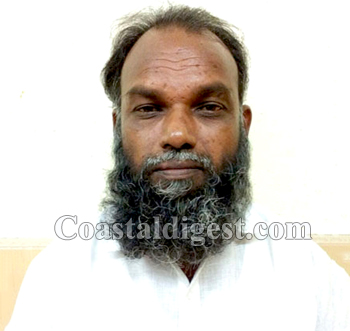
AmirAliPolice sources said that for the past couple of years, Ali had been living a mendicant's life and surviving on alms

The 50-year-old beggar is wanted in four blast cases in Karnataka and Maharashtra, police said. The Karnataka CID team picked him up from a hideout in Nalagonda, Andhra Pradesh.

The Ist Additional Chief Metropolitan Magistrate (ACMM) court in Bengaluru had issued a non-bailable warrant against Ali. The blasts were triggered by men owing allegiance to Deendar Channabasaveshwara Anjuman, a terror outfit banned in 1948.

The explosion in Bengaluru occurred in a church in JJ Nagar on the night of July 9, 2000, damaging it partly. Twenty-nine persons were arrested and the court convicted 23 of them. Eleven convicts were awarded death sentence, while 12 were sentenced to life imprisonment.

Similar blasts were triggered in Hubballi and Wadi around the same time and investigations proved the involvement of Ali and others. Of the seven fugitives, five are settled in Pakistan and one is absconding.

According to police sources, Ali had supplied explosive material to Hashim Ali from Andhra Pradesh, who assembled it to prepare the bombs.

Deendar Anjuman

Deendar Anjuman or Deendar Channabasaveshwara Anjuman was founded by Hazrath Moulana Siddique - alias Deendar Channabasaveshwara - at Bellampet, Gulbarga district, in 1924. Its head office was at Asif Nagar, Hyderabad. Though the organisation operated behind the façade of establishing religious equality, it had a hidden terror agenda, which is widely condemned by Muslims.

Terror track

1. On June 8, 2000, two crude bombs were set off at Saint Anne's Church in Wadi, Gulbarga District. The church was damaged and two persons were injured.

2. On July 9, 2000, bombs were set off at St Peter Paul Church in Jagajeevanaramnagar, Bengaluru.

3. On July 8, 2000, the group triggered off bombs blasts at the St John Luthern Church in Hubli. Sixteen persons faced trial in the case.

4. The final blast occurred when a bomb went off accidentally while the terrorists were transporting them in a Maruti van on July 9.

Comments

Satyameva jayate
 - 
Thursday, 11 Aug 2016

Viren go helpGO maataas dying.....and stinking....will God's stink after dying an need human help to be buried.....

Zakir
 - 
Wednesday, 10 Aug 2016

Muslims should know what exactly Holy Quran & Authentic Hadees says. Rather start following WRONG religious leaders though their life style or preaching against Quran & Hadees. Eventually innocent people loose their life and muslim community name gets spoiled bcoz of some BLACK SHEEP in the community.

Viren Kotian
 - 
Wednesday, 10 Aug 2016

Looks like CD editor's desperate bid to give saffron tinge to Muslim terror. poor fellow.

Add new comment

  • Coastaldigest.com reserves the right to delete or block any comments.
  • Coastaldigset.com is not responsible for its readers’ comments.
  • Comments that are abusive, incendiary or irrelevant are strictly prohibited.
  • Please use a genuine email ID and provide your name to avoid reject.
News Network
February 12,2020

Mumbai, Feb 12: The Income Tax department's Criminal Investigation wing has identified 2,000 Indian citizens who hold properties in Dubai but had failed to declare it in their IT returns.

In its ongoing crackdown on black money, the agency has identified Indian citizens who purchased properties in Dubai but failed to declare and explain the source of funds used to purchase these properties.

In the past few years, people have used shell companies to route illegal money and buy overseas properties to evade income tax.

However, the tax department has now increased its efforts to track down those involved in major tax evasion cases.

The 2,000 persons and companies identified mainly include businessmen, top professionals, and government officials.

The IT department will initiate action against the accused under the Black Money Act.

Citizens who own properties outside the country but fail to declare the source of funds or income used for the purchase could be prosecuted under the Black Money Act.

Under Section FA (Foreign Assets) of the Income Tax Act, an individual has to declare purchase and ownership of properties, assets, companies owned outside the country while filing the income tax returns annually.

In the recent drive against black money, the IT department identified 2,000 Indian nationals who failed to provide information on the same while filing IT returns.

Of the 2,000 citizens owning properties in Dubai, around 600 could not furnish details regarding purchase details.

Those who haven't been able to explain the source of funds used for the purchase of properties could be prosecuted and their properties can be attached by the agency.

Other than the attachment of the property, they can face a monetary penalty up to 300 per cent of the property value and also face imprisonment under the Black Money Act.

The properties owned by Indians in Dubai raised red flags as this pattern of parking money is used by money launderers, smugglers, underworld gangsters and drug traffickers for making payments.

It is worth mentioning that of the 2,000 citizens identified, most are residing in Mumbai, followed by Kerala and Gujarat.

The clause under section FA (foreign Assets) came into effect in the year 2011-12 and it is mandatory for people owning properties outside India to declare it in their IT returns.

Those identified by IT department could also face action under FEMA (Foreign Exchange Management Act) by the Enforcement Directorate under Section 4.

Recently the Enforcement Directorate (ED) launched a crackdown on black money parked overseas by tracking and identifying immovable assets bought overseas by Indian nationals illegally.

The move is being carried out under rules laid down under Section 4 of FEMA (Foregn Exchange Manipulation Act), 1999. Section 4 of FEMA states that no person resident in India shall acquire, hold, own, possess or transfer any foreign exchange, foreign security or any immovable property situated outside India.

On January 17, the Enforcement Directorate (ED) conducted searches at the residence of a former chief engineer of Brihanmumbai Municipal Corporation (BMC) in connection with an inquiry related to FEMA.

In the raids, the ED officials recovered documents related to the purchase of a property in Dubai in an allegedly illegal manner.

The ex-BMC chief engineer was posted with some of the most crucial wings of the municipal corporation -- the building proposal department and development plan department.

The agency did not disclose the name of the ex-BMC chief engineer but it has been learnt that he had superannuated around seven years ago from the municipal corporation.

ED, in a statement, said incriminating documents with regard to illegal acquisition of a property held in Dubai was recovered during the search operation.

The former BMC chief engineer has stated that he had purchased the property in Dubai at 'Park Island, Bonaire Marsa, Dubai' for Rs 70 lakh in 2012. The property is held jointly in his name, his spouse and son.

The retired BMC officials could not furnish any documents which would help ascertain the value of the property and also could not provide details on how the payments were made to buy the property in Dubai.

The citizens identified by the IT department recently also adopted a similar route to buy property in Delhi. It remains to be seen how the income tax department plans to penalise them.

Comments

Add new comment

  • Coastaldigest.com reserves the right to delete or block any comments.
  • Coastaldigset.com is not responsible for its readers’ comments.
  • Comments that are abusive, incendiary or irrelevant are strictly prohibited.
  • Please use a genuine email ID and provide your name to avoid reject.
coastaldigest.com web desk
May 23,2020

The decision of the Indian government to ease the coronavirus-linked global travel restrictions imposed on those having OCI cards has given a big relief to many stranded overseas citizens of India across the world.

OCI card is issued to people of Indian origin globally which gives them almost all the privileges of an Indian national except for the right to vote, government service and buying agricultural land. The OCI card gives them a visa-free travel to India.

On Friday, the central government allowed certain categories of OCI card holders, who are stranded abroad, to come to the country. Earlier, according to the regulations issued by the Indian government in April, visas of foreign nationals and OCI cards were suspended as part of the new international travel restrictions following the COVID-19 pandemic.

This privilege of visa free travel to India was causing distress among a large number of people of Indian-origin and Indian citizens in countries like the US whose children were OCI card holders as they were born in this country.

Many Indian parents, several of whom lost their jobs as a result of the economic crisis due to coronavirus pandemic, but were not allowed to take the special evacuation flights of Air India from various US cities, took to social media and urged the Indian leaders to allow them to travel to India.

“This is a big relief for the OCI card holders. It was a humanitarian crisis in the making. I am pleased that the Indian Government listened to their voices,” said social activist Prem Bhandari, chairman of Jaipur Foot USA, who has been taking up the cause of the OCI card holders.

Dr Arathi Krishna, former deputy chairperson of NRI Forum of Karnataka government, who had been demanding this relaxation, many of the thousands of stranded OCI card holders in defferent parts of the world were in pursuading her to exert pressure on the authorities concerned for this much needed relaxation.

The restrictions on traveling of OCI card holders to India was issued by govt of India on March 13 in the wake of global outbreak of coronavirus pandemic. 

She said: "Many parents who are Indian nationals could not travel for emergency purpose to India after repatriation flights started due to their minor children being OCI card holders. Many children who were OCI card holders could not travel to India to perform last rites when there was death in their family due to these restrictions"

"I was constantly pressurising and bringing these issues to the attention of ministry officials in External Affairs and Home Affairs departments. I was following up with Mr Dammu Ravi who is heading the COVID task force  task firce in the ministry of overseas Indian affairs who took interest in solving this problem through his consistent efforts with MHA. Iam thankful to Fireign Secretary too for his efforts and concern and to MHA for making it easier now for OCI card holders to travel in repatriation flights with emergency reasons," she said.

Comments

Add new comment

  • Coastaldigest.com reserves the right to delete or block any comments.
  • Coastaldigset.com is not responsible for its readers’ comments.
  • Comments that are abusive, incendiary or irrelevant are strictly prohibited.
  • Please use a genuine email ID and provide your name to avoid reject.
News Network
June 4,2020

Jun 4: Belur Mutt, the global headquarters of Ramakrishna Mutt and Ramakrishna Mission, has decided to throw open its gates to the devotees from June 15 after putting in place all safety measures required to contain the spread of COVID-19.

The gates of the sprawling premises of the mutt set up by Swami Vivekananada at Belur near here was closed since the lockdown was announced in March by the Centre. The Mutt has devotees from across the globe.

The secretary of Belur Mutt Ramakrishna Mutt and Ramakrishna Mission, Swami Suvirananda said in a statement that as the easing down of lockdown measures announced by the Centre and the state did not indicate the threat caused by COVID-19 pandemic is over, the authorities thought it prudent to put in place all the measures required before opening the gates of the Mutt and all RKM centres in the country for the scores of devotees.

The statement was issued on June 1, the day religious places of worship were thrown open by the West Bengal government.

"We had to think about both aspects - the issue of public health and also the wish of our devotees for having a darshan of the shrines of Swami Vivekananda, Sri Sarada Maa and Ramamrishna Paramahansa. But we believe spirituality and sceintific temparament must go hand in hand," he told reporters on Thursday.

"Therefore it is imperative for us to consult experts and put in place adequate arrangement and infrastructure" before opening the (Belur Mutt) gates," he said.

The senior monk said the timing of the opening and closure of the shrine and all other details conforming the health protocol and guidelines will be announced before opening date.

The Mutt complex had become totally out of bound for visitors from March 24 when the lockdown was clamped. There was restricted entry to it since May 16.

Comments

Add new comment

  • Coastaldigest.com reserves the right to delete or block any comments.
  • Coastaldigset.com is not responsible for its readers’ comments.
  • Comments that are abusive, incendiary or irrelevant are strictly prohibited.
  • Please use a genuine email ID and provide your name to avoid reject.