


Deendar Channabasaveshwara terror case: Beggar arrested after 16 years

[email protected] (CD Network)
August 10, 2016

Bengaluru, Aug 10: Sixteen years after Karnataka faced serial bombings by Deendar Channabasaveshwara Anjuman, the Criminal Investigation Department (CID) sleuths have arrested Sheikh Amir Ali, a beggar and prime suspect in the case.
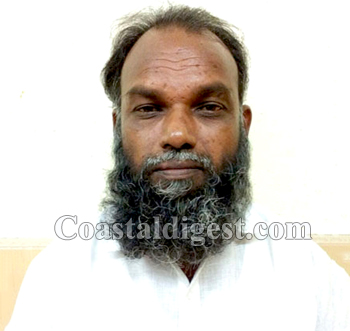
AmirAliPolice sources said that for the past couple of years, Ali had been living a mendicant's life and surviving on alms

The 50-year-old beggar is wanted in four blast cases in Karnataka and Maharashtra, police said. The Karnataka CID team picked him up from a hideout in Nalagonda, Andhra Pradesh.

The Ist Additional Chief Metropolitan Magistrate (ACMM) court in Bengaluru had issued a non-bailable warrant against Ali. The blasts were triggered by men owing allegiance to Deendar Channabasaveshwara Anjuman, a terror outfit banned in 1948.

The explosion in Bengaluru occurred in a church in JJ Nagar on the night of July 9, 2000, damaging it partly. Twenty-nine persons were arrested and the court convicted 23 of them. Eleven convicts were awarded death sentence, while 12 were sentenced to life imprisonment.

Similar blasts were triggered in Hubballi and Wadi around the same time and investigations proved the involvement of Ali and others. Of the seven fugitives, five are settled in Pakistan and one is absconding.

According to police sources, Ali had supplied explosive material to Hashim Ali from Andhra Pradesh, who assembled it to prepare the bombs.

Deendar Anjuman

Deendar Anjuman or Deendar Channabasaveshwara Anjuman was founded by Hazrath Moulana Siddique - alias Deendar Channabasaveshwara - at Bellampet, Gulbarga district, in 1924. Its head office was at Asif Nagar, Hyderabad. Though the organisation operated behind the façade of establishing religious equality, it had a hidden terror agenda, which is widely condemned by Muslims.

Terror track

1. On June 8, 2000, two crude bombs were set off at Saint Anne's Church in Wadi, Gulbarga District. The church was damaged and two persons were injured.

2. On July 9, 2000, bombs were set off at St Peter Paul Church in Jagajeevanaramnagar, Bengaluru.

3. On July 8, 2000, the group triggered off bombs blasts at the St John Luthern Church in Hubli. Sixteen persons faced trial in the case.

4. The final blast occurred when a bomb went off accidentally while the terrorists were transporting them in a Maruti van on July 9.

Comments

Satyameva jayate
 - 
Thursday, 11 Aug 2016

Viren go helpGO maataas dying.....and stinking....will God's stink after dying an need human help to be buried.....

Zakir
 - 
Wednesday, 10 Aug 2016

Muslims should know what exactly Holy Quran & Authentic Hadees says. Rather start following WRONG religious leaders though their life style or preaching against Quran & Hadees. Eventually innocent people loose their life and muslim community name gets spoiled bcoz of some BLACK SHEEP in the community.

Viren Kotian
 - 
Wednesday, 10 Aug 2016

Looks like CD editor's desperate bid to give saffron tinge to Muslim terror. poor fellow.

Add new comment

  • Coastaldigest.com reserves the right to delete or block any comments.
  • Coastaldigset.com is not responsible for its readers’ comments.
  • Comments that are abusive, incendiary or irrelevant are strictly prohibited.
  • Please use a genuine email ID and provide your name to avoid reject.
News Network
February 27,2020

Bengaluru, Feb 27: About 60kg of unaccounted gold ornaments worth Rs. 21 crore were unearthed by officers of the Commercial Taxes Department of Karnataka Government.

The ornaments were recovered after the department conducted surprise inspections and raided business premises of wholesale jewellery dealers in Ranganatha Mansion and Sakalajee Market in Chickpet area of Bengaluru on Tuesday.

"The raid was based on information that many traders from other states visit the city and carry gold jewels without any valid documents and supply it to local jewellers without invoices," said Srikar MS Commissioner of Commercial Taxes in a statement.

The officers raided the premises of 23 jewellers and found 60 kg gold ornaments in stock which were not covered by valid documents. A penalty was levied on the undocumented ornaments.

"It is informed that the enforcement wing is keeping a close watch on the interstate movement of gold, silver and all the dealers in the state are hereby advised not to buy any goods without valid purchase invoices, added Srikar MS.

Comments

Add new comment

  • Coastaldigest.com reserves the right to delete or block any comments.
  • Coastaldigset.com is not responsible for its readers’ comments.
  • Comments that are abusive, incendiary or irrelevant are strictly prohibited.
  • Please use a genuine email ID and provide your name to avoid reject.
News Network
May 13,2020

Belagavi, 13: In a shocking development, Karnataka has reported its first COVID-19 relapse with a 50-year-old Tablighi Jamaat convention attendee in Belagavi testing positive days after being discharged.

The State health officials confirmed that P-298 from Kudachi, who had recovered and was discharged, has suffered a relapse. He has been re-admitted to a designated hospital in Belagavi.

The patient was initially admitted on April 15 and recovered, testing negative twice on April 30 and May 1. The tests were done at the National Institute of Virology (NIV), Bengaluru, and the National Institute of Traditional Medicine (NITM), Belagavi.

Despite recovering, his treatment continued in the ICU for other comorbidities, especially cardiac issues. He was discharged on May 4 and quarantined at an institutional facility in Kudachi.

However, he developed symptoms again and was tested for COVID-19 again on May 5 at NITM, Belagavi. The result came back positive. He was re-admitted to a hospital, and on May 6 a second test was done at the Belagavi Institute of Medical Sciences. Again, he tested positive.

Comments

Add new comment

  • Coastaldigest.com reserves the right to delete or block any comments.
  • Coastaldigset.com is not responsible for its readers’ comments.
  • Comments that are abusive, incendiary or irrelevant are strictly prohibited.
  • Please use a genuine email ID and provide your name to avoid reject.
Media Release
February 14,2020

Veteran journalist P. Sainath has said that the nation is in a crisis. And this crisis is not limited to just the rural area. It has become a national crisis at various areas such as agriculture, education, economy, job creation etc.

He was delivering the endowment lecture on the topic ‘Indian democracy at the post-liberalization and post-truth era’ at Media Manthan 2020 organized by the PG department of journalism and mass communication at St Aloysius College (Autonomous). 

Mr Sainath said that the many policies adopted in the 90s led to India becoming unusually unequal. Referring to the speech Ambedkar had made at the Constituent Assembly while handing over the draft of the Constitution, Mr Sainath said, “Ambedkar had warned about the weakness of Indian democracy that liberty without equality allows the supremacy of a few over the multitude. Liberty, equality and fraternity must be kept together as we cannot have one without the other.” 

Mr Sainath stated that the agrarian crisis was no longer about the loss of productivity, employment or about farmer suicide; it was a societal, civilizational crisis. Commenting on the lopsided policies such as cow-slaughter ban, he explained how cow slaughter ban had adversely affected many industries due to their interdependency. While Muslims who slaughtered cows were rendered helpless, the cattle traders who were mostly OBCs lost their earnings as the cattle prices crashed. An important industry like Kolhapur sandals industry in Maharashtra went bankrupt as a result of the cow slaughter ban in Maharashtra. He said the policymakers had no idea how the rural industries were interconnected. Demonetisation too devastated the rural economy as 98 percent of rural transactions happen through cash. 

Mr Sainath also spoke about the crisis of inequality which affects the Dalits and the Adivasis far more than anyone else as 90 percent of the rural households take home less than Rs 10,000/- per month. “Women are yet another group whose labour is never counted in the gross domestic product. Women and girls globally do unpaid work which amounts to about 12.5 billion working hours per year. Monetarily speaking, this is worth 10.8 trillion dollars,” Mr Sainath added. 

Speaking about the crisis of jobs Mr Sainath said that major companies were laying off employees just to create more profits for the investors and the adoption of artificial intelligence in the industry would further destroy millions of jobs.

Rector of St Aloysius College Institutions Fr Dionysius Vaz SJ, Principal Dr (Fr) Praveen Martis SJ, HOD of Journalism and Mass Communication department Dr (Fr) Melwyn Pinto SJ were present.

‘Veerappan and Vijay Mallya’s business models are interesting!’

Addressing the gathering during his endowment lecture on Friday, Mr Sainath made an interesting comment on the so called ‘revenue model’. “Whenever I visit IIMs and IITs for lectures on my PARI project, the students there ask me what my revenue model for my project is. I tell them that I do not have a revenue model. In fact, journalism does not begin with a revenue model. Gandhiji, Ambedkar, Bhagat Singh were all great journalists. But they did not have a revenue model,” Mr Sainath said.

On a lighter note, he said that the best revenue model that he liked was that of forest brigand Veerappan and liquor baron Vijay Mallya. “Veerappan ruled the forest for forty years and from the top ministers to the villagers he could dictate terms and liver royally. Similarly, Mallya’s revenue model was to steal the banks and run away abroad and live like a king,” Mr Sainath added.

Journalism is not and can never be a business. It is a calling, he opined. While newspaper can be a business, television can be a business, journalism per se cannot be reduced to a business. “Unfortunately today, journalists are recruited on a contract basis and they have no bargaining power; and there are no unions to fight for their cause. Hence, they are at the mercy of the corporate media houses for their survival and are made to write stories that cannot be called journalism,” Mr Sainath said.

Answering a question as to the pressures he faced as a journalist, he said that external pressures from the government or others could be very well handled. It is the internal pressures from once own media house that journalists find it difficult to manage.


Comments

Add new comment

  • Coastaldigest.com reserves the right to delete or block any comments.
  • Coastaldigset.com is not responsible for its readers’ comments.
  • Comments that are abusive, incendiary or irrelevant are strictly prohibited.
  • Please use a genuine email ID and provide your name to avoid reject.