Deendar Channabasaveshwara terror case: Beggar arrested after 16 years

[email protected] (CD Network)
August 10, 2016

Bengaluru, Aug 10: Sixteen years after Karnataka faced serial bombings by Deendar Channabasaveshwara Anjuman, the Criminal Investigation Department (CID) sleuths have arrested Sheikh Amir Ali, a beggar and prime suspect in the case.
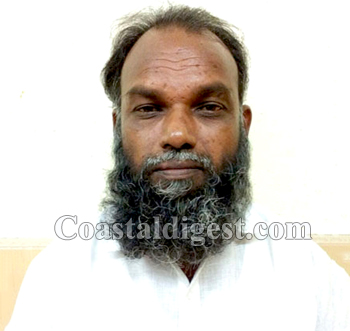
AmirAliPolice sources said that for the past couple of years, Ali had been living a mendicant's life and surviving on alms

The 50-year-old beggar is wanted in four blast cases in Karnataka and Maharashtra, police said. The Karnataka CID team picked him up from a hideout in Nalagonda, Andhra Pradesh.

The Ist Additional Chief Metropolitan Magistrate (ACMM) court in Bengaluru had issued a non-bailable warrant against Ali. The blasts were triggered by men owing allegiance to Deendar Channabasaveshwara Anjuman, a terror outfit banned in 1948.

The explosion in Bengaluru occurred in a church in JJ Nagar on the night of July 9, 2000, damaging it partly. Twenty-nine persons were arrested and the court convicted 23 of them. Eleven convicts were awarded death sentence, while 12 were sentenced to life imprisonment.

Similar blasts were triggered in Hubballi and Wadi around the same time and investigations proved the involvement of Ali and others. Of the seven fugitives, five are settled in Pakistan and one is absconding.

According to police sources, Ali had supplied explosive material to Hashim Ali from Andhra Pradesh, who assembled it to prepare the bombs.

Deendar Anjuman

Deendar Anjuman or Deendar Channabasaveshwara Anjuman was founded by Hazrath Moulana Siddique - alias Deendar Channabasaveshwara - at Bellampet, Gulbarga district, in 1924. Its head office was at Asif Nagar, Hyderabad. Though the organisation operated behind the façade of establishing religious equality, it had a hidden terror agenda, which is widely condemned by Muslims.

Terror track

1. On June 8, 2000, two crude bombs were set off at Saint Anne's Church in Wadi, Gulbarga District. The church was damaged and two persons were injured.

2. On July 9, 2000, bombs were set off at St Peter Paul Church in Jagajeevanaramnagar, Bengaluru.

3. On July 8, 2000, the group triggered off bombs blasts at the St John Luthern Church in Hubli. Sixteen persons faced trial in the case.

4. The final blast occurred when a bomb went off accidentally while the terrorists were transporting them in a Maruti van on July 9.

Comments

Satyameva jayate
 - 
Thursday, 11 Aug 2016

Viren go helpGO maataas dying.....and stinking....will God's stink after dying an need human help to be buried.....

Zakir
 - 
Wednesday, 10 Aug 2016

Muslims should know what exactly Holy Quran & Authentic Hadees says. Rather start following WRONG religious leaders though their life style or preaching against Quran & Hadees. Eventually innocent people loose their life and muslim community name gets spoiled bcoz of some BLACK SHEEP in the community.

Viren Kotian
 - 
Wednesday, 10 Aug 2016

Looks like CD editor's desperate bid to give saffron tinge to Muslim terror. poor fellow.

Add new comment

  • Coastaldigest.com reserves the right to delete or block any comments.
  • Coastaldigset.com is not responsible for its readers’ comments.
  • Comments that are abusive, incendiary or irrelevant are strictly prohibited.
  • Please use a genuine email ID and provide your name to avoid reject.
coastaldigest.com news network
August 1,2020

Bengaluru,  Aug 1: As many as 5,172 new COVID-19 cases and 98 deaths were reported in Karnataka on Saturday, taking the state's count of coronavirus cases to 1,29,287.

The active cases in the state now stand at 73,219 while 53,648 people have been discharged.

"5,172 new COVID-19 cases and 98 deaths reported in Karnataka in the last 24 hours, taking total cases to 1,29,287 including 53,648 discharges and 2,412 deaths. The number of active cases stands at 73,219," said State Health Department.

So far, a total of 2,412 people have died in the state.

India, on Saturday, reported 57,117 new COVID-19 cases, taking the country's coronavirus tally to 16,95,988, said the Union Health Ministry. 

Comments

Add new comment

  • Coastaldigest.com reserves the right to delete or block any comments.
  • Coastaldigset.com is not responsible for its readers’ comments.
  • Comments that are abusive, incendiary or irrelevant are strictly prohibited.
  • Please use a genuine email ID and provide your name to avoid reject.
News Network
March 6,2020

Bengaluru, Mar 6: School children in Karnataka will have 'bag-free' days on two Saturdays in a month as part of efforts to create a joyful learning experience, Chief Minister B S Yediyurappa announced on Thursday. By making two Saturdays in a month as bag-free days, "Sambhrama Shanivara" will be observed with the objective of creating a joyful learning experience by reducing the burden of text books, he said, presenting the 2020-21 budget in the state assembly.

"The main purpose of such days is to create awareness, by means of activities, on topics that are necessary for students to be ideal citizens," he added.

He also said for the first time in the history of the state his government presented a "child budget", making it a special feature of the budget.

All the policies and programmes for the development of children below the age of 18 are consolidated and presented in this budget and as many as 279 programmes involving Rs.36,340crore, which is 15.28 per cent of the total volume of the Budget, have been earmarked.

English medium of instruction would be given along with Urdu in 400 government Urdu schools and Rs one crore will be provided during 2020-21 for this purpose, Mr Yediyurappa said.

For the education of children of auto drivers, up to Rs 2,000 would be provided annually to each family. For this purpose, Rs 40 crore will be provided in the coming fiscal, the Chief Minister added.

Comments

Add new comment

  • Coastaldigest.com reserves the right to delete or block any comments.
  • Coastaldigset.com is not responsible for its readers’ comments.
  • Comments that are abusive, incendiary or irrelevant are strictly prohibited.
  • Please use a genuine email ID and provide your name to avoid reject.
News Network
August 2,2020

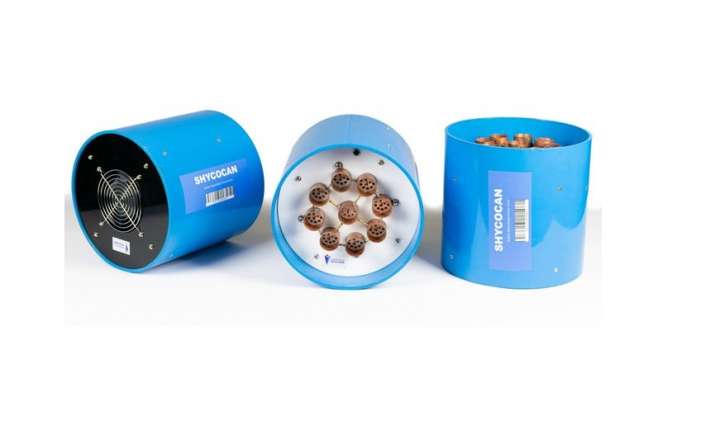
Bengaluru, Aug 2: Bengaluru based Centre for Advanced Research and Development (CARD), the research wing of organisation De scalene has come up with a device called "SHYCOCAN" (Scalene Hypercharge Corona Canon) which neutralizes the coronavirus.

Speaking to news agency Dr Rajah Vijay Kumar, Chairman, Organisation De Scalene said that the device will not kill any bacteria or fungus, however, neutralizes the coronavirus particles.

"The device was tested for its safety and efficacy and is soon going to be manufactured and marketed in the US under the Enforcement Discretion policy of USFDA and in Europe as the device is CE compliant and is CE marked," said Kumar.

He also added the device will cover a volume of 10,000 cubic feet.

The device Scalene Hypercharge Corona Canon (SHYCOCAN) is intended to be used in the residential, industrial and commercial environment and is designed for active containment by attenuation of Corona family of viruses. (Laboratories de Especialidades Immunological S.A. de C.V, Virucidal Activity concludes 99.9 per cent virus elimination), Kumar asserted.

"SHYCOCAN operates on regular 110/240V - 50/60 Hz wall socket and is a plug and play device, that delivers the necessary signals to a photon mediated electrons emitters (PMEE), that produces hypercharge high-velocity electrons by photon mediation that interacts with the negative seeking S-protein of Corona family of viruses thus reducing infectivity and prevent air and surface borne transmission of corona family of viruses," said Kumar.

The device does not use any chemicals, or any other consumables and does not produce harmful ozone gas or any other substances and is completely safe for use in any environment, he added.

"The attack mechanism of the Virus starts with the initial attachment of the virion to the host cell, it is initiated by interactions between the S-protein and its receptor on the "negative" cell membrane. The sites of receptor binding domains (RBD) within the S1 region of a coronavirus S-protein vary depending on the virus. 

The S-protein/receptor interaction is the primary determinant for a coronavirus to infect a host species and governs the tissue tropism of the virus. However, the end result is the fusion and release of the viral genome into the cytoplasm," said Kumar.

He continued saying that the counter mechanism by the device SHYCOCAN is that if negative seeking is the guidance mechanism of the S- Protein, attracted by the transmembrane potential of the host cells, then breaking this mechanism would block the Coronavirus infectivity and spread.

"The device has been in use for more than a year at the S-CARD campus, the headquarters of Scalene," said Kumar.

Comments

Add new comment

  • Coastaldigest.com reserves the right to delete or block any comments.
  • Coastaldigset.com is not responsible for its readers’ comments.
  • Comments that are abusive, incendiary or irrelevant are strictly prohibited.
  • Please use a genuine email ID and provide your name to avoid reject.