


Deendar Channabasaveshwara terror case: Beggar arrested after 16 years

[email protected] (CD Network)
August 10, 2016

Bengaluru, Aug 10: Sixteen years after Karnataka faced serial bombings by Deendar Channabasaveshwara Anjuman, the Criminal Investigation Department (CID) sleuths have arrested Sheikh Amir Ali, a beggar and prime suspect in the case.
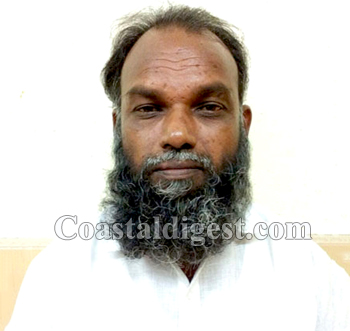
AmirAliPolice sources said that for the past couple of years, Ali had been living a mendicant's life and surviving on alms

The 50-year-old beggar is wanted in four blast cases in Karnataka and Maharashtra, police said. The Karnataka CID team picked him up from a hideout in Nalagonda, Andhra Pradesh.

The Ist Additional Chief Metropolitan Magistrate (ACMM) court in Bengaluru had issued a non-bailable warrant against Ali. The blasts were triggered by men owing allegiance to Deendar Channabasaveshwara Anjuman, a terror outfit banned in 1948.

The explosion in Bengaluru occurred in a church in JJ Nagar on the night of July 9, 2000, damaging it partly. Twenty-nine persons were arrested and the court convicted 23 of them. Eleven convicts were awarded death sentence, while 12 were sentenced to life imprisonment.

Similar blasts were triggered in Hubballi and Wadi around the same time and investigations proved the involvement of Ali and others. Of the seven fugitives, five are settled in Pakistan and one is absconding.

According to police sources, Ali had supplied explosive material to Hashim Ali from Andhra Pradesh, who assembled it to prepare the bombs.

Deendar Anjuman

Deendar Anjuman or Deendar Channabasaveshwara Anjuman was founded by Hazrath Moulana Siddique - alias Deendar Channabasaveshwara - at Bellampet, Gulbarga district, in 1924. Its head office was at Asif Nagar, Hyderabad. Though the organisation operated behind the façade of establishing religious equality, it had a hidden terror agenda, which is widely condemned by Muslims.

Terror track

1. On June 8, 2000, two crude bombs were set off at Saint Anne's Church in Wadi, Gulbarga District. The church was damaged and two persons were injured.

2. On July 9, 2000, bombs were set off at St Peter Paul Church in Jagajeevanaramnagar, Bengaluru.

3. On July 8, 2000, the group triggered off bombs blasts at the St John Luthern Church in Hubli. Sixteen persons faced trial in the case.

4. The final blast occurred when a bomb went off accidentally while the terrorists were transporting them in a Maruti van on July 9.

Comments

Satyameva jayate
 - 
Thursday, 11 Aug 2016

Viren go helpGO maataas dying.....and stinking....will God's stink after dying an need human help to be buried.....

Zakir
 - 
Wednesday, 10 Aug 2016

Muslims should know what exactly Holy Quran & Authentic Hadees says. Rather start following WRONG religious leaders though their life style or preaching against Quran & Hadees. Eventually innocent people loose their life and muslim community name gets spoiled bcoz of some BLACK SHEEP in the community.

Viren Kotian
 - 
Wednesday, 10 Aug 2016

Looks like CD editor's desperate bid to give saffron tinge to Muslim terror. poor fellow.

Add new comment

  • Coastaldigest.com reserves the right to delete or block any comments.
  • Coastaldigset.com is not responsible for its readers’ comments.
  • Comments that are abusive, incendiary or irrelevant are strictly prohibited.
  • Please use a genuine email ID and provide your name to avoid reject.
News Network
February 22,2020

Bengaluru, Feb 22: President Ram Nath Kovind on Saturday said an ideal trade-off needs to be reached between new media -- which is fast and popular -- and traditional media which has developed skills to authenticate a news report, which is a costly operation.

Addressing the fourth edition of ‘the Huddle’ – the annual thought conclave of the Hindu here, he asserted that the internet and social media had democratised journalism and revitalised democracy, but had also led to many anxieties.

While the new media was fast and popular and people could choose what they wanted to watch, hear or read, traditional media would have to introspect on its role in society and find ways to earn the reader’s full trust again as "the project of democracy was incomplete without informed citizens – which means, without unbiased journalism."

Debate and discussion were internalised in India’s social psyche to arrive at truth since time immemorial, he said.

"There is no doubt that perception of truth is conditioned by circumstances. The conditions that cloud the truth’s positions are effectively dispelled by a contestation of ideas through debate, discussion and scientific temper. Prejudices and violence vitiate the search for truth."

Expressing happiness to attend ‘The Huddle’ organised by The Hindu, he said the Hindu group of publications had been relentlessly aiming to capture the essence of this great country through its responsible and ethical journalism. He commended them for their insistence on sticking to the five basic principles of journalism – truth-telling, freedom and independence, justice, humaneness and contributing to the social good, an official release here said.

Mr Kovind said dogmas and personal prejudices distorted the truth. In the 150th year of Gandhiji’s birth, he asked all to ponder over this question: "will it not be proper to pursue truth itself as the ideology? Gandhiji has shown us the path by walking ceaselessly in search of truth which would ultimately encompass every positive attribute that enriches the universe."

Comments

Add new comment

  • Coastaldigest.com reserves the right to delete or block any comments.
  • Coastaldigset.com is not responsible for its readers’ comments.
  • Comments that are abusive, incendiary or irrelevant are strictly prohibited.
  • Please use a genuine email ID and provide your name to avoid reject.
News Network
January 8,2020

Bengaluru, Jan 8: The Karnataka government on Tuesday decided to adopt a no-fail approach for Class 7 examinations for government and private schools following the state syllabus.

The report card of a student doesn’t carry ‘pass’ or ‘fail’ remark, but points to his or her strengths and weaknesses in each subject in the exams, which will now be called Common Evaluation Exam.

The quality cell of the Karnataka Secondary Education Examination Board (which conducts SSLC exams) will prepare question papers, which will be evaluated at the district level by government and private schoolteachers. The Class 7 exams will be held in March.

The Common Evaluation Exam follows the Continuous Comprehensive Evaluation (CCE) currently practised under the Right to Education Act. “The formative and summative assessments (tests, projects and quizzes) will be held as usual,”KG Jagadeesha, commissioner of public instruction, said.

Edu dept to launch helpline by March

For the March exam, summative assessment 2 will be held with half the syllabus. Other modalities (exam duration and total marks) will be announced next week,” said KG Jagadeesha. The CCE system will continue for classes 8 and 9. The government hopes the exam and subsequent interventions in classes 8 and 9 will boost students’ confidence for crucial board examinations.

Minister S Suresh Kumar said, “More than an exam, it’s an evaluation of a child’s knowledge. The Belagavi division has done something similar. The Kalaburagi zone found mathematics and science were areas of concern; language was an issue in Urdumedium schools.” The minister said zilla panchayat CEOs have observed that intervention should start from class 8. “Keeping this in mind, we’ve started necessary preparation for class 7 exam ,” he added.

The education department will start a helpline by March for students, teachers, school managements and educationists to 11 raise problems on day-to-day issues.

Comments

Add new comment

  • Coastaldigest.com reserves the right to delete or block any comments.
  • Coastaldigset.com is not responsible for its readers’ comments.
  • Comments that are abusive, incendiary or irrelevant are strictly prohibited.
  • Please use a genuine email ID and provide your name to avoid reject.
News Network
February 6,2020

Mangalore, Feb 6: The first Rashtriya Lok Adalat of 2020 will get started from Feb 8, A district judge has announced, adding that it is being organised by Karnataka Law Services Authority and Dakshina Kannada Law Services Authority.

Speaking to media on Wednesday evening, Justice Sathyanarayana Acharya Kandlur said, "4,820 cases were resolved through Lok Adalat last year. 618 cases have been registered so far to be decided under the Lok Adalat."

Familial, civil and revenue cases of cheque dishonour, financial extortion, cases related to telephone, electricity, water, land encroachment and acquisition, motor vehicle cases, labour issues and maintenance expenses will be decided in the Lok Adalat.

Comments

Add new comment

  • Coastaldigest.com reserves the right to delete or block any comments.
  • Coastaldigset.com is not responsible for its readers’ comments.
  • Comments that are abusive, incendiary or irrelevant are strictly prohibited.
  • Please use a genuine email ID and provide your name to avoid reject.