



Deendar Channabasaveshwara terror case: Beggar arrested after 16 years

[email protected] (CD Network)
August 10, 2016

Bengaluru, Aug 10: Sixteen years after Karnataka faced serial bombings by Deendar Channabasaveshwara Anjuman, the Criminal Investigation Department (CID) sleuths have arrested Sheikh Amir Ali, a beggar and prime suspect in the case.
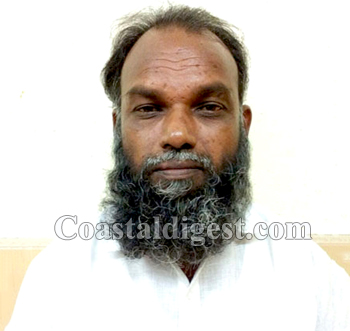
AmirAliPolice sources said that for the past couple of years, Ali had been living a mendicant's life and surviving on alms

The 50-year-old beggar is wanted in four blast cases in Karnataka and Maharashtra, police said. The Karnataka CID team picked him up from a hideout in Nalagonda, Andhra Pradesh.

The Ist Additional Chief Metropolitan Magistrate (ACMM) court in Bengaluru had issued a non-bailable warrant against Ali. The blasts were triggered by men owing allegiance to Deendar Channabasaveshwara Anjuman, a terror outfit banned in 1948.

The explosion in Bengaluru occurred in a church in JJ Nagar on the night of July 9, 2000, damaging it partly. Twenty-nine persons were arrested and the court convicted 23 of them. Eleven convicts were awarded death sentence, while 12 were sentenced to life imprisonment.

Similar blasts were triggered in Hubballi and Wadi around the same time and investigations proved the involvement of Ali and others. Of the seven fugitives, five are settled in Pakistan and one is absconding.

According to police sources, Ali had supplied explosive material to Hashim Ali from Andhra Pradesh, who assembled it to prepare the bombs.

Deendar Anjuman

Deendar Anjuman or Deendar Channabasaveshwara Anjuman was founded by Hazrath Moulana Siddique - alias Deendar Channabasaveshwara - at Bellampet, Gulbarga district, in 1924. Its head office was at Asif Nagar, Hyderabad. Though the organisation operated behind the façade of establishing religious equality, it had a hidden terror agenda, which is widely condemned by Muslims.

Terror track

1. On June 8, 2000, two crude bombs were set off at Saint Anne's Church in Wadi, Gulbarga District. The church was damaged and two persons were injured.

2. On July 9, 2000, bombs were set off at St Peter Paul Church in Jagajeevanaramnagar, Bengaluru.

3. On July 8, 2000, the group triggered off bombs blasts at the St John Luthern Church in Hubli. Sixteen persons faced trial in the case.

4. The final blast occurred when a bomb went off accidentally while the terrorists were transporting them in a Maruti van on July 9.

Comments

Satyameva jayate
 - 
Thursday, 11 Aug 2016

Viren go helpGO maataas dying.....and stinking....will God's stink after dying an need human help to be buried.....

Zakir
 - 
Wednesday, 10 Aug 2016

Muslims should know what exactly Holy Quran & Authentic Hadees says. Rather start following WRONG religious leaders though their life style or preaching against Quran & Hadees. Eventually innocent people loose their life and muslim community name gets spoiled bcoz of some BLACK SHEEP in the community.

Viren Kotian
 - 
Wednesday, 10 Aug 2016

Looks like CD editor's desperate bid to give saffron tinge to Muslim terror. poor fellow.

Add new comment

  • Coastaldigest.com reserves the right to delete or block any comments.
  • Coastaldigset.com is not responsible for its readers’ comments.
  • Comments that are abusive, incendiary or irrelevant are strictly prohibited.
  • Please use a genuine email ID and provide your name to avoid reject.
News Network
July 26,2020

Kasaragod, Jul 26: First funeral, now wedding. Forty-three persons who attended a wedding at Pilankatta in Chengala panchayat in Kasaragod on July 17 have tested positive for Covid-19, said district medical officer (DMO) A V Ramdas.

They include the bride and the groom. Collector D Sajith Babu has asked all those who attended the wedding to go into home quarantine for 14 days. Those with Covid symptoms should get in touch with the nearest primary health centre, he said.

The DMO said samples of 128 persons linked to the wedding were tested, of which 43 turned out positive. Earlier, 44 persons who attended a funeral in Cherkala in the first week of July had tested positive. The funeral was declared a cluster and the government had to test 522 persons linked to the funeral.

The collector said those taking part in funeral or weddings without following the Covid protocol would be booked under the Kerala Epidemic Diseases Act. If convicted, they would face up to two years of rigorous imprisonment and a fine of `10,000. Kasaragod police said they will register a case in connection with the wedding. 

Pilankatta ward member Abdulla Kunhi K B said it was not a big fat wedding. The ceremony held at the bride’s house at Pilankatta was attended by less than 100 people, he said.“Theirs is a big family with four houses in one compound. 

As many as 30 members are staying in these houses,” said Kunhi. Nine of the 30 have tested positive.Of the 15 guests, who came from the bride’s mother’s house, 12 contracted the infection. “The rest of the infected persons were among the groom’s guests,” said Kunhi, who did not attend the wedding. The groom and the bride’s father returned from Dubai three months ago.

1,049: state records biggest recovery
A total of 1,049 Covid patients recovered on Saturday. This is the first time that the number of recoveries crossed the 1,000-mark in the state. The previous highest was 968 reported on Friday. So far, as many as 8,613 patients have recovered.

roping in ayush experts a challenge  
Plan to bring AYUSH practitioners for treating positive patients at CFLTCs is going to be a challenge for the government. It turned out that respective associations were planning to approach the government with an individual charter of demands. 

Comments

Add new comment

  • Coastaldigest.com reserves the right to delete or block any comments.
  • Coastaldigset.com is not responsible for its readers’ comments.
  • Comments that are abusive, incendiary or irrelevant are strictly prohibited.
  • Please use a genuine email ID and provide your name to avoid reject.
coastaldigest.com news network
February 3,2020

Mangaluru, Feb 3: After neighbouring reported the second confirmed case of dreaded Coronavirus, the government of Karnataka today ordered high alert across border districts including Dakshina Kannada.

Apart from Dakshina Kannada, district administrations in Kodagu, Chamarajanagar and Mysuru that share boundary with Kerala have been put on high alert over the movement of people with suspected cases.

In a statement released on Monday, the Health and Family welfare department said that these districts have been directed to immediately report to the State Surveillance Unit (SSU) if they come across any suspected cases of people infected with Coronavirus.

Currently, about 51 people who returned from Coronavirus-affected regions have been identified and 46 are under home isolation across Karnataka.

So far, 44 samples have been sent to the National Institute of Virology, Pune for analysis and out of which 29 samples have revealed negative results. Yet, the state government has put in all possible measures to check the spread of the virus in any part of the state.

Comments

Add new comment

  • Coastaldigest.com reserves the right to delete or block any comments.
  • Coastaldigset.com is not responsible for its readers’ comments.
  • Comments that are abusive, incendiary or irrelevant are strictly prohibited.
  • Please use a genuine email ID and provide your name to avoid reject.
Agencies
June 30,2020

Washington, Jun 30: Researchers in China have discovered a new type of swine flu that is capable of triggering a pandemic, according to a study published Monday in the US science journal PNAS.

Named G4, it is genetically descended from the H1N1 strain that caused a pandemic in 2009.

It possesses "all the essential hallmarks of being highly adapted to infect humans," say the authors, scientists at Chinese universities and China's Center for Disease Control and Prevention.

The researchers then carried out various experiments including on ferrets, which are widely used in flu studies because they experience similar symptoms to humans -- principally fever, coughing and sneezing. 

G4 was observed to be highly infectious, replicating in human cells and causing more serious symptoms in ferrets than other viruses.

Tests also showed that any immunity humans gain from exposure to seasonal flu does not provide protection from G4.

According to blood tests which showed up antibodies created by exposure to the virus, 10.4 percent of swine workers had already been infected.

The tests showed that as many as 4.4 percent of the general population also appeared to have been exposed.

The virus has therefore already passed from animals to humans but there is no evidence yet that it can be passed from human to human -- the scientists' main worry.

"It is of concern that human infection of G4 virus will further human adaptation and increase the risk of a human pandemic," the researchers wrote.

The authors called for urgent measures to monitor people working with pigs.

"The work comes as a salutary reminder that we are constantly at risk of new emergence of zoonotic pathogens and that farmed animals, with which humans have greater contact than with wildlife, may act as the source for important pandemic viruses," said James Wood, head of the department of veterinary medicine at Cambridge University.

A zoonotic infection is caused by a pathogen that has jumped from a non-human animal into a human.

Comments

Add new comment

  • Coastaldigest.com reserves the right to delete or block any comments.
  • Coastaldigset.com is not responsible for its readers’ comments.
  • Comments that are abusive, incendiary or irrelevant are strictly prohibited.
  • Please use a genuine email ID and provide your name to avoid reject.