


Deendar Channabasaveshwara terror case: Beggar arrested after 16 years

[email protected] (CD Network)
August 10, 2016

Bengaluru, Aug 10: Sixteen years after Karnataka faced serial bombings by Deendar Channabasaveshwara Anjuman, the Criminal Investigation Department (CID) sleuths have arrested Sheikh Amir Ali, a beggar and prime suspect in the case.
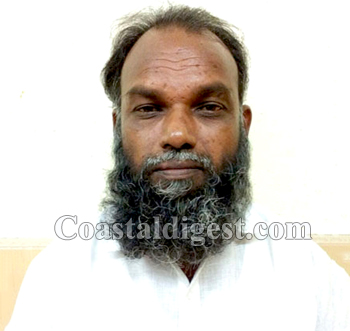
AmirAliPolice sources said that for the past couple of years, Ali had been living a mendicant's life and surviving on alms

The 50-year-old beggar is wanted in four blast cases in Karnataka and Maharashtra, police said. The Karnataka CID team picked him up from a hideout in Nalagonda, Andhra Pradesh.

The Ist Additional Chief Metropolitan Magistrate (ACMM) court in Bengaluru had issued a non-bailable warrant against Ali. The blasts were triggered by men owing allegiance to Deendar Channabasaveshwara Anjuman, a terror outfit banned in 1948.

The explosion in Bengaluru occurred in a church in JJ Nagar on the night of July 9, 2000, damaging it partly. Twenty-nine persons were arrested and the court convicted 23 of them. Eleven convicts were awarded death sentence, while 12 were sentenced to life imprisonment.

Similar blasts were triggered in Hubballi and Wadi around the same time and investigations proved the involvement of Ali and others. Of the seven fugitives, five are settled in Pakistan and one is absconding.

According to police sources, Ali had supplied explosive material to Hashim Ali from Andhra Pradesh, who assembled it to prepare the bombs.

Deendar Anjuman

Deendar Anjuman or Deendar Channabasaveshwara Anjuman was founded by Hazrath Moulana Siddique - alias Deendar Channabasaveshwara - at Bellampet, Gulbarga district, in 1924. Its head office was at Asif Nagar, Hyderabad. Though the organisation operated behind the façade of establishing religious equality, it had a hidden terror agenda, which is widely condemned by Muslims.

Terror track

1. On June 8, 2000, two crude bombs were set off at Saint Anne's Church in Wadi, Gulbarga District. The church was damaged and two persons were injured.

2. On July 9, 2000, bombs were set off at St Peter Paul Church in Jagajeevanaramnagar, Bengaluru.

3. On July 8, 2000, the group triggered off bombs blasts at the St John Luthern Church in Hubli. Sixteen persons faced trial in the case.

4. The final blast occurred when a bomb went off accidentally while the terrorists were transporting them in a Maruti van on July 9.

Comments

Satyameva jayate
 - 
Thursday, 11 Aug 2016

Viren go helpGO maataas dying.....and stinking....will God's stink after dying an need human help to be buried.....

Zakir
 - 
Wednesday, 10 Aug 2016

Muslims should know what exactly Holy Quran & Authentic Hadees says. Rather start following WRONG religious leaders though their life style or preaching against Quran & Hadees. Eventually innocent people loose their life and muslim community name gets spoiled bcoz of some BLACK SHEEP in the community.

Viren Kotian
 - 
Wednesday, 10 Aug 2016

Looks like CD editor's desperate bid to give saffron tinge to Muslim terror. poor fellow.

Add new comment

  • Coastaldigest.com reserves the right to delete or block any comments.
  • Coastaldigset.com is not responsible for its readers’ comments.
  • Comments that are abusive, incendiary or irrelevant are strictly prohibited.
  • Please use a genuine email ID and provide your name to avoid reject.
News Network
April 1,2020

Bengaluru, Apr 1: Karnataka Health Minister B Sriramulu on Wednesday said that 200 people, out of 342 from the state who had attended the religious gathering at Markaz building in Delhi's Nizamuddin area, have been quarantined.

"200 people including four from Bengaluru and five from Belgaum, who participated in Tablighi Jamaat (in Delhi's Nizamuddin), have been quarantined. Total 342 people from Karnataka had attended the event," Sriramulu told reporters here.

The gatherings organised by the Tablighi Jamaat at the Markaz building in Nizamuddin came into the spotlight after multiple coronavirus cases were confirmed amongst those who attended the event held in March.
Twenty-four cases were reported from the national capital alone, apart from Telangana, the union territory of Andaman and Nicobar Islands amongst others.

The minister had earlier said that Bengaluru Urban and Mysuru have been identified among the prime 25 COVID-19 hotspots in the country.
Chikkaballapur, since the last fourteen days, has been emerging as another hotspot, according to Sriramulu.

The total number of coronavirus cases in India has risen to 1,637 after 240 new cases were reported in the country, according to the Ministry of Health and Family Welfare, on Wednesday.

The total number of active cases rose to 1466 in the country, while 132 people have been cured and discharged after receiving treatment, as of 9 am.

Comments

Add new comment

  • Coastaldigest.com reserves the right to delete or block any comments.
  • Coastaldigset.com is not responsible for its readers’ comments.
  • Comments that are abusive, incendiary or irrelevant are strictly prohibited.
  • Please use a genuine email ID and provide your name to avoid reject.
News Network
August 7,2020

Bengaluru, Aug 7: Amid the rising number of COVID-19 cases in Karnataka, the state's health department issued fresh guidelines for the disposal of bodies of COVID patients.

"Although an increased risk of COVID infection from a dead body to health workers or family members who follow standard precautions while handling the body is unlikely, the lack of scientific data requires the utmost care to avoid the inadvertent spread of COVID-19 during these times," the statement from the health department's press release read, emphasising on the dignity of the dead and the religious and cultural tradition.

The 23-page press release elaborated on guidelines regarding testing, handling of dead bodies and other specificities in relation to the management of COVID-19 bodies.

"Testing should not be insisted in every case of death, but only when they have a recorded history of influenza-like symptoms. The body should be handed over to the family members/ relatives in a dignified manner immediately after swab collection and hospitals should provide handouts with a list of dos and don'ts in English and Kannada laying down relevant information," the statement said.

It added, "At the mortuary, health care workers, mortuary staff and the family of the deceased body shall not come in direct contact with the dead body and must wear full personal protective equipment (PPE). If the family or relative are for any reason unable to cremate or bury the body, the local health authority shall arrange for the dignified last rites as per the religious traditions of the family."

Regarding autopsies (post mortem) on COVID-19 bodies, the state department said that they should be avoided, except in necessary circumstances.

The statement also gave detailed guidelines regarding the appropriate recording of COVID-19 deaths in line with the Indian Council of Medical Research (ICMR) guidelines.

Additionally, the health department made a statement about the admission procedure for COVID positive patients referred by other district administrations saying, "It is now mandatory for all the referrals from the BBMP admission and discharge of COVID positive patients to be done through the online COVID Hospital Bed Management System (CHBMS)."

The state's count of coronavirus cases was 1,51,449 in the past 24 hours.

So far, a total of 2,804 people have died due to COVID-19 in the state, while the average recovery rate in Karnataka is 49.3 per cent.

Comments

Add new comment

  • Coastaldigest.com reserves the right to delete or block any comments.
  • Coastaldigset.com is not responsible for its readers’ comments.
  • Comments that are abusive, incendiary or irrelevant are strictly prohibited.
  • Please use a genuine email ID and provide your name to avoid reject.
News Network
January 30,2020

Udupi, Jan 30: Fishermen in Udupi’s Malpe have netted ‘spanner crab’, a rare variety of deep sea crab, mostly found in Australia and Hawaiian coast.

Hundreds of onlookers were surprised to the see the catch when it was brought to Malpe harbour by the fisherman Prashanth Kunder and others on Tuesday evening.

Dr Shivakumar Haragi, Assistant Professor at Karnatak University, PG Centre Department of Marine Biology, Karwar identified this crab variety as ‘spanner crab’ and the scientific name of this crab is Ranina Ranina.

Ranina Ranina is mainly nocturnal as it remains active during night and is found buried in sand during the day .It is easily distinguished from other crab species in its habitat due to its red carapace and elongated midsection.

Resembling a frog in its shape, this crab species is found mainly in Africa, Hawaiian coast and also in the Great Barrier Reef, located in the Coral Sea, off the coast of Queensland, Australia. Its lifetime is seven to nine years and each crab weighs around 400-900 grams.

Prashanth Kunder and his associates have also netted a rare fish variety called yellow-edged lyretail. Another unique variety fish netted by Prashanth is epinephelus flavocaeruleus.

Comments

Add new comment

  • Coastaldigest.com reserves the right to delete or block any comments.
  • Coastaldigset.com is not responsible for its readers’ comments.
  • Comments that are abusive, incendiary or irrelevant are strictly prohibited.
  • Please use a genuine email ID and provide your name to avoid reject.