


Deendar Channabasaveshwara terror case: Beggar arrested after 16 years

[email protected] (CD Network)
August 10, 2016

Bengaluru, Aug 10: Sixteen years after Karnataka faced serial bombings by Deendar Channabasaveshwara Anjuman, the Criminal Investigation Department (CID) sleuths have arrested Sheikh Amir Ali, a beggar and prime suspect in the case.
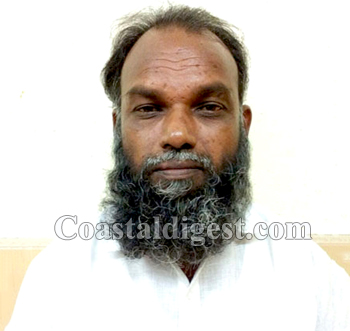
AmirAliPolice sources said that for the past couple of years, Ali had been living a mendicant's life and surviving on alms

The 50-year-old beggar is wanted in four blast cases in Karnataka and Maharashtra, police said. The Karnataka CID team picked him up from a hideout in Nalagonda, Andhra Pradesh.

The Ist Additional Chief Metropolitan Magistrate (ACMM) court in Bengaluru had issued a non-bailable warrant against Ali. The blasts were triggered by men owing allegiance to Deendar Channabasaveshwara Anjuman, a terror outfit banned in 1948.

The explosion in Bengaluru occurred in a church in JJ Nagar on the night of July 9, 2000, damaging it partly. Twenty-nine persons were arrested and the court convicted 23 of them. Eleven convicts were awarded death sentence, while 12 were sentenced to life imprisonment.

Similar blasts were triggered in Hubballi and Wadi around the same time and investigations proved the involvement of Ali and others. Of the seven fugitives, five are settled in Pakistan and one is absconding.

According to police sources, Ali had supplied explosive material to Hashim Ali from Andhra Pradesh, who assembled it to prepare the bombs.

Deendar Anjuman

Deendar Anjuman or Deendar Channabasaveshwara Anjuman was founded by Hazrath Moulana Siddique - alias Deendar Channabasaveshwara - at Bellampet, Gulbarga district, in 1924. Its head office was at Asif Nagar, Hyderabad. Though the organisation operated behind the façade of establishing religious equality, it had a hidden terror agenda, which is widely condemned by Muslims.

Terror track

1. On June 8, 2000, two crude bombs were set off at Saint Anne's Church in Wadi, Gulbarga District. The church was damaged and two persons were injured.

2. On July 9, 2000, bombs were set off at St Peter Paul Church in Jagajeevanaramnagar, Bengaluru.

3. On July 8, 2000, the group triggered off bombs blasts at the St John Luthern Church in Hubli. Sixteen persons faced trial in the case.

4. The final blast occurred when a bomb went off accidentally while the terrorists were transporting them in a Maruti van on July 9.

Comments

Satyameva jayate
 - 
Thursday, 11 Aug 2016

Viren go helpGO maataas dying.....and stinking....will God's stink after dying an need human help to be buried.....

Zakir
 - 
Wednesday, 10 Aug 2016

Muslims should know what exactly Holy Quran & Authentic Hadees says. Rather start following WRONG religious leaders though their life style or preaching against Quran & Hadees. Eventually innocent people loose their life and muslim community name gets spoiled bcoz of some BLACK SHEEP in the community.

Viren Kotian
 - 
Wednesday, 10 Aug 2016

Looks like CD editor's desperate bid to give saffron tinge to Muslim terror. poor fellow.

Add new comment

  • Coastaldigest.com reserves the right to delete or block any comments.
  • Coastaldigset.com is not responsible for its readers’ comments.
  • Comments that are abusive, incendiary or irrelevant are strictly prohibited.
  • Please use a genuine email ID and provide your name to avoid reject.
News Network
March 25,2020

Mangaluru, Mar 25: Fishing boats returned to the old Port in Mangaluru after the government prohibited deep-sea fishing till further orders on Wednesday to prevent the assembly of a large gathering here in the wake of the novel coronavirus pandemic. 

According to officials, deep-sea fishing activities result in the gathering of a large number of people and is much against the government's direction on maintaining social distancing. 

According to the Department, the 42-Km coastline in Dakshina Kannada hass 57 purse seine boats, 1,270 trawl boats, 1,483 gillnet boats, 549 other mechanised boats.

Comments

Add new comment

  • Coastaldigest.com reserves the right to delete or block any comments.
  • Coastaldigset.com is not responsible for its readers’ comments.
  • Comments that are abusive, incendiary or irrelevant are strictly prohibited.
  • Please use a genuine email ID and provide your name to avoid reject.
News Network
April 17,2020

Bengaluru, Apr 17: The Karnataka government has announced the purchase of an additional two lakh rapid test kits for COVID-19 detection at a task force meeting on Thursday.

Home Minister Basavaraj Bommai and other senior officials were present at the task force meeting chaired by Deputy Chief Minister Dr CN Ashwathnarayan.

The Chinese government has agreed to supply rapid test kits to an officially listed company, which will increase the number of tests once it arrives, Ashwathnarayan said.

Moreover, 250 kiosks will be set up in the state to collect saliva samples of a person with COVID-19 symptoms. Such kiosks will be launched one-by-one in taluks of the state.

Ashwathnarayan explained that this would increase the sample collection process and prevent the spread of disease.

Ashwathnarayan said the purchase of the required 25,000 RT-PCR kits was also approved.
He stated that COVID-19 patients should be treated at government-appointed hospitals. A separate coronavirus helpline will be made operational to address the queries of people, Ashwathnarayan said.

During Ramadan, it has been decided not to allow mass prayers, he said. And added that tracing of cases related to the Tablighi Jamaat meeting in Delhi has been completed in the state.

Comments

Add new comment

  • Coastaldigest.com reserves the right to delete or block any comments.
  • Coastaldigset.com is not responsible for its readers’ comments.
  • Comments that are abusive, incendiary or irrelevant are strictly prohibited.
  • Please use a genuine email ID and provide your name to avoid reject.
News Network
July 22,2020

Bengaluru, Jul 22: Karnataka's Covid-19 task force on Tuesday decided that the state government will regulate the supply of Remdesivir, the drug used in the treatment of coronavirus infected patients, to private hospitals to check black marketing and hoarding.

"Remdesivir which is currently available in the government hospitals will be supplied to private hospitals through the government.

This will help curb black marketing of this drug," Medical Education Minister K Sudhakar's office said in a release.

Along with Sudhakar, other task force members, including Health Minister Sriramulu, Deputy Chief Minister C N Ashwath Narayan and Chief Secretary T M Vijay Bhaskar attended the meeting. However, Home Minister Basavaraj Bommai was not part of it as he was out of Bengaluru.

At the meeting, the government has also fixed the rate for Covid-19 tests in private labs- Rs 2,000 for government referred cases and 3,000 for self-reporting cases.

It was also decided to purchase 4 lakh antigen test kits and 5 lakh swab test kits to ramp up testing, the release said, adding that approvals have also been given for additional drugs for the treatment of Covid-19 patients.

The decisions also included increasing monthly salary for Ayush doctors to 48,000, MBBS doctors to 80,000 and nurses to get 30,000 for next 6 months.

The task force also made it clear that private hospitals have to reserve 50 percent beds for the government for Covid-19 treatment. The remaining 50 percent can be used by the private hospitals for Covid-19 and non-Covid-19 treatment.

Private hospitals provide treatment under Ayushman Bharat scheme (ABARK) for Covid-19 patients.

Those cases in which treatment does not cover under the scheme can be charged as per the user charges, the release said.

A committee will be formed to supervise and recommend the purchase of equipment and medicines for Covid-19 treatment, which will be headed by ACS, ITBT Department.

Approval has been given for the procurement of N-95 masks and lakh PPE kits for the safety of healthcare workers. The decision also has been taken to connect oxygen pipeline to 4,736 beds in 17 government medical colleges, which will enable high flow oxygen for these beds besides being beneficial for future use as well.

According to the release, 16 RTPCR and 15 Automated RNA extraction units will be established to ramp up testing and this will help achieve the target of 50,000 tests per day. "On the whole approvals given for purchase of equipment and upgradation of existing facilities at government hospitals is estimated to be about Rs 500 Crore," it added.

Comments

Add new comment

  • Coastaldigest.com reserves the right to delete or block any comments.
  • Coastaldigset.com is not responsible for its readers’ comments.
  • Comments that are abusive, incendiary or irrelevant are strictly prohibited.
  • Please use a genuine email ID and provide your name to avoid reject.