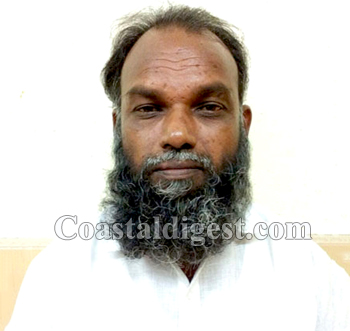
Deendar Channabasaveshwara terror case: Beggar arrested after 16 years

[email protected] (CD Network)
August 10, 2016

Bengaluru, Aug 10: Sixteen years after Karnataka faced serial bombings by Deendar Channabasaveshwara Anjuman, the Criminal Investigation Department (CID) sleuths have arrested Sheikh Amir Ali, a beggar and prime suspect in the case.

AmirAliPolice sources said that for the past couple of years, Ali had been living a mendicant's life and surviving on alms

The 50-year-old beggar is wanted in four blast cases in Karnataka and Maharashtra, police said. The Karnataka CID team picked him up from a hideout in Nalagonda, Andhra Pradesh.

The Ist Additional Chief Metropolitan Magistrate (ACMM) court in Bengaluru had issued a non-bailable warrant against Ali. The blasts were triggered by men owing allegiance to Deendar Channabasaveshwara Anjuman, a terror outfit banned in 1948.

The explosion in Bengaluru occurred in a church in JJ Nagar on the night of July 9, 2000, damaging it partly. Twenty-nine persons were arrested and the court convicted 23 of them. Eleven convicts were awarded death sentence, while 12 were sentenced to life imprisonment.

Similar blasts were triggered in Hubballi and Wadi around the same time and investigations proved the involvement of Ali and others. Of the seven fugitives, five are settled in Pakistan and one is absconding.

According to police sources, Ali had supplied explosive material to Hashim Ali from Andhra Pradesh, who assembled it to prepare the bombs.

Deendar Anjuman

Deendar Anjuman or Deendar Channabasaveshwara Anjuman was founded by Hazrath Moulana Siddique - alias Deendar Channabasaveshwara - at Bellampet, Gulbarga district, in 1924. Its head office was at Asif Nagar, Hyderabad. Though the organisation operated behind the façade of establishing religious equality, it had a hidden terror agenda, which is widely condemned by Muslims.

Terror track

1. On June 8, 2000, two crude bombs were set off at Saint Anne's Church in Wadi, Gulbarga District. The church was damaged and two persons were injured.

2. On July 9, 2000, bombs were set off at St Peter Paul Church in Jagajeevanaramnagar, Bengaluru.

3. On July 8, 2000, the group triggered off bombs blasts at the St John Luthern Church in Hubli. Sixteen persons faced trial in the case.

4. The final blast occurred when a bomb went off accidentally while the terrorists were transporting them in a Maruti van on July 9.

Comments

Satyameva jayate
 - 
Thursday, 11 Aug 2016

Viren go helpGO maataas dying.....and stinking....will God's stink after dying an need human help to be buried.....

Zakir
 - 
Wednesday, 10 Aug 2016

Muslims should know what exactly Holy Quran & Authentic Hadees says. Rather start following WRONG religious leaders though their life style or preaching against Quran & Hadees. Eventually innocent people loose their life and muslim community name gets spoiled bcoz of some BLACK SHEEP in the community.

Viren Kotian
 - 
Wednesday, 10 Aug 2016

Looks like CD editor's desperate bid to give saffron tinge to Muslim terror. poor fellow.

Add new comment

  • Coastaldigest.com reserves the right to delete or block any comments.
  • Coastaldigset.com is not responsible for its readers’ comments.
  • Comments that are abusive, incendiary or irrelevant are strictly prohibited.
  • Please use a genuine email ID and provide your name to avoid reject.
News Network
May 18,2020

Bengaluru, May 18: Senior Congress leader and former Union Minister Mallikarjuna Kharge on Monday slammed the State Government’s decision to appoint administrative committees to Panchayats, which completes their five-year term, shortly.

Speaking to media persons, the Congress leader described the State Government’s decision on appointing committees as a ‘death knell ‘ to the basic characters of the Panchayat bodies, which were elected on a non-party basis.

Strongly recommending the BJP-led government to desist from its decision, Kharge urged Chief minister B S Yediyurappa to extend the term of the elected bodies of the Panchayats by six months.

Comments

Add new comment

  • Coastaldigest.com reserves the right to delete or block any comments.
  • Coastaldigset.com is not responsible for its readers’ comments.
  • Comments that are abusive, incendiary or irrelevant are strictly prohibited.
  • Please use a genuine email ID and provide your name to avoid reject.
News Network
May 5,2020

Dubai, May 5: Tickets on repatriation flights from UAE to India, which start on May 7, could be costlier than regular airfare, and adding to the financial woes of those flying back. Nearly 200,000 Indians in the UAE have registered on the website seeking to return home.

“A one-way repatriation ticket to Delhi will cost approximately Dh1,400-Dh1,650 - this would earlier have cost between Dh600-Dh700 [during these months],” said Jamal Abdulnazar, CEO of Cozmo Travel. “A one-way repatriation flight ticket to Kerala would cost approximately Dh1,900-Dh2,300.”

This can be quite a burden, as a majority of those taking these flights have either lost their jobs or are sending back their families because of uncertainty on the work front. To now have to pay airfare that is nearly on par with those during peak summer months is quite a blow.

Sources said that officials in Indian diplomatic missions have already initiated calls to some expats, telling them about likely ticket fares and enquiring about their willingness to travel.

Although many believed repatriation would be government-sponsored, Indian authorities have clarified that customers would have to pay for the tickets themselves. Those who thought they were entitled to free repatriation might back out of travel plans for now.

Fact of life

But aviation and travel industry sources say higher rates cannot be escaped since social distancing norms have to be strictly enforced at all times. That would limit the number of passengers on each of these flights.

“One airline can carry only limited passengers - therefore, multiple airlines are likely to get the approval to operate repatriation flights,” said Abdulnazar. “Also, airports will have to maintain safe distance for passengers to queue up at immigration and security counters.

“Therefore, it is recommended that multiple carriers fly into multiple Indian airports for repatriation to be expedited.”

The Indian authorities, so far, have not taken the easy decision to get its private domestic airlines into the rescue act. Gulf News tried speaking to the leading players, but they declined to provide any official statements. So far, only Air India, the national airline, has been commissioned to operate the flights.

Air India finds itself in the driver's seat when it comes to operating India's repatriation flights. To date, there is no confirmation India's private airlines will be allowed to join in.

UAE carriers ready to help out

UAE’s Emirates airline, Etihad, flydubai and Air Arabia are likely to also operate repatriation flights to India after Air India implements the first phase of services.

“We are fully supporting governments and authorities across the flydubai network with their repatriation efforts, helping them to make arrangements for their citizens to return home,” said a flydubai spokesperson.

“We will announce repatriation flights as and when they are confirmed, recognising this is an evolving situation whilst the flight restrictions remain in place.”

An AirArabia spokesperson said the airline is ready to operate repatriation flights when the government tells them to.

Travel agencies likely to benefit

Apart from operating non-scheduled commercial flights, the Indian government is also deploying naval ships to bring expat Indians back. Sources claim the ships are to ferry passengers who cannot afford the repatriation airfares.

Even then, considering the sheer numbers who will want to get on the flights, travel agencies are likely to see a surge in bookings since airline websites alone may not cope with the demand set off in such a short span.

Learn from Gulf governments

In instances when they carried out their own repatriation flights, some GCC governments paid the ticket fares to fly in their citizens. Those citizens who did not have the ready funds could approach their diplomatic mission and aid would be given on a case-to-case basis.

Should Indians wait for normal services to resume?

Industry sources say that those Indians wanting to fly back and cannot afford the repatriation flights should wait for full services to resume once the COVID-19 pandemic settles.

But can those who lost their jobs or seen steep salary cuts stay on without adding to their costs? And is there any guarantee that when flight services resume, ticket rates would be lower than on the repatriation trips.

As such, normal travel is expected to pick up only after the repatriation exercise to several countries is completed. UAE-based travel agencies are not seeing any bookings for summer, which is traditionally the peak holiday season.

“Majority want to stay put unless full confidence is restored,” said Abdulnazar. “I expect full normalcy to be restored not until March 2021.

“People have also taken a hit to their income. Without disposable income, you will curtail your travel.”

What constitutes normalcy?

Airfares are expected to remain high, given the need to keep the middle seats empty to practise safe distance onboard.

“We expect holiday travel to resume by October or November - but, the travel sentiment will not go back to pre-COVID-19 levels anytime soon,” said Manvendra Roy, Vice-President – Commercial at holidayme, an online travel agency. “The need to keep the middle seat vacant will add 30-40 per cent pricing pressure per seat from an airline perspective.

“This will make holidays more expensive.”

As for business travel, it will take some time to recover. Corporate staff are now used to getting work done via conference calls. “Companies will also curtail their travel expenditure since their income has taken a hit,” said Abdulnazar.

Comments

Add new comment

  • Coastaldigest.com reserves the right to delete or block any comments.
  • Coastaldigset.com is not responsible for its readers’ comments.
  • Comments that are abusive, incendiary or irrelevant are strictly prohibited.
  • Please use a genuine email ID and provide your name to avoid reject.
News Network
June 1,2020

Bengaluru, Jun 1: Karnataka's Department of Health and Family Welfare on Sunday released the protocol for inter-state travellers to the State during phased reopening --#Unlock1.

Five points protocol in this regard are: 1. Mandatory Self- Registration on Seva Sindhu Portal by all travellers before entering Karnataka:

a. Name, Address and Mobile Number to be provided

b. No approval required

c. Use of same Mobile number for multiple registrations not allowed except in the case of a family.

d. Business visitors to give details (name, mobile and address of persons in Karnataka they intend to meet).

e. Transit travellers to provide an address in destination state and indicate exit check post from Karnataka.

2. Health Screening of all incoming persons at entry points.

a. Border Check-posts, Airports, Railway stations and Bus stand

b. Home Quarantine hand-stamping on hand for 14-days period as per quarantine norms

3. Quarantine norms are based on three parameters

I. Symptomatic on arrival from any State: 7 days of Hospital isolation at COVID Care Centre(CCC)/Dedicated COVID Health Centre (DCHC) followed by 7 days of home quarantine or manage as per symptoms.

II. Test immediately on arrival: If positive, shift to Dedicated COVID-19 Hospital (DCH). If negative, no further test required

III. Asymptomatic on arrival:

* For persons coming from Maharashtra

a) 7 days of institutional quarantine followed by 7 days of home quarantine

b) Test if they develop symptoms during the quarantine period

c) Exceptions for Special Category Asymptomatic persons--14-days home quarantine (one attendant to be permitted) and Special category passengers--Death in the family, Pregnant Women, Children aged below 10 years, Elderly aged above 60 years, Serious illness, Human Distress

d) Business travellers from Maharashtra: To establish that one is a business traveller, a person should show confirmed return flight/train ticket which should not be more than 7 days later from the date of arrival.

In case one is coming by road, he/she should provide the address proof of person in Karnataka he intends to meet. In addition, the person should produce -- one having COVID-19 negative test certificate, which is not more than two days old -- exempted from quarantine.

One does not have a COVID-19 negative test certificate, such a person should go for institutional quarantine of two days within which COVID-19 test should be conducted at his/her own cost. After the test result is negative, the person is exempted from quarantine. No hand stamping of the business visitor is required.

e) All travellers from Maharashtra who come with COVID-19 negative test certificate from an ICMR approved lab, which is not more than two days old from the date of arrival, are exempted from seven days of institution quarantine. They can be asked to go for 14 days of home quarantine.

f) Transit traveller from Maharashtra: To establish that one is a transit traveller, a person should show flight/ train ticket for the onward journey which should not be more than 1 day later from the date of arrival. In case one is travelling by road, he/she should provide the identity proof and address proof in the destination state. Such traveller should be hand stamped if travelling by road as "Transit Traveller."

*For persons coming from other States

a) 14 days of home quarantine

b) Test if they develop symptoms during the home quarantine period

c) For persons where home quarantine is not possible, then institutional quarantine should be done, especially when we have a large family or no separate room for home quarantine, slum or overcrowded areas where home quarantine can not be followed.

d) Business visitors from the Other States: To establish that one is a business traveller, a person should show confirmed return flight/train ticket which should not be more than 7 days later from the date of arrival. In case one is coming by road, he/she should provide the address proof of the native State. No quarantine, and no hand stamping for business visitors from other states.

e) Transit traveller from the other States: To establish that one is a transit traveller, the person should show flight/train ticket for the onward journey which should not be more than one day later from the date of arrival. In case one is travelling by road, he/she should provide the identity proof and address proof in the destination state. Such traveller should be hand stamped if travelling by road as "Transit Traveller."

4. Home Quarantine: Home quarantine follow-up for all incoming persons except business visitors and transit travellers

A. For Rural Areas--

* Home quarantine poster on the home door.

* Information to two neighbours

* Gram Panchayat Task Force to carry an overall responsibility of Home Quarantine

* 3-Member team in every village to monitor

* Flying Squad: FIR against violation of home quarantine and shift to institutional quarantine

* IVRS Call-centre outbound calls

* Quarantine watch App-daily self-monitoring upload-Temperature, Finger-tip pulse-oximetry for elderly and persons with co-morbidity

B. For BBMP and other Urban Areas--

* Home Quarantine Poster on the home door.

* Information to two neighbours and resident welfare/apartment owner's association.

* Ward level team to carry an overall responsibility of home quarantine

* 3-member team at booth level to monitor along with the involvement of Resident Welfare/Apartment Owners' Associations

* Flying Squad: FIR against violation of home quarantine and shift to institutional quarantine

* IVRS Call-centre outbound calls

* Quarantine watch App: Daily self-monitoring upload- temperature, finger-tip pulse-oximetry for elderly and persons with co-morbidity

Karnataka government on Sunday issued guidelines, which will come into force from June 1 and continue till June 30.

According to the new guidelines, religious places and places of worship for the public, hotels, restaurants and other hospitality services, and shopping malls will be permitted to open from June 8.

Union Ministry of Home Affairs (MHA) on Saturday announced new guidelines for phased re-opening of "all activities outside containment zones for the next one month beginning June 1.

In an order, Karnataka government said that phased re-opening of areas outside the containment zones, all activities will be permitted, except the following, which will be allowed, with the stipulation of following Standard Operating Procedures (SOPs) to be prescribed by the Ministry of Health and Family Welfare (MoHFW).

According to the Union Health Ministry, there are 2,922 confirmed COVID-19 cases in the State including 1,877 active cases, 997 recovered and 48 deaths.


Comments

Add new comment

  • Coastaldigest.com reserves the right to delete or block any comments.
  • Coastaldigset.com is not responsible for its readers’ comments.
  • Comments that are abusive, incendiary or irrelevant are strictly prohibited.
  • Please use a genuine email ID and provide your name to avoid reject.