


Deendar Channabasaveshwara terror case: Beggar arrested after 16 years

[email protected] (CD Network)
August 10, 2016

Bengaluru, Aug 10: Sixteen years after Karnataka faced serial bombings by Deendar Channabasaveshwara Anjuman, the Criminal Investigation Department (CID) sleuths have arrested Sheikh Amir Ali, a beggar and prime suspect in the case.
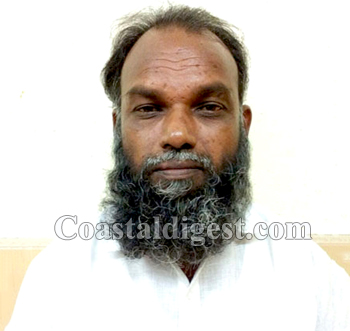
AmirAliPolice sources said that for the past couple of years, Ali had been living a mendicant's life and surviving on alms

The 50-year-old beggar is wanted in four blast cases in Karnataka and Maharashtra, police said. The Karnataka CID team picked him up from a hideout in Nalagonda, Andhra Pradesh.

The Ist Additional Chief Metropolitan Magistrate (ACMM) court in Bengaluru had issued a non-bailable warrant against Ali. The blasts were triggered by men owing allegiance to Deendar Channabasaveshwara Anjuman, a terror outfit banned in 1948.

The explosion in Bengaluru occurred in a church in JJ Nagar on the night of July 9, 2000, damaging it partly. Twenty-nine persons were arrested and the court convicted 23 of them. Eleven convicts were awarded death sentence, while 12 were sentenced to life imprisonment.

Similar blasts were triggered in Hubballi and Wadi around the same time and investigations proved the involvement of Ali and others. Of the seven fugitives, five are settled in Pakistan and one is absconding.

According to police sources, Ali had supplied explosive material to Hashim Ali from Andhra Pradesh, who assembled it to prepare the bombs.

Deendar Anjuman

Deendar Anjuman or Deendar Channabasaveshwara Anjuman was founded by Hazrath Moulana Siddique - alias Deendar Channabasaveshwara - at Bellampet, Gulbarga district, in 1924. Its head office was at Asif Nagar, Hyderabad. Though the organisation operated behind the façade of establishing religious equality, it had a hidden terror agenda, which is widely condemned by Muslims.

Terror track

1. On June 8, 2000, two crude bombs were set off at Saint Anne's Church in Wadi, Gulbarga District. The church was damaged and two persons were injured.

2. On July 9, 2000, bombs were set off at St Peter Paul Church in Jagajeevanaramnagar, Bengaluru.

3. On July 8, 2000, the group triggered off bombs blasts at the St John Luthern Church in Hubli. Sixteen persons faced trial in the case.

4. The final blast occurred when a bomb went off accidentally while the terrorists were transporting them in a Maruti van on July 9.

Comments

Satyameva jayate
 - 
Thursday, 11 Aug 2016

Viren go helpGO maataas dying.....and stinking....will God's stink after dying an need human help to be buried.....

Zakir
 - 
Wednesday, 10 Aug 2016

Muslims should know what exactly Holy Quran & Authentic Hadees says. Rather start following WRONG religious leaders though their life style or preaching against Quran & Hadees. Eventually innocent people loose their life and muslim community name gets spoiled bcoz of some BLACK SHEEP in the community.

Viren Kotian
 - 
Wednesday, 10 Aug 2016

Looks like CD editor's desperate bid to give saffron tinge to Muslim terror. poor fellow.

Add new comment

  • Coastaldigest.com reserves the right to delete or block any comments.
  • Coastaldigset.com is not responsible for its readers’ comments.
  • Comments that are abusive, incendiary or irrelevant are strictly prohibited.
  • Please use a genuine email ID and provide your name to avoid reject.
Agencies
January 9,2020

New Delhi, Jan 9: Crime in India has increased by 1.3 per cent in 2018 compared to 2017 with the registration of over 50 lakh cognisable crimes, reveals 2018 edition of 'Crime in India' statistics released this week by the National Crime Records Bureau (NCRB).

As per the NCRB, which works under the Ministry of Home Affairs, a total of 50.74 lakh crimes, including 31.32 lakh under the Indian Penal Code (IPC) and 19.41 under the Special Local Laws (SLL) was registered in 2018.

The report says that there was an overall rise of 1.3 per cent in the registration of cases in 2017, but crime rate per lakh population was down to 383.5 in 2018 from 388.6 in 2017.

A total of 1.05 lakh cases of kidnapping and abduction across the country was registered in 2018, showing an increase of 10.3 per cent over 95,893 such cases in 2017, the latest NCRB report said.

A total of 29,017 murders were reported in 2018, up by 1.3 per cent over 2017. Of which, disputes were reported as the motive of the highest number of murder cases (9,623) followed by personal vendetta and enmity (3,875) and gain (2,995).

Accidental deaths have also seen a rise to 4,11,824 in 2018 from 3,96,584 in 2017 -- a rise to 31.1 per cent from 30.3 per cent in 2017.

The NCRB report 'Crime in India-2018' said in its disclaimer section that clarifications on data were pending from West Bengal, Arunachal, Meghalaya, Sikkim and Kolkata. Hence, the data from these states and city may be treated as provisional.

No let up in road accident deaths in 2018: NCRB

There were 1,35,051 incidences of deaths due to negligence relating to road accidents in 2018, according to the latest NCRB report on "Crime in India -2018".

When compared to the previous two years, the statistics show that there has been no significant change in the overall situation.

In 2017 there were 1,34,803 incidences reported from across the country, while in 2016 it was 1,35,656.

Incidents of 'Hit and run' accident cases have climbed up marginally over the last year, if the latest figures are any indication. In 2018, the 'hit and run' cases reported were 47,028. In 2017, the cases registered under this category were 43,727.

The data collection process for NCRB report on "Crime in India - 2018" including clarifications from the states/UTs/central agencies started in July, 2019 and continued till December, 2019.

People involved in farming sector, including 5,763 farmers or cultivators, committed suicide during 2018, the report reveals.

The annual data was released around three months after the government released the National Crime Records Bureau (NCRB) report on "Crime in India 2017".

As per the latest data, of the 10,349 persons who committed suicide in 2018, 4,586 were agricultural labourers.

The number of suicides in farming sector in 2018 accounts for 7.7 per cent of the total suicide victims (1,34,516) in the country, the NCRB data said.

Suicides in India in 2018 rose to 1,34,516 from 1,29,887 in 2017. Rate of suicides is also up from 9.9 in 2017 to 10.2 in 2018.

In 2017, a total of 10,655 farmer suicides were reported.

West Bengal, Bihar, Odisha, Uttarakhand, Meghalaya, Goa, Chandigarh, Daman and Diu, Delhi, Lakshadweep and Puducherry reported zero suicides of farmers or cultivators and agricultural labourers during 2018, said the report.

Comments

Add new comment

  • Coastaldigest.com reserves the right to delete or block any comments.
  • Coastaldigset.com is not responsible for its readers’ comments.
  • Comments that are abusive, incendiary or irrelevant are strictly prohibited.
  • Please use a genuine email ID and provide your name to avoid reject.
News Network
March 27,2020

Bengaluru, Mar 27: Oncologist Dr. Vishal Rao, HCG Hospital Bengaluru on Friday said that human body cells release interferon chemical to kill viruses but it cannot be released by cells in the case of COVID-19 cases, leading to weak immune system. However, a therapy of specific concoction could be useful in treating COVID-19 patients.

"We got hold of some preprint suggesting that interferon is effective in COVID19," said Rao.

Speaking to news agency, he continued saying "When we withdraw blood for regular check-ups, we get buffy coat which can be used to take out cells and form interferon. These two chemicals and some other cytokines, in a specific concoction, could be potentially very useful in treating COVID-19 patients."

Rao said that they have built a concoction of cytokines which can be injected to reactivate immune system in COVID-19 patients.

"We are in a very initial stage and hope to be ready with its first set by this weekend. We have applied to the governement for an expedited review. We have also presented this before the state government" said Rao.

"We have a team of infection specialist, ICU team and other...all of us have worked together to build something that we believe. We want to serve the society at this hour of need," he added.

Dr Rao clarified that this is not a vaccine and this particular interferon therapy does not help to prevent the infection of COVID-19. However, this is focused and targeted towards COVID-19 positive patients or those who have just incubated the virus.

"We believe that in early stages as well as the patients who have just incubated, this particular therapy of interferon gama and other concoction of cytokines could be an effective method. In the late stages we are looking at specific dosage of the cells which are our own body cells which can actually be affective and could also be of use for the ventilator patients," he added.

Meanwhile, Dr Gururaj, Immunologist and Scientist told ANI that they are trying to cover two aspects, one is the early stage patients where they are trying to improve their immune systems.

"As Dr Vishal said, we are trying to see whether we can use the cytokines from our own immune cells which is a natural process but it is hampered in infected patients," said Dr Gururaj.

"In the last phase we are using cells which are used from the bone marrow of the patient or donors. We can use those cells to reduce the inflation and so called cytokines release syndrome which is basically the inflammatory response of the body," he added.

Comments

Add new comment

  • Coastaldigest.com reserves the right to delete or block any comments.
  • Coastaldigset.com is not responsible for its readers’ comments.
  • Comments that are abusive, incendiary or irrelevant are strictly prohibited.
  • Please use a genuine email ID and provide your name to avoid reject.
Agencies
February 23,2020

Bengaluru, Feb 23: Bolstered by the Supreme Court's interim nod for the gazette notification of the Mahadayi Water Dispute Tribunal award by the Central government, Karnataka decided to allot funds for the drinking water project in the state's northwest region, an official said on Saturday.

"Funds will be allotted in the state budget for fiscal 2020-21 to complete the Kalasa-Banduri project across the Mahadayi river for supplying drinking water to the four drought-prone northern districts in the state," the official of the water resources department told media on anonymity.

As Chief Minister B.S. Yediyurappa also holds the finance portfolio, he has agreed to allocate funds for the project, held up for years in the legal battle with the neighbouring Goa and Maharashtra over the sharing of the river water among the three coastal states.

Yediyurappa is slated to present the state budget for the ensuing fiscal in the legislative assembly on March 2.

"We will resume the project work once the Centre notifies the award though it will be binding on the final outcome of the apex court's hearing the review petitions of Goa and Maharashtra against the Tribunal award," the official noted.

A division bench of Justice D.Y. Chandrachud and Justice Hemant Gupta on Thursday passed an interim order on the Tribunal award, allowing the central water resources ministry to notify it for implementation and posted the case for final hearing in July.

The Tribunal on August 14, 2018 allocated 13.42 thousand million cubic feet (tmcft) of the river water to the southern state for irrigation and drinking water supply to towns and villages across Bagalkot, Belagavi, Dharwad and Gadag districts, which are in the arid region of the Deccan plateau.

The four districts are about 400-550 km northwest of Bengaluru in the southern state.

Of the 13.42 tmcft water, 5.5 tmcft will be used in the river basin and for diversion into the depleted Malaprabha reservoir while the balance 7.92 tmcft will be utilized for hydel power generation instead of allowing the water to go into the Arabian Sea on the state's west coast through Goa.

Goa, which opposed Karnataka's demand for 36.66 tmcft, was allocated 24 tmcft, while Maharashtra got 1.3 tmcft.

The Tribunal assessed that 188.06 tmc feet water is available at 75 per cent dependability.

The three-member Tribunal is headed by Chairman Justice J.M. Panchal, Justice Viney Mittal and Justice P.S. Naayana.

The Union government had set up the inter-state Tribunal on November 16, 2010 for the djudication of the Mahadayi basin water allocation among the three riparian and contiguous states.

Goa and Maharashtra claimed 122.6 tmc feet and 6.35 tmc feet of the river water respectively.

The Tribunal, which commenced sittings on September 6, 2012, held 1,209 sittings for over 6 years.

Supreme Court senior counsel F.S. Nariman represented the state before the Tribunal to present its case.

The Tribunal's chairman and two members inspected the river basin area across the three coastal states from December 12-24, 2013.

The 77km-long Mahadayi or Mandovi river originates at Bhimgad in the Western Ghats in Belagavi district and flows into the neighbouring Goa through Maharashtra and joins the Arabian Sea off the west coast.

Though the river flows 29 km in Karnataka and 52 km in Goa, its catchment area is spread over 2,032 km in the southern state as against 1,580 km in the western state (Goa).

Comments

Add new comment

  • Coastaldigest.com reserves the right to delete or block any comments.
  • Coastaldigset.com is not responsible for its readers’ comments.
  • Comments that are abusive, incendiary or irrelevant are strictly prohibited.
  • Please use a genuine email ID and provide your name to avoid reject.