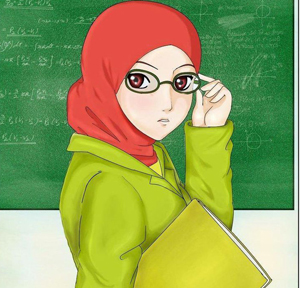
Denied permission for hijab, woman drops plan to join teaching course

Agencies
July 20, 2017

Kasaragod, Jul 20: A Muslim woman has dropped her plan to join a teacher training course at an institute in neighbouring Malappuram district after the institution told her that she could not attend classes wearing 'Hijab'.hijab

Husna, decided not to pursue her BEd course at Jamia Nadwiya Teacher Training Institute run by Kerala Naduvathul Mujahideen (KNM),a Muslim organisation. "We decided that Husna will wear Hijab as it would be more comfortable and safer than sari and approached the authorities even though there is a stipulation in the institute that students should wear sari three days in a week" as uniform", Husna's husband P Harshad Muhammed said when contacted.

Harshad said that he had written a letter to KNM pointing out that some other institutions run by Muslim organisations allowed students to attend classes wearing Hijab. But the authorities at the institute refused her plea stating that there was a dress code in the institution, he said.

"In this circumstance, she has decided to drop the plan of joining the institute", he said.

When contacted, a senior official of the institution said rules could not be relaxed for an individual.

"If we relax the rule for one person now, there will be such demands from others also", the official said.

Comments

Haneef
 - 
Sunday, 23 Jul 2017

INNAH LILLAHI VA INNA ILAHI RAJIVOON

Mustafa
 - 
Sunday, 23 Jul 2017

Well done SDPI. You are the hope..you are the leader

Honest
 - 
Saturday, 22 Jul 2017

Gau Bakhts Pas-Ghaya
Cheddi trapped the gau bhakts again...
But still Gau bhakts never understand this traps... of cheddis

Abdul
 - 
Saturday, 22 Jul 2017

Remaing country inisde hell

Add new comment

  • Coastaldigest.com reserves the right to delete or block any comments.
  • Coastaldigset.com is not responsible for its readers’ comments.
  • Comments that are abusive, incendiary or irrelevant are strictly prohibited.
  • Please use a genuine email ID and provide your name to avoid reject.
Ram Puniyani
January 14,2020

In the beginning of January 2020 two very disturbing events were reported from Pakistan. One was the attack on Nankana Sahib, the holy shrine where Sant Guru Nanak was born. While one report said that the place has been desecrated, the other stated that it was a fight between two Muslim groups. Prime Minister of Pakistan Imran Khan condemned the incident and the main accused Imran Chisti was arrested. The matter related to abduction and conversion of a Sikh girl Jagjit Kaur, daughter of Pathi (One who reads Holy Guru Granth Sahib in Gurudwara) of the Gurudwara. In another incident one Sikh youth Ravinder Singh, who was out on shopping for his marriage, was shot dead in Peshawar.

While these condemnable attacks took place on the Sikh minority in Pakistan, BJP was quick enough to jump to state that it is events like this which justify the Citizenship Amendment Act (CAA). Incidentally CAA is the Act which is discriminatory and relates to citizenship with Religion, which is not as per the norms of Indian constitution. There are constant debates and propaganda that population of Hindus has come down drastically in Pakistan and Bangla Desh. Amit Shah, the Home minister stated that in Pakistan the population of Hindus has come down from 23% at the time of partition to 3.7% at present. And in Bangla Desh it has come down from 22% to present 8%.

While not denying the fact that the religious minorities are getting a rough deal in both these countries, the figures which are presented are totally off the mark. These figures don’t take into consideration the painful migrations, which took place at the time of partition and formation of Bangla Desh later. Pakistan census figures tell a different tale. Their first census was held in 1951. As per this census the overall percentage of Non Muslim in Pakistan (East and West together) was 14.2%, of this in West Pakistan (Now Pakistan) it was 3.44 and in Eat Pakistan it was 23.2. In the census held in Pakistan 1998 it became 3.72%. As far as Bangla Desh is concerned the share of Non Muslims has gone down from 23.2 (1951) to 9.6% in 2011.

The largest minority of Pakistan is Ahmadis, (https://minorityrights.org/country/pakistan/) who are close to 4 Million and are not recognised as Muslims in Pakistan. In Bangla Desh the major migrations of Hindus from Bangla Desh took place in the backdrop of Pakistan army’s atrocities in the then East Pakistan.

As far as UN data on refugees in India it went up by 17% between 2016-2019 and largest numbers were from Tibet and Sri Lanka.  (https://www.un.org/en/development/desa/population/migration/publication…)

The state of minorities is in a way the index of strength of democracy. Most South Asian Countries have not been able to sustain democratic values properly. In Pakistan, the Republic began with Jinnah’s classic speech where secularism was to be central credo of Pakistan. This 11th August speech was in a way what the state policy should be, as per which people of all faiths are free to practice their religion. Soon enough the logic of ‘Two Nation theory” and formation of Pakistan, a separate state for Muslim took over. Army stepped in and dictatorship was to reign there intermittently. Democratic elements were suppressed and the worst came when Zia Ul Haq Islamized the state in collusion with Maulanas. The army was already a strong presence in Pakistan. The popular formulation for Pakistan was that it is ruled by three A’s, Army, America and Allah (Mullah).

Bangla Desh had a different trajectory. Its very formation was a nail in the coffin of ‘two nation theory’; that religion can be the basis of a state. Bangla Desh did begin as a secular republic but communal forces and secular forces kept struggling for their dominance and in 1988 it also became Islamic republic. At another level Myanmar, in the grip of military dictatorship, with democratic elements trying to retain their presence is also seeing a hard battle. Democracy or not, the army and Sanghas (Buddhist Sang has) are strong, in Myanmar as well. The most visible result is persecution of Rohingya Muslims.

Similar phenomenon is dominating in Sri Lanka also where Budhhist Sanghas and army have strong say in the political affairs, irrespective of which Government is ruling. Muslim and Christian minorities are a big victim there, while Tamils (Hindus, Christians etc.) suffered the biggest damage as ethnic and religious minorities. India had the best prospect of democracy, pluralism and secularism flourishing here. The secular constitution, the outcome of India’s freedom struggle, the leadership of Gandhi and Nehru did ensure the rooting of democracy and secularism in a strong way.

India so far had best democratic credentials amongst all the south Asian countries. Despite that though the population of minorities rose mainly due to poverty and illiteracy, their overall marginalisation was order of the day, it went on worsening with the rise of communal forces, with communal forces resorting to identity issues, and indulging in propaganda against minorities.

While other South Asian countries should had followed India to focus more on infrastructure and political culture of liberalism, today India is following the footsteps of Pakistan. The retrograde march of India is most visible in the issues which have dominated the political space during last few years. Issues like Ram Temple, Ghar Wapasi, Love Jihad, Beef-Cow are now finding their peak in CAA.

India’s reversal towards a polity with religion’s identity dominating the political scene was nicely presented by the late Pakistani poetess Fahmida Riaz in her poem, Tum bhi Hum Jaise Nikle (You also turned out to be like us). While trying to resist communal forces has been an arduous task, it is becoming more difficult by the day. This phenomenon has been variously called, Fundamentalism, Communalism or religious nationalism among others. Surely it has nothing to do with the religion as practiced by the great Saint and Sufi traditions of India; it resorts mainly to political mobilization by using religion as a tool.


Comments

Ashi
 - 
Tuesday, 14 Jan 2020

If Malaysia implement similar NRC/CAA, India and China are the loser.

Add new comment

  • Coastaldigest.com reserves the right to delete or block any comments.
  • Coastaldigset.com is not responsible for its readers’ comments.
  • Comments that are abusive, incendiary or irrelevant are strictly prohibited.
  • Please use a genuine email ID and provide your name to avoid reject.
News Network
May 18,2020

Bengaluru, May 18: A large number of people in India are planning inter-city bus travel within a month of the lifting of travel restrictions, according to a randomised online survey of over 10,300 customers of redBus, India's largest online bus ticketing platform.

Nearly 57 per cent of the respondents are planning to travel within a month post the lockdown. However, there is a high standard of expectation on the implementation of measures to make buses safe for travel with over 79 per cent wanting deep cleaning and sanitisation of buses after every trip.

Hand sanitisers, mandatory masks and temperature screening for all passengers are next in expectations for bus travel. Over 78 per cent of the respondents want the implementation of hygienic conditions at boarding points and 70 per cent want social distancing protocols to be implemented at boarding points.

"The survey does underscore the fact that given the adherence to safety protocols, bus travel is possibly one of the safest options for travel since the number of travellers are fewer, checks can be done individually and the whole factor of pick up and drop as close to home as possible minimises the number of contacts throughout the journey," said redBus Chief Executive Officer Prakash Sangam.

In addition, online booking further reduces the number of contact points as people can book bus tickets directly from their home. Further, there is a heightened awareness of personal hygiene and safety measures which is important for the travel to be safe.

"The large number of people waiting to travel not only points to the need but also the importance it has for the revival of economic activity as very few of them would be travelling for leisure," said Sangam.

The survey also showed that passengers put a very high consideration on hygiene, sanitation and disinfection -- over 73 per cent -- and social distancing (63 per cent) and much lower consideration to traditional factors such as travel cost (22 per cent), comfort (21 per cent) and punctuality (18 per cent).

The survey was conducted among redBus customers across India. Only 5 per cent of the respondents were willing to postpone their travel to over six months while the rest had plans to travel within that period.

Comments

Add new comment

  • Coastaldigest.com reserves the right to delete or block any comments.
  • Coastaldigset.com is not responsible for its readers’ comments.
  • Comments that are abusive, incendiary or irrelevant are strictly prohibited.
  • Please use a genuine email ID and provide your name to avoid reject.
coastaldigest.com news network
May 18,2020

Bengaluru, May 18: Karnataka chief minister B S Yediyurappa today announced lockdown relaxations from tomorrow (May 19) across the state. As per new guidelines public transport services will start operations outside COVID-19 containment zones in the state. 

 “To facilitate easy movements of citizens, services of the BMTC, KSRTC, NEKRTC and NWKRTC will start from Tuesday morning, except in containment zones. Even private buses can ply,” Yediyurappa said, after discussing the Centre's Lockdown 4.0 guidelines with his Cabinet colleagues and officials. 

“The only condition is that only 30 people should travel in one bus so as to ensure social distancing,” the CM said. 

He also clarified that bus fares will not be hiked. “I know there will be losses incurred. The government will bear the losses,” he said. 

Auto rickshaws, taxis and maxi cabs (six-passenger vehicles) will also be allowed to operate. “Auto rickshaws and taxis will have a driver and two passengers. Maxi cabs will have a driver and three passengers,” Yediyurappa said. 

All parks in the state will be open 7 am to 9 am and 5 pm to 7 pm. 

Starting Tuesday, all shops except malls and theatres can open. “This includes salons,” the CM said. 

All relaxation will cease to exist every Sunday, the CM said. “Every Sunday will be a complete lockdown. There’ll be no shops and the movement of people. It’ll be a complete rest day,” he said. 

The existing curfew from 7 pm to 7 am will continue on all days, which means public transport services will not be allowed during this time. 

Trains will run within the state, but interstate trains will not be allowed till May 31, the CM said. 

It is mandatory for citizens to wear masks in public. “Not wearing a mask will be penalised,” Yediyurappa said. 

On the classification of zones, Yediyurappa said the government's main focus was containment zones. “We're particular about containment zones. In the Karwar district, for example, Bhatkal will be a containment zone and no other taluk will have restrictions,” he said. 

However, the government will review the relaxation based on how things pan out. “States have been given the freedom, so we can withdraw or modify as necessary,” he said.

Comments

Add new comment

  • Coastaldigest.com reserves the right to delete or block any comments.
  • Coastaldigset.com is not responsible for its readers’ comments.
  • Comments that are abusive, incendiary or irrelevant are strictly prohibited.
  • Please use a genuine email ID and provide your name to avoid reject.