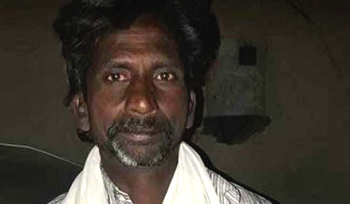
Desperate to return home, Indian expat walked 1,000 km to Dubai court

November 29, 2016

Dubai, Nov 29: An Indian expatriate in Dubai walked a total of over 1,000 km for over two years to attend court proceedings in a bid to return home, a newspaper reported on Tuesday.

DubaiJagannathan Selvaraj, 48, who hails from Tiruchirappalli in Tamil Nadu, told the Khaleej Times that he braved traffic, heat, sandstorm and exhaustion to attend the labour court proceedings.

Mr Selvaraj began his court journeys after his mother died in Tamil Nadu and he was denied permission to go and attend her funeral.

His case went on for almost two years. Mr Selvaraj said he must have walked at least 20 times to Karama district in Dubai from Sonapur and back, every time covering a distance of over 50 km in four hours.

He said he could not afford a bus journey from his Sonapur accommodation on the outskirts of Dubai to the labour court.

Selvaraj told the Khaleej Times that he had been living in a public park for several months and was desperate to return to India.

Comments

Mohammed SS
 - 
Wednesday, 30 Nov 2016

Fake Story.....!!!

suleman
 - 
Wednesday, 30 Nov 2016

Hype in the story. 12 KM/ Hr. He might be jogging.

Add new comment

  • Coastaldigest.com reserves the right to delete or block any comments.
  • Coastaldigset.com is not responsible for its readers’ comments.
  • Comments that are abusive, incendiary or irrelevant are strictly prohibited.
  • Please use a genuine email ID and provide your name to avoid reject.
coastaldigest.com news network
May 24,2020

Bengaluru, May 24: With 130 new cases, Karnataka's COVID-19 tally crossed the 2,000-mark on Sunday. Most new cases reported have interstate travel history with 97 coming from Maharashtra. The number of active cases in the state is 1,391 and the deaths reported so far is 42, including 2 for non-COVID reasons.

"Ninety seven of the 130 new patients are returnees from Maharashtra, the worst affected state in the country with 47,190 cases till Saturday," said a state health official. 

"The total number of COVID-19 cases across the state is 2,089, with 130 more testing positive in the past 18 hours," said the official.

Forty six patients were discharged from hospitals on Sunday taking the number of cured persons to 634. Of the 46 discharged, 18 are in Davanagere, 20 in Uttara Kannada, 4 in Chitradurga, 3 in Bagalakote and one in Haveri.

Of the 30 Karnataka districts, Chikkaballapura recorded the highest cases on Sunday at 27, followed by Yadgir (24), Udupi (23), Mandya (15) and Hassan (14).

Chikkaballapura is the home district of Medical Education Minister K Sudhakar, a doctor by profession, who is spearheading the fight against the pandemic.

On Saturday, the state's tally shot up to 1,959 due to 196 new cases, the highest single-day rise, with 195 of them crossing over from Maharashtra through the inter-state border, which was opened up as part of partial relaxation of the lockdown.  

The Karnataka government has imposed institutional quarantine on persons traveling in from outside the state, particularly by flight from Maharashtra, Gujarat, Tamil Nadu, Delhi, Rajasthan, and Madhya Pradesh.

Comments

Add new comment

  • Coastaldigest.com reserves the right to delete or block any comments.
  • Coastaldigset.com is not responsible for its readers’ comments.
  • Comments that are abusive, incendiary or irrelevant are strictly prohibited.
  • Please use a genuine email ID and provide your name to avoid reject.
News Network
May 5,2020

Dubai, May 5: Tickets on repatriation flights from UAE to India, which start on May 7, could be costlier than regular airfare, and adding to the financial woes of those flying back. Nearly 200,000 Indians in the UAE have registered on the website seeking to return home.

“A one-way repatriation ticket to Delhi will cost approximately Dh1,400-Dh1,650 - this would earlier have cost between Dh600-Dh700 [during these months],” said Jamal Abdulnazar, CEO of Cozmo Travel. “A one-way repatriation flight ticket to Kerala would cost approximately Dh1,900-Dh2,300.”

This can be quite a burden, as a majority of those taking these flights have either lost their jobs or are sending back their families because of uncertainty on the work front. To now have to pay airfare that is nearly on par with those during peak summer months is quite a blow.

Sources said that officials in Indian diplomatic missions have already initiated calls to some expats, telling them about likely ticket fares and enquiring about their willingness to travel.

Although many believed repatriation would be government-sponsored, Indian authorities have clarified that customers would have to pay for the tickets themselves. Those who thought they were entitled to free repatriation might back out of travel plans for now.

Fact of life

But aviation and travel industry sources say higher rates cannot be escaped since social distancing norms have to be strictly enforced at all times. That would limit the number of passengers on each of these flights.

“One airline can carry only limited passengers - therefore, multiple airlines are likely to get the approval to operate repatriation flights,” said Abdulnazar. “Also, airports will have to maintain safe distance for passengers to queue up at immigration and security counters.

“Therefore, it is recommended that multiple carriers fly into multiple Indian airports for repatriation to be expedited.”

The Indian authorities, so far, have not taken the easy decision to get its private domestic airlines into the rescue act. Gulf News tried speaking to the leading players, but they declined to provide any official statements. So far, only Air India, the national airline, has been commissioned to operate the flights.

Air India finds itself in the driver's seat when it comes to operating India's repatriation flights. To date, there is no confirmation India's private airlines will be allowed to join in.

UAE carriers ready to help out

UAE’s Emirates airline, Etihad, flydubai and Air Arabia are likely to also operate repatriation flights to India after Air India implements the first phase of services.

“We are fully supporting governments and authorities across the flydubai network with their repatriation efforts, helping them to make arrangements for their citizens to return home,” said a flydubai spokesperson.

“We will announce repatriation flights as and when they are confirmed, recognising this is an evolving situation whilst the flight restrictions remain in place.”

An AirArabia spokesperson said the airline is ready to operate repatriation flights when the government tells them to.

Travel agencies likely to benefit

Apart from operating non-scheduled commercial flights, the Indian government is also deploying naval ships to bring expat Indians back. Sources claim the ships are to ferry passengers who cannot afford the repatriation airfares.

Even then, considering the sheer numbers who will want to get on the flights, travel agencies are likely to see a surge in bookings since airline websites alone may not cope with the demand set off in such a short span.

Learn from Gulf governments

In instances when they carried out their own repatriation flights, some GCC governments paid the ticket fares to fly in their citizens. Those citizens who did not have the ready funds could approach their diplomatic mission and aid would be given on a case-to-case basis.

Should Indians wait for normal services to resume?

Industry sources say that those Indians wanting to fly back and cannot afford the repatriation flights should wait for full services to resume once the COVID-19 pandemic settles.

But can those who lost their jobs or seen steep salary cuts stay on without adding to their costs? And is there any guarantee that when flight services resume, ticket rates would be lower than on the repatriation trips.

As such, normal travel is expected to pick up only after the repatriation exercise to several countries is completed. UAE-based travel agencies are not seeing any bookings for summer, which is traditionally the peak holiday season.

“Majority want to stay put unless full confidence is restored,” said Abdulnazar. “I expect full normalcy to be restored not until March 2021.

“People have also taken a hit to their income. Without disposable income, you will curtail your travel.”

What constitutes normalcy?

Airfares are expected to remain high, given the need to keep the middle seats empty to practise safe distance onboard.

“We expect holiday travel to resume by October or November - but, the travel sentiment will not go back to pre-COVID-19 levels anytime soon,” said Manvendra Roy, Vice-President – Commercial at holidayme, an online travel agency. “The need to keep the middle seat vacant will add 30-40 per cent pricing pressure per seat from an airline perspective.

“This will make holidays more expensive.”

As for business travel, it will take some time to recover. Corporate staff are now used to getting work done via conference calls. “Companies will also curtail their travel expenditure since their income has taken a hit,” said Abdulnazar.


Comments

Add new comment

  • Coastaldigest.com reserves the right to delete or block any comments.
  • Coastaldigset.com is not responsible for its readers’ comments.
  • Comments that are abusive, incendiary or irrelevant are strictly prohibited.
  • Please use a genuine email ID and provide your name to avoid reject.
News Network
May 9,2020

New Delhi, May 9: The Finance Ministry on Friday announced relief to those who have been facing difficulty with their residency status in India under section 6 of the Income-tax Act due to lockdown and suspension of international flights owing to COIVD-19 outbreak, as they have had to prolong their stay in India.

According to a Central Board of Direct Taxes (CBDT) release, Finance Minister Nirmala Sitharaman today allowed discounting of prolonged stay period in India for the purpose of determining residency status after considering various representations received from people who had to prolong their stay in India due to lockdown and suspension of international flights.

They expressed concern that they will be required to file tax returns as Indian residents and not as NRIs after 120 days of stay.

The Finance Ministry stated that the lockdown continues during the financial year 2020-21 and it is not yet clear when international flight operations would resume, a circular excluding the period of stay of these individuals up to the date of resumption of international flight operations shall be issued for determination of the residential status for the financial year 2020-21.

A circular also said that in order to avoid genuine hardship in such cases, the CBDT has decided that for the purposes of determining the residential status under section 6 of the Act during the previous year 2019-20 in respect of an individual who has come to India on a visit before March 22, 2020 and:

(a) has been unable to leave India on or before March 31, 2020, his period of stay in India from March 22, 2020 to March 31, 2020 shall not be taken into account; or

(b) has been quarantined in India on account of novel coronavirus (Covid-19) on or after March 1, 2020 and has departed on an evacuation flight on or before March 31, 2020 or has been unable to leave India on or before March 31, 2020, his period of stay from the beginning of his quarantine to his date of departure or March 31, 2020, as the case may be, shall not be taken into account; or

(c) has departed on an evacuation flight on or before March 31, 2020, his period of stay in India from March 22, 2020 to his date of departure shall not be taken into account."

The release said there are number of individuals who had come on a visit to India during the previous year 2019-20 for a particular duration and intended to leave India before the end of the previous year for maintaining their status as non-resident or not ordinary resident in India.

"However, due to declaration of the lockdown and suspension of international flights owing to outbreak of COVID-19, they are required to prolong their stay in India. The status of an individual whether he is resident in India or a non-resident or not ordinarily resident, is dependent, inter-alia, on the period for which the person is in India during a year," it said.

Comments

Add new comment

  • Coastaldigest.com reserves the right to delete or block any comments.
  • Coastaldigset.com is not responsible for its readers’ comments.
  • Comments that are abusive, incendiary or irrelevant are strictly prohibited.
  • Please use a genuine email ID and provide your name to avoid reject.