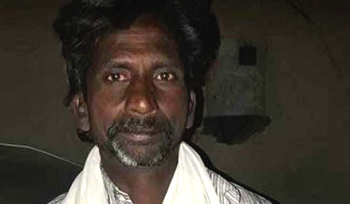
Desperate to return home, Indian expat walked 1,000 km to Dubai court

November 29, 2016

Dubai, Nov 29: An Indian expatriate in Dubai walked a total of over 1,000 km for over two years to attend court proceedings in a bid to return home, a newspaper reported on Tuesday.

DubaiJagannathan Selvaraj, 48, who hails from Tiruchirappalli in Tamil Nadu, told the Khaleej Times that he braved traffic, heat, sandstorm and exhaustion to attend the labour court proceedings.

Mr Selvaraj began his court journeys after his mother died in Tamil Nadu and he was denied permission to go and attend her funeral.

His case went on for almost two years. Mr Selvaraj said he must have walked at least 20 times to Karama district in Dubai from Sonapur and back, every time covering a distance of over 50 km in four hours.

He said he could not afford a bus journey from his Sonapur accommodation on the outskirts of Dubai to the labour court.

Selvaraj told the Khaleej Times that he had been living in a public park for several months and was desperate to return to India.

Comments

Mohammed SS
 - 
Wednesday, 30 Nov 2016

Fake Story.....!!!

suleman
 - 
Wednesday, 30 Nov 2016

Hype in the story. 12 KM/ Hr. He might be jogging.

Add new comment

  • Coastaldigest.com reserves the right to delete or block any comments.
  • Coastaldigset.com is not responsible for its readers’ comments.
  • Comments that are abusive, incendiary or irrelevant are strictly prohibited.
  • Please use a genuine email ID and provide your name to avoid reject.
News Network
March 5,2020

Mar 5: The Karnataka government on Thursday proposed to increase rate of tax on petrol and diesel by three per cent which would make the fuel dearer by Rs 1.60 and Rs 1.59 per litre, respectively.

Presenting the 2020-21 budget in the Legislative Assembly, Chief Minister B S Yediyurappa proposed to increase rate of tax on petrol from 32 per cent to 35 per cent and diesel from 21 per cent to 24 per cent, as part of additional resource mobilisation measures.

Yediyurappa, who also holds the finance portfolio, increased excise duty on Indian Made Liquor (KML) across 18 slabs by six per cent.

However, to promote affordable housing, the government proposed to reduce stamp duty on first time registration of new apartments/flats costing less than Rs 20 lakh from existing five per cent to two per cent.

This is the first budget of the BJP government after coming to power last year; it's the seventh presented by Yediyurappa.

"For the year 2020-21, a total amount of Rs 55,732 crore is provided for stimulating economic growth sector", the Chief Minister said.

He said the revenue collection target for the Commercial Taxes department for the year 2020-21 is fixed at Rs 82,443 crore.

Stating the government had fixed a revenue target of Rs 20,950 crore for the excise department for the year 2019- 20, he said at the end of February Rs 19,701 crore had been collected.

"We hope to achieve the budget target."

He also hoped with the increase in rates and effective enforcement and regulatory measures, the Excise department would be achieving the target of Rs 22,700 crore fixed for the financial year 2020-21.

On the transport sector, Yediyurappa said it is proposed to levy motor vehicle tax on contract carriages having seating capacity to carry more than 12 passengers, but not more than 20 passengers at the rate of Rs 900 per seat per quarter.

He said it is also proposed to levy vehicle tax on new model sleeper coaches which are granted permits under section 88 (9) of MV Act 1988 at the rate of Rs 4,000 per sleeper per quarter.

Noting that a target of Rs 7,100 crore revenue collection is expected to be achieved in 2019-20 in transport sector, he said for 2020-21 revenue collection target has been fixed at Rs 7,115 crore.

He said the revenue collection target for 2019-20 under stamps and registration was fixed at Rs 11,828 crore and against this Rs 10,248 crore has been collected till the end of February 2020 which is 87 per cent of full year target.

While the revenue collection target for 2020-21 under stamps and registration is fixed at Rs 12,655 crore.


Comments

Add new comment

  • Coastaldigest.com reserves the right to delete or block any comments.
  • Coastaldigset.com is not responsible for its readers’ comments.
  • Comments that are abusive, incendiary or irrelevant are strictly prohibited.
  • Please use a genuine email ID and provide your name to avoid reject.
News Network
May 2,2020

Bengaluru, May 2: The Centre’s classification of districts created confusion in Karnataka as the state’s own categorisation deviates significantly from the health ministry’s list.

For instance, the Centre put the number of districts in the red zone in state at three, while the state Covid-19 war room puts it at 14. Bengaluru Urban and Mysuru figure in the red zone in both lists. While Bengaluru Rural with zero active cases on May 1makes it to the Centre’s red-zone list, it is in the orange zone according to the state.

In addition to these two, the state classifies Belagavi, Kalaburagi, Vijayapura, Bagalkot, Mandya, Bidar, Dakshina Kannada, Chikkaballapura, Dharwad, Gadag, Tumakuru and Davanagere as red-zone districts.

State Covid war-room authorities said they would take a look at the Centre’s criteria for classification and take a call. Besides, incharge Munish Mudgil pointed out that states are allowed to make additions to the red and orange zones. According to the Centre’s list, Karnataka has 13 districts in the orange zone and 14 in the green zone.

Sudan said, “the districts were earlier designated as hotspots or red zones, orange zones and green zones primarily based on the cumulative cases reported and the doubling rate. Since recovery rates have gone up, the districts are now being designated across various zones duly broad-basing the criteria.

This classification takes into consideration incidence of cases, doubling rate, extent of testing and surveillance feedback. A district will be considered under the green zone if there are no confirmed cases so far or if there is no reported case in the past 21 days.”

Comments

Add new comment

  • Coastaldigest.com reserves the right to delete or block any comments.
  • Coastaldigset.com is not responsible for its readers’ comments.
  • Comments that are abusive, incendiary or irrelevant are strictly prohibited.
  • Please use a genuine email ID and provide your name to avoid reject.
News Network
July 28,2020

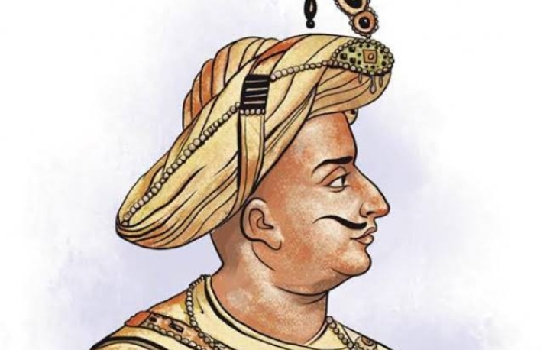
Bengaluru, Jul 28: After the Central Board of Secondary Education (CBSE) reduced the syllabi for Classes 9 to 12 due to COVID-19 pandemic, the Karnataka government has followed the suit. The Department of Public Instruction has omitted the chapters on legendary south Indian rulers Hyder Ali and Tipu Sultan from the textbooks of Class 7 in their attempt to reduce syllabus for state board schools by 30 per cent. 

The department, however, has decided to retain similar chapters on Tipu Sultan in 6th and 10th Classes, though the syllabus in text books for all classes from 1 to 10th has been trimmed. 

The trimmed textbooks uploaded on the website of the Department of State Education Research and Training (DSERT) by Karnataka state Textbook Society revealed removal of chapters on Tipu Sultan for the seventh grade.

Justifying the decision, officials said, "students study similar chapters in Class 6 and more in the 10th grade." Yet another senior official from the Text Book Society said, "Trimming does not mean we have removed half of the syllabus from textbooks. It is only keeping in mind the repetition we have condensed the chapters. In case students study about a particular dynasty in higher grades, then the same had been removed from lower grades."

A few months ago, there was an uproar over dropping of content on Tipu Sultan and MLAs from the ruling BJP also demanded the same and petitioned to the Chief Minister. Even an expert committee led by Prof Baraguru Ramachandrappa suggested to not drop any content on the historic figure. However, the department still decided to drop lessons from one of the classes while keeping the syllabus short for the next 120 active academic days.

Earlier this month, a controversy had erupted over the CBSE's decision to omit topics like federalism, secularism, citizenship, etc while reducing the syllabus for Classes 9 to 12. The education board had issued a detailed clarification later, stating that topics claimed to be dropped "are either being covered by the rationalised syllabus or in the Alternative Academic Calendar of NCERT".

"The rationalisation of syllabus up to 30 per cent has been undertaken by the Board for nearly 190 subjects of class 9 to 12 for the academic session 2020-21 as a one-time measure only. The objective is to reduce the exam stress of students due to the prevailing health emergency situation and prevent learning gaps," it said.

Last week, the Congress in Uttar Pradesh expressed its concern over 'deliberate and systematic' deletions of chapters related to the freedom struggle and the party's role in it from the Class 10-12 syllabi of the Secondary Education Board.

Comments

Add new comment

  • Coastaldigest.com reserves the right to delete or block any comments.
  • Coastaldigset.com is not responsible for its readers’ comments.
  • Comments that are abusive, incendiary or irrelevant are strictly prohibited.
  • Please use a genuine email ID and provide your name to avoid reject.