


Discussions on surgical strikes will be insult to Army: BJP

October 5, 2016

New Delhi, Oct 5: Hitting out at those "seeking proof" of the surgical strikes in PoK, Union Minister M Venkaiah Naidu today said further discussions on the operations will be an "insult" to the "commendable" task carried out by the Army.
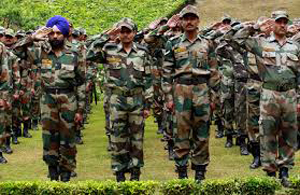
images 6"There is no need to respond to such irresponsible comments and demands. Fortunately, Congress has also realised its mistake and distanced itself from the comments of its leaders...AAP has also made it very clear," he told reporters on the sidelines of an event here.

He said nobody has any doubt about the "credentials and commitment" of the Indian Army which has done a "commendable" job and further discussions on the operations will be an "insult" to the force.

"I don't think any Indian citizen has got any doubt. Nobody is doubting the credentials and commitment of the Indian Army. It did a commendable job...It would be an insult to the Army if we further discuss," he said.

Naidu said the Director General Military Operations (DGMO) himself had given the statement about the operations in full details and also shared the information at an all-party meeting.

He wondered if giving further details will be in the interest of the nation. Observing that entire country is happy about the surgical strikes, he said the world has also acknowledge the step taken by India.

"Only Pakistan is saying something because they have to say something. They are not in a position to conduct funeral or last rites of their own citizens...This is their culture," he said.

Earlier, addressing the event, the minister said India does not want war with anybody, but will give a befitting reply if continuously provoked.

"...We never want a war with anybody. If somebody continuously provokes us, we will give them a befitting reply like our jawans gave the reply recently," he said.

Congress leader Sanjay Nirupam had accused the BJP of indulging in politics over national interest and called the surgical strikes on terror camps as fake, the comments which were slammed by his own party.

Congress leader P Chidmabaram had also reportedly said it was up to the government to give proof of the surgical strikes in which seven terror launch pads in Pakistan-occupied-Kashmir were destroyed by the Army.

Also, Delhi Chief Minister Arvind Kejriwal had on Monday released a video message "saluting" Prime Minister Narendra Modi for the surgical strikes across the LoC and urging him to "unmask" Pakistan's propaganda.

Pakistan has denied that the Indian Army conducted surgical strikes against terrorist units on its side of the border on the intervening night of September 28 and 29.

Comments

Rashid
 - 
Wednesday, 5 Oct 2016

You already made a lot of damage to the credentials of army by dragging it to your political gain. now international media also shown some sign of suspicion

Add new comment

  • Coastaldigest.com reserves the right to delete or block any comments.
  • Coastaldigset.com is not responsible for its readers’ comments.
  • Comments that are abusive, incendiary or irrelevant are strictly prohibited.
  • Please use a genuine email ID and provide your name to avoid reject.
coastaldigest.com web desk
June 16,2020

New Delhi, Jun 16: Despite Prime Minister Narendra Modi led government’s attempt to downplay the border dispute with China, matters have heated up unprecedentedly along the Line of Actual Control (LAC)- the effective Sino-India border in Eastern Ladakh. 

The country has lost three precious lives – an army officer and two soldiers. The last time blood was spilled on the LAC, before the latest episode, was 45 years ago when the Chinese ambushed an Assam Rifles patrol in Tulung La.

India had lost four soldiers on October 20, 1975 in Tulung La, the last time bullets were fired on the India-China border though both the countries witnessed bitter stand-offs later at Sumdorong Chu valley in 1987, Depsang in 2013, Chumar in 2014 and Doklam in 2017.

Between 1962 and 1975, the biggest clash between India and China took place in Nathu La pass in 1967 when reports suggest that around 80 Indian soldiers were killed and many more Chinese personnel.

While three soldiers, including a Commanding Officer, were killed in the latest episode in Galwan Valley, the government describes it as a "violent clash" and does not mention opening fire.

New Delhi described the locality where the 1975 incident took place as "well within" its territory only to be rebuffed by Beijing as "sheer reversal of black and white and confusion of right and wrong".

The Ministry of External Affairs had then said that the Chinese had crossed the LAC and ambushed the soldiers while Beijing claimed the Indians entered their territory and did not return despite warnings.

The Indian government maintained that the ambush on the Assam Rifles' patrol in 1975 took place "500 metres south of Tulung" on the border between India and Tibet and "therefore in Indian territory". It said Chinese soldiers "penetrating" Indian territory implied a "change in China's position" on the border question but the Chinese denied this and blamed India for the incident.

The US diplomatic cables quoted an Indian military intelligence officer saying that the Chinese had erected stone walls on the Indian side of Tulung La and from these positions fired several hundred rounds at the Indian patrol.

"Four of the Indians had gone into a leading position while two (the ones who escaped) remained behind. The senior military intelligence officer emphasised that the soldiers on the Indian patrol were from the area and had patrolled that same region many times before," the cable said.

One of the US cables showed that former US Secretary of State and National Security Adviser Henry Kissinger sought details of the October 1975 clash "without approaching the host governments on actual location of October 20 incident". He also wanted to know what ground rules were followed regarding the proximity of LAC by border patrols.

A cable sent from the US mission in India on November 4, 1975 appeared to have doubts about the Chinese account saying it was "highly defensive".

"Given the unsettled situation on the sub-continent, particularly in Bangladesh, both Chinese and Indian authorities have authorised stepped up patrols along the disputed border. The clash may well have ensued when two such patrols unexpectedly encountered each other," it said.

Another cable from China on the same day quoted another October 1974 cable, which spoke about Chinese officials being concerned for long that "some hotheaded person on the PRC (People's Republic of China) might provoke an incident that could lead to renewed Sino-Indian hostilities. It went on to say that this clash suggested that "such concerns and apprehensions are not unwarranted".

According to the United States diplomatic cables, Chinese Foreign Ministry on November 3, 1975 disputed the statement of the MEA spokesperson, who said the incident took place inside Indian territory.

The Chinese had said "sheer reversal of black and white and confusion of right and wrong". In its version of the 1975 incident, they said Indian troops crossed the LAC at 1:30 PM at Tulung Pass on the Eastern Sector and "intruded" into their territory when personnel at the Civilian Checkpost at Chuna in Tibet warned them to withdraw.

Ignoring this, they claimed, Indian soldiers made "continual provocation and even opened fire at the Chinese civilian checkpost personnel, posing a grave threat to the life of the latter. The Chinese civilian checkpost personnel were obliged to fire back in self defence."

The Chinese Foreign Ministry spokesperson had also said they told the Indian side that they could collect the bodies "anytime" and on October 28, collected the bodies, weapons and ammunition and "signed a receipt".

The US cables from the then USSR suggested that the official media carried reports from Delhi on the October 1975 incident and they cited only Indian accounts of the incident "ridiculing alleged Chinese claims that the Indians crossed the line and opened fire first".

Comments

Add new comment

  • Coastaldigest.com reserves the right to delete or block any comments.
  • Coastaldigset.com is not responsible for its readers’ comments.
  • Comments that are abusive, incendiary or irrelevant are strictly prohibited.
  • Please use a genuine email ID and provide your name to avoid reject.
News Network
July 11,2020

New Delhi, Jul 11: Poll strategist Prashant Kishor took a swipe at Bihar Chief Minister Nitish Kumar on Saturday, saying this is time to fight the coronavirus not elections and that he should not endanger people's lives in a "hurry" to hold the assembly polls.

"The coronavirus situation in Bihar is worsening like it is in many other states of the country. But a big part of government machinery and resources are busy making preparation for the polls.

"Nitish Kumar ji, this isn't time to fight elections but the coronavirus. Don't endanger people's lives in this hurry to hold the polls," he tweeted.

Kishor, once a confidant of the JD(U) president before he turned a critic and was expelled from the party, joins leaders like LJP chief Chirag Paswan and RJD's Tejashwi Yadav in suggesting that the Bihar assembly polls should be deferred due to the pandemic.

Polls in Bihar are due in October-November but the Election Commission has so far not made any official announcement about its schedule.

The BJP and the JD(U) have been holding organisational meetings and said that they are ready for the elections.

Comments

Add new comment

  • Coastaldigest.com reserves the right to delete or block any comments.
  • Coastaldigset.com is not responsible for its readers’ comments.
  • Comments that are abusive, incendiary or irrelevant are strictly prohibited.
  • Please use a genuine email ID and provide your name to avoid reject.
News Network
January 6,2020

Jan 6: India’s Finance Ministry has delivered a challenge to its revenue collectors: meet tax targets despite $20 billion of corporate tax cuts.

Through a video conference on Dec. 16, officials were exhorted to meet the direct tax mop-up target of 13.4 trillion rupees ($187 billion), a government official told reporters. Collection in the eight months to November grew at 5% from a year earlier, against the desired 17%.

The missive shows Prime Minister Narendra Modi’s urgent need to buoy public finances in a slowing economy where April-November tax collections were half the amount budgeted. Authorities withheld some payments to states and have capped ministries’ expenditure as the fiscal deficit ballooned beyond the target.

The government’s efforts to maintain its deficit goal goes against advice from some quarters, including central bank Governor Shaktikanta Das, who urged more spending to spur economic growth.

It’s uncertain though how much room Modi’s administration has to boost expenditure, given that it may already be borrowing as much as 540 billion rupees through state-run companies, a figure that isn’t reflected on the federal balance sheet. Uncertainty about public finances pushed up sovereign yields in November and December, compelling Das to announce unconventional policies to keep costs in check.

“This is not a time to conceal the fiscal deficit by off-budget borrowing or deferring payments,” said Indira Rajaraman, an economist and a former member of the Reserve Bank of India’s board. “If they were to stick to the target, that would be catastrophic because there is so much pump-priming that is needed right now.”

GDP grew 4.5% in the quarter ended September, the slowest pace in more than six years as both consumption and investments cooled in Asia’s third-largest economy. Only government spending supported the expansion, piling pressure on Modi to keep stimulating.

S&P Global Ratings warned in December it may downgrade India’s sovereign ratings if economic growth doesn’t recover. Government support seems to be waning now, with ministries asked to cap spending in the final quarter of the financial year at 25% of the amount budgeted rather than 33% allowed earlier. This new rule will hamstring sectors including agriculture, aviation and coal, where not even half of annual targets have been disbursed.

As the federal government runs short of money, it’s been delaying payouts to state administrations.

Private hospitals have threatened to suspend cash-less services to government employees over non-payment of dues, while a builder informed the stock exchange about delayed rental payments from no less than the tax office itself.

India is considering a litigation-settlement plan that will allow companies to exit lingering tax disputes by paying a portion of the money demanded by the government, the Economic Times newspaper reported Saturday.

The move will help improve the ease of doing business besides unlocking a part of the almost 8 trillion rupees ($111 billion) caught up in these disputes. The step, which is being considered as part of the annual budget, could also bridge India’s fiscal gap.

Finance Minister Nirmala Sitharaman has refused to comment on the deficit goal before the official budget presentation due Feb. 1.

A deviation from target, if any, “will need to be balanced with a credible consolidation plan further-out,” said Radhika Rao, an economist at DBS Group Holdings Ltd. in Singapore.

Comments

Add new comment

  • Coastaldigest.com reserves the right to delete or block any comments.
  • Coastaldigset.com is not responsible for its readers’ comments.
  • Comments that are abusive, incendiary or irrelevant are strictly prohibited.
  • Please use a genuine email ID and provide your name to avoid reject.