DKMA to provide beneficiary cards to Muslim working women too

[email protected] (CD Network | Suresh)
September 27, 2016

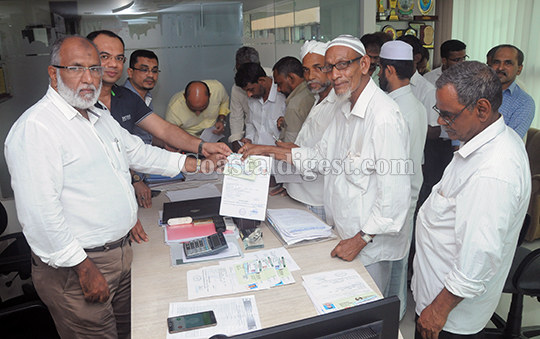
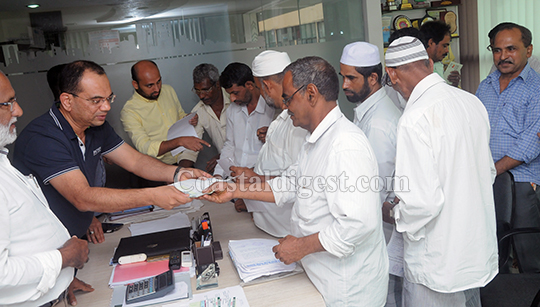
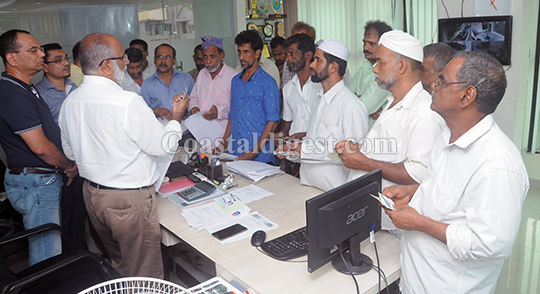
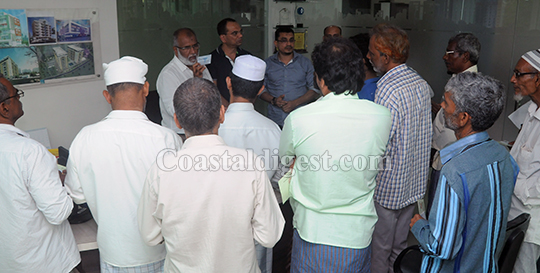
Mangaluru, Sep 27: Dakshina Kannada Muslim Association, a newly formed group of philanthropists, has said that it would distribute beneficiary cards to the Muslim working women too if they were found eligible.

smr 2

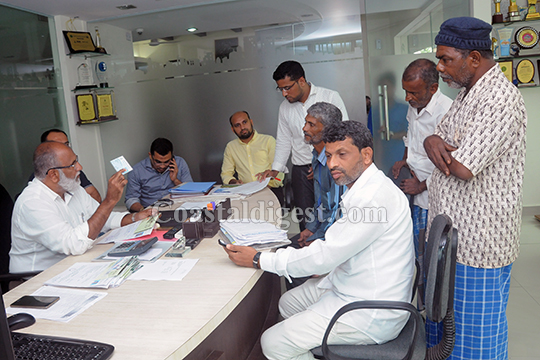
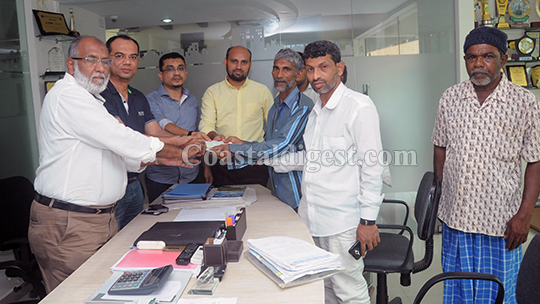
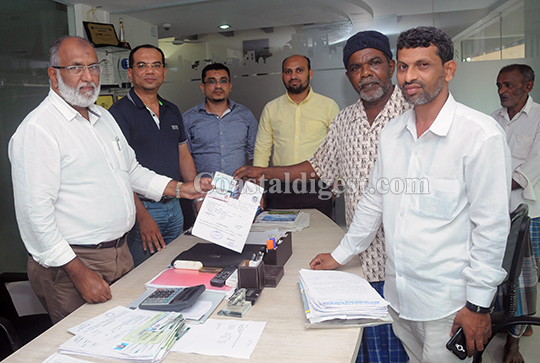
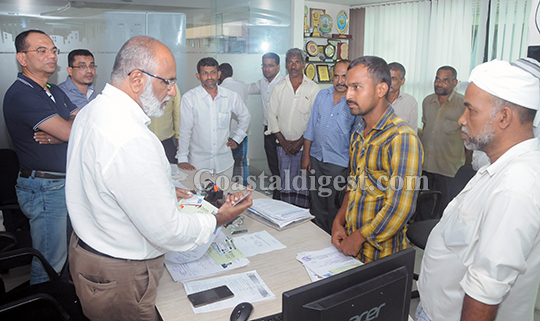
S M Rashid Haji, the president of the Association told media persons on Tuesday that they have already distributed cards to around 85 beneficiaries.

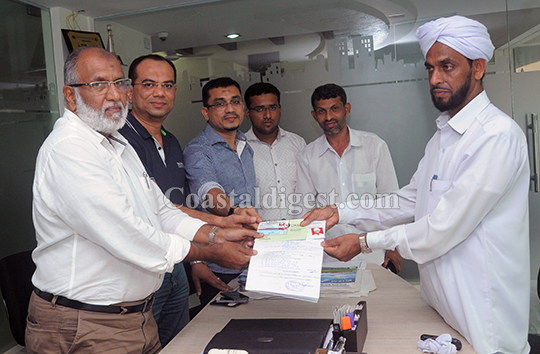
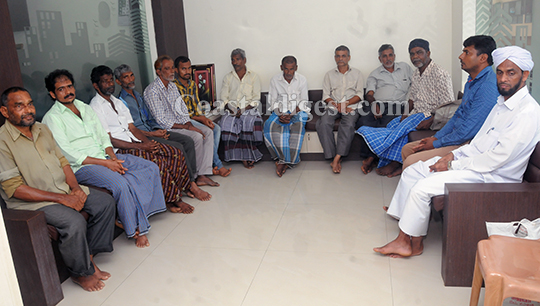
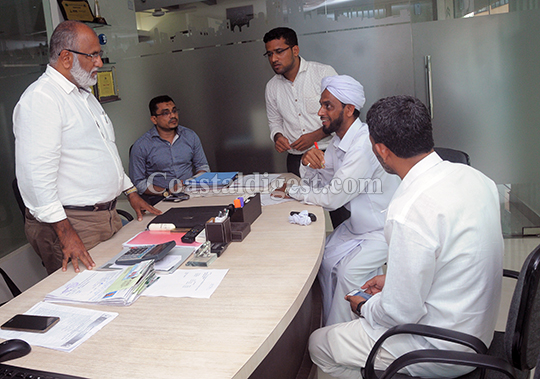
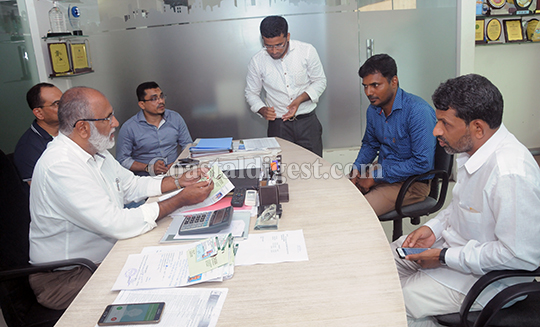
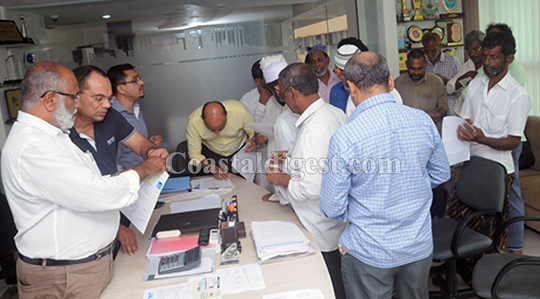
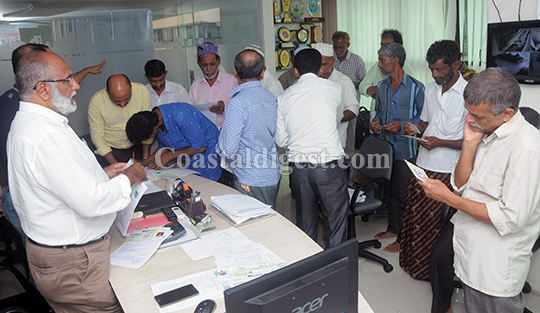
“Today, we distributed beneficiary cards, health cards and free SIM cards to the sole bread winners of 32 poor families. In the past we had distributed such cards to over 50 beneficiaries,” he said.

He said that aspirants of the beneficiary cards can still apply for the same with a certificate from their jurisdictional mosque jamaaths. The last date to submit applications is November 30, 2016.

The intention behind the formation of the Association was to help the poor families in case of the sudden demise of their breadwinners. The Association will donate Rs 2 lakh to the family of each beneficiary card holder after his or her demise.

The families of only those who get beneficiary cards from DKMA will be eligible to receive the amount after their demise. They beneficiaries will also be eligible to get free treatment at Yenepoya Medical College Hospital at Deralakatte.

He said that the Association will distribute beneficiary cards the poor men or women only if they were the breadwinners of their family. “Cards will not be distributed to those who don't work,” he clarified.

Donors Mansoor Azad, Shaukath, Asif Home Plus and Sulaiman Karaya were present on the occasion.

Also Read: DK Muslim Association' launched to help bereaved Muslim families

smr 1

smr 3

smr 4

smr 5

smr 6

smr 7

smr 8

smr 9

smr 10

smr 11

smr 12

smr 15

smr 16

Comments

Shahul
 - 
Wednesday, 28 Sep 2016

Masha allah

Good work by DKMA commendable. Keep it up.

Add new comment

  • Coastaldigest.com reserves the right to delete or block any comments.
  • Coastaldigset.com is not responsible for its readers’ comments.
  • Comments that are abusive, incendiary or irrelevant are strictly prohibited.
  • Please use a genuine email ID and provide your name to avoid reject.
coastaldigest.com news network
May 11,2020

Mangaluru, May 11: The first evocation flight from Dubai to Mangaluru amidst corona crisis is expected to bring back 177 stranded Kannadigas, mainly residents of coastal Karnataka, on Tuesday, May 12.

All the international passengers have to undergo three mandatory upon their arrival at Mangaluru International Airport - the thermal test, pulse oximetry reading and swab test.

They will be categorised based on their health condition and sent to institutional quarantine, said Sindhu B Rupesh, deputy commissioner, Dakshina Kannada.

“Those with some health issues on arrival (Category A) will be ferried through ambulances to quarantine facilities and rest in buses,” she said.

Arriving passengers will be given the option to choose their quarantine home (lodge, hostel and service apartment) based on their budget and preference.

It is learnt that Dakshina Kannada district administration has kept ready close to 1,000 rooms. The tariff for quarantine facilities is between Rs 1,200 and Rs 4,500 (including food) per day.

As per the Karnataka government, as on May 6, about 10,823 stranded expatriates are expected to return home.

The CISF, airport authorities, health and police departments will make arrangements for the arriving repatriates at MIA.

Sindhu said that the district administration has no personal information about the arriving passengers and there is high probability that they may belong to other districts or the neighbouring Kerala.

“So far, the district administration has received the missive that 177 passengers will be landing on May 12. If we are given advance details about the expats from other districts/state, the district administration will alert them to make necessary arrangements,” she said.

Comments

Add new comment

  • Coastaldigest.com reserves the right to delete or block any comments.
  • Coastaldigset.com is not responsible for its readers’ comments.
  • Comments that are abusive, incendiary or irrelevant are strictly prohibited.
  • Please use a genuine email ID and provide your name to avoid reject.
Agencies
May 8,2020

Washington D.C., May 8: The prime time for brain development in a child's life is the first year, where the infant spends most of the time asleep. It is the time when neural connections form and sensory memories are encoded.

However, when sleep is disrupted, as occurs more often among children with autism, brain development may be affected, too.

New research led by the University of Washington finds that sleep problems in a baby's first 12 months may not only precede an autism diagnosis but also may be associated with altered growth trajectory in a key part of the brain, the hippocampus.

The study, which was published in the American Journal of Psychiatry, researchers report that in a sample of more than 400 taken of 6- to 12-month-old infants, those who were later diagnosed with autism were more likely to have had difficulty falling asleep.

It also states that this sleep difficulty was associated with altered growth trajectories in the hippocampus.

"The hippocampus is critical for learning and memory, and changes in the size of the hippocampus have been associated with poor sleep in adults and older children.

As many as 80 per cent of the children with autism spectrum disorder have sleep problems," said Annette Estes, director of the UW Autism Center and senior author of the study.

"In our clinical experience, parents have a lot of concerns about their children's sleep, and in our work on early autism intervention, we observed that sleep problems were holding children and families back," added Estes, who is also a UW professor of speech and hearing sciences.

"It could be that altered sleep is part-and-parcel of autism for some children. One clue is that behavioural interventions to improve sleep don't work for all children with autism, even when their parents are doing everything just right. This suggests that there may be a biological component to sleep problems for some children with autism," said Estes.

To consider links among sleep, brain development, and autism, researchers at the IBIS Network looked at MRI scans of 432 infants, surveyed parents about sleep patterns, and measured cognitive functioning using a standardized assessment.

At the outset of the study, infants were classified according to their risk for developing autism: Those who were at higher risk of developing autism -- about two-thirds of the study sample -- had an older sibling who had already been diagnosed.

Infant siblings of children with autism have a 20 per cent chance of developing autism spectrum disorder -- a much higher risk than children in the general population.

In the current study, 127 of the 432 infants were identified as "low risk" at the time the MRI scans were taken because they had no family history of autism.

They later evaluated all the participants at 24 months of age to determine whether they had developed autism. Of the roughly 300 children originally considered "high familial risk," 71 were diagnosed with autism spectrum disorder at that age.

Problems with sleep were more common among the infants later diagnosed with an autism spectrum disorder, as were larger hippocampi. No other subcortical brain structures were affected, including the amygdala, which is responsible for certain emotions and aspects of memory, or the thalamus, a signal transmitter from the spinal cord to the cerebral cortex.

The authors note that while parents reported more sleep difficulties among infants who developed autism compared to those who did not, the differences were very subtle and only observed when looking at group averages across hundreds of infants.

Sleep patterns in the first years of life change rapidly as infants transition from sleeping around the clock to a more adult-like sleep/wake cycle. Until further research is completed, Estes said, it is not possible to interpret challenges with sleep as an early sign of increased risk for autism.


Comments

Add new comment

  • Coastaldigest.com reserves the right to delete or block any comments.
  • Coastaldigset.com is not responsible for its readers’ comments.
  • Comments that are abusive, incendiary or irrelevant are strictly prohibited.
  • Please use a genuine email ID and provide your name to avoid reject.
News Network
May 10,2020

May 10: Azaan is an integral part of the faith, not the gadget, says veteran writer-lyricist Javed Akhtar, asking that the Islamic call to prayer on loudspeakers should be stopped as it causes "discomfort" to others.

In a tweet on Saturday, Akhtar wondered why the practice was 'halaal' (allowed) when it was, for nearly half a century in the country, considered 'haraam' or forbidden.

"In India for almost 50 years Azaan on the loud speak was Haraam. Then it became Halaal and so halaal that there is no end to it, but there should be an end to it. Azaan is fine but loud speaker does cause of discomfort for others. I hope that atleast this time they will do it themselves (sic)," Akhtar tweeted.

When a user asked his opinion on loudspeakers being used in temples, the 75-year-old writer said everyday use of speakers is a cause of concern.

"Whether it's a temple or a mosque, if you're using loudspeakers during a festival, it's fine. But it shouldn't be used everyday in either temples or mosques.

"For more than thousand years Azaan was given without the loud speaker. Azaan is the integral part of your faith, not this gadget," he replied.

Earlier in March, Akhtar had supported the demand to shut mosques amid the coronavirus outbreak in the country, saying even Kaaba and Medina have been closed due to the pandemic.

He had also appealed to the Muslim community to offer prayers from home in the holy month of Ramzan, which began on April 24.

"I request all the Muslim brothers that now that Ramzan is coming, please say your prayers but make sure that this doesn't cause problems to anyone else. The prayers that you do in the mosque, you can do that at home. According to you, the house, the ground, this all has been made by Him. Then you can do your prayers anywhere," he had said.

Comments

Add new comment

  • Coastaldigest.com reserves the right to delete or block any comments.
  • Coastaldigset.com is not responsible for its readers’ comments.
  • Comments that are abusive, incendiary or irrelevant are strictly prohibited.
  • Please use a genuine email ID and provide your name to avoid reject.