DKMA to provide beneficiary cards to Muslim working women too

[email protected] (CD Network | Suresh)
September 27, 2016

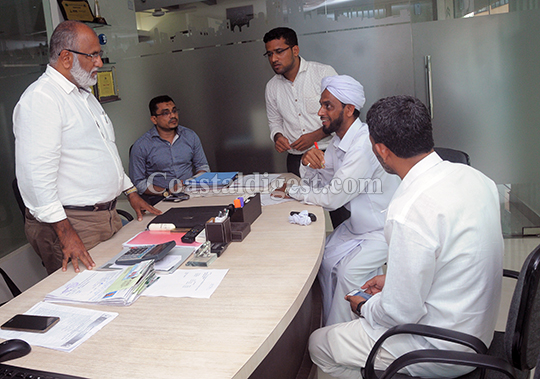
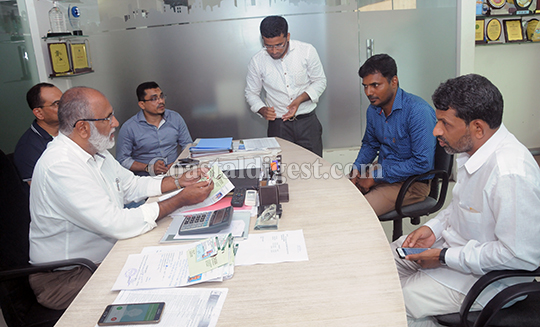
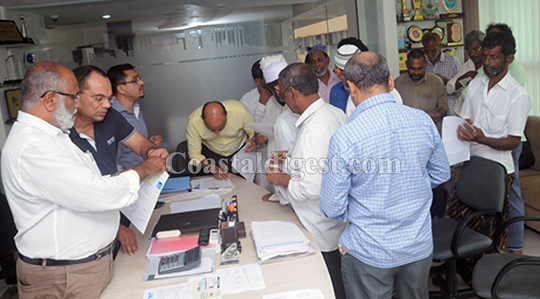
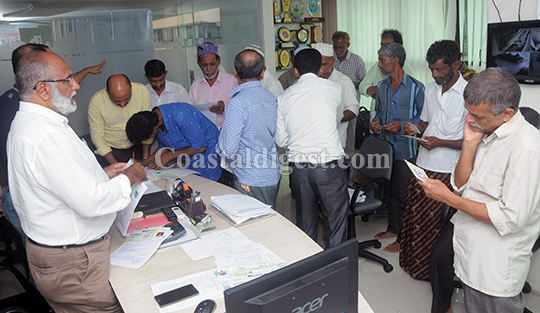
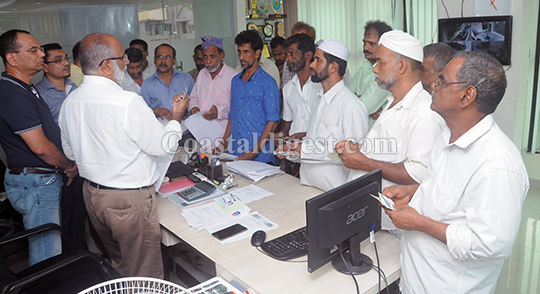
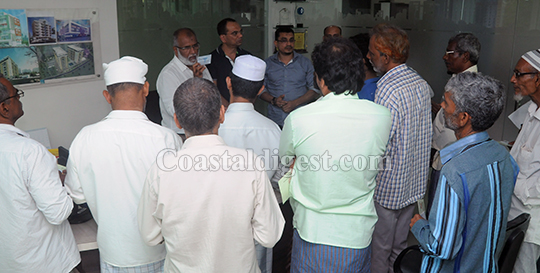
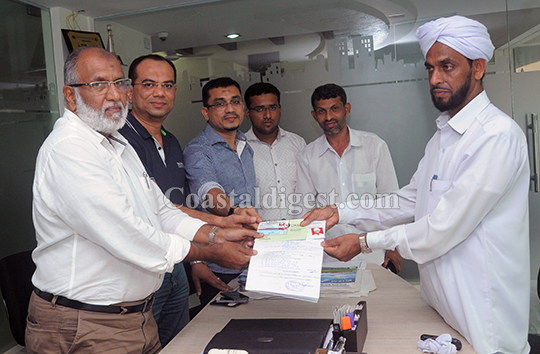
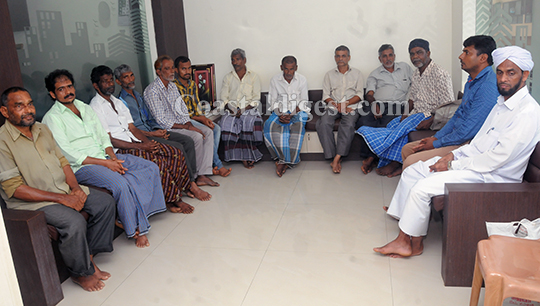
Mangaluru, Sep 27: Dakshina Kannada Muslim Association, a newly formed group of philanthropists, has said that it would distribute beneficiary cards to the Muslim working women too if they were found eligible.
smr 2

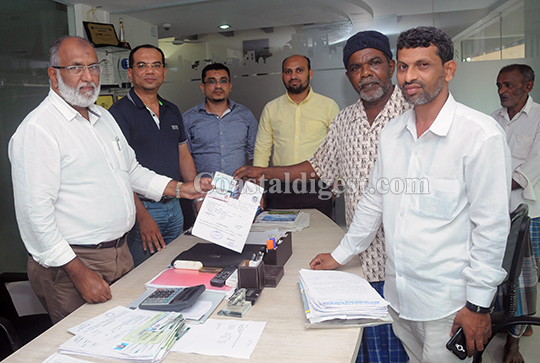
S M Rashid Haji, the president of the Association told media persons on Tuesday that they have already distributed cards to around 85 beneficiaries.

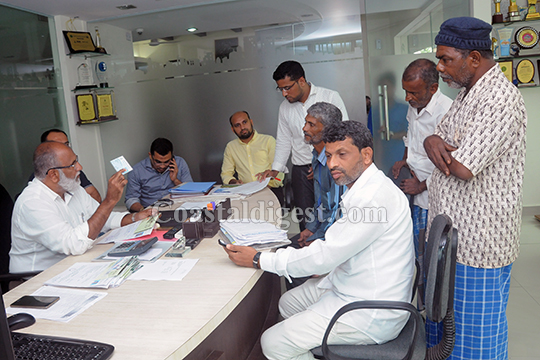
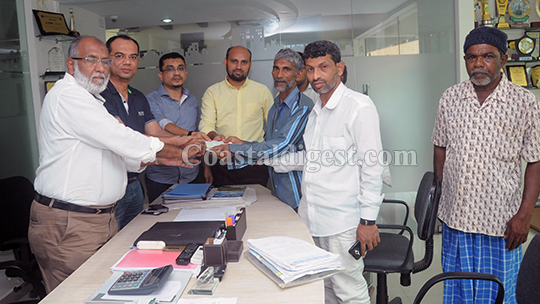
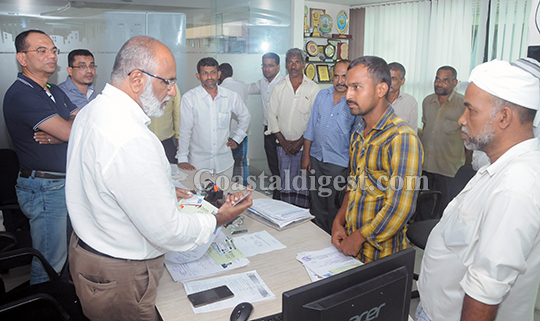
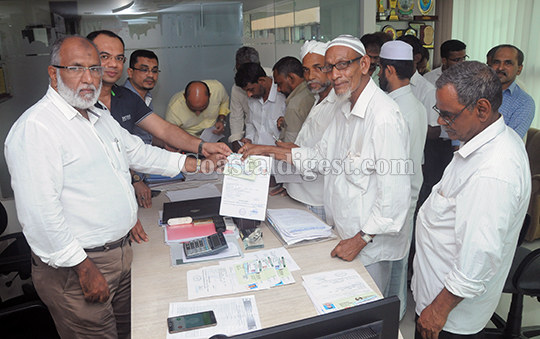
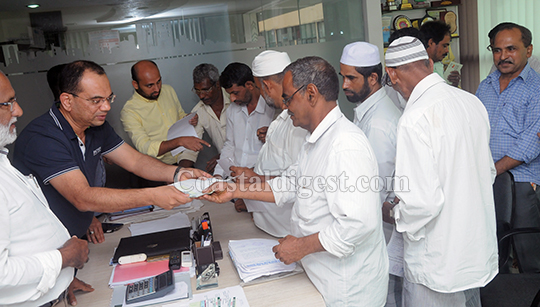
“Today, we distributed beneficiary cards, health cards and free SIM cards to the sole bread winners of 32 poor families. In the past we had distributed such cards to over 50 beneficiaries,” he said.

He said that aspirants of the beneficiary cards can still apply for the same with a certificate from their jurisdictional mosque jamaaths. The last date to submit applications is November 30, 2016.

The intention behind the formation of the Association was to help the poor families in case of the sudden demise of their breadwinners. The Association will donate Rs 2 lakh to the family of each beneficiary card holder after his or her demise.

The families of only those who get beneficiary cards from DKMA will be eligible to receive the amount after their demise. They beneficiaries will also be eligible to get free treatment at Yenepoya Medical College Hospital at Deralakatte.

He said that the Association will distribute beneficiary cards the poor men or women only if they were the breadwinners of their family. “Cards will not be distributed to those who don't work,” he clarified.

Donors Mansoor Azad, Shaukath, Asif Home Plus and Sulaiman Karaya were present on the occasion.

Also Read: DK Muslim Association' launched to help bereaved Muslim families
smr 1

smr 3

smr 4

smr 5

smr 6

smr 7

smr 8

smr 9

smr 10

smr 11

smr 12

smr 15

smr 16

Comments

Shahul
 - 
Wednesday, 28 Sep 2016

Masha allah

Good work by DKMA commendable. Keep it up.

Add new comment

  • Coastaldigest.com reserves the right to delete or block any comments.
  • Coastaldigset.com is not responsible for its readers’ comments.
  • Comments that are abusive, incendiary or irrelevant are strictly prohibited.
  • Please use a genuine email ID and provide your name to avoid reject.
News Network
July 3,2020

New Delhi, Jul 3: Accredited Social Health Activists (ASHAs) in Karnataka have emerged as a "crucial pillar in the state's success" in combating Covid-19, the Union Health Ministry said on Friday.

Acknowledging and praising their work, the ministry said they have been actively participating in household surveys in the state, screening inter-state passengers, migrant workers and others in the community for symptoms of the infection,

“Around 42,000 ASHAs have emerged as a crucial pillar in the state's success” in combating Covid-19, the ministry said.

"Recognizing the increased vulnerability of certain population groups to Covid-19, in a one-time survey to identify households with the elderly, persons with co-morbidities, and immune-compromised individuals, about 1.59 crore households were covered," the ministry said in a statement.

ASHAs regularly monitor such high-risk groups in their area with a periodicity of follow-up visits varying from once a day in the containment zones to once every 15 days in other areas, it said.

They also visit the houses of persons complaining influenza-like-illness (ILI) symptoms and severe acute respiratory infections (SARI), besides high-risk individuals who have called the state health department helpline numbers, the ministry said.

ASHAs are a part of the Rural Task Force, headed by Panchayat Development Officer (PDO) at the Gram Panchayat level, for addressing public grievances on both Covid-19 and non-Covid-19 related services.

ASHAs are trained female community health activists selected from the village itself and accountable to it. They are trained to work as an interface between the community and the public health system.

In the urban areas too, they have been at the forefront of dissemination of various awareness activities in fever clinics and swab collection centres in urban areas.

They have also actively screened cases of ILI and SARI in urban areas. They are also part of the screening teams at international and interstate check-posts.

Karnataka has reported 272 Covid-19 deaths and 18,016 cases, according to the health ministry data updated at 8 AM.

Comments

Add new comment

  • Coastaldigest.com reserves the right to delete or block any comments.
  • Coastaldigset.com is not responsible for its readers’ comments.
  • Comments that are abusive, incendiary or irrelevant are strictly prohibited.
  • Please use a genuine email ID and provide your name to avoid reject.
News Network
May 27,2020

In a development which highlights the diversity in the United Kingdom’s legal system, a 40-year-old Muslim woman has become the first hijab-wearing judge in the country.

Raffia Arshad, a barrister, was appointed a deputy district judge on the Midlands circuit last week after 17-year career in law.  

She said her promotion was great news for diversity in the world’s most respected legal system. She hopes to be an inspiration to young Muslims.

Ms Arshad, who grew up in Yorkshire, north England, has wanted to work in law since she was 11.

Ms Arshad said the judicial office was looking to promote diversity, but when they appointed her they did not know that she wore the hijab.

‘It’s definitely bigger than me,” she told Metro newspaper. "I know this is not about me.

"It’s important for all women, not just Muslim women, but it is particularly important for Muslim women."

Ms Arshad, a mother of three, has been practising private law dealing with children, forced marriage, female genital mutilation and other cases involving Islamic law for the past 17 years.

She was the first in her family to go to university and has also written a leading text on Islamic family law.

Although the promotion by the Lord Chief Justice was welcome news for her, Ms Arshad said the happiness from other people sharing the news was “far greater”.

“I’ve had so many emails from people, men and women," she said.

"It’s the ones from women that stand out, saying that they wear a hijab and thought they wouldn’t even be able to become a barrister, let alone a judge."

Ms Arshad is regularly the subject of discrimination in the courtroom because of her choice to wear the hijab.

She is sometimes mistaken for a court worker or a client.

Ms Arshad said that recently she was asked by an usher whether she was a client, an interpreter, and even if she were on work experience.

“I have nothing against the usher who said that but it reflects that as a society, even for somebody who works in the courts, there is still this prejudicial view that professionals at the top end don’t look like me,” she said.

A family member once advised her to not wear a hijab at an interview for a scholarship at the Inns of Court School of Law in 2001, warning that it would affect her chances of landing the role.

“I decided that I was going to wear my headscarf because for me it’s so important to accept the person for who they are," Ms Arshad said.

"And if I had to become a different person to pursue my profession, it’s not something I wanted.”

The joint heads of St Mary’s Family Law Chambers said they were “delighted” to hear the news of her appointment.

“Raffia has led the way for Muslim women to succeed in the law and at the bar, and has worked tirelessly to promote equality and diversity in the profession,” Vickie Hodges and Judy Claxton said.

“It is an appointment richly deserved and entirely on merit, and all at St Mary’s are proud of her and wish her every success.”

Comments

Add new comment

  • Coastaldigest.com reserves the right to delete or block any comments.
  • Coastaldigset.com is not responsible for its readers’ comments.
  • Comments that are abusive, incendiary or irrelevant are strictly prohibited.
  • Please use a genuine email ID and provide your name to avoid reject.
Abu Muhammad | coastaldigest.com
January 16,2020

Even as the Muslims of undivided Dakshina Kannada district broke out of the “spiral of silence” and made history by leading an unprecedented protest against CAA, NPR and NRC as well as the categorial mistreatment of non-saffronites at the hands of the police across the country, mainstream media turned a blind eye to the spectacle at the Shah Garden Maidan in Mangaluru’s Adyar where about two lakh patriots with tricolor in their hands converged to assert themselves on January 15th, 2020, a date which will be remembered by the people of coastal Karnataka forever.

The largest gathering in the history of Mangaluru was absolutely peaceful, law-abiding and respectful. While the slogans of ‘Azaadi’ were reverberating in the atmosphere, the protesters were seen making way for vehicles and passersby, taking care of women and helping elderly citizens on the highway adjacent to the ground. Though the organisers and most of the participants were Muslims, they collectively identified themselves as “We, the people of India”.

The district administration and the police department hadn’t imagined or even dreamt of such a mammoth gathering after blocking the highway and banning public transport from 9 am to 9 pm. Many opine that this action was taken only to discourage the concerned from participating in the protest and to create fear in the hearts of the people who are yet to process the unjustifiable deaths of two innocent citizens in an unwarranted police firing a few weeks ago.

What has since surprised the protesters most is the mainstream media’s blatant attempt to downplay the significance of this largest ever gathering. Shockingly, it could not make it to the front pages of any of the state-level Kannada daily newspapers except city-based Vaartha Bharathi. In the absence of The Hindu, which had announced a holiday on account of Makar Sankranti, most of the English newspapers too pitilessly buried the historic event in their inner pagers. National TV channels too were evidently reluctant to cover the event until NDTV started telecasting the news of the protest.

This uneasy relationship between the media and minorities in coastal Karnataka has long existed, but the non-coverage of the huge protest of Jan 15 marks a quantum leap beyond the media’s traditional pro-Sangh Parivar stance and biases –– which in the past had often demonised non-saffronites –– to now completely ignore and suppress the people’s voice. This media bias has naturally evoked a sharp response from netizens, who took to social media to issue clarion calls to boycott the mainstream media forever.

Cleanliness Drive

Most major protest meets and rallies –– both religious and political –– leave behind tonnes of garbage, especially water bottles, placards and buntings. However, the organisers of the Jan 15 protest meet led by example by launching a cleanliness drive in the area soon after the protesters left the venue peacefully. The drive continued on Jan 16 too. (Ironically, amidst this ongoing cleanliness drive, a local news portal captured photos of a few plastic bottles scattered along the road at Adyar and published a report accusing the event organisers and participants of polluting the area!)

Comments

Add new comment

  • Coastaldigest.com reserves the right to delete or block any comments.
  • Coastaldigset.com is not responsible for its readers’ comments.
  • Comments that are abusive, incendiary or irrelevant are strictly prohibited.
  • Please use a genuine email ID and provide your name to avoid reject.