Donald Trump pledges Mideast peace plan within months

Agencies
September 27, 2018

United Nations, Sep 27: President Donald Trump vowed Wednesday to present a "very fair" Middle East peace plan by the end of the year and endorsed a two-state solution, apparently confident that the Palestinians would return to talks despite his unwavering support for Israel.

Holding talks with Israeli Prime Minister Benjamin Netanyahu in New York, Trump said it was a "dream" of his to bring about a peaceful solution to a conflict that has eluded several of his predecessors.

While Trump said he expected Israel to make concessions in any final settlement of the decades-old conflict, the Palestinians said his administration's policies in the Middle East were destroying hopes of peace.

Jared Kushner, who is Trump's son-in-law as well as a senior advisor in the White House, has been working on a peace plan for more than a year, but there have been few clues to date on what he is expected to propose.

"I would say over the next two to three to four months," Trump said, referring to his prospective timetable for presenting a plan.

Trump, who met with Netanyahu on the sidelines of the UN General Assembly, said explicitly for the first time that he backed a two-state solution, saying: "That's what I think works best, that's my feeling." "I really believe something will happen. It is a dream of mine to be able to get that done prior to the end of my first term," added Trump, who was elected to serve four years through January 2021.

"Jared, who's so involved, he loves Israel but he's also going to be very fair with the Palestinians," the US president later told a news conference.

"I think probably two-state is more likely but if they do a single, if they do a double, I'm okay with it if they're both happy. If they're both happy, I'm okay with either. I think the two-state is more likely," he said.

Middle East peace efforts effectively stalled when the Palestinians broke off contacts with the Trump administration last year in protest at Trump's landmark decision to recognize Jerusalem as the capital of Israel.

Palestinian foreign affairs minister Riyad al-Maliki was unimpressed with Trump's remarks, saying the US president chose his tone because he was appearing with Netanyahu.

Maliki -- speaking after meeting in New York with representatives from 40 countries but not Kushner or other US officials -- said Trump needed to state clearly that a two-state solution would include a return to borders from before the 1967 Six-Day War and that east Jerusalem is occupied rather than part of Israel.

"These are important statements that President Trump has to say in order just to convince anyone that he is committed to real peace in our region," Maliki told reporters.

Maliki said that the Palestinians met more than 40 times with Trump's envoys only "to discover that they have opted to open that war against the Palestinians to inflict the most damage." 

Relations between the Palestinian Authority and the United States plummeted even lower in recent weeks after Washington cut off all funding to a UN agency that helps millions of Palestinian refugees, triggering a budget panic.

Trump said, however, that he was in no doubt that the Palestinians would soon return to the negotiating table. "Absolutely, 100 percent," he said.

"Lots of good things are happening," said Trump, before adding: "Israel will have to do something that will be good for the other side." 

Israeli media quoted Netanyahu as saying that Israel must retain security control in any peace deal with the Palestinians west of Jordan to the Mediterranean -- which includes the occupied West Bank.

"Israel will not relinquish security control west of Jordan. This will not happen so long as I am prime minister and I think the Americans understand that," he reportedly said.

Several of Trump's predecessors have played leading roles in trying to bring an end to the conflict, including Jimmy Carter, who brokered the 1978 Camp David agreement, which saw Egypt formally recognize Israel.

Bill Clinton oversaw the Oslo peace accords in 1993 which spelled out the aim of a two-state solution and allowed for the creation of the Palestinian Authority which is meant to rule over the West Bank and Gaza Strip.

But it left issues such as the borders and status of Jerusalem unresolved.

Egypt and Jordan are still the only Arab nations that formally recognize Israel.

Comments

Add new comment

  • Coastaldigest.com reserves the right to delete or block any comments.
  • Coastaldigset.com is not responsible for its readers’ comments.
  • Comments that are abusive, incendiary or irrelevant are strictly prohibited.
  • Please use a genuine email ID and provide your name to avoid reject.
coastaldigest.com web desk
May 21,2020

The Tawakkalna application developed by Saudi Arabia's National Information Centre to processes requests for movement permits during the curfew to curb the spread of the virus has become a major helplnine for past few weeks. 

The application developed through the close cooperation between the Ministry of Health and the Saudi Data and Artificial Intelligence Authority (SDAIA) was launched on May 4.

According to Saudi Telecom Group, it handles 20,000 calls daily through the Tawakkalna platform by dedicating a call centre of 600 employees through its Contact Centre Company (CCC). 

The Tawakkalna app can be used to issue e-permits for a selected group of government and private sector employees who were exempted from the curfew, and individuals who have medical appointments as well as couriers.

Tawakkalna has features for the service of citizens and residents, for ensuring their safety and comfort that would contribute to facilitating the access of authorized persons to travel permits.

The official page about Tawakkalna on Twitter, says: “You must always keep in mind that pinpointing your exact location of residence is the only way for you to benefit from the app’s range of services and permits.”

The app will also provide the latest alerts and medical news issued by the Ministry of Health about the virus as well as about its spread, ways to prevent it and movement permits.

Tawakkalna can be used for self-disclosure for people who show signs of coronavirus infection and for requesting ambulance service and other important services for the community.

Through the app users can apply for a one-hour permit for a walk in the neighborhood on a daily basis, thereby encouraging walking during this period of lockdown.

Comments

muhammad Sheheryar
 - 
Sunday, 14 Jun 2020

sir,


i am facing problem for receiving OTP code during registration for my family. i am unable to get OTP code.

please assist. 

Abdulrazaq Yousef
 - 
Thursday, 4 Jun 2020

Entering date of birth is the big problem is the big problem of this app. 


Malik asif
 - 
Tuesday, 26 May 2020

Dob entering problem 

Thomas Philipose
 - 
Monday, 25 May 2020

Hi,

I am trying to register in the Tawakkalna app, but it keeps on throwing error. Any idea?


thanx


Add new comment

  • Coastaldigest.com reserves the right to delete or block any comments.
  • Coastaldigset.com is not responsible for its readers’ comments.
  • Comments that are abusive, incendiary or irrelevant are strictly prohibited.
  • Please use a genuine email ID and provide your name to avoid reject.
News Network
January 18,2020

Jan 18: To mark the 30th anniversary of the mass exodus of Kashmiri Pandits from the Valley, members of the community took to social media to post videos of themselves by narrating the "Hum Aayenge Apne Watan" dialogue from an upcoming flick, 'Shikara', with the hope that they would return to their homeland one day.

On January 19, 1990, lakhs of Kashmiri Pandits were forced to leave their homes in the Valley following a genocidal campaign launched by the terrorists.

Theatre actor Chandan Sadhu participated in the campaign and said that Kashmiri Pandits have shown "unimaginable resilience" and hope to return to the Valley soon.

"As Kashmiri Pandits complete 30 years in exile this weekend, let our cry for justice be finally noticed. We have shown unimaginable resilience, and today we resolve to return home. Kashmiri Pandit friends: please record this video statement and put it up with #HumWapasAayenge," Sadhu tweeted.

The #HumWapasAayenge is trending on Twitter as more and more Kashmiri Pandits joined in the campaign to narrate the "Hum Aayenge Apne Watan" dialogue and a pledge to return to their homes.

Noted political commentator Sunanda Vashisht tweeted a throwback image of herself and said that resolve to go back home has strengthened more.

"I don't have many pictures left of my childhood. Choosing between life and family albums is really no choice at all. When lives were rescued, family albums got left behind. 30 years have passed. Resolve to go back home has only strengthened. #HumWapasAayenge," she tweeted.

Radio personality Khushboo Mattoo tweeted a video repeating the dialogue from Shikara and tweeted, "Said this in a BBC interview three years back. And I am saying it again #HumWapasAayenge #Shikara."

Journalist Rahul Pandita also took to his Twitter and captioned his post saying, "30 years of exile from Kashmir. Let us now pledge that we will return home."

'Shikara' chronicles the exodus of Kashmiri Pandits from the Valley on the night of January 19, 1990. Helmed by Vidhu Vinod Chopra, the movie is slated to release on February 7.

Netizens have supported the initiative and have expressed solidarity with the Kashmiri Pandits.

In July last year, Home Minister Amit Shah said in the Rajya Sabha that the central government is committed to bringing Kashmiri Pandits and Sufis back to the Valley saying a time will come when they will offer prayers at the famous Kheer Bhawani temple.

"Kashmiri Pandits were forced to leave Kashmir. Many of their shrines were demolished. Sufism was targeted in Jammu and Kashmir. Sufism used to talk about unity and harmony but they were attacked. No voice was raised in favour of Kashmiri Pandits and Sufis when they were brutally attacked. Sufis used to talk about the unity among Hindus and Muslims but they were forced to leave the Valley. Narendra Modi-led government is committed to bringing back Kashmiri Pandits, he had said.

The Mata Kheer Bhawani temple is one of the holiest shrines of Kashmiri Pandits, located about 14 kilometres east of Srinagar.

Last September, a delegation of the Kashmiri Pandit community met the Prime Minister in Houston and thanked him for the historic decision to abrogate Article 370 that gave special status to Jammu and Kashmir.

Modi acknowledged the hardships endured by the community following their exodus from their ancestral homeland back in 1989-1990 due to militancy.

"You have suffered a lot, but the world is changing. We have to move ahead together and build a new Kashmir," the Prime Minister had told the delegation.

"I had a special interaction with Kashmiri Pandits in Houston," Modi had tweeted following the interaction.

In October, Union Minister Prakash Javadekar announced that the Centre has decided to provide compensation of Rs 5.5 lakh each to 5,300 displaced families from Pakistan-occupied Kashmir (PoK), who initially opted to move outside Jammu and Kashmir but later on returned.

These families were earlier left out in the rehabilitation package that was approved by the Cabinet on November 30, 2016.

The Prime Minister had announced a reconstruction plan for Jammu and Kashmir in November 2016. His plan included a rehabilitation package for a one-time settlement of 36,384 displaced persons' (DPs) families of PoK-1947 and Chhamb.

Comments

Add new comment

  • Coastaldigest.com reserves the right to delete or block any comments.
  • Coastaldigset.com is not responsible for its readers’ comments.
  • Comments that are abusive, incendiary or irrelevant are strictly prohibited.
  • Please use a genuine email ID and provide your name to avoid reject.
Agencies
July 30,2020

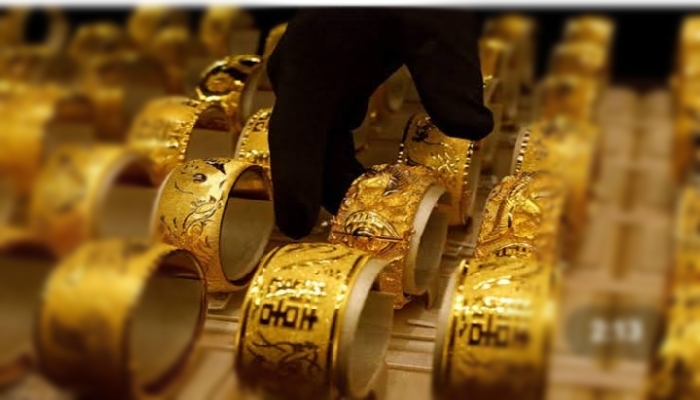
New Delhi, Jul 30: India's gold demand in 2020 is expected to fall to the lowest level in 26 years with domestic bullion prices hitting a record high and as falling disposable incomes could curtail retail purchases, the World Gold Council (WGC) said on Thursday.

Lower demand by the world's second-biggest bullion consumer could limit a rally in global prices, which hit a record high earlier this month, although it could also reduce India's trade deficit and support the ailing rupee.

"Fast rising gold prices could act as headwinds," said Somasundaram PR, the managing director of WGC's Indian operations.

Local gold futures have jumped 35% so far this year after rising a quarter in 2019.

India's gold consumption in the first half of 2020 plunged 56% on-year to 165.6 tonnes. Meanwhile, the coronavirus-triggered lockdown also slashed demand by 70% in the June quarter to 63.7 tonnes, the lowest in more than a decade, the WGC said in a report published on Thursday.

Millions of Indians have lost their jobs or taken a pay cut after the country imposed a lockdown on its 1.3 billion people to curb the spread of the virus that has infected more than 1.5 million Indians.

Consumption is generally high during the June quarter due to weddings and key festivals such as Akshaya Tritiya, but lockdown restrictions kept shoppers indoors this year.

The weak demand in the first half could drag down India's gold consumption in 2020 to the lowest since 1994, when demand stood at 415 tonnes, Somasundaram said, adding that it is still difficult to provide an estimate for full-year demand as the coronavirus crisis is still unfolding.

"Indian demand has previously jumped as much as 300 tonnes in a quarter. Latent demand could come out in the second half," Somasundaram said.

Comments

Add new comment

  • Coastaldigest.com reserves the right to delete or block any comments.
  • Coastaldigset.com is not responsible for its readers’ comments.
  • Comments that are abusive, incendiary or irrelevant are strictly prohibited.
  • Please use a genuine email ID and provide your name to avoid reject.