


Don’t communalise, says Army after Owaisi reveals religion of martyred soldiers

coastaldigest.com news network
February 14, 2018

The Indian army on Wednesday, Feb 14, indirectly asked politicians not to communalise martyrs, a day after AIMIM president and Hyderabad MP Asaduddin Owaisi revealed that five out of seven soldiers killed in the Sunjuwan military camp attack were Muslims.

"We don't communalise martyrs, those making statements don't know the army well," said Northern Army Commander Lieutenant General Devraj Anbu.

On Tuesday Owaisi slammed those questioning the patriotism of Muslims, while making a reference to the fact that five army soldiers killed by terrorists at the Sunjuwan army camp in Jammu were Muslims.

General Anbu also expressed concern over the local youth in Kashmir joining militancy saying "the trend needed to be addressed."

"The enemy is frustrated and is trying for softer targets, when they fail at borders they attack on camps. Yes, youths joining militancy is a concern, we need to address this trend," he said.

While warning anyone who picks up arms against the state, the army commander said they will be dealt with sternly.

"Anyone who picks up an arm and is against the state, is a terrorist and we will deal with him," he said.

He said that Hizb-ul-Mujahideen, Jaish-e-Mohammed and Lashkar-e-Toiba were hands in glove in carrying attacks.

"Whether it's in Valley or here (Jammu), there is no differentiation. They keep jumping from one tanzim (outfit) to other," Gen Abbu said.

He also blamed social media for acting as a catalyst in brewing militancy. "Social media is also responsible for increase in terror, it's engaging the youth at a large scale and I think we need to focus, " he said.

"Anyone who picks up an arm and is against the state, is a terrorist and we'll deal with him."

He said that Hizb-ul-Mujahideen, Jaish-e-Mohammed and Lashkar-e-Toiba terror outfits were hands in glove in carrying attacks. "Whether it's in Valley or here (Jammu), there is no differentiation. They keep jumping from one tanzim (outfit) to other," Gen Abbu said.
Comments

Abu Muhammad
 - 
Thursday, 15 Feb 2018

While those people who are associated with anti-nationals have the time to tweet and comment about a boy in remote African village, completely shut their b.. mouth to praise the brave soldiers who laid their lives to safeguard India. No comment on anti-nationals who questioned the preparedness of Indian armed forces. No comment on anti-national BJP IT wing of Madhya Pradesh who sell military intelligence to Pakistan. When Owaisy asks a genuine question - it strikes the very nerve centre of these people. These two sets of rules, laws and approach is dangerous to the unity of the nation.

imtiaz
 - 
Thursday, 15 Feb 2018

Why their mouth shut when RSS chief insult Indian Army....?

Add new comment

  • Coastaldigest.com reserves the right to delete or block any comments.
  • Coastaldigset.com is not responsible for its readers’ comments.
  • Comments that are abusive, incendiary or irrelevant are strictly prohibited.
  • Please use a genuine email ID and provide your name to avoid reject.
Agencies
July 23,2020

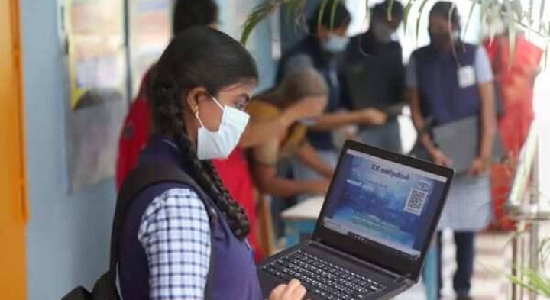
Ahmedabad, Jul 23: Private schools in Gujarat have suspended online classes for an indefinite period from Thursday, after a state government order said they should not collect fees from students until the schools reopen.

In a notification issued last week, the Gujarat government directed self-financed schools in the state not to collect tuition fees from students as long as they remain shut in the wake of the COVID-19 pandemic.

It also asked these schools not to hike fees for the academic year 2020-21.

Unhappy with the move, a union of representing nearly 15,000 self-financed schools in Gujarat decided to put on hold online classes, an alternative arrangement started earlier this month for students.

Majority of these schools informed the parents through SMS on Wednesday night that there will not be any online classes for their wards from Thursday.

Self-financed School Management Association's spokesperson Dipak Rajyaguru on Thursday said almost all the self-financed schools in the state refrained from imparting online education.

"If the government believes online education is not real education, then there is no meaning of imparting such unreal education to our students. Online education will remain suspended until the government withdraws that notification," Rajyaguru said in a statement.

He said the association will also approach the high court against state government's decision.

Jatin Bharad, a prominent educationist and member of the association, said there is no alternative to online education in the present scenario.

"Self-financed schools need to pay salaries to the teachers and other staff. No state in India has taken such decision that fees cannot be collected despite conducting online classes. If we adhere to the state notification, it will be impossible for us to pay salaries and run the school.

Thus, we have decided to suspend the online classes," said Bharad said.

Comments

Add new comment

  • Coastaldigest.com reserves the right to delete or block any comments.
  • Coastaldigset.com is not responsible for its readers’ comments.
  • Comments that are abusive, incendiary or irrelevant are strictly prohibited.
  • Please use a genuine email ID and provide your name to avoid reject.
Agencies
January 1,2020

New Delhi, Jan 1: On the New Year's eve, the railways announced fare hike across its network effective from January 1, 2020, according to an order issued on Tuesday.

While suburban fares remain unchanged, ordinary non-AC, non-suburban fares were increased by 1 paise per km of journey.

The railways also announced a two paise/km hike in fares of mail/express non-AC trains and four paise/km hike in the fares of AC classes.

The fare hike is also applicable to premium trains such as Shatabdi, Rajdhani and Duronto, according to the order.

In the Delhi-Kolkata Rajdhani, which covers a distance of 1,447 km, the hike at the rate of 4 paise per km will be around Rs 58.

According to the order, there will not be any change in the reservation fee and superfast charge and the hike in fares will not be applicable to tickets already booked.

The last such hike was announced in 2014-2015 when fares of all classes of trains were raised by 14.2 per cent and freight charges by 6.5 per cent. However, since then, the railways introduced the flexi-fare scheme which significantly raised fares on select trains and launched trains like Vande Bharat Express and Tejas Express which have relatively higher fares. Trains with dynamic pricing like Suvidha Express were also introduced.

Comments

Add new comment

  • Coastaldigest.com reserves the right to delete or block any comments.
  • Coastaldigset.com is not responsible for its readers’ comments.
  • Comments that are abusive, incendiary or irrelevant are strictly prohibited.
  • Please use a genuine email ID and provide your name to avoid reject.
Agencies
July 29,2020

New Delhi, Jul 29: The new National Education Policy (NEP) approved by the Union Cabinet on Wednesday is set to usher in a slew of changes with the vision of creating an education system that contributes directly to transforming the country, providing high-quality education to all, and making India a global knowledge superpower.

The draft of the NEP by a panel headed by former Indian Space Research Organisation (ISRO) chief Kasturirangan and submitted to the Union Human Resource Development Minister Ramesh Pokhriyal when he took charge last year. The new NEP replaces the one formulated in 1986.

Some of the key highlights of the New Education Policy are:-

The policy aims to enable an individual to study one or more specialized areas of interest at a deep level, and also develop character, scientific temper, creativity, spirit of service, and 21st century capabilities across a range of disciplines including sciences, social sciences, arts, humanities, among others.

It identified the major problems facing the higher education system in the country and suggested changes such as moving towards multidisciplinary universities and colleges, with more institutions across India that offer medium of instruction in local/Indian languages, a more multidisciplinary undergraduate education, among others. 

The governance of such institutions by independent boards having academic and administrative autonomy has also been suggested.

Under the suggestions for institutional restructuring and consolidation, it has suggested that by 2040, all higher education institutions (HEIs) shall aim to become multidisciplinary institutions, each of which will aim to have 3,000 or more students, and by 2030 each or near every district in the country there will be at least one HEI.

The aim will be to increase the Gross Enrolment Ratio in HEIs including vocational education from 26.3 per cent (2018) to 50 per cent by 2035.

Single-stream HEIs will be phased out over time, and all will move towards becoming vibrant multidisciplinary institutions or parts of vibrant multidisciplinary HEI clusters.

It also pushes for more holistic and multidisciplinary education to be provided to the students.

Comments

Add new comment

  • Coastaldigest.com reserves the right to delete or block any comments.
  • Coastaldigset.com is not responsible for its readers’ comments.
  • Comments that are abusive, incendiary or irrelevant are strictly prohibited.
  • Please use a genuine email ID and provide your name to avoid reject.