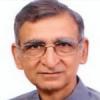
Dr Ravikanthe Gowda assumes charge as DK SP, vows to curb criminal, communal elements

coastaldigest.com news network
January 29, 2018

Mangaluru, Jan 29: A week after he was posted as the Superintend of Police of Dakshina Kannada , 50-year-old ‘encounter specialist’ Dr Ravikanthe Gowda on Monday assumed the charge with a promise to handle the situation in the sensitive district which witnessed several communal clashes and killings in recent years.

Dr Gowda, who was serving as the SP of Belagavi, had handed over charge to outgoing DK SP Sudheer Kumar Reddy last Tuesday. After receiving guard of honour, today Dr Gowda took over the charge from Additional SP V J Sajeeth.

Speaking on the occasion, he said that his utmost priority will be people-friendly policing and maintaining law and order in the district, which is known for its rich cultures and traditions.

He expressed confidence of creating a good and healthy relationship between the common men and the policemen with the help of his subordinates and higher authorities. “For some reasons, DK is known as sensitive district, but I have enough experience and guidance of seniors to tackle the situation," he said.

Dr Gowda also warned those who have a penchant for posting provocative and abusive messages on social media. “One can utilize social media for healthy discussions. But, if people misuse social media platforms to spread hatred and disrupt peace they will face legal action,” he said.

The multi-talented cop

A native of Mandya, Dr Gowda is the son of well-known short-story writer Besagarahalli Ramanna. Though he became famous as an ‘encounter specialist’ after eliminating three rowdies when he was serving as DCP in Bengaluru, Dr Gowda is also a poet and singer who has a keen interest in Hindustani music. He also holds a doctorate in Kannada literature.

The 50-year-old is well known for his tactful handling and fearlessness in the police fraternity. He believes in being ruthless towards communal forces and underworld elements. His success in thwarting simmering communal tensions and the guts he showed in raiding the treacherous hooch dens in Hubli-Dharwad, has earned him the sobriquet `Mandyada Huli’. Gowda also nabbed underworld don Sudhir Prabhu in Mysuru.

He began his career in policing as a KSPS officer of 1997 batch and became an IPS officer in 2005. His first posting was as DySP of Nanjangud in 1999, after which he went on to become DCP of Hubballi-Dharwad, DCP (crime) in Bengaluru, DCP (law and order), Mysuru, DCP of north east Bengaluru, DCP of central Bengaluru city, and SP of Belagavi.

Comments

Ibrahim
 - 
Monday, 29 Jan 2018

First and foremost thing cop has to do is control media. They are so negative and communal

Rahul
 - 
Monday, 29 Jan 2018

I heard he is an poet and singer. Cool cop. All the best

Mohan
 - 
Monday, 29 Jan 2018

encounter specialist, strict police is better to maintain peace in city. Hope new sp can maintain peace in Mangaluru

Kumar
 - 
Monday, 29 Jan 2018

The tiltle "encounter specialist" giving hope.

Yogesh
 - 
Monday, 29 Jan 2018

Hope new SP will encounter all muslim goons soon

Hari
 - 
Monday, 29 Jan 2018

Congrats sir. All the very best

Add new comment

  • Coastaldigest.com reserves the right to delete or block any comments.
  • Coastaldigset.com is not responsible for its readers’ comments.
  • Comments that are abusive, incendiary or irrelevant are strictly prohibited.
  • Please use a genuine email ID and provide your name to avoid reject.
News Network
July 16,2020

Bengaluru, Jul 16: Karnataka Medical Education Minister K Sudhakar on Thursday paid a surprise visit to the C V Raman Hospital in Bengaluru and urged the administration to follow COVID-19 guidelines properly. He also took stock of the hospital's preparedness to fight the deadly virus.

The minister noticed a number of flaws and warned the hospital to go strictly by the guidelines. He saw that despite 15 high-flow oxygen beds lay vacant, only two patients were admitted. He then asked the hospital to send asymptomatic and mildly symptomatic patients to COVID-19 care centres so that beds were available to those who need these.

"Doctors' profession is a noble one and in a situation like this everyone should perform their duty with utmost humanity and compassion. During this crisis, we should all be kind and empathetic," the minister said. He also ordered the suspension of two officials for not following the guidelines and not giving the right treatment to patients.

He noticed that the hospital lab collected less number of swabs and instructed them to collect a minimum of 500 swabs per day. Pointing out the under-utilised beds and ICUs, he observed that because of such negligence by officials, the government is being blamed despite working day and night for the past four-five months.
During this visit, the minister also interacted with the patients through video call and enquired about the services provided to them by the hospital.

"Surprise visits will continue. I will be in touch with every lab and get the right number of tests done on a daily basis," the minister said while speaking to the media.

He also urged the people who have recovered from COVID-19 to donate their plasma to save other lives, adding that donors will receive a reward of Rs 5000 as a token of appreciation.

Comments

Add new comment

  • Coastaldigest.com reserves the right to delete or block any comments.
  • Coastaldigset.com is not responsible for its readers’ comments.
  • Comments that are abusive, incendiary or irrelevant are strictly prohibited.
  • Please use a genuine email ID and provide your name to avoid reject.
Ram Puniyani
June 29,2020

In Minneapolis, US an African American, George Floyd lost his life as the white policeman, Derek Chauvin, caught hold of him and put his knee on his neck. This is a technique developed by Israel police. For nine long minutes the knee of the while policeman was on the neck of George, who kept shouting, I can’t breathe.

Following this gruesome murder America erupted with protests, ‘Black lives matter’. The protestors were not just African Americans but also a large section of whites. Within US one police Chief apologized for the act of this. In a touching gesture of apology the police force came on its knees. This had reverberations in different parts of the World.

The act was the outcome of the remnants of the racial hatred against blacks by the whites. It is the hatred and the perceptions which are the roots of such acts of violence. What was also touching that the state of democracy in US is so deep that even the police apologized, the nation, whites and blacks, stood up as a sensitive collective against this violence.

US is not the only country where the brutal acts of violence torment the marginalized sections of society. In India there is a list of dalits, minorities and adivasis who are regularly subjected to such acts. But the reaction is very different. We have witnessed the case of Tabrez Ansari, who was tied to the pole by the mob and beaten ruthlessly. When he was taken to police station, police took enough time to take him to hospital and Tabrez died.

Mohsin Sheikh, a Pune techie was murdered by Hindu Rashtra Sena mob, the day Modi came to power in 2014. Afrazul was killed by Shambhulal Regar, videotaped the act released on social media. Regar believed that Muslims are indulging in love Jihad, so deserve such a fate. Mohammad Akhlaq is one among many names who were mob lynched on the issue of beef cow. The list can fill pages after pages.

Recently a young dalit boy was shot dead for the crime of entering a temple. In Una four dalits were stripped above waste and beaten mercilessly. Commenting on this act the Union Minister Ramvilas Paswan commented that it is a minor incident. Again the list of atrocities against dalits is long enough. The question is what Paswan is saying is the typical response to such gruesome murders and tortures. In US loss of one black life, created the democratic and humane response. In India there is a general silence in response to these atrocities. Some times after a good lapse of time, the Prime Minister will utter, ‘Mother Bharati has lost a son’. Most of the time victim is blamed. Some social groups raise their voice in some fora but by and large the deafening silence from the country is the norm.

India is regarded as the largest democracy. Democracy is the rule of law, and the ground on which the injustices are opposed. In America though the present President is insensitive person, but its institutions and processes of democratic articulations are strong. The institutions have deepened their roots and though prejudices may be guiding the actions of some of the officers like the killer of George, there are also police officers who can tell their President to shut up if he has nothing meaningful to say on the issue. The prejudices against Blacks may be prevalent and deep in character, still there are large average sections of society, who on the principles of ‘Black lives matter’. There are large sections of vocal population who can protest the violation of basic norms of democracy and humanism.

In India by contrast there are multiple reasons as to why the lives of Tabrez Ansari, Mohammad Akhlaq, Una dalit victims and their likes don’t matter. Though we claim that we are a democracy, insensitivity to injustices is on the rise. The strong propaganda against the people from margins has become so vicious during last few decades that any violence against them has become sort of a new normal. The large populace, though disturbed by such brutalities, is also fed the strong dose of biases against the victims. The communal forces have a great command over effective section of media and large section of social media, which generates Hate against these disadvantaged groups, thereby the response is muted, if at all.

As such also the process of deepening of our democracy has been weak. Democracy is a dynamic process; it’s not a fixed entity. Decades ago workers and dalits could protest for their rights. Now even if peasants make strong protests, dominant media presents it as blocking of traffic! How the roots of democracy are eroded and are visible in the form where the criticism of the ruling dispensation is labelled as anti National..

Our institutions have been eroded over a period of time, and these institutions coming to the rescue of the marginalized sections have been now become unthinkable. The outreach of communal, divisive ideology, the ideology which looks down on minorities, dalits and Adivasis has risen by leaps and bounds.

The democracy in India is gradually being turned in to a hollow shell, the rule of law being converted in to rule of an ideology, which does not have faith in Indian Constitution, which looks down upon pluralism and diversity of this country, which is more concerned for the privileges of the upper caste, rich and affluent. The crux of the matter is the weak nature of democracy, which was on way to become strong, but from decades of 1980s, as emotive issues took over, the strength of democracy started dwindling, and that’s when the murders of the types of George Floyd, become passé. One does complement the deeper roots of American democracy and its ability to protect the democratic institutions, which is not the case in India, where protests of the type, which were witnessed after George Floyd’s murder may be unthinkable, at least in the present times. 

Comments

Add new comment

  • Coastaldigest.com reserves the right to delete or block any comments.
  • Coastaldigset.com is not responsible for its readers’ comments.
  • Comments that are abusive, incendiary or irrelevant are strictly prohibited.
  • Please use a genuine email ID and provide your name to avoid reject.
News Network
April 14,2020

Bengaluru, Apr 14: The Karnataka government has decided to adopt “remote monitoring” of COVID-19 positive patients in order to ensure the safety of healthcare professionals - the frontline warriors against the pandemic.

Two doctors treating COVID-19 patients tested positive recently and in to check such instances in future, the Department of Medical Education is planning remote monitoring, which reduces doctors’ exposure to patients.

Medical Education Minister Dr K Sudhakar has consulted some of the doctors in the United States who are already using this technology to treat the COVID-19 positive cases. The minister is also having a meeting with representatives of some of the companies which provide such technology.

“I spoke to a team of epidemiologists and heads of certain departments at the United States to know about the remote monitoring technology they are using. I am also meeting the representatives of a few such companies which can provide us with the technology at our hospitals,”  Dr Sudhakar said.

Track state-wise coronavirus cases here

The minister added, “We have heard reports of many doctors and other health professionals succumbing to COVID-19. We don’t want to take risk.” Explaining the technology, Dr Sachidanand, Vice Chancellor of Rajiv Gandhi University of Health Sciences said that remote monitoring uses a software with which specialist doctors can monitor health condition of patients and treat them by not getting exposed directly.

The presence of all the doctors in COVID-19 is not necessary when patients are monitored remotely. 

Comments

Add new comment

  • Coastaldigest.com reserves the right to delete or block any comments.
  • Coastaldigset.com is not responsible for its readers’ comments.
  • Comments that are abusive, incendiary or irrelevant are strictly prohibited.
  • Please use a genuine email ID and provide your name to avoid reject.