One of the distinguish features of the Noble Quran is that it presents different sorts of classifications. It is quite evident as one of the names of the Quran is Furqan that is it differentiates between things through its unique style of classification. The Quran openly proclaims the difference between right and wrong, truth and falsehood, literate and illiterate, light and darkness and so on. The system of Quranic taxonomy has a pivotal element with regard to ranking of human beings. It classifies them into two groups, one, who is honorable in the sight of their Creator and the second, disliked by Him.
This Quranic approach of classification is quite genuine, void of all sorts of bias. Since humans have no say in their birth, color or region, therefore the Quran doesn’t recognize these parameters to classify two groups of people.
The crux of Quranic taxonomy rests with the human ability which has been equally distributed among all humans. In terms of abilities to perform, barring those tasks performed with exceptional talents, all humans are equal. This is where Quran draws a line and specify who is most honorable in the sight of their Creator, it says:
O mankind, We created you from one man and one woman, and then divided you into nations and tribes so that you may recognize one another. Indeed, the most honorable among you in the sight of Allah is he who is the most pious of you. Surely, Allah is All-knowing, All-Wise. (Chapter 49, Verse 13).
Criterion of judgement
To be most righteous in the sight of God, one has to be of pious nature. The Quran uses term Taqwa (a sense of distinguishing between right and wrong, piety) to exemplify the pious nature. It further specifies that the source of pious nature - Taqwa is an inherent quality of human beings. Along with the faculties of hearing, seeing and speaking they have been bestowed with (Taqwa) the criterion of distinguishing between virtues and vices, it has been mentioned in the Quran as:
And by the human self and by Him Who balanced it, then inspired it with its wickedness and piety (Chapter 91, Verses 7 & 8).
Good deeds and human nature
With the advent of human race on earth, the equation has been set in simple terms. Humans have to be obedient to their Creator by means of using their intellect, smart enough to use their ability to judge between right and wrong and spend their lives in performing good deeds. For this very reason God has created life and death:
Who created death and life that He may try you to see which of you is best in deeds, and He is All-Mighty as well as All-Forgiving (Chapter 67, Verse 2)
Since life is all about performing good deeds, the ability to perform any good action has been made as natural as recognizing any color with naked eyes. It is within the reach of a person to identify the difference between colors, so is his criterion of judgement that tells what to perform and what to refrain from?
Good actions have been synchronized with human nature whereas evil deeds are quite detrimental, that’s why there is a universal consensus over the conception of virtues and vices. No one can dare to differ with virtues like truth, justice and honesty etc, and no one appreciates vices like falsehood, violations and corruption. With this inherent ability of humans to identify good and bad, the concept of virtues and vices has been described with the same bent of human intellect, there is no philosophical and ideological kind of description to tell what truth and falsehood are, it is as simple as this:
Prophet Muhammad (peace be upon him) said: Give up what is doubtful to you for that which is not doubtful; for truth is peace of mind and falsehood is doubt (Tirmidhi)
Highway of actions
The Quran presents a highway of actions for everyone who believes in it and intend to be most honorable in the sight of the Creator. For each and every day, there is a definite plan of action to go ahead with it to please the Creator. Again, for every week and month, there are clear specifications with regard to individual and collective actions. So no place for claims and reservations, no place for any excuse either, things have been made clear. For a person to be honored, he has to be man of deeds, that’s it. Every person has fair chances of performing better, as the life has been given, criterion of judgement between right and wrong has been given, and plan of action has been provided with. Now one has to energize himself for everyday action and try to set right the intention.
Difference in human efficiencies
No doubt there are differences in human abilities and efficiencies, one may argue about the quality and magnitude of actions. Those who are of high efficiency may perform well and those who are inefficient may not? True, to convince what Quran emphasizes is, God doesn’t look at the magnitude of an action, rather He sees with what intention in what circumstances it has been performed? If any person keep fast in scorching heat for more than 16 hours a day will get high rewards compare to the one who fast less than 10 hours a day at a cold place. Again, if the intention is to please the God, than every action, no matter how small or big it is in its scale, will fetch rich dividends. A poor’s donation of few rupees will be equal in rewards as compare to what a millionaire gets by donating thousands of rupees from his enormous wealth. The act of charity has demanded sacrifice; both of them have sacrificed in accordance with their capacities. Therefore upon asking whose charity is noble in the sight of God, the Prophet Muhammad (pbuh) said: The charity of poor person who tries hard to get few rupees from his hard earn money to donate in the way of God (Nasai – Book of Hadith).
The Quranic taxonomy of human is quite justifiable as every human bear testimony to its genuine and unbiased classification through what we term as actions. Therefore the world has to witness a race between men and women to see who can compete with others in order to please their Creator?
Whosoever acts righteously – whether a man or a woman and embraces belief, We will surely grant him a good life; and will surely grant such persons their reward according to the best of their deeds. (Chapter 16, Verse 97)
God-oriented actions, privilege for the Humanity
It’s very unpleasant to notice that in today’s world the parameters like statuses, resources and wealth have been regarded as privilege and honor for both humans and their societies. No doubt they are, but not at the cost of losing the very essence of human nature and sacrificing its interest. Today’s advancements speak of this dark phase where the height of inventions and discoveries touching the skies while the dignity and honor of humans have gone to the lowest of the low. The ever increasing poverty, hunger, untimely deaths, different forms of corruption in the land, violation of human rights are just to remind a few. The presence of rich and poor, highs and lows in the society speaks of disparity of actions, lack of selfless service and hearts void of God’s love and fear.
The beauty of humanity is to remain in the service of God and always stand on the toes to help those who are in need. This God-oriented action enables every doer to be dear to his God as the classification of good and the bad is purely based on the actions performed for the sake of the Creator:
Everyone is assigned a rank according to his deed. Your Lord is not heedless of what they do (Chapter 6, Verse 132).
Muhammad Abdullah Javed is the Director of AJ Academy for Research & Development. He can be reached at [email protected]



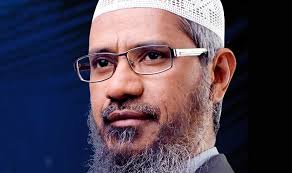 "The Mumbai Regional Passport Office has approved the NIA's request to revoke Zakir Naik's passport," a spokesperson for the anti-terror agency said today.
Comments
break his hands.....parade him on street,,,, such a disgusting act...
shame on this guy.....uncle g popikaaala
Inna lillahi va inna elahi rajioon
Hahahaa..... truth is bitter
AJJI SHOONTI
Is this institution Kerala Nadvathul Mujahideen is run by name sake muslims or pro sangh parivar staff. If a Muslim women is not allowed to wear hijab in a muslim run organisation, what is the use of naming the organisation as Nadvathul Mujahideen. Better change the name as Nadvathul sangh parivar or Nadvathul Seculardeen. shame to hear such news.
Add new comment