



Drones will fly over Karnataka to assess agricultural land, crops

TNN
August 9, 2018

Bengaluru, Aug 9: Soon, there will be drones flying over the fields of North Karnataka, as the state government turns to technology to estimate crop damage due to deficit rainfall in a quick, standardized and objective manner.

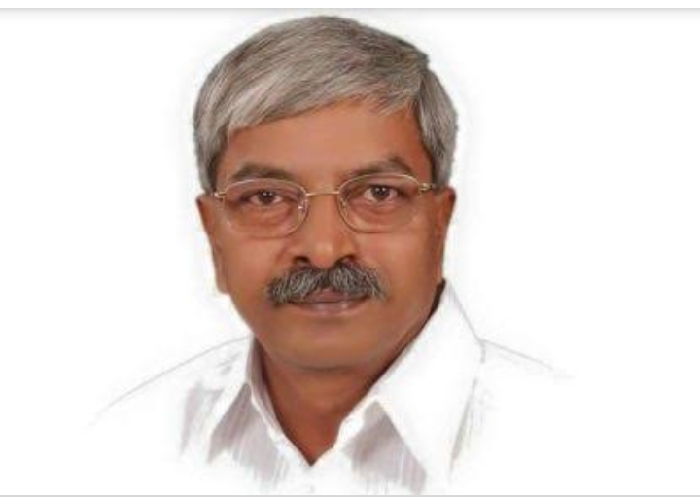
Agriculture minister N H Shivashankar Reddy on Wednesday said the department will be taking the assistance of drones for the first time to assess crop damage, although the previous Congress government had used the technology to survey agricultural lands in the state.

“The present survey is not able to throw light on agricultural lands and crops grown on them. Several RTCs show there are no crops grown at all on them. Building on the current survey which has been commissioned, we will use drones and applications to assess the land and existing crops on them,” said the minister.

Reddy said that per day, a single drone can assess about 1,000 acres of land. “And with this being the speed of assessment, we can cover the entire state’s agricultural lands in the next couple of months. This will help get the actual position of crops and land use,” said Reddy.

The minister said that at present, sowing in Karnataka has achieved 66% coverage. Of the targeted 74.69 lakh hectares, sowing is complete on 49.47 lakh hectares, with another 21.04 lakh hectares expected to be sown in the next two months.

“For the remaining 8.07 lakh hectares, we are preparing contingency plans,” said Reddy.

The minister said the government is also trying to replace water intensive trees like eucalyptus, and encourage people to replace them with bamboo. “We are looking to promote bamboo in a big way, considering the remuneration of approximately Rs 3.5lakh per hectare of bamboo within three years. The project will be taken up under the ‘bamboo mission’ of the central government,” he said.

Comments

Naresh
 - 
Thursday, 9 Aug 2018

People can fool poor people duping as govt officials and they can do illegal things by using drones

Suresh
 - 
Thursday, 9 Aug 2018

How a common man can make out which authorised drone. May be this projct will raise more security threats


Danish
 - 
Thursday, 9 Aug 2018

So drones are legal in Karnataka? 

Add new comment

  • Coastaldigest.com reserves the right to delete or block any comments.
  • Coastaldigset.com is not responsible for its readers’ comments.
  • Comments that are abusive, incendiary or irrelevant are strictly prohibited.
  • Please use a genuine email ID and provide your name to avoid reject.
News Network
April 2,2020

The current physical distancing guidelines provided by the World Health Organisation (WHO) and by the US Centers for Disease Control and Prevention (CDC) may not be adequate to curb the coronavirus spread, according to a research which says the gas cloud from a cough or sneeze may help virus particles travel up to 8 metres. The research, published in the Journal of the American Medical Association, noted that the the current guidelines issued by the WHO and CDC are based on outdated models from the 1930s of how gas clouds from a cough, sneeze, or exhalation spread.

Study author, MIT associate professor Lydia Bourouiba, warned that droplets of all sizes can travel 23 to 27 feet, or 7-8 metres, carrying the pathogen.

According to Bourouiba, the current guidelines are based on "arbitrary" assumptions of droplet size, "overly simplified", and "may limit the effectiveness of the proposed interventions" against the deadly pandemic.

 She explained that the old guidelines assume droplets to be one of two categories, small or large, taking short-range semi-ballistic trajectories when a person exhales, coughs, or sneezes.

However based on more recent discoveries, the MIT scientist said, sneezes and coughs are made of a puff cloud that carries ambient air, transporting within it clusters of droplets of a wide range of sizes.

Bourouiba warned that this puff cloud, with ambient air entrapped in it, can offer the droplets moisture and warmth that can prevent it from evaporation in the outer environment.

"The locally moist and warm atmosphere within the turbulent gas cloud allows the contained droplets to evade evaporation for much longer than occurs with isolated droplets," she said.

"Under these conditions, the lifetime of a droplet could be considerably extended by a factor of up to 1000, from a fraction of a second to minutes," the researcher explained in the study.

The MIT scientist, who has researched the dynamics of coughs and sneezes for years, added that these droplets settle along the trajectory of a cough or sneeze contaminating surfaces, with their residues staying suspended in the air for hours.

"Even when maximum containment policies were enforced, the rapid international spread of COVID-19 suggests that using arbitrary droplet size cutoffs may not accurately reflect what actually occurs with respiratory emissions, possibly contributing to the ineffectiveness of some procedures used to limit the spread of respiratory disease," Bourouiba wrote in the study

Comments

Add new comment

  • Coastaldigest.com reserves the right to delete or block any comments.
  • Coastaldigset.com is not responsible for its readers’ comments.
  • Comments that are abusive, incendiary or irrelevant are strictly prohibited.
  • Please use a genuine email ID and provide your name to avoid reject.
News Network
January 2,2020

Tumakuru, Jan 2: Prime Minister Narendra Modi on Thursday paid respects to the 'Gadduge' (final resting place) of Shivakumara Swamiji at Siddaganga Math, a prominent Lingayat seminary here, and said the Swamiji's work would continue to inspire everyone.

The Swamiji, who was known as the 'Walking God' among his countless followers, had passed away last year at the age of 111. The Prime Minister, who arrived at the Yelahanka Airbase in Bengaluru, went directly to Tumakuru, where the Math is located, by a chopper along with Chief Minister B S Yediyurappa, Union Minister Pralhad Joshi and former Chief Minister D V Sadananda Gowda among others. Modi, after offering respects to the 'Gadduge', planted Bilva plant (Aegle marmelos) on the premises of the Math and also laid the foundation for the construction of a museum dedicated to Swamiji here before addressing the gathering, largely comprising students. Speaking on the occasion, Modi said he was feeling blessed to begin 2020 from the sacred land of Siddaganga, but at the same time was feeling the "vacuum" in the absence of Shivakumara Swamiji. "It is rare see the number of people swamiji had inspired during his life time. I'm really fortunate to lay the foundation for the museum in swamiji's memory. Through this museum, his works will continue to inspire generations," he said. Also, Prime Minister remembered Vishwesha Theertha of Udupi's Pejawar Math who passed away recently. Yediyurappa and the present pontiff of the Math Siddalinga Swamiji were among the others present. Known as "trivida dasohi" for his triple sacraments - food, shelter and education - among his followers, Shivakumara swamiji was considered as the incarnation of Basavanna, the 12th-century social reformer, as he accepted all irrespective of their religion or caste. There has been a growing clamour from people of different walks of life, including politicians, for conferring "Bharat Ratna" on the late Swamiji.

After the Swamiji's demise, the then Chief Minister H D Kumaraswamy had written to Modi urging him to confer the country's highest civilian order on the late seer.

Opposition Congress on Thursday questioned the Prime Minister about not conferring the"Bharat Ratna" on Shivakumara Swamiji.

Questioning Modi as to why he did not visit Tumakuru when Shivakumara Swamiji of Siddaganga Math passed away, the principal opposition party in the state assembly in a tweet also sought to know why the seer was not conferred with the Bharat Ratna yet, while pointing out that former Chief Minister Siddaramaiah had written a letter in this regard in January 2018.

The present seer of the seminary Siddalinga Swamiji presented Modi a silver statue of Shivakumara Swamiji as a memento.

Comments

Add new comment

  • Coastaldigest.com reserves the right to delete or block any comments.
  • Coastaldigset.com is not responsible for its readers’ comments.
  • Comments that are abusive, incendiary or irrelevant are strictly prohibited.
  • Please use a genuine email ID and provide your name to avoid reject.
News Network
August 4,2020

Bengaluru, Aug 4: Janata Dal (Secular) leader and MLA Satyanarayana passed away today due to multiple organ failure. He was 67.

Satyanarayana was representing Tumakuru’s Sira constituency in the Karnataka Legislative Assembly. He is survived by five daughters and one son.

It is learnt that he was suffering from multiple organ ailments from the past few days and was recently admitted to Manipal Hospital in the city. He breathed his last at 12:20 p.m.

He contested from JDS and worked three times as MLA and 2 times as MP. He was the chairman of KSRTC during the coalition government led by HD Kumaraswamy.

Former Prime Minister HD Devegowda mourned his death and said, “It is a shock to hear the demise of former minister and my close friend. We are friends from the past 3 decades and I cannot recall the days without him.”

Karnataka Pradesh Congress Committee President DK Shivakumar said, “Satyanarayana was concerned for the farmers and he was a gentleman. Hearing the news hurts me and this is an irreparable loss to the political field.”

Comments

Add new comment

  • Coastaldigest.com reserves the right to delete or block any comments.
  • Coastaldigset.com is not responsible for its readers’ comments.
  • Comments that are abusive, incendiary or irrelevant are strictly prohibited.
  • Please use a genuine email ID and provide your name to avoid reject.