Drug gangs behind Sri Lanka Easter bombings, reveals President

coastaldigest.com web desk
July 15, 2019

Colombo, Jul 15: International drug syndicates orchestrated Sri Lanka's deadly Easter Sunday bombings, the country's top leader revealed today. The government had initially blamed the attacks on terror groups that operate in the name of Islam.

The statement comes amid a nationwide narcotics crackdown, with President Maithripala Sirisena aiming to reintroduce capital punishment for drug offences.

Authorities have said local jihadist group National Thowheeth Jama'ath (NTJ) were responsible for the suicide bombings in churches and hotels that killed at least 258 people in April. The attacks were later claimed by the Islamic State group.

Sirisena's office said the day after the bombings that local terrorists and international terror groups were responsible for the attacks.

But in a statement issued by his office Monday, Sirisena said the attacks "were the work of international drug dealers".

"Drug barons carried out this attack to discredit me and discourage my anti-narcotics drive. I will not be deterred," he said.

Sirisena is waging a battle against efforts by his governing coalition in parliament to abolish capital punishment, which has been subject to a moratorium since 1976.

Sri Lankan courts routinely hand down death sentences to drug offenders, murderers and rapists but it is automatically commuted a term of life imprisonment.

The president has marshalled public support for an end to the moratorium, saying that hangings would deter the illegal drugs trade.

"If the government brings legislation to abolish capital punishment, I will declare a day of national mourning," Sirisena said in the statement, adding that public opinion favoured hanging condemned criminals.

He said the leading Buddhist monk Omalpe Sobitha had advised him to resume hangings and not to abandon his war on narcotics.

Sri Lanka's Supreme Court earlier this month suspended Sirisena's moves to hang four drug convicts. The court banned any executions until it rules on a petition seeking a declaration that hanging breaches the country's constitution.

The next hearing in the case is in October.

Sri Lanka's last hangman retired in 2014, but officials said they had selected two new executioners from a pool of candidates.

Comments

ABDUL AZIZ
 - 
Tuesday, 16 Jul 2019

ALHAMDULILLAH, TRUTH PREVAILED AND EVIL PERISHED,   PUNISH THE CRIMINALS AND MURDERERS SOON , DONT BLAME MUSLIMS,    ISLAM is peacefull religion,  dont blame muslims as terrorists, 


Add new comment

  • Coastaldigest.com reserves the right to delete or block any comments.
  • Coastaldigset.com is not responsible for its readers’ comments.
  • Comments that are abusive, incendiary or irrelevant are strictly prohibited.
  • Please use a genuine email ID and provide your name to avoid reject.
coastaldigest.com news network
August 1,2020

Udupi, Aug 1: A young rider lost his life after a head-on collision between a scooter and a car on K G Road in Udupi last evening.

The deceased has been identified as Praveen Ganiga (24), a resident of Kodavoor in Malpe.

According to police Praveen was riding his scooter on the wrong side of the road. The car was plying from Brahmavar to Udupi.

The people on board car suffered minor injuries in the mishap. A case was registered at Brahmavar police station and investigations are on.

Comments

Add new comment

  • Coastaldigest.com reserves the right to delete or block any comments.
  • Coastaldigset.com is not responsible for its readers’ comments.
  • Comments that are abusive, incendiary or irrelevant are strictly prohibited.
  • Please use a genuine email ID and provide your name to avoid reject.
News Network
July 28,2020

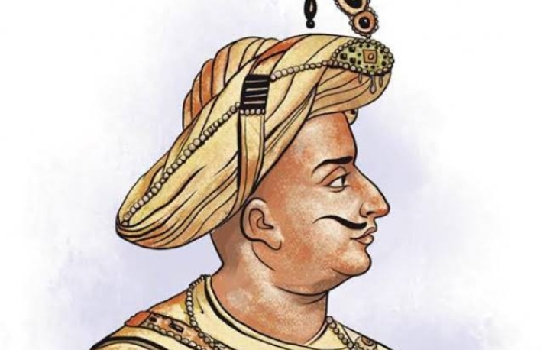
Bengaluru, Jul 28: After the Central Board of Secondary Education (CBSE) reduced the syllabi for Classes 9 to 12 due to COVID-19 pandemic, the Karnataka government has followed the suit. The Department of Public Instruction has omitted the chapters on legendary south Indian rulers Hyder Ali and Tipu Sultan from the textbooks of Class 7 in their attempt to reduce syllabus for state board schools by 30 per cent. 

The department, however, has decided to retain similar chapters on Tipu Sultan in 6th and 10th Classes, though the syllabus in text books for all classes from 1 to 10th has been trimmed. 

The trimmed textbooks uploaded on the website of the Department of State Education Research and Training (DSERT) by Karnataka state Textbook Society revealed removal of chapters on Tipu Sultan for the seventh grade.

Justifying the decision, officials said, "students study similar chapters in Class 6 and more in the 10th grade." Yet another senior official from the Text Book Society said, "Trimming does not mean we have removed half of the syllabus from textbooks. It is only keeping in mind the repetition we have condensed the chapters. In case students study about a particular dynasty in higher grades, then the same had been removed from lower grades."

A few months ago, there was an uproar over dropping of content on Tipu Sultan and MLAs from the ruling BJP also demanded the same and petitioned to the Chief Minister. Even an expert committee led by Prof Baraguru Ramachandrappa suggested to not drop any content on the historic figure. However, the department still decided to drop lessons from one of the classes while keeping the syllabus short for the next 120 active academic days.

Earlier this month, a controversy had erupted over the CBSE's decision to omit topics like federalism, secularism, citizenship, etc while reducing the syllabus for Classes 9 to 12. The education board had issued a detailed clarification later, stating that topics claimed to be dropped "are either being covered by the rationalised syllabus or in the Alternative Academic Calendar of NCERT".

"The rationalisation of syllabus up to 30 per cent has been undertaken by the Board for nearly 190 subjects of class 9 to 12 for the academic session 2020-21 as a one-time measure only. The objective is to reduce the exam stress of students due to the prevailing health emergency situation and prevent learning gaps," it said.

Last week, the Congress in Uttar Pradesh expressed its concern over 'deliberate and systematic' deletions of chapters related to the freedom struggle and the party's role in it from the Class 10-12 syllabi of the Secondary Education Board.

Comments

Add new comment

  • Coastaldigest.com reserves the right to delete or block any comments.
  • Coastaldigset.com is not responsible for its readers’ comments.
  • Comments that are abusive, incendiary or irrelevant are strictly prohibited.
  • Please use a genuine email ID and provide your name to avoid reject.
News Network
January 27,2020

New Delhi, Jan 27: Non-Muslim refugees from Pakistan, Bangladesh and Afghanistan will have to provide proofs of their religious beliefs while applying for Indian citizenship under the controversial Citizenship Amendment Bill (CAA), officials said on Monday.

The applicants belonging to Hindu, Sikh, Christian, Buddhist, Jain or Parsi faiths will also have to furnish documents to prove that they entered India on or before December 31, 2014.

Those who will seek Indian citizenship under the CAA will have to provide proofs of their religious beliefs and this will be mentioned in the rules to be issued under the CAA, a government official said.

According to the CAA, members of Hindu, Sikh, Buddhist, Jain, Parsi and Christian communities who have come from Pakistan, Bangladesh and Afghanistan till December 31, 2014, due to religious persecution there will not be treated as illegal immigrants and will be given Indian citizenship.

The central government is also likely to give a relatively smaller window of just three months to those who want to apply for Indian citizenship in Assam under the CAA, another official said.

Some Assam-specific provisions are expected to be incorporated in the rules to be issued for the implementation of the CAA.

Assam chief minister Sarbananda Sonowal and his finance minister Himanta Biswa Sarma had made a request about a fortnight ago to keep a limited period window for applying under the CAA and also incorporate some other Assam-specific provisions in the CAA rules.

The move comes in view of continuing protests against the CAA in Assam that have been going on since the legislation was passed by Parliament in December last year.

There has been a growing feeling among the indigenous people of Assam that the newly enacted legislation will hurt their interests politically, culturally as well as socially.

The Assam Accord provides for detection and deportation of all illegal immigrants who have entered the country after 1971 and are living in the state, irrespective of their religion.

The protesters in Assam say that the CAA violates the provisions of the Assam Accord.

Comments

Add new comment

  • Coastaldigest.com reserves the right to delete or block any comments.
  • Coastaldigset.com is not responsible for its readers’ comments.
  • Comments that are abusive, incendiary or irrelevant are strictly prohibited.
  • Please use a genuine email ID and provide your name to avoid reject.