Earning more than Rs 15,000 in first job? EPS is not for you

August 26, 2014

New Delhi, Aug 26: Employees with a monthly salary of over Rs 15,000 in their first jobs would no longer be able to contribute to the Employees' Pension Scheme (EPS) run by the provident fund department.

EarningThe move is triggered by fears that the hike in the salary ceiling for statutory PF contributions to Rs 15,000 per month from Rs 6,500 per month, would have a major adverse impact on the Pension scheme's financial viability.

According to the pension scheme's latest valuation to be shared with the PF board on Tuesday, its unfunded liability or deficit has shrunk by around Rs 51,000 crore from around Rs 62,000 crore in 2009 to around Rs 10,900 crore in 2012. The scheme's entry norms are being tweaked to ensure that high-income workers do not abuse the benefits of a deficit-ridden scheme that enjoys a subsidy from the central government.

The finance ministry has called for a fresh valuation to assess the impact of the hike in the salary ceiling on PF contributions and calibrating the scheme's benefits on the basis of a fresh valuation. The last time the salary ceiling was hiked, in 2001, from Rs 5,000 per month to the present Rs 6,500 cap, the pension scheme's liabilities had jumped by Rs 10,000 crore.

Over 8.5 crore formal sector employees have a Provident Fund account, where 24% of their salaries is diverted to guarantee a lumpsum retirement nest-egg and a monthly pension through the EPS. A little over a third of this contribution (8.33% of salary) is parked in the EPS that was launched in 1995 and is the only pension scheme in the world that defines both contributions and benefits.

The government currently brings in around Rs 1,200 crore a year into the nearly Rs 2 lakh crore pension scheme, contributing 1.16% of every scheme member's salary up to the salary ceiling.

Less than 21% of the scheme's beneficiaries get a monthly pension of Rs 1,000 or more, with over a third getting less than Rs 500.

The government has okayed a minimum pension under the scheme o fRs 1,000 along with the hike in the salary ceiling for statutory PF contributions, but the finance ministry has set some stiff riders and conditions before concurring.

The major changes being simultaneously introduced are designed to keep out high income workers from availing the pension scheme that currently offers a pension linked to the salary paid in their last 12 months in service.

Most importantly, the membership of EPS is being restricted to persons whose salary at the time of joining service was less than Rs 15,000, the PF department has informed its board members. If someone's salary moves beyond Rs 15,000 a month during the course of their career, EPS contributions would still be restricted to 8.33% of Rs 15,000.

Comments

Add new comment

  • Coastaldigest.com reserves the right to delete or block any comments.
  • Coastaldigset.com is not responsible for its readers’ comments.
  • Comments that are abusive, incendiary or irrelevant are strictly prohibited.
  • Please use a genuine email ID and provide your name to avoid reject.
News Network
August 9,2020


New Delhi, Aug 9: With the National Education Policy 2020 recognising the need for flexibility in choosing the subjects that a student wants to study, implementation of this policy will boost science, technology, engineering and mathematics (STEM) education in India, edtech startup SP Robotic Works has said.

The new education policy also recognised that skills like coding and scientific temper and evidence-based thinking should be learned by all students to become good, successful, innovative, adaptable and productive human beings in today's rapidly changing world.

With the semester-based pattern, there is a lot of relaxation with respect to a child's choice to select their interest in subjects, according to Sneha Priya, CEO and co-founder, SP Robotic Works.

"This will promote the kids to explore various segments which otherwise I believe was restricted to an extent," Priya told IANS in an interview.

On July 29, the Union Cabinet gave its approval to a new National Education Policy (NEP) which aims at bringing about several changes in the education system from the school to college level.

Prime Minister Narendra Modi on Friday said that the NEP is the foundation of a "new India" and that it will help close the gap between education and research.

It is now well recognised that in opening the door to myriad opportunities offered by STEM education, online platforms have played a pivotal role.

Coding-related courses have picked up well and the online platforms have seen a lot of kids enrol in block programming, artificial intelligence (AI) and android app development.

"As the field of STEM education gained immense popularity in India, this online learning platform has seen 80 per cent increase in the number of renewal of programmes, which implies the increase in interest and is a positive sign for the future of STEM education," she said.
The proposal to introduce coding from Class 6 and onwards is one of the best decisions of the policy, Priya added.

"With importance being given to coding in the NEP, the schools will be more open to adopting new ways to ensure their children master in what they are learning which will automatically result in better outcomes," she opined.

"Focus on these skills is crucial during the formative years for the development of the children. Hence, this new policy will prove beneficial for growing kids to gather their interest in coding at an early stage," she said.

According to Priya, it is important to deliver the coding concepts in the right manner to captivate and encourage the child to engross his/her attention towards the subject.

She also stressed that both robotics and coding courses have seen a huge upsurge this year.
In addition to what is being taught at school, the online learning platform has seen an increased number of queries from parents with regards to shaping up their child's coding skills.

"Especially with the current situation, the Covid-i9 lockdown has given more time to students to explore their interest in this field and we have seen double the demand in participation just in the previous few months from children," Priya quipped.

Even during the lockdown, SP Robotic Works said they have seen an increase of 55 per cent in the revenues.

"Additionally, we have seen around 1 lakh new enrolments during the last four months which demonstrates that Indian children are exploring their interests across segments," the CEO said.
"For the next six months, our focus is going to continue educating and engaging more students in experiential learning as we work towards building a nation that's truly 'Aatmanirbhar'," Priya noted.

Comments

Add new comment

  • Coastaldigest.com reserves the right to delete or block any comments.
  • Coastaldigset.com is not responsible for its readers’ comments.
  • Comments that are abusive, incendiary or irrelevant are strictly prohibited.
  • Please use a genuine email ID and provide your name to avoid reject.
Media Release
July 21,2020

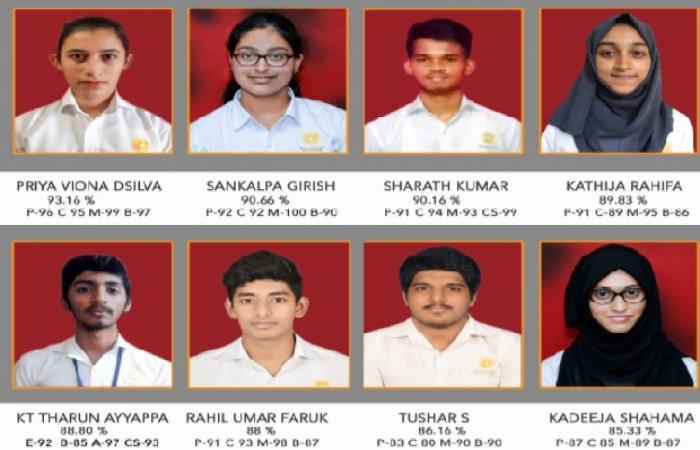
Mangaluru: As many as 22 students of Shakti PU College wrote second PUC exams and from that 8 students passed 
with distinction, 14 students passed with first class, and achieved 100% results in 
science and commerce streams.

Students from science & commerce dept. PRIYA VIONA DSILVA, SANKALPA 
GIRISH, SHARATH KUMAR, KATHIJA RAHIFA, K.T. THARUN AYYAPPA, 
RAHIL UMAR FARUK, TUSHAR S, KDEEJA SHAHAMA, passed with distinction.

Akshaya Acharya, B Anil Kumar, S Writhwik K.T., K.S. Varun, Madhuraj PC, Nazila 
Fathima, Pratheek S, Rajath R Gujaran, Uruthik, Riza Basheer, Saania Eraam, Shreya 
Somanna, P.B. Sayyed Mohammed Moosa, Viba S, passed with first class,

College Director Dr. K.C. Naik, Secretary Sanjith Naik, Advisory chairman Ramesh K, 
College development Officer Prakiyath Rai, College Principal Prabhakar J.S. and 
Shakthi Residential College principal Vidya G Kamath, praised all the students for their 
performance and also to their teaching staff, who put their efforts and hard works to 
bring their students to this level.

Comments

Add new comment

  • Coastaldigest.com reserves the right to delete or block any comments.
  • Coastaldigset.com is not responsible for its readers’ comments.
  • Comments that are abusive, incendiary or irrelevant are strictly prohibited.
  • Please use a genuine email ID and provide your name to avoid reject.
coastaldigest.com news network
February 25,2020

The Post Graduate Department of English, St. Agnes College (Autonomous) organized COSMOPOETICA – a Two-Day International Poets Conference, transcending the boundaries of language and bringing together scholars from English, Hindi and Kannada languages. The key-note speaker was Dr Hima Urmila Shetty and the Panel of Experts included Maggie Harris, a Commonwealth short stories award winning poet of Broadstairs, Kent; Dr Kathryn Hummel, a visiting professor at IIT Hyderabad; Prof Raj Rao, acclaimed poet and novelist, former HOD of English, Savithribai Phule University; Lata Chouhan from Bangalore; Vijay Tiwari from Ahmedabad; Dr. Nagaveni Manchi, an acclaimed Poet and Professor, Govt College, Carstreet and Ms. Chandrakala Nandavara, former Principal of Ganapati PU College.

Dr Sr Jeswina A.C., the Principal; Dr Sr Maria Roopa A.C. the Superior and Dr Sr Vinora A.C., graced the occasion.

Dr Geralyn Pinto, the Staff Convenor; Dr Malini Hebbar, the HOD and Ananya Sneha the student Convenor organised the Conference.

The highlight of the Conference was the Poetry Workshop, Slam Poetry Competition in three languages and paper presentations on various aspects of poetry.

Overall the conference drew together poets and academicians to discuss poetry as a genre and practice with ignited minds.

Comments

Add new comment

  • Coastaldigest.com reserves the right to delete or block any comments.
  • Coastaldigset.com is not responsible for its readers’ comments.
  • Comments that are abusive, incendiary or irrelevant are strictly prohibited.
  • Please use a genuine email ID and provide your name to avoid reject.