EC bars Guj BJP from using 'Pappu' in electronic advertisement

November 15, 2017

Ahmedabad, Nov 15: The Election Commission has barred the ruling BJP in Gujarat from using the word "Pappu" in an electronic advertisement, which apparently targeted Congress vice-president Rahul Gandhi, calling it "derogatory".

"Pappu" is perceived as a social media slur coined to target Gandhi.

Confirming the development, sources in the BJP said the script of the advertisement did not link the word to any individual.

According to BJP sources, the media committee under the Gujarat Chief Electoral Officer (CEO) objected to the word mentioned in the script of the advertisement which was submitted by the party for approval last month.

"Before making any election-related advertisement, we have to submit a script to the committee to get a certificate. However, they raised an objection to the word 'Pappu', saying it is derogatory. They asked us to remove or replace it," a senior BJP leader said.

He said the party will replace the word and submit a new script for the EC's approval.

"Since there was no direct mention or linkage with any person while mentioning 'Pappu' in the entire script, we had appealed to the committee to reconsider their decision, but they rejected it. Now, we will change that word and submit a new script for approval," he said.

When contacted, Gujarat CEO BB Swain said he was not aware of any such development and can comment only after getting the details.

Comments

syed
 - 
Wednesday, 15 Nov 2017

Replace it with FEKU instead of PAPPU. 

Add new comment

  • Coastaldigest.com reserves the right to delete or block any comments.
  • Coastaldigset.com is not responsible for its readers’ comments.
  • Comments that are abusive, incendiary or irrelevant are strictly prohibited.
  • Please use a genuine email ID and provide your name to avoid reject.
News Network
January 17,2020

New Delhi, Jan 17: Airports in Srinagar and Jammu are to be “immediately” brought under the security cover of the CISF in view of the arrest of DSP Davinder Singh, a Jammu and Kashmir government order has said.

The two sensitive airports are to be “handed over” to the CISF by January 31, the order of the Jammu and Kashmir Home Department to the Director General of Police (DGP) said.

“This issue (CISF security at Srinagar and Jammu airports) has acquired immediacy in view of the recent developments relating to the arrest of Davinder Singh, DSP airport security, for trying to assist militants to travel to other parts of the country,” the order issued on Wednesday said.

Police had arrested Singh, a deputy superintendent of police, at Mir Bazar in Jammu and Kashmir’s Kulgam district on Saturday, along with Hizbul Mujahideen terrorists Naveed Baba and Altaf, besides a lawyer who was operating as an overground worker for terror outfits.

The two airports are guarded by the CRPF and the J-K Police at present.

The Union government had last year decided that the Central Industrial Security Force (CISF) will be handed over security of these two airports along with the one in Leh in view of their sensitive and strategic location and the threats it faced related to possible terrorist and hijack attempts.

CISF is the national civil aviation security force and at present it guards 61 airports including the ones at Delhi and Mumbai.

News agency had on January 13 reported that the Union home ministry sanctioned about 800 personnel to the CISF in order to take over security duties at the three airports of the newly created Union Territories of Jammu and Kashmir and Ladakh.

As per the original plan, the CISF was to take over Jammu airport by next month and the Srinagar and Leh airports after the spell of severe cold ends.

However, officials said, keeping in mind the arrest of the DSP and his alleged links, the latest order has been issued which also directs the J-K Police to make arrangements for accommodation, transport and other logistical requirements of the armed contingent of the CISF on a quick basis.

Once inducted at the most-sensitive Srinagar airport, the CISF will secure access control at both city and air side (tarmac area) while the CRPF will be responsible for securing the outer periphery. At the Jammu airport, the peripheral security duties will be rendered by the JK Police.

An assortment of surveillance and security gadgets like CCTVs, observation monitors, hand-held metal detectors, bullet-proof patrol vehicles and bomb detection and disposal equipment are also being provided by the airport operator, the Airports Authority of India (AAI), to the CISF.

The Union government sometime back made it clear that CISF will be the only civil airports guarding force and all such facilities in the country will be gradually brought under its command to bolster aviation security and tighten anti-terror and anti-hijack protocols.

Comments

Add new comment

  • Coastaldigest.com reserves the right to delete or block any comments.
  • Coastaldigset.com is not responsible for its readers’ comments.
  • Comments that are abusive, incendiary or irrelevant are strictly prohibited.
  • Please use a genuine email ID and provide your name to avoid reject.
News Network
January 6,2020

Jan 6: India’s Finance Ministry has delivered a challenge to its revenue collectors: meet tax targets despite $20 billion of corporate tax cuts.

Through a video conference on Dec. 16, officials were exhorted to meet the direct tax mop-up target of 13.4 trillion rupees ($187 billion), a government official told reporters. Collection in the eight months to November grew at 5% from a year earlier, against the desired 17%.

The missive shows Prime Minister Narendra Modi’s urgent need to buoy public finances in a slowing economy where April-November tax collections were half the amount budgeted. Authorities withheld some payments to states and have capped ministries’ expenditure as the fiscal deficit ballooned beyond the target.

The government’s efforts to maintain its deficit goal goes against advice from some quarters, including central bank Governor Shaktikanta Das, who urged more spending to spur economic growth.

It’s uncertain though how much room Modi’s administration has to boost expenditure, given that it may already be borrowing as much as 540 billion rupees through state-run companies, a figure that isn’t reflected on the federal balance sheet. Uncertainty about public finances pushed up sovereign yields in November and December, compelling Das to announce unconventional policies to keep costs in check.

“This is not a time to conceal the fiscal deficit by off-budget borrowing or deferring payments,” said Indira Rajaraman, an economist and a former member of the Reserve Bank of India’s board. “If they were to stick to the target, that would be catastrophic because there is so much pump-priming that is needed right now.”

GDP grew 4.5% in the quarter ended September, the slowest pace in more than six years as both consumption and investments cooled in Asia’s third-largest economy. Only government spending supported the expansion, piling pressure on Modi to keep stimulating.

S&P Global Ratings warned in December it may downgrade India’s sovereign ratings if economic growth doesn’t recover. Government support seems to be waning now, with ministries asked to cap spending in the final quarter of the financial year at 25% of the amount budgeted rather than 33% allowed earlier. This new rule will hamstring sectors including agriculture, aviation and coal, where not even half of annual targets have been disbursed.

As the federal government runs short of money, it’s been delaying payouts to state administrations.

Private hospitals have threatened to suspend cash-less services to government employees over non-payment of dues, while a builder informed the stock exchange about delayed rental payments from no less than the tax office itself.

India is considering a litigation-settlement plan that will allow companies to exit lingering tax disputes by paying a portion of the money demanded by the government, the Economic Times newspaper reported Saturday.

The move will help improve the ease of doing business besides unlocking a part of the almost 8 trillion rupees ($111 billion) caught up in these disputes. The step, which is being considered as part of the annual budget, could also bridge India’s fiscal gap.

Finance Minister Nirmala Sitharaman has refused to comment on the deficit goal before the official budget presentation due Feb. 1.

A deviation from target, if any, “will need to be balanced with a credible consolidation plan further-out,” said Radhika Rao, an economist at DBS Group Holdings Ltd. in Singapore.


Comments

Add new comment

  • Coastaldigest.com reserves the right to delete or block any comments.
  • Coastaldigset.com is not responsible for its readers’ comments.
  • Comments that are abusive, incendiary or irrelevant are strictly prohibited.
  • Please use a genuine email ID and provide your name to avoid reject.
Agencies
July 29,2020

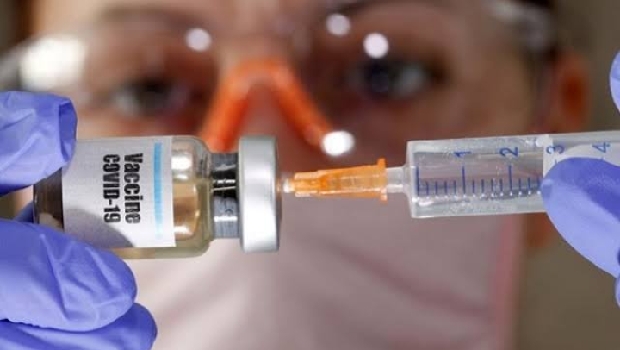
If everything goes as Russia’s expectation, it will be world’s first country to approve a coronavirus vaccine for widespread in the second week of August despite safety and efficacy concerns, according to a report. The adenoviral vector-based vaccine developed by Russian military and government researchers is currently in phase 2 trials.

According to a report from CNN, Russian officials are hoping to get approval for the COVID-19 vaccine developed by the Moscow-based Gamaleya Institute on Agust 10 or even before that. The officials told the outlet that the vaccine will be approved for public use with frontline healthcare workers receiving it first.

“It’s a Sputnik moment,” said Kirill Dmitriev, head of Russia’s sovereign wealth fund, which is financing Russian vaccine research, referring to the successful 1957 launch of the world’s first satellite by the Soviet Union, according to CNN.

“Americans were surprised when they heard Sputnik’s beeping. It’s the same with this vaccine. Russia will have got there first,” he was quoted as saying.

However, Russia is yet to release the scientific data on its coronavirus vaccine trials, hence, questions remain about the safety and efficacy of the vaccine, said the report. The vaccine is in the second phase of testing with developers planning to launch the phase 3 trials sometime after August 3.

Earlier, Interfax reported, citing Health Minister Mikhail Murashko, that the vaccine will be widely used in parallel with phase 3 trials. He said the country plans to vaccinate medics who are at high-risk for COVID-19 next month before clinical trials are completed.

Murashko added that individuals at higher risk of getting infected with the coronavirus such as older people or those with health conditions will also be prioritised for the vaccine, although he did not estimate or reveal when that would happen. The minister added 800 people will be recruited for the phase 3 trials.

Meanwhile, health officials were more cautious considering the fact that human testing of the vaccine is incomplete, and the state registration is expected to begin after August 3, reported The Moscow Times.

On Monday, Moderna and Pfizer announced the commencement of the final phase 3 trials of their candidate vaccines against the SARS-CoV-2 virus, which has so far claimed at least 654,477 lives and infected 16,514,500 people worldwide. 

Researchers will recruit up to 30,000 volunteers in separate trials both backed by the US government. India's first indigenous coronavirus vaccine, COVAXIN, is undergoing phase 1 human clinical trials across the country. More than 150 COVID-19 vaccines are being developed all over the world with at least six candidates already in late-stage clinical trials.

Comments

Add new comment

  • Coastaldigest.com reserves the right to delete or block any comments.
  • Coastaldigset.com is not responsible for its readers’ comments.
  • Comments that are abusive, incendiary or irrelevant are strictly prohibited.
  • Please use a genuine email ID and provide your name to avoid reject.