


Eid al-Adha: Celebration sweeps across the Muslim world

Agencies
August 11, 2019

Dubai, Aug 11: Joy and celebrations are sweeping across the UAE and the Muslim world as residents and visitors mark Eid Al Adha, the Festival of Sacrifice, on Sunday.

The annual Islamic festival, which this year begins on August 11 in the UAE, sees Muslims offer a sacrificial animal (typically a goat or sheep) in gratitude for Allah’s blessings.

Eid Al Adha is named after the sacrificial ritual, one of the rites of the Haj in Makkah, Saudi Arabia, where some 2 million Muslims from around the world have gathered for the annual occasion.

Public holiday

In the UAE, Eid Al Adha is being celebrated as a four-day public holiday, from Saturday (August 10) to Tuesday (August 13).

This is the moment when residents visit each other’s homes for Eid greetings and go out for a variety of dining, entertainment and shopping options.

Cattle markets and abattoirs had already prepared days in advance for the Eid rush to buy and sacrifice livestock.

It is common practice to gift some of the sacrificial meat, donate a part to charity and consume the rest at home. The sacrificial rite is preceded by the Eid congregational prayer held in large mosques and open areas shortly after sunrise.

‘Days of Eating’

The days of Eid Al Adha — the 10th, 11th, 12th and 13th of the month of Haj — are also known “as the days of eating and drinking”.

Family lunches as well as meals or tea parties with friends at home are a main part of the festivities. Traditionally, Muslims cook some of the meat from the sacrificial animal for lunch or dinner. Many people also like to head out to restaurants.

Sweets, too, are a major flavour of Eid and shops are brimming with treats. As usual, especially in demand are traditional stuffed dates, Arabic sweets, dry fruits and chocolates, shopkeepers said. A salesman at a sweetshop in Diyafah said customers keep shopping till 4am on the eve of Eid.

Richly-decorated special Eid packaging and trays laden with sweets can be seen at the shops. Some non-Muslims are also buying sweets as gifts for Muslim colleagues and friends.

Children are in for a double treat as elders present them cash gifts called ‘Eidiya’ or ‘Eidee’.

Events and attractions
The UAE, like other Muslim countries, has organised a range of Eid events and activities.

Dubai Festivals and Retail Establishment (DFRE) is rolling out its ‘Eid in Dubai — Al Adha’ calendar of events with a focus on family fun.

There will be stage performances and roaming shows at malls, including Ibn Battuta Mall, Mercato Mall, and City Centre Mirdif, among others.

A complete line up of things to do for Eid is available on www.eidindubai.ae and on @dssoscial accounts of DFRE.

There will be fireworks at Dubai Festival City Mall on Sunday and Monday, at 8pm and 10pm.

Also, from Sunday to Tuesday, IMG Worlds of Adventure will be hosting shows between 11am and 11pm. Meanwhile, Modhesh World, a free-to-enter entertainment park at Dubai World Trade Centre, will continue to provide games, rides and entertainment throughout the Eid break and beyond.

Play areas and activations will also be offered at Children’s City, at Creek Park Gate 1, on Monday and Tuesday from 11am to 1pm, and then 4pm to 6pm.

Despite the hot weather, some families will be heading to public parks, beaches and tourist spots for an Eid getaway; while others have planned staycations at UAE resorts for the long weekend.

Online shopping is in
Shopping for new clothes and gifts is also a main aspect of Eid and this year many residents logged in for online deals instead of heading to the mall.

“We start shopping for Eid about 10 days ahead, beginning with the gifts and the new outfits to the groceries,” Alexandre LeChef, a French-Syrian public relations director and father-of-two, told Gulf News.

“I don’t want to miss out on the latest toys and must-haves, so this is what I usually pick up first, including video games, consoles and toys. We’ve also managed to find our Eid outfits, but need to get matching shoes that will please my two daughters.”

LeChef said he likes to finish his shopping early, including picking up ingredients for the traditional sweets and pastries.

Like Le Chef, Ansar Babu, a 39-year-old marketing executive from India, said he prefers to shop with his wife.

“We have families on both sides living here, and Eid is very a family affair. So we spend quite a bit of our time getting clothes for the family, and also to present as gifts to our extended family. There were quite a few sales on last weekend, and we’ve managed to get everything we wanted,” Babu said.

This Eid, Babu and his family are also focusing on renovating their house, and they so ended up making a few household purchases.

Sara Mousa, a 25-year-old Canadian-Egyptian media executive, said she loves to dress to the nines on Eid.

“I love wearing new clothes and accessorising, but had put off my purchases till the last minute. Everything seemed a tad expensive despite the sales. If I don’t find what I’m looking for, online shopping is always an option,” she said.

LeChef agreed, saying he had found a number of bargains online.

“I was able to find a few things that I couldn’t find in stores, and they were delivered the very next day too,” he added.

To ensure the safety and security of residents in the Eid rush, police departments nationwide are deploying extra units and operating special 24-hour patrols. Public transport services have also been extended to meet high passenger demand during the festive season. Meanwhile, public parking has been made free for the Eid holidays.

What is Eid Al Adha?

The Muslim festival marks the completion of rite of sacrifice during the annual Haj pilgrimage to the holy city of Makkah, Saudi Arabia. Devotees globally also sacrifice an animal, usually a sheep or goat, to show gratitude for the blessings of Islam.

Muslims believe Allah accepted a ram as a sacrifice from Prophet Ebrahim (PBUH) after he had tested him with the order to sacrifice his son Prophet Ishmael (PBUH). When he obeyed, his son was replaced by a ram.

Eid routine

The first day of Eid Al Adha starts with group Eid prayers held in larges mosques and dedicated open spaces in each emirate shortly after sunrise. Many worshippers proceed to purchase a goat or sheep (or a camel or cow, in some cases) from the livestock market so they can offer the Eid sacrifice at abattoirs.

It is recommended to gift some of the sacrificial meat, donate a part in charity and consume the rest at home. Eid dishes are a main part of festivities, as the Eid days are known as “the days of eating and drinking” in Islam.

Muslims put on their best clothes for the occasion. They also gift money to children in a tradition called “Eidiya” or “Eidee”.

Comments

Add new comment

  • Coastaldigest.com reserves the right to delete or block any comments.
  • Coastaldigset.com is not responsible for its readers’ comments.
  • Comments that are abusive, incendiary or irrelevant are strictly prohibited.
  • Please use a genuine email ID and provide your name to avoid reject.
Agencies
July 30,2020

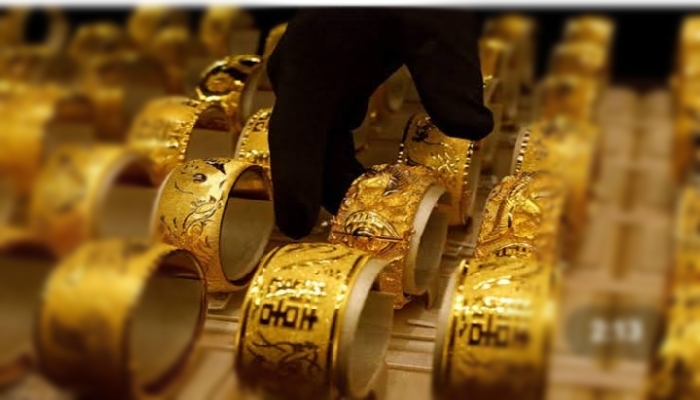
New Delhi, Jul 30: India's gold demand in 2020 is expected to fall to the lowest level in 26 years with domestic bullion prices hitting a record high and as falling disposable incomes could curtail retail purchases, the World Gold Council (WGC) said on Thursday.

Lower demand by the world's second-biggest bullion consumer could limit a rally in global prices, which hit a record high earlier this month, although it could also reduce India's trade deficit and support the ailing rupee.

"Fast rising gold prices could act as headwinds," said Somasundaram PR, the managing director of WGC's Indian operations.

Local gold futures have jumped 35% so far this year after rising a quarter in 2019.

India's gold consumption in the first half of 2020 plunged 56% on-year to 165.6 tonnes. Meanwhile, the coronavirus-triggered lockdown also slashed demand by 70% in the June quarter to 63.7 tonnes, the lowest in more than a decade, the WGC said in a report published on Thursday.

Millions of Indians have lost their jobs or taken a pay cut after the country imposed a lockdown on its 1.3 billion people to curb the spread of the virus that has infected more than 1.5 million Indians.

Consumption is generally high during the June quarter due to weddings and key festivals such as Akshaya Tritiya, but lockdown restrictions kept shoppers indoors this year.

The weak demand in the first half could drag down India's gold consumption in 2020 to the lowest since 1994, when demand stood at 415 tonnes, Somasundaram said, adding that it is still difficult to provide an estimate for full-year demand as the coronavirus crisis is still unfolding.

"Indian demand has previously jumped as much as 300 tonnes in a quarter. Latent demand could come out in the second half," Somasundaram said.

Comments

Add new comment

  • Coastaldigest.com reserves the right to delete or block any comments.
  • Coastaldigset.com is not responsible for its readers’ comments.
  • Comments that are abusive, incendiary or irrelevant are strictly prohibited.
  • Please use a genuine email ID and provide your name to avoid reject.
News Network
January 7,2020

New Delhi, Jan 7: When a reign of terror was unleashed by "masked goons" in the Jawaharlal Nehru University (JNU) on Sunday, Delhi Police registered two cases against varsity students union president Aishe Ghosh, who was badly injured in the attack, within a span of five minutes.

The registration of cases on two separate complaints against Ghosh and other students filed by JNU security department on January 3 and January 4 were registered on Sunday night when the violence was on, triggering questions about the motive behind the timing.

While the FIRs against Ghosh and others were registered between 8.44 pm and 8.49 pm after the JNUSU president was admitted to AIIMS, an FIR on the Sunday violence was registered on Monday at 5.36 am against unknown persons. The Sunday violence case has been transferred to Crime Branch for further investigations.

Questions are being raised over the registration of FIRs on Sunday while the complaints were filed on the previous days. Students allege that it was an afterthought from the police and authorities, as a nationwide outrage erupted as soon as the violence was reported.

Delhi Police is under attack for not coming to the aid of students targeted by the mob of ABVP activists armed with iron rods and sticks who went on a rampage on the campus. While no single person in the Sunday violence was arrested, the police are also accused of being a "mute spectator" by allowing the rioters to leave the campus without being arrested.

In its complaints, the JNU Security Department has alleged that Ghosh and others entered into a verbal and physical scuffle with security guards, including women, when officials tried to open the Centre for Information System (CIS) that was blocked by students protesting against the fee hike and registration process.

While the January 3 complaint claims that the students switched off the power supply to the CIS and evicted staff forcefully, the January 4 complaint alleged that they damaged the information system.

They also claimed the students damaged the servers, made it dysfunctional, severely damaged optic fibre cables and broke the biometric system in the CIS. The complaint also cited a Supreme Court order that prevented any protest within 100 metres of Administration Block and claimed the students violated the direction.

The FIR filed on Sunday violence on the basis of the statement of Inspector Anand Yadav said that the first phase of violence was reported at 3.45 pm when "40-50 unidentified" people who had "covered their faces" attacked students in Periyar Hostel and the situation was brought under control.

However at around 7 pm, "50-60 people with rods in their hands" targeted students in Sabarmati Hostel in which students were attacked and public property destroyed.

The FIR said that students were injured but skipped the mention of the attack on teachers, who were injured. At least two faculty members Sucharita Sen and Ameet Parameswaran were taken to AIIMS while several other teachers suffered minor injuries.

Comments

Add new comment

  • Coastaldigest.com reserves the right to delete or block any comments.
  • Coastaldigset.com is not responsible for its readers’ comments.
  • Comments that are abusive, incendiary or irrelevant are strictly prohibited.
  • Please use a genuine email ID and provide your name to avoid reject.
News Network
March 10,2020

Mar 10: Indian energy tycoon Mukesh Ambani is no longer Asia’s richest man, relinquishing the title to Jack Ma after oil prices collapsed along with global stocks.

The rout, exacerbated by mounting fears that the spread of the novel coronavirus will thrust the world into a recession, erased $5.8 billion from Ambani’s net worth on Monday and pushed him to No. 2 on the list of Asia’s richest people, according to the Bloomberg Billionaires Index. Ma, the Alibaba Group Holding Ltd. founder who relinquished the No. 1 ranking in mid-2018, is back on top with a $44.5 billion fortune, about $2.6 billion more than Ambani.

Oil plunged the most in 29 years on Monday as Saudi Arabia and Russia vowed to pump more in a struggle for market share. The slump comes just as the coronavirus is spurring the first decline in demand in more than a decade. That raises questions about whether Ambani’s flagship Reliance Industries Ltd. will be able to cut net debt to zero by early 2021, as he has pledged. The plan hinges on a proposal to sell a stake in the group’s oil and petrochemicals division to Saudi Arabian Oil Co., the world’s biggest crude producer.

While the coronavirus has curtailed some of tech giant Alibaba’s businesses, the damage has been mitigated by increased demand for its cloud computing services and mobile apps.

Reliance Industries, by comparison, has no such silver lining. The Indian conglomerate’s shares plunged 12% on Monday, the most since 2009, extending this year’s decline to 26%. Alibaba’s American depositary receipts have slipped 6.8% so far in 2020.

Ma reclaims crown after Reliance shares were pummeled in 2020.

Few of the world’s billionaires fared well in Monday’s collapse as the S&P 500 Index and Dow Jones Industrial Average each plunged more than 7.5%, the most since the 2008 financial crisis, threatening to end the longest bull market in history. But no one did worse than those whose fortunes are underpinned by oil. Wildcatter Harold Hamm’s fortune was cut almost in half to $2.4 billion and fellow oil magnate Jeff Hildebrand lost $3 billion, bumping both from Bloomberg’s 500-member wealth ranking.

In a pivot toward new businesses such as telecommunications, technology and retail, Ambani’s Reliance Industries has piled on billions of dollars of debt over the years.

It spent almost $50 billion -- most of it funded by borrowings -- to build Reliance Jio Infocomm Ltd., which became India’s No. 1 wireless carrier within about three years of its debut. As the mobile venture took off, Ambani also unveiled plans for an e-commerce empire to rival Amazon.com Inc. in India.

Addressing concerns over the liabilities, Ambani pledged in August to cut the group’s net debt to zero from about $21 billion as of last March. The Aramco deal is crucial to that plan for which Reliance Industries has valued its oil-to-chemicals division at $75 billion including debt, implying a $15 billion valuation for the 20% stake that’s for sale.

Signs of a potential delay to that deal unnerved some investors, hammering the stock since it touched a record high on Dec. 19.

Reliance Industries expected the Aramco transaction to be completed by March, but people familiar with the matter said in February that talks were still ongoing to bridge differences between the two parties over the deal’s structure.

Adding to the uncertainty, Indian Prime Minister Narendra Modi’s administration has petitioned a court to halt the proposed stake sale, threatening a key source of funds needed to pare net debt.

But Ambani, 62, may soon bounce back from the setback, said Harish H.V., managing partner at ECube Investment Advisors in Bengaluru, India.

“The game isn’t over,” he said. “Ambani has successfully built a robust business model which would keep him in the game. Moreover, his telecom business will start yielding results in coming years.”

Comments

SmR
 - 
Tuesday, 10 Mar 2020

The curses of the bank depositors savings which vanished with collapsing economy and fraudlent seems to have gradully affecting riches of Ambani's.


AU
 - 
Tuesday, 10 Mar 2020

in Holy Quran Allah says; but they plan and Allah plans, and Allah is the best planners..(Surah Al Anfal 8:30)

Add new comment

  • Coastaldigest.com reserves the right to delete or block any comments.
  • Coastaldigset.com is not responsible for its readers’ comments.
  • Comments that are abusive, incendiary or irrelevant are strictly prohibited.
  • Please use a genuine email ID and provide your name to avoid reject.