


Today as the first rays of sunlight appeared, Muslims in many countries wake for Eid al-Fitr, the festival of the breaking of the fast. It marks the end of Ramadan, a month in which every Muslim (who is able to) fasts from food and water from dawn to dusk. The Qur’an, Islam’s holy book, was believed to have been revealed during this month.
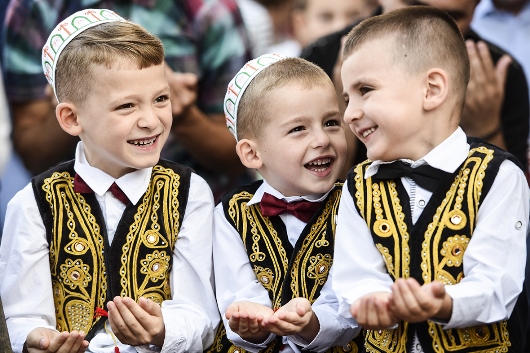
Eid al-Fitr is one of two annual festivals in Islam, different from Eid al-Adha, oft used interchangeably due to the similar names. This Eid, Eid al-Fitr, celebrates the completion of Ramadan, while Eid al-Adha, the feast of sacrifice, marks the end of Hajj, the annual pilgrimage to Makkah.
The exact date of Eid al-Fitr is difficult to predict as it’s dependent on the Islamic lunar-based calendar. The dates are decided according to the phases of the moon so it moves 10 to 11 days back each year in respect to the solar-based Gregorian calendar. Eid al-Fitr is observed when the new moon is sighted in the region, signifying the end of the 9th month of the Islamic calendar, Ramadan, and the start of the 10th month, Shawwal. This year it is on the 25th of June, but many countries around the world will be celebrating it on the 26th or 27th.
The significance of Eid al-Fitr is primarily spiritual. The month of Ramadan is seen as the holiest month of the year, culminating in Eid. The Prophet Muhammad (peace be upon him) said, “Whoever spends the nights of Ramadaan in prayer out of faith and in the hope of reward, his previous sins will be forgiven” (Sahih Muslim and Bukhari).
Muslims thank Allah for enabling them the health and capacity to fast and worship throughout the month. It is not a celebration of the end of Ramadan, but rather of the happiness of remaining steadfast through a blessed time. In fact, the day of Eid al-Fitr is one of the only days of the year on which fasting is prohibited, as the day is reserved for celebration. Many Muslims feel sorrow at the passing of Ramadan, counting the days until the next year arrives.
Eid al-Fitr is observed a public holiday in many Muslim countries, with school and work taking vacation days. In non-Muslim majority countries, this is not the case, but many employers and schools will make allowances for Muslims to take time off for their celebration.
Muslims celebrate Eid al-Fitr by spending time with loved ones and contributing to the community. It is obligatory upon Muslims, provided they are financially stable, to begin the day by paying Zakat al-Fitr (a special alms given at the end of Ramadan) to the poor and needy so they may have the means to celebrate the day along with others. Zakat al-Fitr is a special form of charity, given in addition to the annual zakat of 2.5% of one’s economic surplus. Charity is a vital aspect of Islam as one of its pillars. If one is not financially able to give zakat, they are eligible as a recipient instead.
Once the religious duty is fulfilled, Muslims gather to offer Eid Prayer, a special prayer only done twice a year. The prayer is usually offered early in the morning. Muslims greet each other by saying “Eid Mubarak, translated as “have a blessed Eid”.
The prayer is followed by a short sermon to remind people of the blessings of God, to reflect on the holy month that’s been completed. While the entire month was a time of spirituality and developing good habits, the day of Eid marks the beginning of a goal to maintain those habits throughout the year.
After the prayer, there are other traditions of Eid, such as wearing one’s best clothes and visiting family and friends. Sweets are exchanged, women and children adorn their hands with mehendi, and luncheons and dinners are often held with a spread of a variety of food. Kids are given Eidi, gifts of money, from the elders in the community. In Ramadan, one of the recommended ways to break fast is with the community, and this carries into the Eid celebrations. Muslims are encouraged to share meals with their neighbors, coworkers, and classmates.
Celebrations last long into the night and even throughout the week. It’s seen as a time of unity and giving thanks to Allah (God) for enabling them to complete the month of spiritual cleansing, forgiveness, and compassion.

The author, Heraa Hashmi, is a 19 year old University student at Boulder, Colorado. She’s studying Molecular Biology and is the president of Muslim Student Association. Recently she founded Muslims Condemn, a spreadsheet with over 5000 instances of Muslims condemning terrorism and is a part of the Bridge Initiative at Georgetown University, an initiative dedicated to tackling Islamophobia through education. This is her first article for coastaldigest.com


Comments
Add new comment