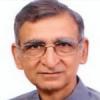
Emirate Khader Bhai: Loved by everyone; hated by none

P A Hameed Padubidri, Riyadh-KSA
December 7, 2018

When full of emotions, words get frozen... That’s what I personally felt when I heard the shocking news of death of my very good friend Emirate Khader. I felt once as if I was seeing a bad dream! Initial confusion about the uncertainty of his death gave again some hope; but that too was temporary as fact is always fact.
 
He is no more among us now. I personally feel that whatever I write about his personality is insufficient. I had good times with him when we were together at a room in Dammam for about one and half years in 2005-2006. I saw a rarest of rare personalities like him in my social, political and professional life with always smiling face and laughs even in his toughest times, with good passion and humanitarian gesture and easily available for any issue.
 
Allah gifted him with such a personality that stamped hundreds of thousands of hearts with non-erasable marks; remembering him forever.
 
He was a Good Samaritan with great qualities and calibres. He was a man of friend-in- need readily available for any issues like labour and other matters. Having a good command over Arabic, he was and effective chap to approach any native Arabic speakers. He never said "No" to any matter and most of the times he was successful in any issue he took up.
 
Most of the new comers to the Kingdom of Saudi Arabia used to come in contact with him for any job placements, iqama process matter etc.
 
At the time when none (or very few people) was available for any help, he played a significant role in social and humanitarian assistances. Not only Mangalureans, but also other Indian compatriots and other nationalities in the KSA used to approach him for help. That makes his personality tall.
 
He struggled a lot...That resulted in his two sons graduated in engineering and other faculty. His whole family stood by him during his most difficulty days. He was a great husband and great father.
 
Tears rolled down the cheeks while I was writing on him. Hearts and minds became heavy when I typed each and every word about him. A reel of flashbacks came in mind in abundance while picking each expression on him. He was hated by none and loved by everyone. He left behind a good legacy leaving many in sad and shocking mood.
 
I feel he is still among us and immediately felt sad he is permanently far away from us and returned to the irrevocable call of ALLAH.
 
His father-in-law, Basrikatte Bawaka, who also passed away with him, was also a noble personality. He was a fitting father-in-law to the best son-in-law. Destiny is that both breathed their last together.
 
May Allah grant them Maghfirah and Jannaathul Firdous. May Allah give their family a great volume of patience (Sabr) to bear the great losses. May Allah give a speedy recovery for his wife and children, who sustained injuries in the accident.

Aslo Read: Emirate Khader, father-in-law die in ghastly car mishap in Saudi Arabia

Comments

syed
 - 
Saturday, 8 Dec 2018

انا لله وانا اليه راجعون,,,,,,,,,امين

Sharief
 - 
Saturday, 8 Dec 2018

To live in the hearts of others is never to die..

Add new comment

  • Coastaldigest.com reserves the right to delete or block any comments.
  • Coastaldigset.com is not responsible for its readers’ comments.
  • Comments that are abusive, incendiary or irrelevant are strictly prohibited.
  • Please use a genuine email ID and provide your name to avoid reject.
coastaldigest.com news network
May 6,2020

Mangaluru, May 6: Amidst preparation for the paid evacuation of Indians stuck in Gulf countries amidst coronavirus lockdown, the central government has announced that it would only do a medical screening of the passengers before the flight and only asymptomatic persons would be allowed to travel.

Each passenger will have to fill a self-reporting form to be presented at the health and immigration counter at their destination.

The passengers are required to state whether they are suffering from fever, cough, diabetes or any respiratory disease. This form is similar to the one filled by passengers landing in India during the early days of the COVID-19 outbreak.

As per the announcement by the government, returnees would undergo COVID-19 once they complete 14-day quarantine in a hospital or government –arranged institution on a payment basis.

However, the form asks the applicants to keep themselves isolated at home for 28 days unless they develop any symptoms such as fever and cough.

During the journey, they will have to follow the protocols such as those issued by the Health Ministry and the Civil Aviation Ministry. Applicants from the UAE are yet to receive instructions on these.

On reaching the destination, passengers will have to register on the Arogya Setu app, India’s mobile application for COVID-19 surveillance.

No physical distancing!

Air India Express (AIE) which is set to operate the first two flights to Kerala on Thursday will operate its Boeing 737-800 flights, with a seating capacity of 186 economy class seats.

With nine seats reserved for isolation, only 177 passengers would be flown, sources said.

While most of the UAE flights in the first week will be operated by the AIE, Air India will operate two of its Dreamliner aircraft with a seating capacity of 256 seats. These flights would also reserve some seats for isolation.

However, the plan has made it clear that the Indian government will not be following the rules of physical distancing to prevent the spread of coronavirus in the repatriation flights.

Several people, including the Chief Minister of Kerala Pinarayi Vijayan, expressed concern over flying passengers, who will not be tested for COVID-19, without observing physical distancing.

Comments

Add new comment

  • Coastaldigest.com reserves the right to delete or block any comments.
  • Coastaldigset.com is not responsible for its readers’ comments.
  • Comments that are abusive, incendiary or irrelevant are strictly prohibited.
  • Please use a genuine email ID and provide your name to avoid reject.
Ram Puniyani
June 29,2020

In Minneapolis, US an African American, George Floyd lost his life as the white policeman, Derek Chauvin, caught hold of him and put his knee on his neck. This is a technique developed by Israel police. For nine long minutes the knee of the while policeman was on the neck of George, who kept shouting, I can’t breathe.

Following this gruesome murder America erupted with protests, ‘Black lives matter’. The protestors were not just African Americans but also a large section of whites. Within US one police Chief apologized for the act of this. In a touching gesture of apology the police force came on its knees. This had reverberations in different parts of the World.

The act was the outcome of the remnants of the racial hatred against blacks by the whites. It is the hatred and the perceptions which are the roots of such acts of violence. What was also touching that the state of democracy in US is so deep that even the police apologized, the nation, whites and blacks, stood up as a sensitive collective against this violence.

US is not the only country where the brutal acts of violence torment the marginalized sections of society. In India there is a list of dalits, minorities and adivasis who are regularly subjected to such acts. But the reaction is very different. We have witnessed the case of Tabrez Ansari, who was tied to the pole by the mob and beaten ruthlessly. When he was taken to police station, police took enough time to take him to hospital and Tabrez died.

Mohsin Sheikh, a Pune techie was murdered by Hindu Rashtra Sena mob, the day Modi came to power in 2014. Afrazul was killed by Shambhulal Regar, videotaped the act released on social media. Regar believed that Muslims are indulging in love Jihad, so deserve such a fate. Mohammad Akhlaq is one among many names who were mob lynched on the issue of beef cow. The list can fill pages after pages.

Recently a young dalit boy was shot dead for the crime of entering a temple. In Una four dalits were stripped above waste and beaten mercilessly. Commenting on this act the Union Minister Ramvilas Paswan commented that it is a minor incident. Again the list of atrocities against dalits is long enough. The question is what Paswan is saying is the typical response to such gruesome murders and tortures. In US loss of one black life, created the democratic and humane response. In India there is a general silence in response to these atrocities. Some times after a good lapse of time, the Prime Minister will utter, ‘Mother Bharati has lost a son’. Most of the time victim is blamed. Some social groups raise their voice in some fora but by and large the deafening silence from the country is the norm.

India is regarded as the largest democracy. Democracy is the rule of law, and the ground on which the injustices are opposed. In America though the present President is insensitive person, but its institutions and processes of democratic articulations are strong. The institutions have deepened their roots and though prejudices may be guiding the actions of some of the officers like the killer of George, there are also police officers who can tell their President to shut up if he has nothing meaningful to say on the issue. The prejudices against Blacks may be prevalent and deep in character, still there are large average sections of society, who on the principles of ‘Black lives matter’. There are large sections of vocal population who can protest the violation of basic norms of democracy and humanism.

In India by contrast there are multiple reasons as to why the lives of Tabrez Ansari, Mohammad Akhlaq, Una dalit victims and their likes don’t matter. Though we claim that we are a democracy, insensitivity to injustices is on the rise. The strong propaganda against the people from margins has become so vicious during last few decades that any violence against them has become sort of a new normal. The large populace, though disturbed by such brutalities, is also fed the strong dose of biases against the victims. The communal forces have a great command over effective section of media and large section of social media, which generates Hate against these disadvantaged groups, thereby the response is muted, if at all.

As such also the process of deepening of our democracy has been weak. Democracy is a dynamic process; it’s not a fixed entity. Decades ago workers and dalits could protest for their rights. Now even if peasants make strong protests, dominant media presents it as blocking of traffic! How the roots of democracy are eroded and are visible in the form where the criticism of the ruling dispensation is labelled as anti National..

Our institutions have been eroded over a period of time, and these institutions coming to the rescue of the marginalized sections have been now become unthinkable. The outreach of communal, divisive ideology, the ideology which looks down on minorities, dalits and Adivasis has risen by leaps and bounds.

The democracy in India is gradually being turned in to a hollow shell, the rule of law being converted in to rule of an ideology, which does not have faith in Indian Constitution, which looks down upon pluralism and diversity of this country, which is more concerned for the privileges of the upper caste, rich and affluent. The crux of the matter is the weak nature of democracy, which was on way to become strong, but from decades of 1980s, as emotive issues took over, the strength of democracy started dwindling, and that’s when the murders of the types of George Floyd, become passé. One does complement the deeper roots of American democracy and its ability to protect the democratic institutions, which is not the case in India, where protests of the type, which were witnessed after George Floyd’s murder may be unthinkable, at least in the present times. 

Comments

Add new comment

  • Coastaldigest.com reserves the right to delete or block any comments.
  • Coastaldigset.com is not responsible for its readers’ comments.
  • Comments that are abusive, incendiary or irrelevant are strictly prohibited.
  • Please use a genuine email ID and provide your name to avoid reject.
News Network
February 19,2020

Bengaluru, Feb 19: Congress MLA UT Khader on Wednesday slammed the Central government over the enactment of the Citizenship (Amendment) Act and said it violates the Constitution.

"The new citizenship amendment bill is unconstitutional. The citizenship cannot be given on cast and creed basis. Because of these things we are fighting against it," he said while speaking to media in Bengaluru.

Opposition along with several non-BJP state governments, including Madhya Pradesh, West Bengal, Kerala, Punjab and Rajasthan have refused to implement the Citizenship Amendment Act (CAA) and the proposed NRC in their respective states.

The CAA grants citizenship to Hindu, Sikh, Jain, Parsi, Buddhist and Christian refugees from Pakistan, Afghanistan and Bangladesh, who came to India on or before December 31, 2014.

Comments

Add new comment

  • Coastaldigest.com reserves the right to delete or block any comments.
  • Coastaldigset.com is not responsible for its readers’ comments.
  • Comments that are abusive, incendiary or irrelevant are strictly prohibited.
  • Please use a genuine email ID and provide your name to avoid reject.