


Emirates plane crash survivor Basheer Kerala wins 1 million US dollar in Dubai

August 10, 2016

Dubai, Aug 10: A 62-year-old Indian, who was on board the Emirates plane that crash-landed here, might be the luckiest man alive as he has won a million dollars in lottery, just six days after miraculously surviving the accident.mohammad
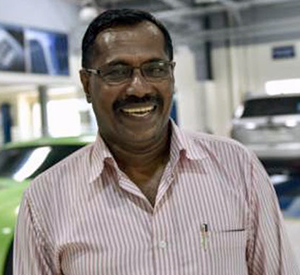
Mohammad Basheer Abdul Khadar, from Kerala, was among the 300 people on board the Emirates flight EK521 which crash landed and burst into flames at the Dubai airport last Wednesday.

The Dubai expatriate struck gold yesterday when his lucky ticket number 0845 was drawn in the Dubai Duty Free Millennium Millionaire at Concourse A at Dubai International Airport, winning him USD 1 million (Dirham 3.67 million), Gulf News reported.

Khadar had purchased the ticket on Eid on his way for a vacation with his family in Thiruvananthapuram.

A fleet administrator with a car dealer group in Dubai, Khadar had made it a habit to purchase a raffle ticket whenever he travelled to his home country.

Khadar became a millionaire after purchasing his 17th ticket, just four months before he was due to retire in December, he told the daily.

"I have been working in Dubai for 37 years, and I have always felt like this is my country. I live a simple life, and now that it's my time to retire, I feel like God gave me a second life when I survived the plane crash, and blessed me with this money to follow all this up by doing good things," Khadar said.

Khadar said he plans to return to India after his retirement to find a job that involves helping people in need.

He wants to help children in Kerala who are in need of financial help and medical support.

"I am blessed to have finally won with Dubai Duty Free and can't wait to share the news with my family. If you ask me about my plans, I obviously want to help the children in Kerala who are less fortunate than others and need some financial help and medical support," he said.

Khadar, a grandfather, earns Dirham 8,000 (Rs 1,45,212) a month. However, he had to struggle a lot for the treatment of his 21- year-old son who became paralysed after an accidental fall just 13 days after birth.

"I had to spend a lot of money on his treatment. Some years back I had to take a loan of Rs 1.8 million for a major surgery for him. I have managed to pay it back," said Khadar.

He said he was thankful for his job that also helped him get his daughter married.
"I will continue to work till I can. Nothing else can give you the satisfaction of your hard-earned money," he said.

In 2007, Indian national Sadanand Raghavan, a mechanic in Sharjah, scooped Dirham 5 million in a Mashreq Bank raffle.

Comments

Prashanth
 - 
Thursday, 11 Aug 2016

its absolutely haram. as the ticket was purchased without any goods or service purchased............and considered as gambling or lottery ...........

brother basheer pls donate this money to charity or use it to the public works like roads or toilets or library

Rikaz
 - 
Wednesday, 10 Aug 2016

Congratulations! Lucky, you saved people!

Add new comment

  • Coastaldigest.com reserves the right to delete or block any comments.
  • Coastaldigset.com is not responsible for its readers’ comments.
  • Comments that are abusive, incendiary or irrelevant are strictly prohibited.
  • Please use a genuine email ID and provide your name to avoid reject.
News Network
April 5,2020

Bengaluru, Apr 5: Fake news spreads faster and more easily nowadays through the internet, social media and instant messaging and such news about the COVID-19 pandemic have been labeled a dangerous “infodemic”.

These messages may contain useless, incorrect or even harmful information and advice, which can hamper the public health response and add to social disorder and division.

Asking people to avoid fake news on COVID-19, Hemant Nimbalkar IPS, IGP and Additional Commissioner of Police (Administration), shared a photo on his Twitter page and wrote, “One Mask For Ear Too"

Comments

Add new comment

  • Coastaldigest.com reserves the right to delete or block any comments.
  • Coastaldigset.com is not responsible for its readers’ comments.
  • Comments that are abusive, incendiary or irrelevant are strictly prohibited.
  • Please use a genuine email ID and provide your name to avoid reject.
News Network
July 4,2020

Bengaluru: The Secondary School Leaving Certificate (SSLC) examinations in Karnataka concluded on Friday with an overall average of about 98 per cent attendance amid the coronavirus scare. Chief Minister B S Yediyurappa congratulated the lakhs of students who appeared for the crucial exercise braving the coronavirus pandemic situation.

An average of about 98 per cent of 8.5 lakh odd enrolled students took the exams which began on June 25, after the government stuck to its decision to go ahead with them despite rising coronavirus cases but laid down a string of safety measures, including face masks and maintaining distancing by seating only one student a bench.

Examinations for all main subjects had been completed and alternative subjects such as music would take place on Saturday, Education department officials said.

"I heartily congratulate students who faced the examination even during the coronavirus pandemic," Mr Yediyurappa tweeted.

Expressing happiness over the successful completion of the examination, he greeted state Primary and Secondary Education Minister S Suresh Kumar, officers and employees of education department, health department, police and transport personnel.

"The exam is a proof that anything can be made possible if all the government departments work in tandem," Mr Kumar tweeted.

Later addressing a press conference, he said on Friday 98.10 per cent attendance was recorded compared to 98.76 for the same paper last year.

"Credit goes to children. First day, parents were scared and students were sceptical and there was a big challenge before us. But the children appearing for the exam instilled confidence. They came with masks, sanitisers and were careful about maintaining social distancing. Our children have set an example for others to follow," Mr Kumar said.

Lauding the students, parents and the government staff who made the exam possible ignoring the virus scare, Medical Education Minister Dr K Sudhakar said Karnataka has set an example by successfully conducting the examination.

The Karnataka Secondary Education Examination Board, which conducted the examination, faced various challenges. While protecting students from coronavirus infection was the top priority, transportation, security and convincing the parents to allow their children to take up the exam were the other factors it encountered.

According to sources in the department, the education officers had directed authorities of all the schools to call the parents and students to make sure that they appear for the examinations.

The Central Board of Secondary Education (CBSE) and boards of various neighbouring states either gave general promotion or decided to give marks to the students based on their performance in the earlier tests conducted by the schools.

The exams were conducted at a time when there was a sudden spurt in coronavirus cases in Karnataka, especially Bengaluru. Expressing apprehension, former chief minister and JD(S) leader H D Kumaraswamy had appealed to the government to postpone the examination but the government went ahead with its decision.

Comments

Add new comment

  • Coastaldigest.com reserves the right to delete or block any comments.
  • Coastaldigset.com is not responsible for its readers’ comments.
  • Comments that are abusive, incendiary or irrelevant are strictly prohibited.
  • Please use a genuine email ID and provide your name to avoid reject.
Agencies
July 8,2020

The Central Board of Secondary Education (CBSE) has rationalised by up to 30 per cent the syllabus for classes 9 to 12 for the academic year 2020-21 to reduce course load on students amid the COVID-19 crisis, Union HRD Minister Ramesh Pokhriyal 'Nishank' announced on Tuesday.

The curriculum has been rationalised while retaining the core elements, the Human Resource Development said.

Among the chapters dropped after the rationalisation exercise are lessons on democracy and diversity, demonetisation, nationalism, secularism, India's relations with its neighbours and growth of local governments in India, among others.

"Looking at the extraordinary situation prevailing in the country and the world, CBSE was advised to revise the curriculum and reduce course load for the students of classes 9 to 12.

"To aid the decision, a few weeks back I also invited suggestions from all educationists on the reduction of syllabus for students and I am glad to share that we received more than 1.5K suggestions. Thank you, everyone, for the overwhelming response," Nishank tweeted.

"Considering the importance of learning achievement, it has been decided to rationalise syllabus up to 30 per cent by retaining the core concepts," he added.

The Union minister said the changes made in the syllabi have been finalised by the respective course committees with the approval of the curriculum committee and the Governing Body of the Board.

"The heads of schools and teachers have been advised by the board to ensure that the topics that have been reduced are also explained to the students to the extent required to connect different topics. However, the reduced syllabus will not be part of the topics for internal assessment and year-end board examination.

"Alternative academic calendar and inputs from the NCERT on transacting the curriculum using different strategies shall also be part of the teaching pedagogy in the affiliated schools," a senior official of the HRD ministry said.

For classes 1 to 8, the National Council of Education Research and Training (NCERT) has already notified an alternative calendar and learning outcomes.

According to the updated curriculum, among the chapters deleted from class 10 syllabus are-- democracy and diversity, gender, religion and caste, popular struggles and movement, challenges to democracy

For class 11, the deleted portions included chapters on federalism, citizenship, nationalism, secularism, growth of local governments in India.

Similarly, class 12 students will not be required to study chapters on India's relations with its neighbours, changing nature of India's economic development, social movements in India and demonetisation, among others.

Universities and schools across the country have been closed since March 16 when the central government announced a nationwide classroom shutdown as one of the measures to contain the COVID-19 outbreak.

A nationwide lockdown was announced on March 24, which came into effect the next day. While the government has eased several restrictions, schools and colleges continue to remain closed.

Comments

Add new comment

  • Coastaldigest.com reserves the right to delete or block any comments.
  • Coastaldigset.com is not responsible for its readers’ comments.
  • Comments that are abusive, incendiary or irrelevant are strictly prohibited.
  • Please use a genuine email ID and provide your name to avoid reject.