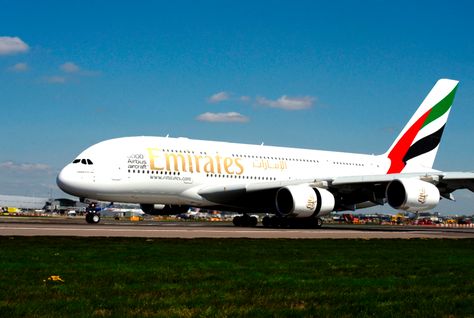
Emirates plane lands in Mumbai after passenger dies

August 10, 2015

Mumbai, Aug 10: An Emirates flight from Dubai to Adelaide was diverted to Mumbai on Sunday morning after an elderly passenger died onboard.

EmiratesAirline2

The passenger, B Peter Richard (60), was a Sydney resident and was travelling alone. Richard started bleeding from his mouth and nose while on board. He collapsed while going to the washroom. A co-passenger, who is a doctor, declared him dead.

The flight EK 440 landed at Mumbai airport around 7.30am. Medical and security personnel attended the arrival flight, said an Emirates spokesperson. "As soon as the flight landed in Mumbai, the Sahar airport police rushed Richard to a public hospital. An autopsy was carried out at the Cooper post-mortem examination centre and it was videographed," said a police officer.

Officials said that Richard was on medication and his medicines were found in his bag. "As he is a foreign national, the autopsy was videographed. The Australian embassy has been informed of the death. We conducted an inquest panchnama around 10.30am," an officer from Sahar police station said. "Based on the details in Richard's passport, the Australian embassy will locate his family in Sydney and inform them. The embassy will make arrangements to take Richard's body to Australia," the officer said. The Sahar police have recorded an accidental death case.

Forensic doctors at the post-mortem centre said that the cause of death has been reserved, pending chemical analysis and histopathology examination. The body will be moved out of the mortuary on Monday.

The Emirates official said that due to night-time arrival/departure restrictions in Adelaide, the aircraft returned to Dubai. "Passengers will be accommodated in hotels in Dubai and will re-board the delayed flight EK440 from Dubai to Adelaide at 11pm on Sunday," the spokesperson added.

Comments

Add new comment

  • Coastaldigest.com reserves the right to delete or block any comments.
  • Coastaldigset.com is not responsible for its readers’ comments.
  • Comments that are abusive, incendiary or irrelevant are strictly prohibited.
  • Please use a genuine email ID and provide your name to avoid reject.
News Network
April 7,2020

Wayanad, April 7: The Kerala government has allowed people from border villages of Karnataka and Tamil Nadu to use medical facilities at Wayanad.

"We have opened our borders to people from neighbouring states who require medical facilities in Kerala. Twenty-nine people from Bairakuppa in Karnataka have used medical facilities in Wayanad and 44 from Tamil Nadu," Kerala Chief Minister Pinarayi Vijayan said on Monday.

Bairakuppa, a small village in Karnataka, is separated by the river Kabini from Wayanad district and the residents there depend on the healthcare facilities available in Wayanad.

Speaking to news agency, Adeela Abdulla, District Collector of Wayanad, said that instructions have been issued to allow people from neighbouring states of Karnataka and Tamil Nadu, who need medical facilities, to cross the border.

"Right from the start of the lockdown, we have not restricted individuals from Bairakuppa region in Mysore district to use the medical facilities in Wayanad as people in that region depend on medical facilities in Wayanad," she said.

Comments

Add new comment

  • Coastaldigest.com reserves the right to delete or block any comments.
  • Coastaldigset.com is not responsible for its readers’ comments.
  • Comments that are abusive, incendiary or irrelevant are strictly prohibited.
  • Please use a genuine email ID and provide your name to avoid reject.
News Network
April 19,2020

Kasaragod, Apr 19: Kasaragod, Kerala's COVID-19 hotspot, is the only district in the southern state lacking adequate health infrastructure.

In spite of treating the highest number of COVID-19 patients in the state with meagre infrastructural facilities and even without the support of a medical college in the north Kerala district, no deaths have been reported due to coronavirus.

The state health department views the performance of M Kunhiraman and his team, consisting of Janardhana Naik and Krishna Naik, at the General hospital in Kasaragod as a success story.

"Not only did they control the situation quickly with minimum infrastructure, they also started turning out a large number of negative cases within a few weeks and creditably ensured zero mortality.

This can be showcased as a best global model," Chairman of the Information Education and Communication (IEC) Committee and Project Director Kerala State Aids Control Society, R Ramesh said.

Recalling the ordeal, Janardhana Naik said his first major challenge was the physical examination of a patient with suspected COVID-19.

"Even with the PPE kit, nobody knew how effective they were and it took a whole 30 minutes to wear them properly.

But as time passed, we got accustomed to it," he said.

The traditional method of dealing with a patient involved knowing his or her history, observation and physical examination.

For hundreds of years, the hands-on body approach has been the soul of the doctor-patient relationship -- taking the pulse, tapping on and listening to the chest, feeling lumps.

With the onset of COVID-19 all that has changed.

"In fact, the whole exercise was fraught with grave risks because everything connected with COVID-19 was new.

Doctors have to keep a distance even though the physical examination wearing a Personal Protective Equipment (PPE) is difficult.

Sounds from the body are inaudible, vision is blurred through the smog-covered goggles and a stethoscope seldom has any use," Janardhana Naik said.

It was from March 15 that the hospital started receiving COVID-19 patients, primarily from Dubai.

By the time the first person came, the hospital was ready for him.

Soon, patient numbers began to swell and in a couple of weeks they reached about 91.

From then on, it was teamwork.

Committees were formed for each and every task, including the help desk, IT, treatment, medical board, training, food, waste disposal and data maintenance.

Initially, patients had many misgivings about the hospital.

"Some were disillusioned and even aggressive. Some were not happy with the facilities the hospital had to offer.

But gradually through good treatment and counselling by a psychiatrist, who visited the hospital on alternate days, the confidence and mood of the patients changed and they became friendly with the staff," Naik elaborated.

Counselling was also given to the concerned family members of the patients.

Besides treatment, the medical staff had to spend a considerable amount of time clearing the doubts of patients.

When they got discharged some patients insisted on seeing the faces of the medical staff, who till then were anonymous entities covered from head to toe.

Some even wanted to take selfies with them.

However, the medical team politely turned down their requests and preferred to remain hidden in their work attires.

The mood of the patients also rubbed off on the doctors and hospital staff.

All the physicians and hospital staff are now more confident of dealing with contagious diseases after treating COVID-19 patients.

"Our previous experience of treating H1N1, Chikungunya and Dengue cases helped us a lot.

Words of encouragement from the Health Minister K K Shailaja, Health Principal Secretary Dr Rajan N Khobragade and Health Services Director Dr Sarita R L gave us the impetus to build up confidence.

Moreover, the field health workers did a wonderful job in containing the viral spread," Naik added.

As the number of coronavirus cases rose, the state government on April 5 deputed a 26-member medical team from Thiruvananthapuram to set up a COVID-19 hospital in the district.

They turned a block of the under construction Government Medical College as a hospital-like facility, setting up a 200 bed facility to treat coronavirus patients.


Comments

Add new comment

  • Coastaldigest.com reserves the right to delete or block any comments.
  • Coastaldigset.com is not responsible for its readers’ comments.
  • Comments that are abusive, incendiary or irrelevant are strictly prohibited.
  • Please use a genuine email ID and provide your name to avoid reject.
News Network
March 27,2020

Bengaluru, Mar 27: Oncologist Dr. Vishal Rao, HCG Hospital Bengaluru on Friday said that human body cells release interferon chemical to kill viruses but it cannot be released by cells in the case of COVID-19 cases, leading to weak immune system. However, a therapy of specific concoction could be useful in treating COVID-19 patients.

"We got hold of some preprint suggesting that interferon is effective in COVID19," said Rao.

Speaking to news agency, he continued saying "When we withdraw blood for regular check-ups, we get buffy coat which can be used to take out cells and form interferon. These two chemicals and some other cytokines, in a specific concoction, could be potentially very useful in treating COVID-19 patients."

Rao said that they have built a concoction of cytokines which can be injected to reactivate immune system in COVID-19 patients.

"We are in a very initial stage and hope to be ready with its first set by this weekend. We have applied to the governement for an expedited review. We have also presented this before the state government" said Rao.

"We have a team of infection specialist, ICU team and other...all of us have worked together to build something that we believe. We want to serve the society at this hour of need," he added.

Dr Rao clarified that this is not a vaccine and this particular interferon therapy does not help to prevent the infection of COVID-19. However, this is focused and targeted towards COVID-19 positive patients or those who have just incubated the virus.

"We believe that in early stages as well as the patients who have just incubated, this particular therapy of interferon gama and other concoction of cytokines could be an effective method. In the late stages we are looking at specific dosage of the cells which are our own body cells which can actually be affective and could also be of use for the ventilator patients," he added.

Meanwhile, Dr Gururaj, Immunologist and Scientist told ANI that they are trying to cover two aspects, one is the early stage patients where they are trying to improve their immune systems.

"As Dr Vishal said, we are trying to see whether we can use the cytokines from our own immune cells which is a natural process but it is hampered in infected patients," said Dr Gururaj.

"In the last phase we are using cells which are used from the bone marrow of the patient or donors. We can use those cells to reduce the inflation and so called cytokines release syndrome which is basically the inflammatory response of the body," he added.

Comments

Add new comment

  • Coastaldigest.com reserves the right to delete or block any comments.
  • Coastaldigset.com is not responsible for its readers’ comments.
  • Comments that are abusive, incendiary or irrelevant are strictly prohibited.
  • Please use a genuine email ID and provide your name to avoid reject.