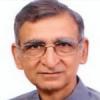
Endless ordeal of Abdul Basheer | ‘No land’s man’ now languishes in Mangaluru rehab

Harsha Raj Gatty
January 24, 2019

No identity, scant memory, mumbling few Urdu, Hindi and Arabic words; while some suspect Abdul Basheer to be a Pakistani, others give him a benefit of doubt that he maybe a Saudi National. But time and again having failed to produce any reliable documentation of identity among other things has got this 45-year on wrong side of the law.

"No one knows how he landed there (Kerala), but what he told us was that he was visiting Ajmer and his passport taken away, which left him stranded in India. But so far neither the Kerala authorities have been able to trace his passport or the origin of his nationality," Joseph Crasta, founder of Snehalaya Psycho Social Rehabilitation Centre said.

Wandering in streets of Kannur has already done enough for Abdul Basheer, after he was picked up by the Kannur police acting 'suspicious'. Further, when Basheer duly told the authorities of his recollection of his mother hailing from Burma and his father was Sayyed Hussain Makkanakkas, a Pakistani national, things didn’t seem to work in his favour. The Kasargod police formally charged him under Foreigners Act and arrested him on September 2012.

Subsequently, Basheer was produced before Kasargod CJM court, and he was duly awarded two years imprisonment at Kannur Jail. According to Kerala police, the jail authorities duly noticed that Basheer was not mentally stable therefore they admitted him for examination in mental-health care unit in Calicut. Although Abdul was slated to be released in November in 2015, he had to undergo another month of prison term since he was unable to pay the fine. Finally he was due to be released on December 2015.

But that was not the end to Basheer’s ordeal. He has neither been identified as an Indian nor has other nationality nor he been granted any refugee status. The authorities did not have a protocol, when the court ordered them to deport Basheer to his respective nation and he continued to be pushed around from one authority to another.

Although Foreigner Regional Registration Offices (FRRO) Ernakulam contacted Saudi Embassy officials to enquire the residence status of Basheer, the foreign authorities told them that they don’t have his records.

Initially, Basheer was transferred to ‘open jail’ in Cheemeni, later under the request from Kerala government, the Kasaragod District officials requested Snehalaya Psycho-Social Rehabilitation Centre at Mangaluru to admit him.

 “Based on a number provided by him, we called a woman in Saudi, who claimed to be his sister and quite often asked about his whereabouts, but later the calls went unanswered and there are no efforts by anyone to provide him any relief,” says Joseph Crasta, founder, Snehalaya Charitable Trust.

According to Crasta, Basheer is schizophrenic but is not a violent case. “His statements about his family, background is inconsistent, although he can speak fluent Hindi and Arabic. Right now, he is the only 'foreigner' among the 167 inmates whom we have lodged in the facility. Earlier we had two Nepali's at our unit, we were able to trace their family, we now hope to reunite Basheer to his family as well,” Crasta adds.


Comments

Naaz
 - 
Thursday, 31 Jan 2019

if anyone can pass that Saudi Number, we can track that lady and inform about it. Nizam Uppala 00966551335641 Basheer Uppala 00966554226682

kumar
 - 
Thursday, 24 Jan 2019

I request the authorities to be kind on this innocent person and consider citizenship to hi m so that he can live peacefully.  I express my grattitudes to the charitable organisation for helping him.   there are many muslim organisations and rich people in Mangalore.  I think its their duty too to help him.  

Nishant Kudla
 - 
Thursday, 24 Jan 2019

He is eligible for Indian citizenship as he has spent several years in the country.

Add new comment

  • Coastaldigest.com reserves the right to delete or block any comments.
  • Coastaldigset.com is not responsible for its readers’ comments.
  • Comments that are abusive, incendiary or irrelevant are strictly prohibited.
  • Please use a genuine email ID and provide your name to avoid reject.
News Network
July 18,2020

Bengaluru, Jul 18: Vendors in Bengaluru are finding it hard to earn a livelihood as the state government has allowed the sale of products only for a few hours each day. The lockdown imposed by the Karnataka government on July 14 will continue till July 22.

Speaking to ANI, Vanajakshi, a local vendor said, "We took loans from banks and small financiers to run our business. But we are finding it tough to pay back as our livelihoods have been hit."
"Because of the lockdown, no one comes to buy and markets remain vacant. There was a time when the Gandhi Nagar market was filled with customers, but now it looks like a vacant playground," she added.

Mythri, an advocate, said, "Look at the conditions of vendors. It's precarious. They do not have any business at all. Even now they have been allowed to sell products till 12 noon, which is not sufficient. It's time for the government to step in and provide assistance. If the Central government can reduce corporate taxes, why can't it help them? At least it will help them pass off these difficult times. "

"They are earning through daily wages. The government imposed lockdown suddenly. Where will they go? The city market in Bengaluru is famous. At least 8,000 people come from slum areas. People here are poor. The lockdown was done suddenly and led to problems for these people," said Congress MLA Zamil Ahmed Khan.

Referring to a recent meeting with the chief minister BS Yediyurappa, he said, "During the meeting called by the CM, I suggested that food kits must be arranged for vendors. The CM said the government is providing rice and wheat but that's not enough."

Comments

Add new comment

  • Coastaldigest.com reserves the right to delete or block any comments.
  • Coastaldigset.com is not responsible for its readers’ comments.
  • Comments that are abusive, incendiary or irrelevant are strictly prohibited.
  • Please use a genuine email ID and provide your name to avoid reject.
Ram Puniyani
June 29,2020

In Minneapolis, US an African American, George Floyd lost his life as the white policeman, Derek Chauvin, caught hold of him and put his knee on his neck. This is a technique developed by Israel police. For nine long minutes the knee of the while policeman was on the neck of George, who kept shouting, I can’t breathe.

Following this gruesome murder America erupted with protests, ‘Black lives matter’. The protestors were not just African Americans but also a large section of whites. Within US one police Chief apologized for the act of this. In a touching gesture of apology the police force came on its knees. This had reverberations in different parts of the World.

The act was the outcome of the remnants of the racial hatred against blacks by the whites. It is the hatred and the perceptions which are the roots of such acts of violence. What was also touching that the state of democracy in US is so deep that even the police apologized, the nation, whites and blacks, stood up as a sensitive collective against this violence.

US is not the only country where the brutal acts of violence torment the marginalized sections of society. In India there is a list of dalits, minorities and adivasis who are regularly subjected to such acts. But the reaction is very different. We have witnessed the case of Tabrez Ansari, who was tied to the pole by the mob and beaten ruthlessly. When he was taken to police station, police took enough time to take him to hospital and Tabrez died.

Mohsin Sheikh, a Pune techie was murdered by Hindu Rashtra Sena mob, the day Modi came to power in 2014. Afrazul was killed by Shambhulal Regar, videotaped the act released on social media. Regar believed that Muslims are indulging in love Jihad, so deserve such a fate. Mohammad Akhlaq is one among many names who were mob lynched on the issue of beef cow. The list can fill pages after pages.

Recently a young dalit boy was shot dead for the crime of entering a temple. In Una four dalits were stripped above waste and beaten mercilessly. Commenting on this act the Union Minister Ramvilas Paswan commented that it is a minor incident. Again the list of atrocities against dalits is long enough. The question is what Paswan is saying is the typical response to such gruesome murders and tortures. In US loss of one black life, created the democratic and humane response. In India there is a general silence in response to these atrocities. Some times after a good lapse of time, the Prime Minister will utter, ‘Mother Bharati has lost a son’. Most of the time victim is blamed. Some social groups raise their voice in some fora but by and large the deafening silence from the country is the norm.

India is regarded as the largest democracy. Democracy is the rule of law, and the ground on which the injustices are opposed. In America though the present President is insensitive person, but its institutions and processes of democratic articulations are strong. The institutions have deepened their roots and though prejudices may be guiding the actions of some of the officers like the killer of George, there are also police officers who can tell their President to shut up if he has nothing meaningful to say on the issue. The prejudices against Blacks may be prevalent and deep in character, still there are large average sections of society, who on the principles of ‘Black lives matter’. There are large sections of vocal population who can protest the violation of basic norms of democracy and humanism.

In India by contrast there are multiple reasons as to why the lives of Tabrez Ansari, Mohammad Akhlaq, Una dalit victims and their likes don’t matter. Though we claim that we are a democracy, insensitivity to injustices is on the rise. The strong propaganda against the people from margins has become so vicious during last few decades that any violence against them has become sort of a new normal. The large populace, though disturbed by such brutalities, is also fed the strong dose of biases against the victims. The communal forces have a great command over effective section of media and large section of social media, which generates Hate against these disadvantaged groups, thereby the response is muted, if at all.

As such also the process of deepening of our democracy has been weak. Democracy is a dynamic process; it’s not a fixed entity. Decades ago workers and dalits could protest for their rights. Now even if peasants make strong protests, dominant media presents it as blocking of traffic! How the roots of democracy are eroded and are visible in the form where the criticism of the ruling dispensation is labelled as anti National..

Our institutions have been eroded over a period of time, and these institutions coming to the rescue of the marginalized sections have been now become unthinkable. The outreach of communal, divisive ideology, the ideology which looks down on minorities, dalits and Adivasis has risen by leaps and bounds.

The democracy in India is gradually being turned in to a hollow shell, the rule of law being converted in to rule of an ideology, which does not have faith in Indian Constitution, which looks down upon pluralism and diversity of this country, which is more concerned for the privileges of the upper caste, rich and affluent. The crux of the matter is the weak nature of democracy, which was on way to become strong, but from decades of 1980s, as emotive issues took over, the strength of democracy started dwindling, and that’s when the murders of the types of George Floyd, become passé. One does complement the deeper roots of American democracy and its ability to protect the democratic institutions, which is not the case in India, where protests of the type, which were witnessed after George Floyd’s murder may be unthinkable, at least in the present times. 

Comments

Add new comment

  • Coastaldigest.com reserves the right to delete or block any comments.
  • Coastaldigset.com is not responsible for its readers’ comments.
  • Comments that are abusive, incendiary or irrelevant are strictly prohibited.
  • Please use a genuine email ID and provide your name to avoid reject.
News Network
April 26,2020

Bengaluru, Apr 26: Two businessmen brothers, Tajammul Pasha and Muzammil Pasha, in Karnataka's Kolar district have set out to help people in need amid the lockdown over the COVID-19 pandemic by selling their land for Rs 25 lakh.

On seeing daily wage labourers and their families in Kolar suffer during the lockdown, the brothers said they decided to sell their land and use the money to buy essentials and food grain for a large number of poor people.

The brothers also bought oil and cereals with the money. Then they set up a tent next to their house and started a community kitchen to make food for labourers and homeless people.

"Our parents died early. When we shifted to our maternal grandmother's place at  Kolar, people from communities, Hindus, Sikhs, Muslims helped us survive without any religious bias," said Tajammul Pasha, visibly emotional.

The Pasha brothers are into banana cultivation and real estate. Tajammul was five and his sibling Muzammil was three when they lost their parents. They had to move from Chickbalapor to Kollar, where their grandmother lived.

"We were brought up in poverty. We survived because of the support of people of all communities and religions. We have signed the society agreement bond and handed it over to our friend who purchased our site and gave the money," the brothers said.

Once the lockdown ends and the land registrar's office opens, the remaining steps to transfer the land will be completed, they said.

So far the two brothers have supplied food grain, oil, sugar and other essentials to over 3,000 families. They have also given hand sanitizers and masks to the poor.

The Kolar administration has issued passes to their volunteers so that they can help in this difficult time.

The number of coronavirus cases in India has increased to 24,506, including 775 deaths, the Home Ministry said today, adding that 1,429 cases and 57 deaths were reported in the last 24 hours.

Amid a countrywide lockdown to check the spread of the highly contagious illness, which began on March 25, the government last night issued an order to allow neighbourhood shops to remain open with conditions; malls across India continue to remain shut.

Comments

Add new comment

  • Coastaldigest.com reserves the right to delete or block any comments.
  • Coastaldigset.com is not responsible for its readers’ comments.
  • Comments that are abusive, incendiary or irrelevant are strictly prohibited.
  • Please use a genuine email ID and provide your name to avoid reject.