



Epic nuclear case: Island nation takes on India, Pak, Britain

October 5, 2016

Majuro/Marshall Islands, Oct 5: As the Marshall Islands awaits an international court ruling on Wednesday on whether its lawsuit against three nuclear powers can proceed, many in the western Pacific nation question the merit of the David-versus-Goliath legal battle.
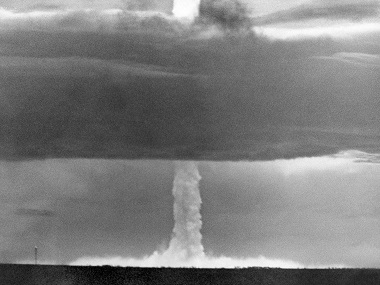
hydrogenThe country of 55,000 people is taking on India, Pakistan and Britain in the International Court of Justice (ICJ), arguing they have failed to comply with the 1968 nuclear Non-Proliferation Treaty.

Initially the lawsuit was even more ambitious — also including China, France, Israel, North Korea, Russia and the United States — none of which recognised the ICJ's jurisdiction on the matter.

The Marshalls has a long, bitter history with nuclear weapons, making it one of the few nations that can argue with credibility before the ICJ about their impact.

The island nation was ground zero for 67 American nuclear weapons tests from 1946-58 at Bikini and Enewetak atolls, when it was under US administration.

The tests included the 1954 "Bravo" hydrogen bomb, the most powerful ever detonated by the United States, about 1,000 times bigger than the atomic bomb dropped on Hiroshima.

They fed into an apocalyptic zeitgeist in Cold War popular culture, giving a name to the bikini swimsuit and leading to the development of Japan's Godzilla movie monster.

In "Godzilla", the creature is awakened by a hydrogen bomb test, rising from a roiling sea to destroy Tokyo, in a walking, radiation-breathing analogy for nuclear disaster.

'Sky turned blood red'

On the Marshall Islands, the impacts of the nuclear tests were all too real.

Numerous islanders were forcibly evacuated from ancestral lands and resettled, while thousands more were exposed to radioactive fallout.

"Several islands in my country were vaporised and others are estimated to remain uninhabitable for thousands of years," Tony deBrum, a former Marshall Islands foreign minister, told an ICJ hearing earlier this year.

He recalled witnessing the Bravo test as a nine-year-old while fishing with his grandfather in an atoll, some 200 kilometres (125 miles) from the blast's epicentre.

"The entire sky turned blood red," he said. "Many died, or suffered birth defects never before seen and cancers as a result of contamination."

DeBrum launched the Marshall's ICJ action in 2014 with cooperation from the California-based Nuclear Age Peace Foundation.

His actions prompted the International Peace Bureau to nominate him in January for the 2016 Nobel Peace Prize, which is yet to be awarded.

Yet critics argue the ICJ action is a distraction and the islanders' real fight is with Washington, which carried out the tests in their backyard.

They contend the case has no relationship to victims' claims for increased compensation, better health care and clean-ups to make sites habitable again.

Official criticism has been muted recently to avoid undermining deBrum's Nobel nomination.

But his successor as foreign minister, John Silk, made his views clear before an election last November when voters ousted 40 percent of the parliament, including deBrum.

Labelling the action "unauthorised" and "a publicity stunt", he said the focus should remain on petitioning the US Congress for increased compensation.

"What do these lawsuits have to do with resolving the legacy of the US nuclear testing programme?" he asked.

The Nuclear Age Peace Foundation argues that the Marshalls is taking a broader perspective in trying to re-start nuclear disarmament talks that have stalled over the past 20 years.

"The Republic of the Marshall Islands acts for the seven billion of us who live on this planet to end the nuclear weapons threat hanging over all humanity," its website says.

"Everyone has a stake in this."

The ICJ, the UN's top court, will decide on Wednesday whether it believes the case should go to a full hearing.

Comments

Ashwin
 - 
Wednesday, 5 Oct 2016

Haha. CD u are very slow. The UN Court has already rejected nuclear case against India. But you are very quick to post something about BJP

Add new comment

  • Coastaldigest.com reserves the right to delete or block any comments.
  • Coastaldigset.com is not responsible for its readers’ comments.
  • Comments that are abusive, incendiary or irrelevant are strictly prohibited.
  • Please use a genuine email ID and provide your name to avoid reject.
Agencies
June 22,2020

The total number of global COVID-19 cases was nearing 9 million, while the deaths have increased to over 467,000, according to the Johns Hopkins University.

By Monday morning, the total number of cases stood at 8,927,195, while the fatalities increased to 467,636, the University's Center for Systems Science and Engineering (CSSE) revealed in its latest update.

With 2,279,306 cases and 119,967 deaths, the US continues with the world's highest number of COVID-19 infections and fatalities, according to the CSSE.

Brazil comes in the second place with 1,083,341 infections and 50,591 deaths.

In terms of cases, Russia ranks third (583,879), and was followed by India (410,461), the UK (305,803), Peru (251,338), Spain (246,272), Chile (242,355), Italy (238,499), Iran (204,952), France (197,008), Germany (191,272), Turkey (187,685), Mexico (180,545), Pakistan (176,617), Saudi Arabia (157,612), Bangladesh (112,306) and Canada (103,078), the CSSE figures showed.

The other countries with over 10,000 deaths are the UK (42,717), Italy (34,634), France (29,643), Spain (28,323), Mexico (21,825) and India (13,254).

Comments

Add new comment

  • Coastaldigest.com reserves the right to delete or block any comments.
  • Coastaldigset.com is not responsible for its readers’ comments.
  • Comments that are abusive, incendiary or irrelevant are strictly prohibited.
  • Please use a genuine email ID and provide your name to avoid reject.
News Network
April 16,2020

Brussels/Amsterdam, Apr 16: As the novel coronavirus continues to wreak havoc in the western world since its outbreak in Wuhan last December, researchers believe that the Chinese leadership is trying to absolve President Xi Jinping by using a section of the western media to influence public opinion globally.

"There are clear indications that China is conducting activities in a persistent and systematic manner to influence public opinion-making, academia, think tanks and political decision-making among the member states of the Belt and Road Initiative (BRI) in general and western capital cities in particular," Siegfried O Wolf, Director of Research at Brussels-based think tank South Asia Democratic Front, said.

Some western media say some Chinese officials were secretly aware that they were facing a pandemic from the new coronavirus but allowed Wuhan to host a mass banquet for tens of thousands of people and millions began their annual trip home for the Lunar New Year celebrations.

The pandemic has since then affected 210 countries and territories around the world. Over 2 million people have been declared positive in which over 134,000 lost their lives.

"The frequency and extra-ordinary large scale of Chinese sponsored events in European political hubs, like in Brussels, and the subsequent media coverage can be seen as evidence for Beijing's public diplomacy efforts. However, the rising skepticism within the EU regarding Xi Jinping's development projects and the emerging questioning of Chinese sources funding Free Universities, like the one in Berlin, shows that this strategy produced mixed results so far," Wolf said.

He added, "However, one must also state that these efforts helped China to gain certain leverage among many non-Chinese media, western as well as non-western ones. Today, we can observe that China's political leadership tries to instrumentalise this influence for a major image campaign to distract from the fact that it carries the initial responsibility for the dramatic spread of COVID-19 by holding back key information."

Wolf also said that the current internal dynamics in China, like the shirking of responsibilities by the local authorities, are most-likely part of a twofold strategy. Firstly, there is the strategic component - namely, to reaffirm to the general public that the Communist Party of China is still in full control of the situation. The second strategic pillar is one of 'whitewashing'.

"Concretely, Beijing's obvious aim is to distract the domestic and international attention from the real, but hidden causes of the Coronavirus outbreak and its potential reputational and political consequences for Xi Jinping and his BRI," he stated.

Yoana Barakova, a Research Analyst at European Foundation for South Asian Studies (EFSAS), an Amsterdam-based think-tank, said, "The death of Dr. Li Wenliang, one of the very few medical professionals who tried to warn the world in December 2019 about the looming threat, sparked widespread condemnation around the international community in early February. Yet, little did he know that his legacy would continue much later after his demise, with the emboldened Chinese government trying to cover up its missteps through hardcore censorship after being exposed for undermining and underestimating the initial danger."

The researchers believe that the deterioration in press freedom under Jinping's regime has become more evident in recent days, with local authorities trying to control the state narrative by cosmetically placing media's focus on government's superficial attempts to tackle the crisis.

Comments

Add new comment

  • Coastaldigest.com reserves the right to delete or block any comments.
  • Coastaldigset.com is not responsible for its readers’ comments.
  • Comments that are abusive, incendiary or irrelevant are strictly prohibited.
  • Please use a genuine email ID and provide your name to avoid reject.
June 25,2020

Islamabad, Jun 25: The coronavirus cases in Pakistan crossed the 192,000-mark after 4,044 new Covid-19 infections were detected in the last 24 hours, the health ministry said on Thursday.

According to the Ministry of National Health Services, 148 more people died due to the deadly virus in the country, taking the death toll to 3,903.

With the detection of 4,044 new cases in the last 24 hours, the coronavirus tally in the country now stands at 192,970, it said.

Sindh reported a maximum number of 74,070 infections, followed by 71,191 in Punjab, 23,887 in Khyber-Pakhtunkhwa, 11,710 in Islamabad, 9,817 in Balochistan, 1,365 in Gilgit-Baltistan and 930 in Pakistan-occupied Kashmir.

A total of 81,307 patients have recovered so far from the disease.

Health authorities have so far conducted 1,171,976 coronavirus tests, including 21,835 in the last 24 hours.

Comments

Add new comment

  • Coastaldigest.com reserves the right to delete or block any comments.
  • Coastaldigset.com is not responsible for its readers’ comments.
  • Comments that are abusive, incendiary or irrelevant are strictly prohibited.
  • Please use a genuine email ID and provide your name to avoid reject.