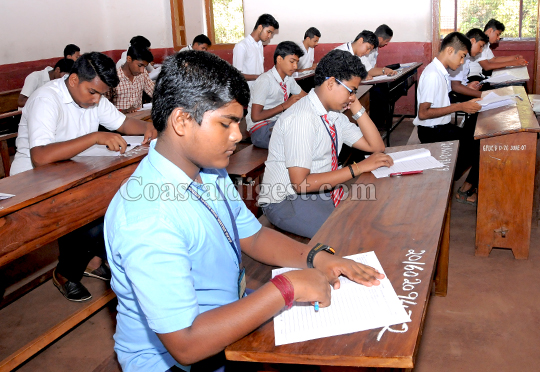
Expectations high in Dakshina Kannada as SSLC exams begin

[email protected] (CD Network | Photos by Suresh)
March 30, 2016

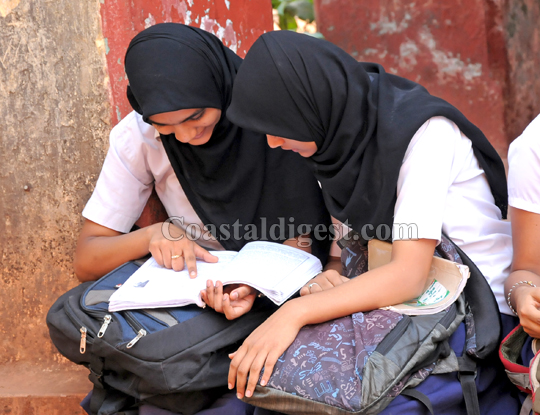
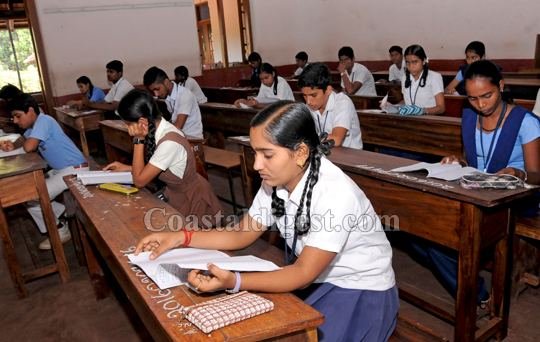
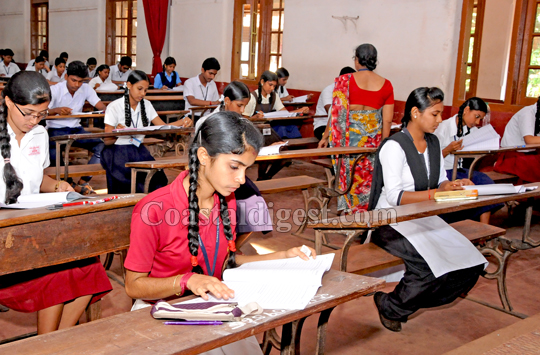
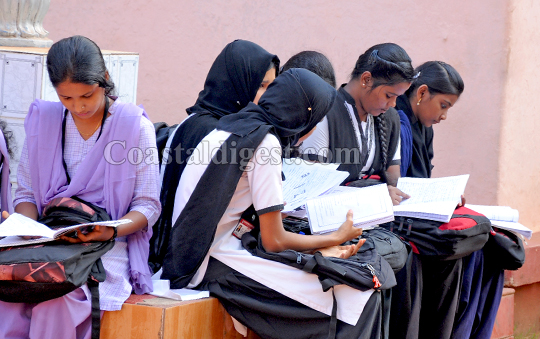
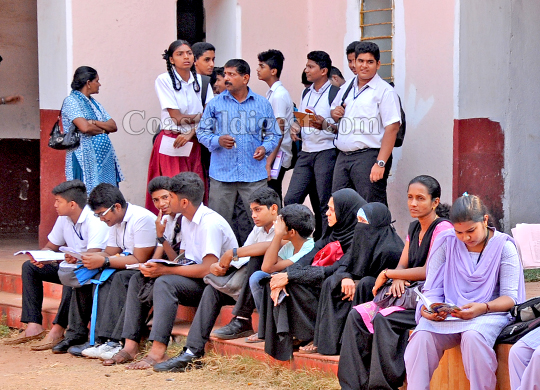
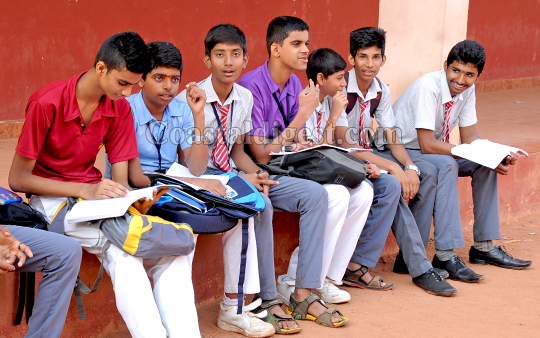
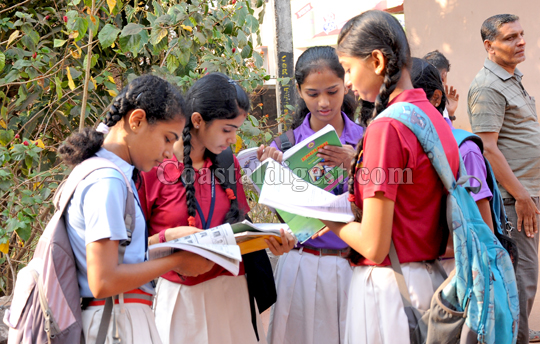
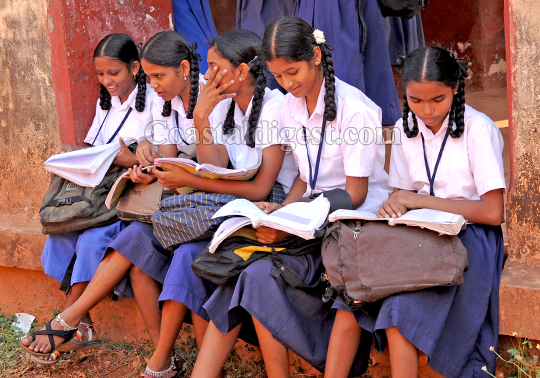
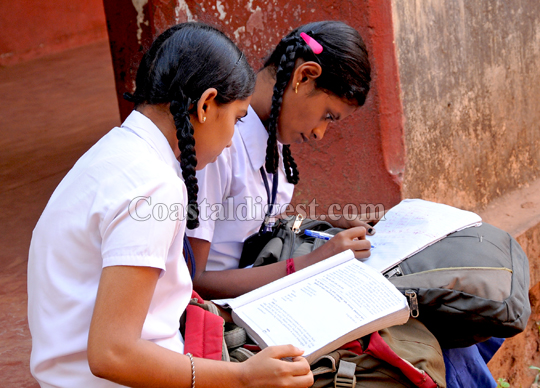
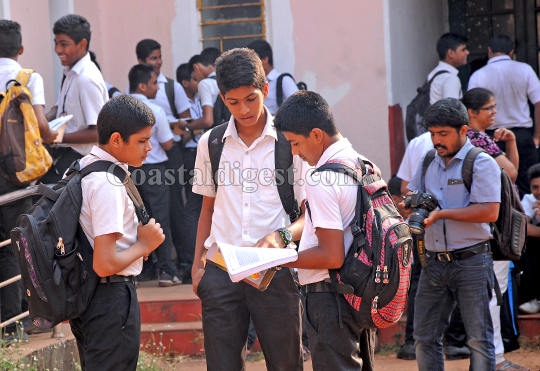
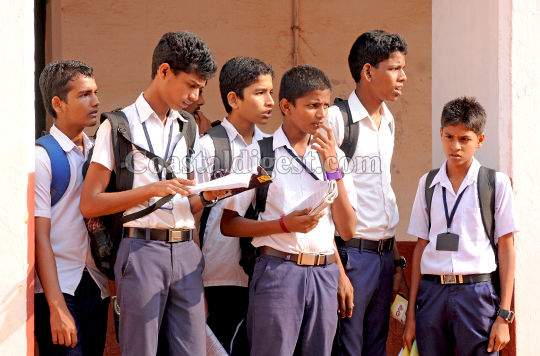
Mangaluru, Mar 30: The SSLC examinations started across Karnataka on Wednesday. Tensed students around the examination centres were seen making last minute preparation prior to entering their respective halls in the morning.

sslc 11

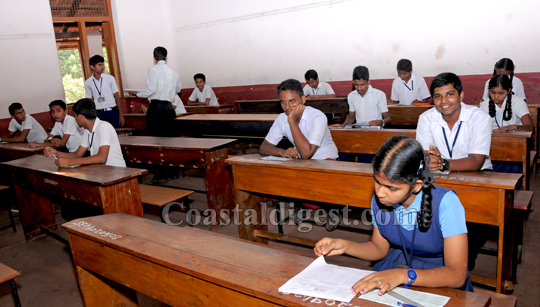
In Dakshina Kannada district, as many as 33,851 candidates are slated to appear for the examinations. Of this, 17,672 are boys, while 16,179 are girls. 1,203 students are appearing as private candidates.

The exams commenced at 9.30 am and students had to be at the examination hall 30 minutes before the commencement of the exam.

Dozens of officials had been deployed to transport question papers to examination centres. The coastal district does not have sensitive and hypersensitive centres.

The district administration intends to see the Dakshina Kannada among the top three good performing districts in the state in the SSLC examination.

Several measures have been initiated to improve the pass percentage in the district. There was a marked improvement in the results last year when the district ranking jumped from 29 to 8.

This improvement was seen in the exam, which, for the first time was based on the new syllabus similar to CBSE. Moreover, it was last year that the Continuous and Comprehensive Evaluation also came into effect.

Ahead of this year's exam, special classes were conducted for slow learners throughout the year. Night classes were held this year too in March.

Legislators, panchayat members and religious leaders had also visited the houses of students to learn their preparation and also to boost their morale.

The Deputy Commissioner has imposed prohibitory orders within 200 metres radius of the examination centres. All the photocopying centres have been asked to shut down during the examinations. To check malpractices, special squads have been formed in the district.

sslc 1

sslc 2

sslc 3

sslc 4

sslc 5

sslc 6

sslc 7

sslc 8

sslc 9

sslc 10

sslc 12

sslc 13

sslc 14

sslc 15

sslc 16

sslc 17

Comments

Zahoor Ahmed
 - 
Wednesday, 30 Mar 2016

Don't stress, do your best, forget the rest....Good luck

Meghana
 - 
Wednesday, 30 Mar 2016

All the best to all, Do well in the exams.

Vinutha
 - 
Wednesday, 30 Mar 2016

All the best students. Future stars of DK.

sadiq
 - 
Wednesday, 30 Mar 2016

Best of luck May allah guide us.. all Imagine what will be the result in the day of judgment we all write exam in duniya (good OR Bad Deeds)& wait for the Result in akhira.MAy allah help in both world AMeen

Mohammed Izaj
 - 
Wednesday, 30 Mar 2016

jasakkulla do well in the exams. all the best guys n girls.

Add new comment

  • Coastaldigest.com reserves the right to delete or block any comments.
  • Coastaldigset.com is not responsible for its readers’ comments.
  • Comments that are abusive, incendiary or irrelevant are strictly prohibited.
  • Please use a genuine email ID and provide your name to avoid reject.
News Network
June 9,2020

Dubai, Jun 9: A young NRI engineer in Dubai, who supported his pregnant spouse to file a plea in the Supreme Court of India for early repatriation from the UAE amid the coronavirus lockdown passed away in his sleep of suspected cardiac arrest.

The deceased identified as Nithin Chandran (28) and his wife Athira Geetha Sreedharan (27) had hit headlines in the past after the latter filed a writ petition seeking assistance to be repatriated to India, following the suspension of flights to the country, as she was due for the delivery of their first baby in the first week of July.

Chandran, a mechanical engineer was working at a construction firm in Dubai. According to the reports, he had stayed back in UAE after sending his wife home on the first day of repatriation from Dubai on May 7 under the Vande Bharat Mission.

The deceased was receiving the treatment for high blood pressure and a heart condition and is suspected to have died of a heart attack while asleep, his friend said. However, the exact cause of his death is yet to be known.

Comments

Add new comment

  • Coastaldigest.com reserves the right to delete or block any comments.
  • Coastaldigset.com is not responsible for its readers’ comments.
  • Comments that are abusive, incendiary or irrelevant are strictly prohibited.
  • Please use a genuine email ID and provide your name to avoid reject.
Wafa Sultana
April 4,2020

Over the last couple of days when the world was occupied with unifying efforts to fight the deadly Covid19 pandemic, sections of Indian media provided viewers a familiar scapegoat – the Indian Muslims – who are often stereotyped as a community being constantly at loggerheads with the citizenry and the State. Biased media channels were quick to resort to blaming the entire Muslim community for the spread of the disease in the country, thanks to an ill-timed Tablighi Jamaat gathering at its international headquarters in Delhi’s Nizamuddin. Unsurprisingly, the opprobrium was also marked by a sudden spike in WhatsApp forwards of videos with people wearing skullcaps licking spoons and performing Sufi breathing rituals, suggesting some sort of wild conspiracy on the part of the community to spread the virus.  Some media channels were quick to formulate, hypothesize and provide loose definitions of a newly discovered form of Jihad i.e. ‘Corona Jihad ’ thereby vilifying the Islamic faith and its followers.

While the investigation on the culpability of the organizers of the Nizamuddin event is still ongoing, there is enough information to suggest that the meeting was held before any lockdown was in force, and the problem began when there was no way of getting people out once the curfew was announced. Be that as it may, there is little doubt that organizing a meet of such a scale when there is a global pandemic smacks of gross misjudgment, and definitely the organizers should be held accountable if laws or public orders were defied. Attendees who attempt to defy quarantine measures must be dealt with strictly. However, what is alarming is that the focus and narrative have now shifted from the unfortunate event at Nizamuddin to the Tablighi Jamaat itself.

For those not familiar with the Tablighi Jamaat, the organization was founded in 1926 in Mewat by scholar Maulana Mohammad Ilyas. The Jamaat’s main objective was to get Muslim youth to learn and practice pristine Islam shorn of external influences. This is achieved through individuals dedicating time for moral and spiritual upliftment secluded from the rest of the world for a brief period of time. There is no formal membership process. More senior and experienced participants typically travel from one mosque to other delivering talks on religious topics, inviting local youth to attend and then volunteer for a spiritual retreat for a fixed number of days to a mosque in a nearby town or village to present the message to their co-religionists. Contrary to ongoing Islamophobic rhetoric, the movement does not actively proselytize. The focus is rather on getting Muslims to learn the teachings and practices of Islam.  This grassroots India-based movement has now grown to almost all countries with substantial Muslim populations. Its annual meets, or ‘ijtemas’ are among the largest Islamic congregations in the world after the annual Haj. One of the reasons for its popularity and wide network in the subcontinent and wordwide is the fact that it has eschewed the need for scholarly intervention, focusing on peer learning of fundamental beliefs and practice rather than high-falutin ideological debates. The Tablighi Jamaat also distinguishes itself from other Islamic movements through its strictly apolitical nature, with a focus on individual self-improvement rather than political mobilization. Hardships and difficulty in the world are expected to be face through ‘sabr’ (patience) and ‘dua’ (supplication),  than through quest for political power or influence. In terms of ideology, it is very much based on mainstream Sunni Islamic principles derived from the Deobandi school.

So, why is all this background important in the current context? While biased media entities have expectedly brought out their Islamophobic paraphernalia out for full display, more neutral commentators have tried to paint the Tablighi Jamaat as a fringe group and have tried to distance it from 'mainstream Muslims'. While the intent is no doubt innocent, this is a trap we must not fall into. This narrative, unfortunately, is also gaining ground due to apathy some Muslims have for the group, accusing it of being “disconnected from the realities of the world”. Unlike other Muslim organizations and movements, the Tablighi Jamat, by virtue of its political indifference, does not boast of high-profile advocates and savvy spokespersons who can defend it in mainstream or social media.  The use of adjectives such as 'outdated' and 'orthodox' by liberal columnists to describe the Jamaat feeds into the malignant attempt to change the narrative from the control of the spread of the pandemic due to the Nizamuddin gathering to 'raison d'etre' of the organization itself.

A large mainstream religious group like the Tablighi Jamaat with nearly a hundred-year history, normally considered to be peaceful, apolitical and minding its own business is now suddenly being villainized owing to unfortunate circumstances. Biased media reactions filled with disgust and hate seem to feed the Indian public conscience with a danngerous misconception - to be a nominal Muslim is okay but being a practicing one is not.  For those committed to the truth and fighting the spread of Islamophobia, the temptation to throw the entire Tablighi Jamaat under the bus must be resisted.

The writer is a lawyer and research scholar at Qatar University. Her research interests include Islamic law and politics.


Comments

zahoorahmed
 - 
Saturday, 4 Apr 2020

great article! provides a great perspective on tableeg jamat

Add new comment

  • Coastaldigest.com reserves the right to delete or block any comments.
  • Coastaldigset.com is not responsible for its readers’ comments.
  • Comments that are abusive, incendiary or irrelevant are strictly prohibited.
  • Please use a genuine email ID and provide your name to avoid reject.
News Network
May 18,2020

Bengaluru, May 18: A large number of people in India are planning inter-city bus travel within a month of the lifting of travel restrictions, according to a randomised online survey of over 10,300 customers of redBus, India's largest online bus ticketing platform.

Nearly 57 per cent of the respondents are planning to travel within a month post the lockdown. However, there is a high standard of expectation on the implementation of measures to make buses safe for travel with over 79 per cent wanting deep cleaning and sanitisation of buses after every trip.

Hand sanitisers, mandatory masks and temperature screening for all passengers are next in expectations for bus travel. Over 78 per cent of the respondents want the implementation of hygienic conditions at boarding points and 70 per cent want social distancing protocols to be implemented at boarding points.

"The survey does underscore the fact that given the adherence to safety protocols, bus travel is possibly one of the safest options for travel since the number of travellers are fewer, checks can be done individually and the whole factor of pick up and drop as close to home as possible minimises the number of contacts throughout the journey," said redBus Chief Executive Officer Prakash Sangam.

In addition, online booking further reduces the number of contact points as people can book bus tickets directly from their home. Further, there is a heightened awareness of personal hygiene and safety measures which is important for the travel to be safe.

"The large number of people waiting to travel not only points to the need but also the importance it has for the revival of economic activity as very few of them would be travelling for leisure," said Sangam.

The survey also showed that passengers put a very high consideration on hygiene, sanitation and disinfection -- over 73 per cent -- and social distancing (63 per cent) and much lower consideration to traditional factors such as travel cost (22 per cent), comfort (21 per cent) and punctuality (18 per cent).

The survey was conducted among redBus customers across India. Only 5 per cent of the respondents were willing to postpone their travel to over six months while the rest had plans to travel within that period.

Comments

Add new comment

  • Coastaldigest.com reserves the right to delete or block any comments.
  • Coastaldigset.com is not responsible for its readers’ comments.
  • Comments that are abusive, incendiary or irrelevant are strictly prohibited.
  • Please use a genuine email ID and provide your name to avoid reject.