Expectations high in Dakshina Kannada as SSLC exams begin

[email protected] (CD Network | Photos by Suresh)
March 30, 2016

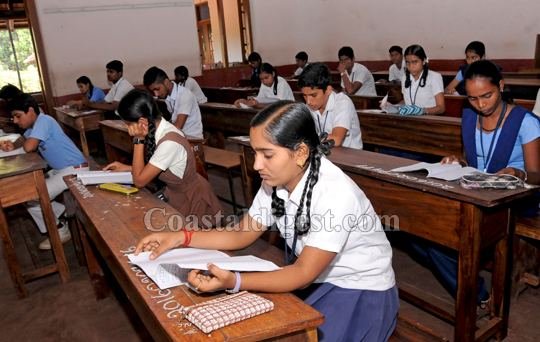
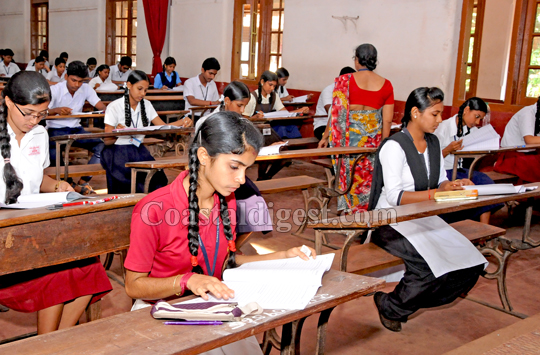
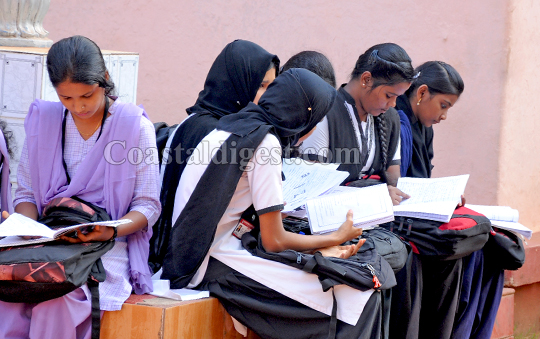
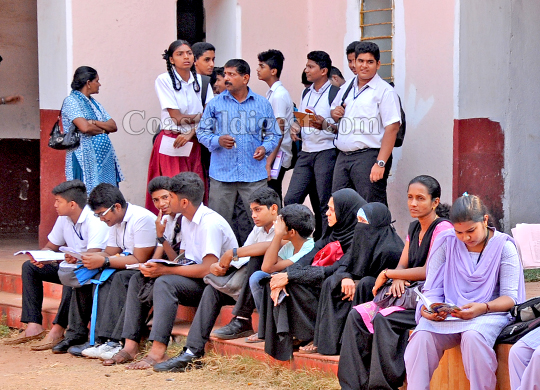
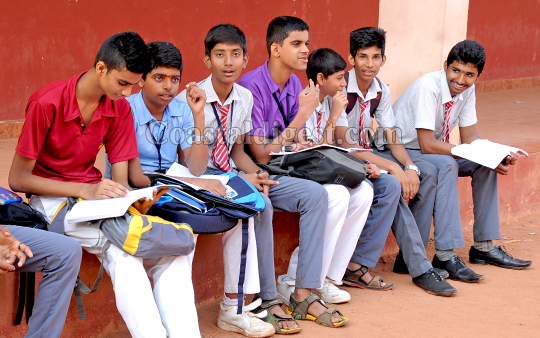
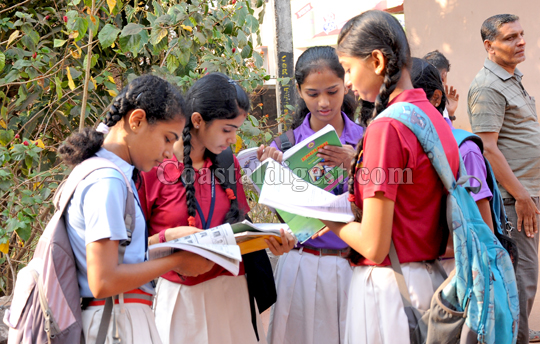
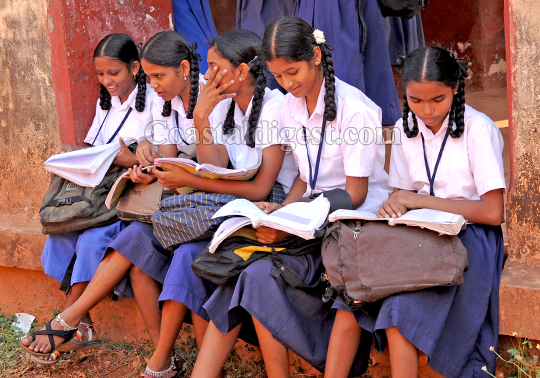
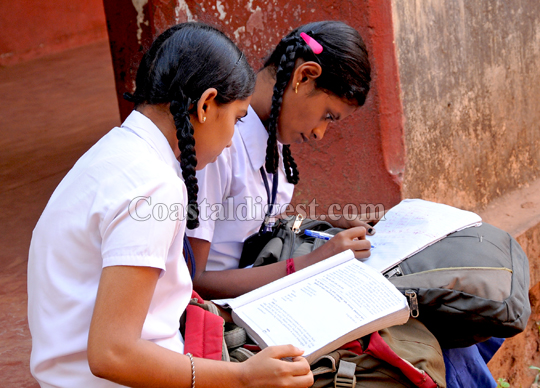
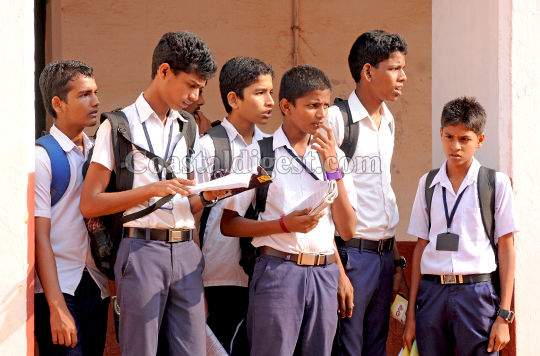
Mangaluru, Mar 30: The SSLC examinations started across Karnataka on Wednesday. Tensed students around the examination centres were seen making last minute preparation prior to entering their respective halls in the morning.

sslc 11

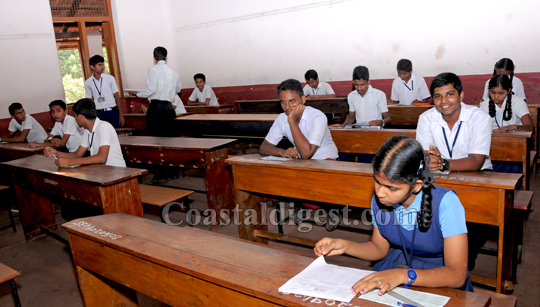
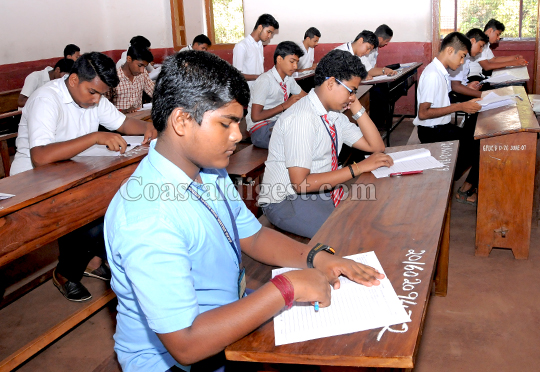
In Dakshina Kannada district, as many as 33,851 candidates are slated to appear for the examinations. Of this, 17,672 are boys, while 16,179 are girls. 1,203 students are appearing as private candidates.

The exams commenced at 9.30 am and students had to be at the examination hall 30 minutes before the commencement of the exam.

Dozens of officials had been deployed to transport question papers to examination centres. The coastal district does not have sensitive and hypersensitive centres.

The district administration intends to see the Dakshina Kannada among the top three good performing districts in the state in the SSLC examination.

Several measures have been initiated to improve the pass percentage in the district. There was a marked improvement in the results last year when the district ranking jumped from 29 to 8.

This improvement was seen in the exam, which, for the first time was based on the new syllabus similar to CBSE. Moreover, it was last year that the Continuous and Comprehensive Evaluation also came into effect.

Ahead of this year's exam, special classes were conducted for slow learners throughout the year. Night classes were held this year too in March.

Legislators, panchayat members and religious leaders had also visited the houses of students to learn their preparation and also to boost their morale.

The Deputy Commissioner has imposed prohibitory orders within 200 metres radius of the examination centres. All the photocopying centres have been asked to shut down during the examinations. To check malpractices, special squads have been formed in the district.

sslc 1

sslc 2

sslc 3

sslc 4

sslc 5

sslc 6

sslc 7

sslc 8

sslc 9

sslc 10

sslc 12

sslc 13

sslc 14

sslc 15

sslc 16

sslc 17

Comments

Zahoor Ahmed
 - 
Wednesday, 30 Mar 2016

Don't stress, do your best, forget the rest....Good luck

Meghana
 - 
Wednesday, 30 Mar 2016

All the best to all, Do well in the exams.

Vinutha
 - 
Wednesday, 30 Mar 2016

All the best students. Future stars of DK.

sadiq
 - 
Wednesday, 30 Mar 2016

Best of luck May allah guide us.. all Imagine what will be the result in the day of judgment we all write exam in duniya (good OR Bad Deeds)& wait for the Result in akhira.MAy allah help in both world AMeen

Mohammed Izaj
 - 
Wednesday, 30 Mar 2016

jasakkulla do well in the exams. all the best guys n girls.

Add new comment

  • Coastaldigest.com reserves the right to delete or block any comments.
  • Coastaldigset.com is not responsible for its readers’ comments.
  • Comments that are abusive, incendiary or irrelevant are strictly prohibited.
  • Please use a genuine email ID and provide your name to avoid reject.
News Network
July 2,2020

Bengaluru, Jul 2: Former Karnataka Chief Minister HD Kumaraswamy on Thursday accused BS Yediyurappa-led state government of "failure" to protect the citizens from coronavirus, stating that Karnataka was suffering due to lack of co-ordination in the cabinet.

In a series of tweets, the JD(S) leader slammed the state government for wasting their time in giving out contradictory statements regarding COVID-19 figures instead of learning lessons from the Kerala government.

"It is shocking to see COVID-19 patients being turned down by the hospitals due to lack of beds. The government has failed in its duty to protect the citizens. The CM and his cabinet colleagues wasted precious time in mere talking for the last three months. As the escalated Covid numbers stare them in the face, they are now helpless," Kumaraswamy wrote.

"Even when you have a proven model in Kerala government's success in Covid management, the ministers waste time in issuing contradictory statements and doing nothing. Karnataka suffers due to lack of co-ordination in the cabinet," he said.

Urging the government to act together, he said that if the government does not get its act together, the day is not far when Covid patients would be "condemned to die on the streets."

We are already seeing heart-wrenching stories of patients denied treatment," he added.

Kumaraswamy also appealed to the Karnataka government to consider the suggestions he had made earlier and not to indulge in party politics in these testing times.

"I appeal to the government to consider the suggestions I made earlier and act accordingly. This is not the time for party politics."

Comments

Add new comment

  • Coastaldigest.com reserves the right to delete or block any comments.
  • Coastaldigset.com is not responsible for its readers’ comments.
  • Comments that are abusive, incendiary or irrelevant are strictly prohibited.
  • Please use a genuine email ID and provide your name to avoid reject.
News Network
February 19,2020

Feb 19: Bavaguthu Raghuram Shetty was once a typical billionaire with a taste for the high-life.

He splurged on a private jet, vintage cars and two entire floors of the Burj Khalifa, the world’s tallest skyscraper. His website shows him hobnobbing with politicians, Bill Gates and Bollywood royalty.

“The thrill of speed and freedom makes me love cars,” Shetty, 77, told local reporters last year.

Shetty had more than enough money -- at least on paper -- to afford such a lifestyle from companies he helped found, including hospital operator NMC Health Plc and financial services firm Finablr Plc. On Dec. 10, his stakes in the public companies were valued at $2.4 billion, making up the bulk of a fortune spanning education, hospitality and one of the world’s oldest tea companies.

Then, a week later, Carson Block came along.

Block’s investment firm, Muddy Waters, issued a report criticizing NMC’s accounts and disclosing a short position. Since then, Muddy Waters’s scrutiny has snowballed into a troubling scenario for Shetty that sheds light on his complex share arrangements and casts doubts about his net worth. His holdings in Finablr and NMC are worth $885 million, but Shetty’s fortune may now be just a fraction of that, depending on the size of his borrowings.

Filings this month show that Shetty pledged a quarter of his NMC stake against loans with First Abu Dhabi Bank and Zurich-based Falcon Private Bank. Two other shareholders may own half of his reported stake. Another lender -- Al Salam Bank Bahrain -- has already sold some of those shares to enforce security over a loan for Shetty, and NMC said Tuesday that First Abu Dhabi Bank sold another chunk earlier this month.

The situation “seems to have gone beyond some of the issues that Muddy Waters focused on initially,“ said Gavin Launder, a fund manager at Legal & General Investment Management, who owned shares in NMC until October. “The increased scrutiny has unearthed other issues.”

Law firm Herbert Smith Freehills has launched a review of Shetty’s holdings at his request, a spokesperson for the Indian-born businessman said, declining to comment further until the analysis is completed. Shetty resigned Sunday as NMC’s chairman.

In its Dec. 17 report on NMC, Muddy Waters hinted at potential overpayment for assets, inflated cash balances and understated debt. Shares of the United Arab Emirates’ biggest private health-care provider have since plunged 67%, and the firm is now the focus of takeover speculation. The sell-off also spread to Finablr, whose stock has tumbled 64% in that span.

NMC has disputed Muddy Waters’s claims, and the company hired former FBI Director Louis Freeh to conduct an independent review of the short seller’s allegations. Meanwhile, local regulators “are making inquiries with the relevant parties,” a spokesperson for the U.K.’s Financial Conduct Authority said.

Shetty is hardly the only ultra-wealthy person to leverage his assets. Elon Musk has used his shares in Tesla Inc. to obtain personal loans, while Oracle Corp. Chairman Larry Ellison has put up millions of the company’s shares to fund a lavish lifestyle that includes trophy properties, America’s Cup teams and the Indian Wells tennis facility in California.

But such deals can also sour, as demonstrated by Shetty’s lenders selling shares his investment firm pledged. He and his advisers are investigating details of the sales as part of their legal review, according to filings.

To complicate matters, Shetty pledged another batch of NMC stock in 2018 as part of a so-called equity collar arrangement with Goldman Sachs Group Inc. that uses options to limit the impact from share moves. Last month, he also pledged most of his stake in Finablr to refinance a loan from the company’s takeover of foreign-exchange firm Travelex for about $1.2 billion.

BRS Ventures Investment, the UAE-based holding company for most of Shetty’s assets, doesn’t report consolidated financials, preventing a complete analysis of his net worth. His other assets include a catering company, a waste-management firm and pharmaceutical business Neopharma, which four months ago was in the early stages of planning for an initial public offering.

Block, 43, earned his reputation as a short seller a decade ago through targeting U.S.-listed Chinese companies that he claimed were frauds. More recently, his San Francisco-based firm focused on British litigation-finance firm Burford Capital Ltd. and Japanese biotech stock PeptiDream Inc. Short sellers seek to benefit from a decline in a company’s share price.

Shetty founded NMC in 1975 after moving to Abu Dhabi from his native India. He created Finablr two years ago to consolidate his financial brands before listing it on the London Stock Exchange in 2019.

Block said he didn’t anticipate NMC’s shareholding drama.

“I wouldn’t have been able to predict that we’d get these bizarre disclosures about unclear share ownership coming out of the company,” he said in a Feb. 13 phone interview. “This has been obviously a more dramatic unraveling than we usually see.”

Comments

Add new comment

  • Coastaldigest.com reserves the right to delete or block any comments.
  • Coastaldigset.com is not responsible for its readers’ comments.
  • Comments that are abusive, incendiary or irrelevant are strictly prohibited.
  • Please use a genuine email ID and provide your name to avoid reject.
Agencies
February 20,2020

India ranked 77th on a sustainability index that takes into account per capita carbon emissions and ability of children in a nation to live healthy lives and secures 131st spot on a flourishing ranking that measures the best chance at survival and well-being for children, according to a UN-backed report.

The report was released on Wednesday by a commission of over 40 child and adolescent health experts from around the world. It was commissioned by the World Health Organization (WHO), UN Children's Fund (UNICEF) and The Lancet medical journal.

In the report assessing the capacity of 180 countries to ensure that their youngsters can survive and thrive, India ranks 77th on the Sustainability Index and 131 on the Flourishing Index, it said.

Flourishing is the geometric mean of Surviving and Thriving. For Surviving, the authors selected maternal survival, survival in children younger than 5 years old, suicide, access to maternal and child health services, basic hygiene and sanitation, and lack of extreme poverty.

For Thriving, the domains were educational achievement, growth and nutrition, reproductive freedom, and protection from violence.

Under the Sustainability Index, the authors noted that promoting today's national conditions for children to survive and thrive must not come at the cost of eroding future global conditions for children's ability to flourish.

The Sustainability Index ranks countries on excess carbon emissions compared with the 2030 target. This provides a convenient and available proxy for a country's contribution to sustainability in future.

The report noted that under realistic assumptions about possible trajectories towards sustainable greenhouse gas emissions, models predict that global carbon emissions need to be reduced from 39·7 giga­ tonnes to 22·8 gigatonnes per year by 2030 to maintain even a 66 per cent chance of keeping global warming below 1·5°C.

It said that the world's survival depended on children being able to flourish, but no country is doing enough to give them a sustainable future.

"No country in the world is currently providing the conditions we need to support every child to grow up and have a healthy future," said Anthony Costello, Professor of Global Health and Sustainability at University College London, one of the lead authors of the report.

"Especially, they're under immediate threat from climate change and from commercial marketing, which has grown hugely in the last decade," said Costello – former WHO Director of Mother, Child and Adolescent health.

Norway leads the table for survival, health, education and nutrition rates - followed by South Korea and the Netherlands. Central African Republic, Chad and Somalia come at the bottom.

However, when taking into account per capita CO2 emissions, these top countries trail behind, with Norway 156th, the Republic of Korea 166th and the Netherlands 160th.

Each of the three emits 210 per cent more CO2 per capita than their 2030 target, the data shows, while the US, Australia, and Saudi Arabia are among the 10 worst emitters. The lowest emitters are Burundi, Chad and Somalia.

According to the report, the only countries on track to beat CO2 emission per capita targets by 2030, while also performing fairly – within the top 70 – on child flourishing measures are: Albania, Armenia, Grenada, Jordan, Moldova, Sri Lanka, Tunisia, Uruguay and Vietnam.

"More than 2 billion people live in countries where development is hampered by humanitarian crises, conflicts, and natural disasters, problems increasingly linked with climate change," said Minister Awa Coll-Seck from Senegal, Co-Chair of the commission.

The report also highlights the distinct threat posed to children from harmful marketing.

Evidence suggests that children in some countries see as many as 30,000 advertisements on television alone in a single year, while youth exposure to vaping (e-cigarettes) advertisements increased by more than 250 per cent in the US over two years, reaching more than 24 million young people.

Studies in Australia, Canada, Mexico, New Zealand and the US – among many others – have shown that self-regulation has not hampered commercial ability to advertise to children.

Children's exposure to commercial marketing of junk food and sugary beverages is associated with purchase of unhealthy foods and overweight and obesity, linking predatory marketing to the alarming rise in childhood obesity, it said.

The number of obese children and adolescents increased from 11 million in 1975 to 124 million in 2016 – an 11-fold increase, with dire individual and societal costs, the report said.

To protect children, the authors call for a new global movement driven by and for children.

Specific recommendations include stopping CO2 emissions with the utmost urgency, to ensure children have a future on this planet; placing children and adolescents at the centre of global efforts to achieve sustainable development, the report said.

New policies and investment in all sectors to work towards child health and rights; incorporating children's voices into policy decisions and tightening national regulation of harmful commercial marketing, supported by a new Optional Protocol to the UN Convention on the Rights of the Child, it said.


Comments

Add new comment

  • Coastaldigest.com reserves the right to delete or block any comments.
  • Coastaldigset.com is not responsible for its readers’ comments.
  • Comments that are abusive, incendiary or irrelevant are strictly prohibited.
  • Please use a genuine email ID and provide your name to avoid reject.