With an eye on Dalit votes, JD(S) announces alliance with BSP for Karnataka polls

coastaldigest.com news network
February 8, 2018

The Janata Dal (Secular) and Bahujan Samaj Party have announced an alliance for the Karnataka assembly elections with an eye to consolidate dalit voters.

JD(S) leader Kunwar Danish Ali and BSP leader S C Mishra on Thursday told media persons that the alliance will be formally launched at a rally in Bengaluru on February 17, which will be addressed by former Prime Minister H D Deve Gowda and BSP supremo Mayawati.

As per the alliance, BSP will contest 20 from 14 districts, where it will try to defeat Congress candidates. Three seats of Kollegal, Chamarajnagar, Gundlupet in Chamarajnagar district, Anekal of Bengaluru urban, Nippani, Raibagh, Chikkodi-Sadalga of Belgaum, Honalli of Davangere, Bidar (North) from Bidar district, Chittapur and Kalburgi rural from Kalburgi, Vijaynagar from Ballari, Bagalkot city, Karkala in Udupi, Hubbali-Dharwad (East), Byadgi of Haveri, Shirahatti and Gadag city in Gadag district, Babaleshwar in Bijapur and Suliya in Dakshina Kannada have been earmarked for BSP to contest from. Eight out of the 20 constituencies are reserved for SC candidate.

Mishra and Ali said JD(S) State President H D Kumaraswamy will be the chief ministerial candidate of the alliance.

In 2013 Karnataka polls JD(S) had won 40 out of the 224 seats with a vote share of 20.19 per cent in the previous assembly election in Karnataka. The BSP contested 175 seats in the previous election but failed to secure a single seat with a vote share of 0.91 percent.

Comments

Truth
 - 
Thursday, 8 Feb 2018

Leaders may make alliance, may break alliance, may form seperate party... People who believe in that leaders, are fools.. All the best

Add new comment

  • Coastaldigest.com reserves the right to delete or block any comments.
  • Coastaldigset.com is not responsible for its readers’ comments.
  • Comments that are abusive, incendiary or irrelevant are strictly prohibited.
  • Please use a genuine email ID and provide your name to avoid reject.
Agencies
May 8,2020

Washington D.C., May 8: The prime time for brain development in a child's life is the first year, where the infant spends most of the time asleep. It is the time when neural connections form and sensory memories are encoded.

However, when sleep is disrupted, as occurs more often among children with autism, brain development may be affected, too.

New research led by the University of Washington finds that sleep problems in a baby's first 12 months may not only precede an autism diagnosis but also may be associated with altered growth trajectory in a key part of the brain, the hippocampus.

The study, which was published in the American Journal of Psychiatry, researchers report that in a sample of more than 400 taken of 6- to 12-month-old infants, those who were later diagnosed with autism were more likely to have had difficulty falling asleep.

It also states that this sleep difficulty was associated with altered growth trajectories in the hippocampus.

"The hippocampus is critical for learning and memory, and changes in the size of the hippocampus have been associated with poor sleep in adults and older children.

As many as 80 per cent of the children with autism spectrum disorder have sleep problems," said Annette Estes, director of the UW Autism Center and senior author of the study.

"In our clinical experience, parents have a lot of concerns about their children's sleep, and in our work on early autism intervention, we observed that sleep problems were holding children and families back," added Estes, who is also a UW professor of speech and hearing sciences.

"It could be that altered sleep is part-and-parcel of autism for some children. One clue is that behavioural interventions to improve sleep don't work for all children with autism, even when their parents are doing everything just right. This suggests that there may be a biological component to sleep problems for some children with autism," said Estes.

To consider links among sleep, brain development, and autism, researchers at the IBIS Network looked at MRI scans of 432 infants, surveyed parents about sleep patterns, and measured cognitive functioning using a standardized assessment.

At the outset of the study, infants were classified according to their risk for developing autism: Those who were at higher risk of developing autism -- about two-thirds of the study sample -- had an older sibling who had already been diagnosed.

Infant siblings of children with autism have a 20 per cent chance of developing autism spectrum disorder -- a much higher risk than children in the general population.

In the current study, 127 of the 432 infants were identified as "low risk" at the time the MRI scans were taken because they had no family history of autism.

They later evaluated all the participants at 24 months of age to determine whether they had developed autism. Of the roughly 300 children originally considered "high familial risk," 71 were diagnosed with autism spectrum disorder at that age.

Problems with sleep were more common among the infants later diagnosed with an autism spectrum disorder, as were larger hippocampi. No other subcortical brain structures were affected, including the amygdala, which is responsible for certain emotions and aspects of memory, or the thalamus, a signal transmitter from the spinal cord to the cerebral cortex.

The authors note that while parents reported more sleep difficulties among infants who developed autism compared to those who did not, the differences were very subtle and only observed when looking at group averages across hundreds of infants.

Sleep patterns in the first years of life change rapidly as infants transition from sleeping around the clock to a more adult-like sleep/wake cycle. Until further research is completed, Estes said, it is not possible to interpret challenges with sleep as an early sign of increased risk for autism.


Comments

Add new comment

  • Coastaldigest.com reserves the right to delete or block any comments.
  • Coastaldigset.com is not responsible for its readers’ comments.
  • Comments that are abusive, incendiary or irrelevant are strictly prohibited.
  • Please use a genuine email ID and provide your name to avoid reject.
News Network
February 2,2020

New Delhi, Jan 2: India on Sunday reported the second case of novel coronavirus with a person from Kerala with a travel history to China testing positive, officials said.

"The patient has tested positive for novel coronavirus and is in isolation in a hospital," the health ministry said.

The patient is stable and is being closely monitored, it said.

India's first novel coronavirus case in India was also reported from Kerala with a student testing positive.

Comments

Add new comment

  • Coastaldigest.com reserves the right to delete or block any comments.
  • Coastaldigset.com is not responsible for its readers’ comments.
  • Comments that are abusive, incendiary or irrelevant are strictly prohibited.
  • Please use a genuine email ID and provide your name to avoid reject.
coastaldigest.com news network
July 31,2020

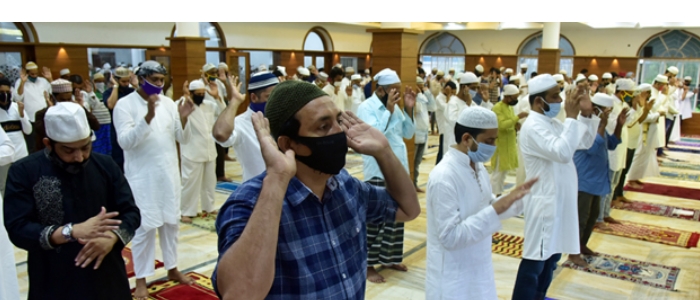
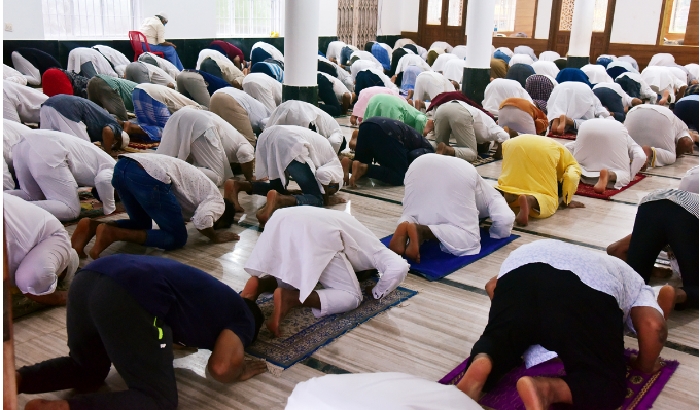
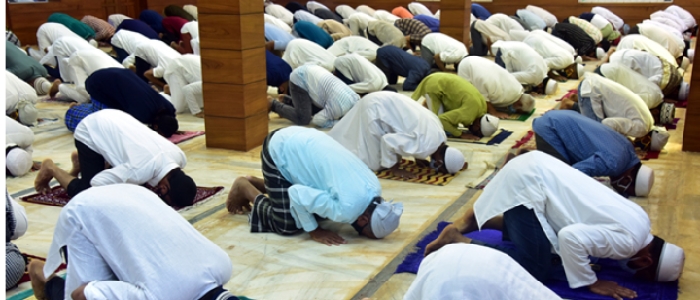
Mangaluru, Jul 31: Muslims across coastal districts of Dakshina Kannada, Udupi and Uttara Kannada today observed Eid al Adha following the safety guidelines issued by the government amidst covid-19 pandemic. 

While coastal Karnataka is celebrating the festival of sacrifice today, it will be observed in other parts of Karnataka and country tomorrow. 

Congregational Eid prayers were held in many mosques while ensuring physical distancing norms. Only 50 devotees were allowed in mosques. Children below 10 years of age and elders above 60 years of age weren’t allowed. 

Eidgahs in the region wore a deserted look as the government has temporarily prohibited prayers in the open grounds. The Eidgah at Lighthouse Hill in Mangaluru, which usually witnessed huge crowd during Eid celebrations, was also closed this time. 

As expected, the celebration this time was a low key thanks to the restrictions placed in tune with the threat of coronavirus infection.

Prayers were held in Kudroli’s Nadupalli and Bundar’s Zeenat Bakhsh Central mosque. All those who entered mosque were wearing masks. 

In Udupi city, Eid prayers were held at Jamia Masjid and other mosques with limited number of devotees. In Bhatkal took some of the mosques hosted Eid prayers with all precautionary measures.

Comments

Add new comment

  • Coastaldigest.com reserves the right to delete or block any comments.
  • Coastaldigset.com is not responsible for its readers’ comments.
  • Comments that are abusive, incendiary or irrelevant are strictly prohibited.
  • Please use a genuine email ID and provide your name to avoid reject.