Bengaluru, Jun 1: Karnataka's Department of Health and Family Welfare on Sunday released the protocol for inter-state travellers to the State during phased reopening --#Unlock1.
Five points protocol in this regard are: 1. Mandatory Self- Registration on Seva Sindhu Portal by all travellers before entering Karnataka:
a. Name, Address and Mobile Number to be provided
b. No approval required
c. Use of same Mobile number for multiple registrations not allowed except in the case of a family.
d. Business visitors to give details (name, mobile and address of persons in Karnataka they intend to meet).
e. Transit travellers to provide an address in destination state and indicate exit check post from Karnataka.
2. Health Screening of all incoming persons at entry points.
a. Border Check-posts, Airports, Railway stations and Bus stand
b. Home Quarantine hand-stamping on hand for 14-days period as per quarantine norms
3. Quarantine norms are based on three parameters
I. Symptomatic on arrival from any State: 7 days of Hospital isolation at COVID Care Centre(CCC)/Dedicated COVID Health Centre (DCHC) followed by 7 days of home quarantine or manage as per symptoms.
II. Test immediately on arrival: If positive, shift to Dedicated COVID-19 Hospital (DCH). If negative, no further test required
III. Asymptomatic on arrival:
* For persons coming from Maharashtra
a) 7 days of institutional quarantine followed by 7 days of home quarantine
b) Test if they develop symptoms during the quarantine period
c) Exceptions for Special Category Asymptomatic persons--14-days home quarantine (one attendant to be permitted) and Special category passengers--Death in the family, Pregnant Women, Children aged below 10 years, Elderly aged above 60 years, Serious illness, Human Distress
d) Business travellers from Maharashtra: To establish that one is a business traveller, a person should show confirmed return flight/train ticket which should not be more than 7 days later from the date of arrival.
In case one is coming by road, he/she should provide the address proof of person in Karnataka he intends to meet. In addition, the person should produce -- one having COVID-19 negative test certificate, which is not more than two days old -- exempted from quarantine.
One does not have a COVID-19 negative test certificate, such a person should go for institutional quarantine of two days within which COVID-19 test should be conducted at his/her own cost. After the test result is negative, the person is exempted from quarantine. No hand stamping of the business visitor is required.
e) All travellers from Maharashtra who come with COVID-19 negative test certificate from an ICMR approved lab, which is not more than two days old from the date of arrival, are exempted from seven days of institution quarantine. They can be asked to go for 14 days of home quarantine.
f) Transit traveller from Maharashtra: To establish that one is a transit traveller, a person should show flight/ train ticket for the onward journey which should not be more than 1 day later from the date of arrival. In case one is travelling by road, he/she should provide the identity proof and address proof in the destination state. Such traveller should be hand stamped if travelling by road as "Transit Traveller."
*For persons coming from other States
a) 14 days of home quarantine
b) Test if they develop symptoms during the home quarantine period
c) For persons where home quarantine is not possible, then institutional quarantine should be done, especially when we have a large family or no separate room for home quarantine, slum or overcrowded areas where home quarantine can not be followed.
d) Business visitors from the Other States: To establish that one is a business traveller, a person should show confirmed return flight/train ticket which should not be more than 7 days later from the date of arrival. In case one is coming by road, he/she should provide the address proof of the native State. No quarantine, and no hand stamping for business visitors from other states.
e) Transit traveller from the other States: To establish that one is a transit traveller, the person should show flight/train ticket for the onward journey which should not be more than one day later from the date of arrival. In case one is travelling by road, he/she should provide the identity proof and address proof in the destination state. Such traveller should be hand stamped if travelling by road as "Transit Traveller."
4. Home Quarantine: Home quarantine follow-up for all incoming persons except business visitors and transit travellers
A. For Rural Areas--
* Home quarantine poster on the home door.
* Information to two neighbours
* Gram Panchayat Task Force to carry an overall responsibility of Home Quarantine
* 3-Member team in every village to monitor
* Flying Squad: FIR against violation of home quarantine and shift to institutional quarantine
* IVRS Call-centre outbound calls
* Quarantine watch App-daily self-monitoring upload-Temperature, Finger-tip pulse-oximetry for elderly and persons with co-morbidity
B. For BBMP and other Urban Areas--
* Home Quarantine Poster on the home door.
* Information to two neighbours and resident welfare/apartment owner's association.
* Ward level team to carry an overall responsibility of home quarantine
* 3-member team at booth level to monitor along with the involvement of Resident Welfare/Apartment Owners' Associations
* Flying Squad: FIR against violation of home quarantine and shift to institutional quarantine
* IVRS Call-centre outbound calls
* Quarantine watch App: Daily self-monitoring upload- temperature, finger-tip pulse-oximetry for elderly and persons with co-morbidity
Karnataka government on Sunday issued guidelines, which will come into force from June 1 and continue till June 30.
According to the new guidelines, religious places and places of worship for the public, hotels, restaurants and other hospitality services, and shopping malls will be permitted to open from June 8.
Union Ministry of Home Affairs (MHA) on Saturday announced new guidelines for phased re-opening of "all activities outside containment zones for the next one month beginning June 1.
In an order, Karnataka government said that phased re-opening of areas outside the containment zones, all activities will be permitted, except the following, which will be allowed, with the stipulation of following Standard Operating Procedures (SOPs) to be prescribed by the Ministry of Health and Family Welfare (MoHFW).
According to the Union Health Ministry, there are 2,922 confirmed COVID-19 cases in the State including 1,877 active cases, 997 recovered and 48 deaths.



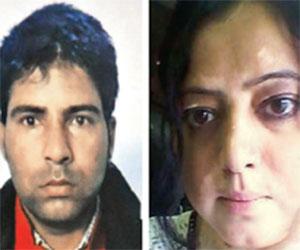 Police sources said Singla, a divorcee hailing from Punjab, had befriended the suspected killer, identified as Sukhbir Singh, on Facebook few weeks ago.


Comments
Crazy Man. He should be under the bar for 20 years. Then only knows the value of once life.
Add new comment