Fertilize your imagination with research, Kunal Basu tells aspiring writers

[email protected] (CD Network)
February 24, 2016

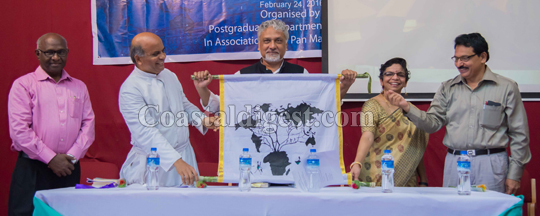
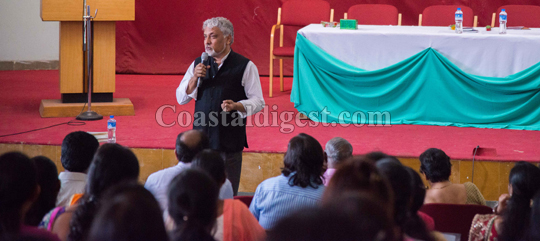
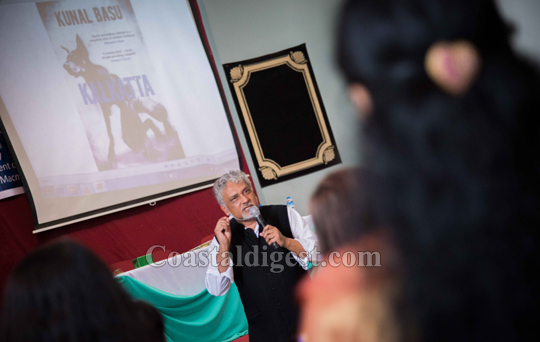
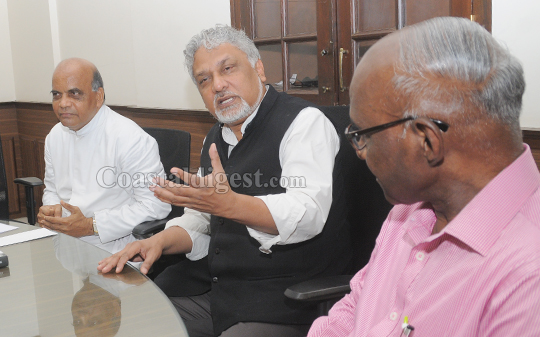
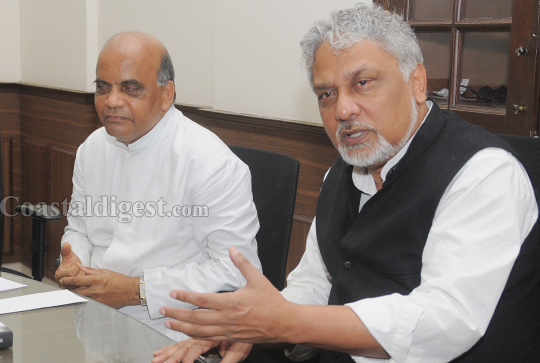
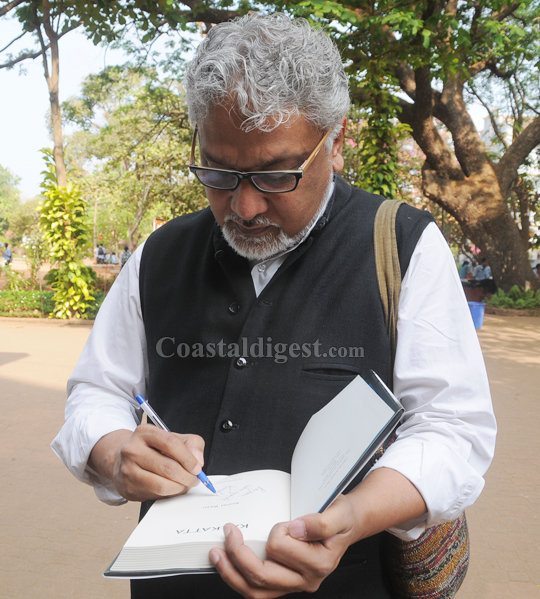
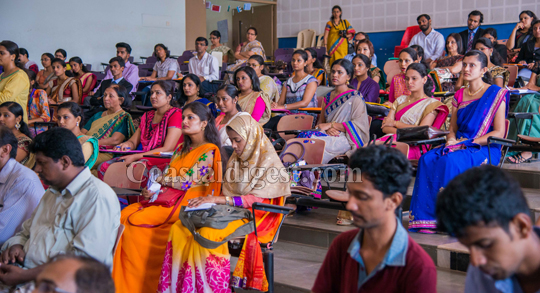
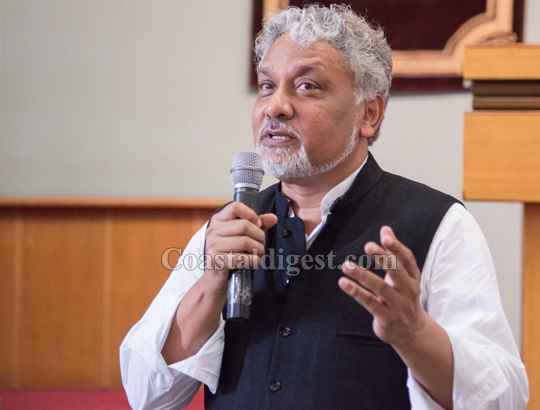
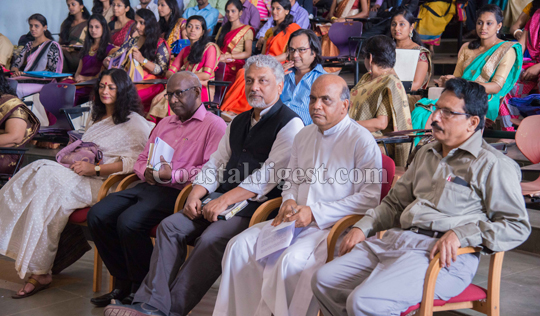
Mangaluru, Feb 24: “Good stories are a product of daydreaming and to be a good writer one needs to continuously feed the daydreaming mind,” said internationally acclaimed author Dr Kunal Basu. He was addressing the delegates of National Seminar on Dislocation, Identities, Multiculturism and the Diaspora' organized by the Post Graduate Department of English, St Aloysius College in association with Pan Macmillan India publishing house.
farmers 1

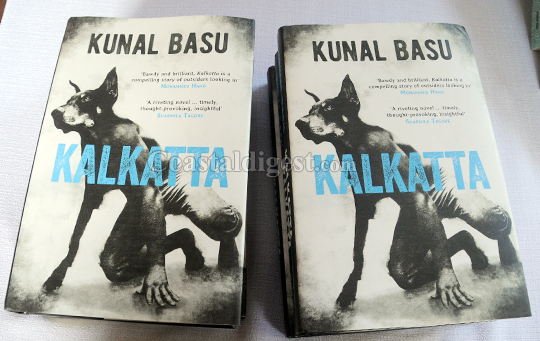
Speaking on the creative process involved in writing, the author of five critically acclaimed novels including the recently released bestseller Kalkatta' said writing has no formula or standardized tool kit.

“Writing is a discipline developed on one's own. So I cannot tell you how to write, only how I write,” he said, “For me writing comprises three things – Impulse, Method and Appraisal. In order to generate fodder for my imagination, I expose myself to unfamiliar experiences in a planned manner. The excitement and curiosity create stories in mind, which I then put on paper.”

In exposing oneself of unfamiliar experiences, it important that one is not judgmental, he added. “I try to be more accepting of the world around me and the research in turn fertilizes my imagination.”

Besides being an author, Dr. Kunal Basu is a management educator presently serving as University Reader in Marketing at Saïd Business School, University of Oxford and a fellow of Green-Templeton College.

Earlier in his welcome address, Dr. Lourdusamy Arputhem, the chairman of the Post Graduate Department of English, said, “As teachers, we should know the undercurrents and nuances of the author, which may not be known to the lay reader.”

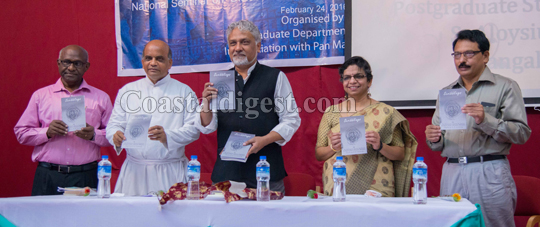
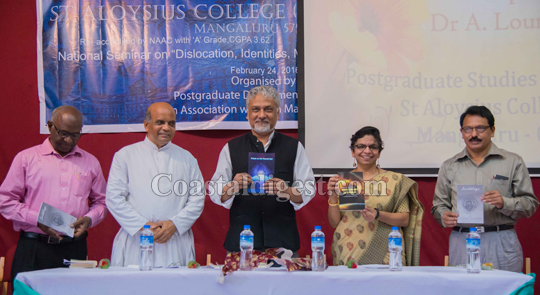
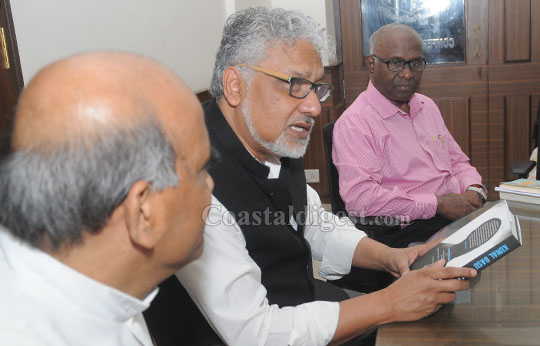
Dr Kunal Basu also released Scribblings', an anthology of poems written by the department students.

Fr Swebert D'Silva, Principal of the college presided over the inauguration ceremony of the seminar. Dr AM Narahari, Registrar of the college and a seminar resource person Dr Padma Baliga, Associate Professor of English, St Joseph's Autonomous College, Bangalore officiated on stage during the inauguration.

Another resource person Dr Rajalakshmi NK, Associate Professor of English, University College, Mangaluru and Vasant Kamat, Head of Product at Pan Macmillan India were present on the occasion. Dr Melisa Goveas proposed vote of thanks.
farmers 7

farmers 2

farmers 4

farmers 5

farmers 6

farmers 8

farmers 9

aloysiusBook 1

aloysiusBook 2

aloysiusBook 3

aloysiusBook 4

aloysiusBook 5

Comments

Honest
 - 
Thursday, 25 Feb 2016

Dear Writers,
Please read the QURAN atleast once in your life time. There are many helpful thoughts to you and the society which U and the society can benefits.

Add new comment

  • Coastaldigest.com reserves the right to delete or block any comments.
  • Coastaldigset.com is not responsible for its readers’ comments.
  • Comments that are abusive, incendiary or irrelevant are strictly prohibited.
  • Please use a genuine email ID and provide your name to avoid reject.
News Network
April 1,2020

Mangaluru, Apr 1: The rush for purchase of essential commodities has eased in several places in Dakshina Kannada with the relaxation of lockdown from Wednesday between 7 am and 12 noon by the district administration. However, a few markets in Mangaluru still had queues in front of vegetable shops on Wednesday.

Vegetable shops and markets in Mallikatte, Kadri, Bejai-Kapikad, Urwastore, Mannagudda and Carstreet areas were crowded with people violating social distancing norms due to the coronavirus crisis.

To avoid swelling of crowds at Central Market in Mangaluru, the market was opened only for wholesalers to collect vegetables. The entry of public to Central Market was prohibited.

MCC Commissioner Ajith Kumar Hegde Shanady said that retail sale is prohibited at Central Market.

The Surathkal market too has been closed from April and traders from the market are allowed to sell essential commodities at alternative locations from 7 am to 12 noon.

Comments

Add new comment

  • Coastaldigest.com reserves the right to delete or block any comments.
  • Coastaldigset.com is not responsible for its readers’ comments.
  • Comments that are abusive, incendiary or irrelevant are strictly prohibited.
  • Please use a genuine email ID and provide your name to avoid reject.
News Network
March 28,2020

Bengaluru, Mar 28: Sun Tsu, in 'The Art of War' speaks of a skilful general who can subdue his enemy without any fighting. This constitutes the ultimate triumph which is referred to as stratagem. Today, we would need one such when we are faced with the '21-day corona challenge' for India.
Nearly four weeks back, Dr Jyothsna Rao, Dr Gururaj Rao and I sat across the OPD in the afternoon at HCG Bengaluru discussing our ongoing cancer immunology research. While on this topic, we drifted into the discussion on the coronavirus. During this engaging discussion, we wondered the similarity of the enigma between the virus and cancer. I paused to ask Dr Jyothsna and Dr Guru - how we wish we could do something against this virus.
Dr Jyothsna is a PhD from NCBS and had worked under Dr Ralph Steinman, physician and researcher from Rockefeller University, who won the Nobel Prize for his discovery of the dendritic cell and its role in adaptive immunity in 2011. Dr Gururaj is a molecular and cell biologist who did his PhD at the Chapel Hill, University of North Carolina and is the Director of iCrest.
Jyothsna while hearing our perplexing conversation on the covid intervened, "Yes, surely. I think we should take a break from cancer and focus on the innate and adaptive immunity role in COVID-19."
Thus began this sincere attempt to relook the human immune system from the eyes of the COVID-19.
We have 10 types of immune cells at the least which are widely dispersed in millions across the body. When our body is invaded by a foreign organism (bacteria, fungi or virus), these cells work with each other to destroy the invader.
Now, the question is - how do the immune cells talk to each other? They use small-molecule substances called cytokines (cyto means cells; kine means movement). There are many cytokines that are involved in work on the immune system. The most relevant for viruses are interferons.
Interferons (IFN) as the name reflects have an ability to interfere with the viral activity and stop their multiplication. These specialised signal proteins are released by our cells in response to a viral attack to forewarn other cells. They help build the antiviral proteins within the cells to kill the virus as it tries to invade the new cells.
Historically, interferons are a group of cytokines known to be potent antiviral agents against viruses and a hallmark cytokine induced by the host upon viral infections. Interferons possess unique immunoregulatory activities and are signature cytokines released by (TH1) T immune cells, which are crucial in viral infections.
As the outbreak of COVID-19 grapples us, an urgent need for finding strategies to combat the virus is growing. Coronaviruses (CoVs) are a group of RNA viruses. In patients infected with coronavirus, it was indicated that the activation of the IFN does not occur until 48 hours post-infection. Thus the delayed IFN-related antiviral response by the healthy cells leads to coronavirus evade the immune response.
Numerous studies have presented the success in defeating CoVs by the direct administration of IFNs. In a combination as a concoction, it was shown to synergistically inhibit the virus replication in vitro.
Moreover, it is understood that the earlier induction of IFNs in children although they have a less developed immune system could be the reason behind the children being least affected.
The key to success in reducing the disease fatality might be the stimulation of the immune responses to trigger IFN production at the very early stages of the disease, which might be done through the administration of IFN. Despite the evidence for the efficacy of IFNs in treating CoV-induced infections, the proper dosing and ideal timing for such interventions needs to be verified in clinical trials.
For the later stages of the diseases in advance stages where patients are on ventilator and have developed respiratory distress, we propose to utilise the mesenchymal cells derived from donor bone marrow that have been known to treat acute respiratory syndrome. Mesenchymal cells are known to possess anti-inflammatory activity and thus used often in autoimmune diseases.
With this scientific background, we have activated T cells from healthy donors, in a cGMP facility at iCrest - HCG hospital with an enriched cocktail of cytokines rich in Interferons. Injections of this cocktail we believe will result in a surge of cytokines in the body of the infected person and will boost his ability to fight the virus in the early phases. We are in the initial phases of this study and hope to be ready in the coming weeks with meaningful data on its potential utility.
Currently, it awaits government approvals (Union and state) and we have applied to central drugs authority for their initial evaluation and further directions.
As my Guru often expounded the philosophy of 'Seva' - the goal of education is knowledge, the end goal of knowledge is service. In this attempt to serve our fellow humans at this brink of unprecedented crisis, medical fraternity stands with you and promises to do our best for your safety.
We assure to exhaust every bit of our spirit in this fight against coronavirus. We have lost the sight of shores and travelled thus far, but that is the mandatory first step to cross the ocean. Are we going to succeed in this battle, is something only time will answer. 

Comments

Add new comment

  • Coastaldigest.com reserves the right to delete or block any comments.
  • Coastaldigset.com is not responsible for its readers’ comments.
  • Comments that are abusive, incendiary or irrelevant are strictly prohibited.
  • Please use a genuine email ID and provide your name to avoid reject.
coastaldigest.com news network
July 1,2020

Mangaluru, July 1: The district administration has imposed prohibitory orders under Section 144 in entire Dakshina Kannada between 8pm and 5am in the entire month of July.

Notice in this regard was issued today by Deputy Commissioner Sindhu B Roopesh. The order will come into force with immediate and will be in place ill July 31, the DC said.

The decision was taken days after Karnataka government took steps to tighten covid restriction and imposed lockdown from 8pm to 5am. 

Under the imposed Section 144, the presence or movement of one or more persons in public places are prohibited. Besides, the gathering of any sort anywhere, including religious places subject to certain conditions in view of the COVID-19 pandemic will also be restricted. 
 

Comments

Add new comment

  • Coastaldigest.com reserves the right to delete or block any comments.
  • Coastaldigset.com is not responsible for its readers’ comments.
  • Comments that are abusive, incendiary or irrelevant are strictly prohibited.
  • Please use a genuine email ID and provide your name to avoid reject.