



Fidel Castro, who defied 10 US presidents in his 50 year rule, dies aged 90

November 26, 2016

Havana, Nov 26: Former President Fidel Castro, who led a rebel army to improbable victory in Cuba, embraced Soviet-style communism and defied the power of 10 US presidents during his half century rule, has died at age 90.
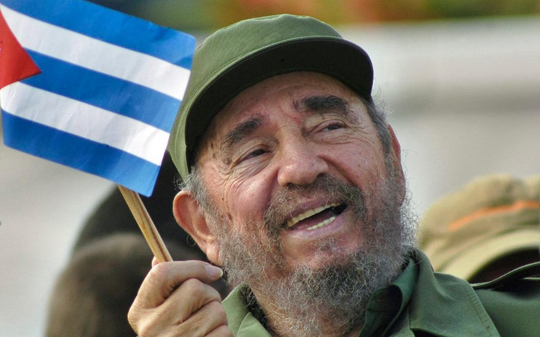
fc

With a shaking voice, his younger brother, Raul Castro, announced on state television that his brother died at 10:29 p.m. on Friday night.

Castro's reign over the island-nation 90 miles from Florida was marked by the US-backed Bay of Pigs invasion in 1961 and the Cuban Missile Crisis a year later that brought the world to the brink of nuclear war.

The bearded revolutionary, who survived a crippling US trade embargo as well as dozens, possibly hundreds, of assassination plots, died eight years after ill health forced him to formally hand power over to Raul.

Castro overcame imprisonment at the hands of dictator Fulgencio Batista, exile in Mexico and a disastrous start to his rebellion before triumphantly riding into Havana in January 1959 to become, at age 32, the youngest leader in Latin America. For decades, he served as an inspiration and source of support to revolutionaries from Latin America to Africa.

His commitment to socialism was unwavering, though his power finally began to fade in mid-2006 when a gastrointestinal ailment forced him to hand over the presidency to Raul in 2008, provisionally at first and then permanently.

His defiant image lingered long after he gave up his trademark Cohiba cigars for health reasons and his tall frame grew stooped. "Socialism or death" remained Castro's rallying cry even as Western-style democracy swept the globe and other communist regimes in China and Vietnam embraced capitalism, leaving this island of 11 million people an economically crippled Marxist curiosity.

He survived long enough to see Raul Castro negotiate an opening with US President Barack Obama on December 17, 2014, when Washington and Havana announced they would move to restore diplomatic ties for the first time since they were severed in 1961.

He cautiously blessed the historic deal with his lifelong enemy in a letter published after a month-long silence. "It's a tragedy," said Dayan Montalvo, a 22-year-old nurse. "We all grew up with him. I feel really hurt by the news that we just heard."

Fidel Castro Ruz was born August 13, 1926, in eastern Cuba's sugar country, where his Spanish immigrant father worked first recruiting labor for US sugar companies and later built up a prosperous plantation of his own.

Castro attended Jesuit schools, then the University of Havana, where he received law and social science degrees. His life as a rebel began in 1953 with a reckless attack on the Moncada military barracks in the eastern city of Santiago. Most of his comrades were killed and Fidel and his brother Raul went to prison.

Castro cobbled revolutionary groups together into the new Cuban Communist Party, with him as first secretary. Labor unions lost the right to strike. The Catholic Church and other religious institutions were harassed. Neighborhood "revolutionary defence committees" kept an eye on everyone.

Castro exported revolution to Latin American countries in the 1960s, and dispatched Cuban troops to Africa to fight Western-backed regimes in the 1970s. Over the decades, he sent Cuban doctors abroad to tend to the poor, and gave sanctuary to fugitive Black Panther leaders from the US.

But the collapse of the Soviet bloc ended billions in preferential trade and subsidies for Cuba, sending its economy into a tailspin. Castro briefly experimented with an opening to foreign capitalists and limited private enterprise.

As the end of the Cold War eased global tensions, many Latin American and European countries re-established relations with Cuba. In January 1998, Pope John Paul II visited a nation that had been officially atheist until the early 1990s.

Aided by a tourism boom, the economy slowly recovered and Castro steadily reasserted government control, stifling much of the limited free enterprise tolerated during harder times.

As flamboyant as he was in public, Castro tried to lead a discreet private life. He and his first wife, Mirta Diaz Balart, had one son before divorcing in 1956. Then, for more than four decades, Castro had a relationship with Dalia Soto del Valle. They had five sons together and were said to have married quietly in 1980.

By the time Castro resigned 49 years after his triumphant arrival in Havana, he was the world's longest ruling head of government, aside from monarchs. In retirement, Castro voiced unwavering support as Raul slowly but deliberately enacted sweeping changes to the Marxist system he had built.

His longevity allowed the younger brother to consolidate control, perhaps lengthening the revolution well past both men's lives. In February 2013, Raul announced that he would retire as president in 2018 and named newly minted Vice President Miguel Diaz-Canel as his successor.

"I'll be 90 years old soon," Castro said at an April 2016 communist party congress where he made his most extensive public appearance in years. "Soon I'll be like all the others.

The time will come for all of us, but the ideas of the Cuban Communists will remain as proof that on this planet, if one works with fervor and dignity, they can produce the material and cultural goods that human beings need and that need to be fought for without ever giving up."

Comments

Congi Shan
 - 
Saturday, 26 Nov 2016

The whole nation suffered because of this man. Not different from dictators Saddam, Gaddafi & Kim Kong Un

Fawad
 - 
Saturday, 26 Nov 2016

CIA tried 500 times to kill him .....Americans are real terrorists

Fedrick
 - 
Saturday, 26 Nov 2016

Red salute to fidel castro and his revolution!

karthik
 - 
Saturday, 26 Nov 2016

Indians can expect the biggest party in the world issuing membership to the expired revolutionary.

Kavya
 - 
Saturday, 26 Nov 2016

Real communism was followed by Karl Marx who envisaged an egalitarian society unlike the Ambanis and Mallyas of today.

Veerendra Hegde
 - 
Saturday, 26 Nov 2016

He kept an enviable and long record as the only leader who ruled a state for more than 50 years! He fought the mighty US and was recognised as one of the tall leaders in the world, with his demise, it is the end of an era! RIP comrade!

Jayaraj
 - 
Saturday, 26 Nov 2016

it is the end of a long innings.. made colorful by his continued anti US stance...... his cigar and the beard made him a recognizable figure who it is said has survived many number of attempts on his life ....MAY HIS SOUL REST IN PEACE......

Add new comment

  • Coastaldigest.com reserves the right to delete or block any comments.
  • Coastaldigset.com is not responsible for its readers’ comments.
  • Comments that are abusive, incendiary or irrelevant are strictly prohibited.
  • Please use a genuine email ID and provide your name to avoid reject.
Agencies
February 18,2020

British lawmaker Debbie Abrahams' e-Business visa was revoked as she was involved in anti-India activities and the cancellation was conveyed to her on February 14, government sources said on Tuesday.

Asserting that the grant, rejection or revocation of a visa or electronic travel authorisation is the sovereign right of a country, the sources said Abrahams was issued an e-Business visa on October 7 last year which was valid till October 5, 2020 for attending business meetings.

"Her e-Business visa was revoked on February 14, 2020 on account of her indulging in activities which went against India's national interest. The rejection of the e-Business visa was intimated to her on February 14," a source said.

Abrahams, who chairs a British parliamentary group on Kashmir, was denied entry into India upon her arrival at the New Delhi airport on Monday.

Government officials had said on Monday also that she was informed in advance that her e-visa had been cancelled.

Comments

Add new comment

  • Coastaldigest.com reserves the right to delete or block any comments.
  • Coastaldigset.com is not responsible for its readers’ comments.
  • Comments that are abusive, incendiary or irrelevant are strictly prohibited.
  • Please use a genuine email ID and provide your name to avoid reject.
News Network
May 5,2020

May 5: Global coronavirus deaths reached 250,000 on Monday after recorded infections topped 3.5 million, a news agency tally of official government data showed, although the rate of fatalities has slowed.

North America and European countries accounted for most of the new deaths and cases reported in recent days, but numbers were rising from smaller bases in Latin America, Africa and Russia.

Globally, there were 3,062 new deaths and 61,923 new cases over the past 24 hours, taking total cases to 3.58 million.

That easily exceeds the estimated 140,000 deaths worldwide in 2018 caused by measles, and compares with around 3 million to 5 million cases of severe illness caused annually by seasonal influenza, according to the World Health Organization (WHO).

While the current trajectory of COVID-19 falls far short of the 1918 Spanish flu, which infected an estimated 500 million people, killing at least 10% of patients, experts worry the available data is underplaying the true impact of the pandemic.

The concerns come as several countries begin to ease strict lockdowns that have been credited with helping contain the spread of the virus.

"We could easily have a second or a third wave because a lot of places aren't immune," Peter Collignon, an infectious diseases physician and microbiologist at Canberra Hospital, told Reuters. He noted the world was well short of herd immunity, which requires around 60% of the population to have recovered from the disease.

The first death linked to COVID-19 was reported on Jan. 10 in Wuhan, China after the coronavirus first emerged there in December. Global fatalities grew at a rate of 1-2% in recent days, down from 14% on March 21, according to the Reuters data.

DEATH RATE ANOMALIES

Mortality rates from recorded infections vary greatly from country to country.

Collignon said any country with a mortality rate of more than 2% almost certainly had underreported case numbers. Health experts fear those ratios could worsen in regions and countries less prepared to deal with the health crisis.

"If your mortality rate is higher than 2%, you've missed a lot of cases," he said, noting that countries overwhelmed by the outbreak were less likely to conduct testing in the community and record deaths outside of hospitals.

In the United States, around half the country's state governors partially reopened their economies over the weekend, while others, including New York Governor Andrew Cuomo, declared the move was premature.

In Britain, Prime Minister Boris Johnson, who battled COVID-19 last month, has said the country was over the peak but it was still too early to relax lockdown measures.

Even in countries where the suppression of the disease has been considered successful, such as Australia and New Zealand which have recorded low daily rates of new infections for weeks, officials have been cautious.

Australian Prime Minister Scott Morrison has predicated a full lifting of curbs on widespread public adoption of a mobile phone tracking app and increased testing levels.

Comments

Add new comment

  • Coastaldigest.com reserves the right to delete or block any comments.
  • Coastaldigset.com is not responsible for its readers’ comments.
  • Comments that are abusive, incendiary or irrelevant are strictly prohibited.
  • Please use a genuine email ID and provide your name to avoid reject.
Agencies
February 29,2020

Doha, Feb 29: The United States signed a landmark deal with the Taliban on Saturday, laying out a timetable for a full troop withdrawal from Afghanistan within 14 months as it seeks an exit from its longest-ever war.

President Donald Trump urged the Afghan people to embrace the chance for a new future, saying the deal held out the possibility of ending the 18-year conflict.

"If the Taliban and the government of Afghanistan live up to these commitments, we will have a powerful path forward to end the war in Afghanistan and bring our troops home," he said on the eve of the event in Doha.

Secretary of State Mike Pompeo arrived in the Qatari capital to witness the signing of the accord, while Defence Secretary Mark Esper was in Kabul for a separate joint declaration with the Afghan government.

The agreement is expected to lead to a dialogue between the Kabul government and the Taliban that, if successful, could ultimately see the Afghan war wind down.

But the position of the Afghan government, which has been excluded from direct US-Taliban talks, remains unclear and the country is gripped by a fresh political crisis amid contested election results.

The United States and its allies will withdraw all their forces from Afghanistan within 14 months if the Taliban abide by the Doha agreement, Washington and Kabul said in a joint statement.

After an initial reduction of troops to 8,600 within 135 days of Saturday's signing, the US and its partners "will complete the withdrawal of their remaining forces from Afghanistan within 14 months... and will withdraw all their forces from remaining bases", the declaration stated.

The Doha accord was drafted over a tempestuous year of dialogue marked by the abrupt cancellation of the effort by Trump in September.

The signing comes after a week-long, partial truce that has mostly held across Afghanistan, aimed at building confidence between the warring parties and showing the Taliban can control their forces.

NATO Secretary General Jens Stoltenberg heralded the agreement as a "first step to lasting peace".

"The way to peace is long and hard. We have to be prepared for setbacks, spoilers, there is no easy way to peace but this is an important first step," the Norwegian former prime minister told reporters in Kabul.

Since the US-led invasion that ousted the Taliban after the September 11, 2001 attacks, America has spent more than $1 trillion in fighting and rebuilding in Afghanistan.

About 2,400 US soldiers have been killed, along with unknown tens of thousands of Afghan troops, Taliban fighters and Afghan civilians.

The insurgents said they had halted all hostilities Saturday in honour of the agreement.

"Since the deal is being signed today, and our people are happy and celebrating it, we have halted all our military operations across the country," Taliban spokesman Zabihullah Mujahid told AFP.

Close to 30 nations were represented at Saturday's signing in the Qatari capital.

While Kabul will not be represented at the Doha ceremony, set for 1245 GMT, it will send a six-person taskforce to the Qatari capital to make initial contact with the Taliban political office, established in 2013.

Any insurgent pledge to guarantee Afghanistan is never again used by jihadist movements such as Al-Qaeda and the Islamic State group to plot attacks abroad will be key to the deal's viability.

The Taliban's sheltering of Al-Qaeda was the main reason for the US invasion following the 9/11 attacks.

The group, which had risen to power in the 1990s in the chaos of civil war, suffered a swift defeat at the hands of the US and its allies. They retreated before re-emerging to lead a deadly insurgency against the new government in Kabul.

After the NATO combat mission ended in December 2014, the bulk of Western forces withdrew from the country, leaving it in an increasingly precarious position.

While Afghans are eager to see an end to the violence, experts say any prospective peace will depend on the outcome of talks between the Taliban and the Kabul government.

But with President Ashraf Ghani and rival Abdullah Abdullah at loggerheads over contested election results, few expect the pair to present a united front, unlike the Taliban, who would then be in a position to take the upper hand in negotiations.

Comments

Add new comment

  • Coastaldigest.com reserves the right to delete or block any comments.
  • Coastaldigset.com is not responsible for its readers’ comments.
  • Comments that are abusive, incendiary or irrelevant are strictly prohibited.
  • Please use a genuine email ID and provide your name to avoid reject.